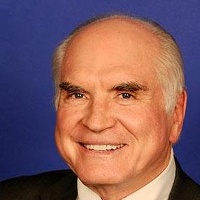
Legislative Activity
Track Mike's sponsored bills, co-sponsored legislation, and voting record
This resolution honors the life and legacy of Charles "Charlie" James Kirk, condemns his assassination as political violence, and calls for a renewed commitment to civil discourse and American founding principles.

Mike Johnson
Representative
LA
Mike Johnson
Representative
LA
This resolution honors the life and legacy of Charles "Charlie" James Kirk, founder of Turning Point USA. It strongly condemns his assassination as an act of political violence. The bill calls for a renewed national commitment to civil discourse and the founding principles of the United States.
This Act ensures that disability compensation or pension payments received by veterans are excluded when determining eligibility for low-income housing tax credits and residential rental project bonds.

Linda Sánchez
Representative
CA
Linda Sánchez
Representative
CA
The Fair Housing for Disabled Veterans Act ensures that veterans' disability compensation or pension payments are excluded when determining income eligibility for low-income housing tax credits and related rental project bonds. This change prevents veterans from being penalized for their service-related benefits when applying for affordable housing assistance. The Act takes effect immediately upon passage.
The Safe Step Act mandates that group health plans using medication step therapy establish clear, timely exception processes for patients and doctors when required drugs are medically inappropriate or ineffective.
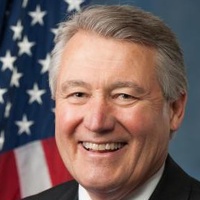
Rick Allen
Representative
GA
Rick Allen
Representative
GA
The Safe Step Act establishes mandatory, transparent exception processes for health plans that use "step therapy" protocols for prescription drugs. This ensures patients or their doctors can quickly request coverage for a prescribed medication when specific clinical criteria are met, such as previous treatment failure or risk of harm. Plans must decide on standard requests within 72 hours and urgent requests within 24 hours, and approved exceptions must last for at least one year. Furthermore, insurers must report detailed data annually on exception requests, approvals, and denials to the Secretary of Health and Human Services.
The HEADACHE Act establishes a National Headache Disorders Initiative, an advisory council, and mandates annual reporting to Congress to improve research, care, and data collection for headache disorders.
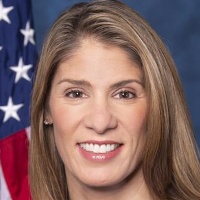
Lori Trahan
Representative
MA
Lori Trahan
Representative
MA
The HEADACHE Act establishes a comprehensive National Headache Disorders Initiative to improve research, workforce development, and care coordination for all headache disorders. It mandates the creation of an Advisory Council to guide federal efforts and requires the Secretary of Health and Human Services to submit annual reports to Congress detailing progress and recommending actions. This legislation aims to address disparities and reduce the societal and financial burden of these conditions before the Act automatically expires five years after enactment.
This bill establishes the Presidents Council on Sports, Fitness, and Nutrition to advise the President on promoting youth physical activity and combating childhood obesity.
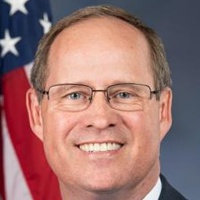
Gregory Murphy
Representative
NC
Gregory Murphy
Representative
NC
The Make America's Youth Healthy Again Act of 2025 establishes a new Presidents Council on Sports, Fitness, and Nutrition. This Council will advise the President on promoting physical activity and setting new national fitness goals for American youth. Its key responsibilities include recommending the return of the Presidential Fitness Award and developing strategies to combat childhood obesity. The Council is set to operate for two years unless the President extends its term.
This bill establishes the new H-2C nonimmigrant visa category to allow registered employers in low-unemployment areas to temporarily hire foreign workers for specific, registered positions.
Lloyd Smucker
Representative
PA
Lloyd Smucker
Representative
PA
The Essential Workers for Economic Advancement Act establishes a new temporary visa category, H-2C, designed to allow registered employers in areas with low unemployment to hire foreign workers for specific, registered positions. This bill creates a comprehensive framework defining eligibility, setting numerical caps, and outlining strict requirements for both employers and workers to address labor shortages. It also includes provisions for worker protections, portability, and a mandatory study on the program's economic and social impact.
This bill establishes a new federal tax credit for individuals who donate cash to approved workforce development or apprenticeship training programs, capped at \$1,700 annually.
Lloyd Smucker
Representative
PA
Lloyd Smucker
Representative
PA
The USA Workforce Investment Act establishes a new federal tax credit for individuals who donate cash to approved workforce development or apprenticeship training programs. This credit is capped at \$1,700 annually and cannot be claimed alongside a standard charitable deduction for the same contribution. Any unused credit can be carried forward for up to five years.
This Act mandates that new passenger motor vehicles sold in the U.S. must include standard equipment capable of receiving AM broadcast radio signals.

Gus Bilirakis
Representative
FL
Gus Bilirakis
Representative
FL
The AM Radio for Every Vehicle Act of 2025 mandates that the Secretary of Transportation establish a rule requiring AM broadcast radio receivers to be installed as standard equipment in new passenger motor vehicles. This requirement aims to ensure public access to AM radio signals, which are often used for emergency alerts. The bill also directs a GAO study on the effectiveness of AM radio within the national emergency alert system compared to other technologies. Finally, the Act preempts state and local laws on this matter and includes a sunset provision eight years after enactment.
This bill amends the Social Security Act to provide Medicare coverage for FDA-approved multi-cancer early detection screening tests starting in 2028.
Jodey Arrington
Representative
TX
Jodey Arrington
Representative
TX
The Nancy Gardner Sewell Medicare Multi-Cancer Early Detection Screening Coverage Act amends the Social Security Act to provide Medicare Part B coverage for multi-cancer early detection screening tests starting January 1, 2028. This legislation establishes clear criteria for qualifying tests and outlines payment structures to ensure beneficiaries have access to these advanced diagnostic tools. Importantly, this coverage is designed to complement, rather than replace, existing Medicare-covered cancer screenings.
This bill ensures Medicare coverage for certain breakthrough medical devices during a four-year transitional period while accelerating the final coverage decision process.
Blake Moore
Representative
UT
Blake Moore
Representative
UT
This Act, the Ensuring Patient Access to Critical Breakthrough Products Act, aims to speed up Medicare coverage for innovative, FDA-approved "breakthrough devices." It establishes a process for manufacturers to gain a four-year transitional coverage period for these devices, ensuring patients have timely access while long-term coverage decisions are finalized. The bill also allocates funding to CMS to manage these expedited reviews and allows for oversight of provider billing practices related to these new technologies.
This Act permanently classifies the entire class of highly potent synthetic opioids known as nitazenes as Schedule I controlled substances to combat overdose deaths.
Eugene Vindman
Representative
VA
Eugene Vindman
Representative
VA
The Nitazene Control Act of 2025 permanently classifies the entire class of highly potent synthetic opioids known as nitazenes (2-Benzylbenzimidazole opioids) as Schedule I controlled substances. This action is taken due to their extreme danger, high potential for abuse, and role in fatal overdoses across the country. By scheduling the entire chemical class at once, the bill aims to proactively stop the emergence of new, dangerous analogs. This permanent scheduling subjects nitazenes to the strictest federal controls, mirroring those applied to fentanyl.
This Act ensures the automatic continuation of pay for active duty military personnel and essential civilian support staff if Congress fails to pass a budget for fiscal year 2026.
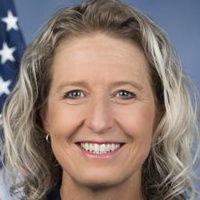
Jennifer Kiggans
Representative
VA
Jennifer Kiggans
Representative
VA
The Pay Our Troops Act of 2026 ensures that active duty military personnel and essential civilian support staff continue to receive their pay if Congress has not yet passed the full budget for fiscal year 2026. This act provides automatic continuing appropriations from the Treasury to prevent a lapse in military salaries due to budget delays. The funding automatically terminates once a new budget or continuing resolution is passed, or on January 1, 2027, whichever comes first.
This bill prohibits federal funding for any entity that employs individuals who condone and celebrate political violence and domestic terrorism.
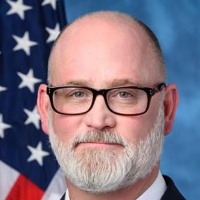
Derrick Van Orden
Representative
WI
Derrick Van Orden
Representative
WI
This bill prohibits the federal government from providing funding to any entity that employs individuals who openly condone or celebrate political violence and domestic terrorism. It directly restricts federal financial support to organizations whose employees publicly endorse such activities. The measure aims to ensure federal dollars do not flow to entities associated with the promotion of political violence.
This Act establishes a pilot program to award grants for implementing evidence-based, professionally supervised peer-to-peer mental health support activities in secondary schools.
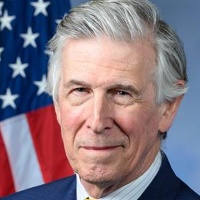
Donald Beyer
Representative
VA
Donald Beyer
Representative
VA
The Peer to Peer Mental Health Support Act establishes a pilot program to fund evidence-based mental health peer support activities in high schools. This program allows eligible entities to receive competitive awards to train students and staff on early intervention and resilience building. All activities must be overseen by a mental health professional, and the program's effectiveness will be evaluated and reported to Congress before its scheduled end in 2029.
This bill protects firearm licensees from license revocation for self-reported or correctable violations by requiring notice, a chance to fix mistakes, and granting federal courts the power to review revocations *de novo*.
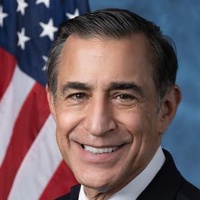
Darrell Issa
Representative
CA
Darrell Issa
Representative
CA
The FIREARM Act aims to protect licensed firearm dealers from overly harsh penalties for minor or self-reported mistakes. It establishes new standards requiring the government to provide notice and an opportunity for dealers to correct violations before license revocation. Furthermore, the bill retroactively applies these protections to licenses previously revoked under a specific 2021 enforcement policy, allowing affected individuals a path to reapply.
The RESULTS Act reforms how Medicare determines payment rates for clinical diagnostic laboratory tests by mandating the use of comprehensive, real-world private payor claims data collected from an independent entity.
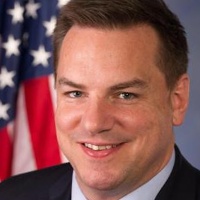
Richard Hudson
Representative
NC
Richard Hudson
Representative
NC
The Reforming and Enhancing Sustainable Updates to Laboratory Testing Services Act of 2025 (RESULTS Act) aims to improve Medicare payment rates for clinical lab tests by mandating the collection of more accurate, real-world payment data directly from large, independent private insurance claims databases. This legislation updates definitions, collection timelines, and calculation methods to ensure Medicare payments for widely available tests reflect current market rates. It also establishes default payment rules if sufficient private payor data cannot be secured.
This Act officially renames the Department of Defense to the Department of War and changes the title of its head to the Secretary of War.
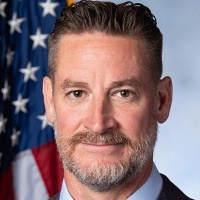
W. Steube
Representative
FL
W. Steube
Representative
FL
The Department of War Restoration Act of 2025 officially renames the Department of Defense to the Department of War. This change also renames the Secretary of Defense to the Secretary of War. The Act ensures all existing laws and documents are updated to reflect this new nomenclature.
This bill establishes a mandatory supply fee paid by Medicare drug plans to long-term care pharmacies for specific prescriptions in 2026 and 2027, while also mandating a GAO study on the financial sustainability of the current payment system.
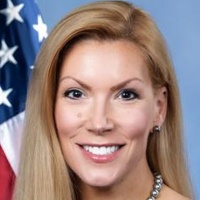
Beth Van Duyne
Representative
TX
Beth Van Duyne
Representative
TX
This Act establishes a mandatory supply fee for Medicare drug plans to pay long-term care pharmacies for specific prescriptions dispensed in 2026 and 2027. The bill mandates a $30 fee per prescription in 2026, increasing in 2027, with penalties for non-payment. Additionally, the GAO is required to study the financial sustainability of the current payment structure for these essential pharmacies. This legislation aims to ensure continued access to medications for patients in long-term care settings.
The College Transparency Act establishes a secure, centralized system for tracking student data across postsecondary institutions to increase transparency regarding costs, completion, and post-college outcomes.
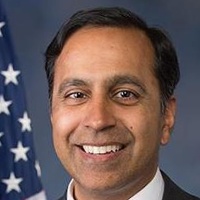
Raja Krishnamoorthi
Representative
IL
Raja Krishnamoorthi
Representative
IL
The College Transparency Act establishes a secure, new national system for tracking student data from postsecondary institutions to improve transparency regarding enrollment, completion, costs, and post-college outcomes. This system will collect detailed, student-level data, securely matched with other federal records, to create public, aggregate reports for comparison. The law mandates strict privacy and security standards while aiming to reduce overall reporting burdens for colleges.
This Act establishes a new reciprocal temporary work visa category for South Korean nationals in specialty occupations, subject to an annual cap of 15,000 principal applicants.
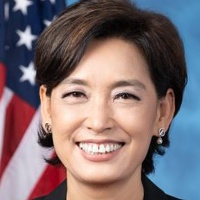
Young Kim
Representative
CA
Young Kim
Representative
CA
The Partner with Korea Act establishes a new reciprocal temporary work visa category specifically for South Korean nationals seeking employment in specialty occupations within the United States. This program is subject to an annual cap of 15,000 principal applicants. The legislation updates immigration procedures to incorporate this dedicated visa stream, contingent upon employer attestations approved by the Secretary of Labor.