
Legislative Activity
Track Amy's sponsored bills, co-sponsored legislation, and voting record
This bill authorizes the minting and sale of special commemorative gold and silver coins to mark the 25th anniversary of the September 11th attacks, with all surcharges benefiting the National September 11 Memorial and Museum.

Kirsten Gillibrand
Senator
NY
Kirsten Gillibrand
Senator
NY
This Act authorizes the minting and issuance of special commemorative gold and silver coins to mark the 25th anniversary of the September 11, 2001, terrorist attacks. The coins will honor the victims, first responders, and the National September 11 Memorial and Museum. All surcharges collected from the sale of these coins must be paid directly to the National September 11 Memorial and Museum to support its operations.
This Act establishes a 60-day congressional review period, requiring presidential notification and approval for any new or increased import duties.

Maria Cantwell
Senator
WA
Maria Cantwell
Senator
WA
The Trade Review Act of 2025 establishes a mandatory 60-day congressional review period for any new or increased import duties imposed by the President. The President must notify Congress within 48 hours of imposing such duties, detailing the justification and impact. Unless Congress passes a joint resolution of approval within 60 days, the new or increased duty automatically expires.
The Fair Day in Court for Kids Act of 2025 mandates government-funded legal representation for unaccompanied children in immigration proceedings, ensures timely access to case files, and guarantees counsel access to detained noncitizens.

Mazie Hirono
Senator
HI
Mazie Hirono
Senator
HI
The Fair Day in Court for Kids Act of 2025 aims to improve efficiency and fairness in immigration courts by significantly increasing access to legal representation for unaccompanied children. This bill mandates the government to provide counsel for these children at no cost through all stages of removal proceedings. Furthermore, it ensures noncitizens receive their case files promptly and establishes new standards for lawyer access to detention facilities and required annual reporting on legal representation outcomes.
This Act extends nonimmigrant status, grants limited job flexibility, and waives the foreign residence requirement for religious workers facing long green card backlogs.
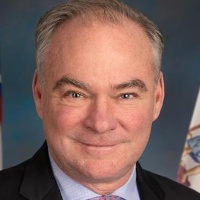
Timothy Kaine
Senator
VA
Timothy Kaine
Senator
VA
The Religious Workforce Protection Act aims to support religious workers facing long delays in obtaining lawful permanent residence. It extends nonimmigrant status for those stuck in green card backlogs, even past the normal five-year limit for R-1 visas. Furthermore, the bill modifies job flexibility rules for certain long-waiting religious workers and exempts those who left the U.S. due to the R-1 visa time limit from the usual one-year foreign residence requirement before reapplying.
The Impact Aid Infrastructure Partnership Act establishes federal-local partnerships to provide formula and competitive grants for urgently needed construction, renovation, and repair of school facilities in districts heavily impacted by non-taxable federal lands.
Mazie Hirono
Senator
HI
Mazie Hirono
Senator
HI
The Impact Aid Infrastructure Partnership Act aims to address the critical need for school facility modernization in districts heavily impacted by non-taxable federal lands. This bill authorizes a four-year, \$250 million annual grant program to provide construction funding through both competitive and formula grants. Priority will be given to districts with emergency facility conditions, while also adjusting funding formulas to better support high-need and defense-impacted school agencies. Funds must supplement, not replace, local spending on essential repairs, renovations, and new construction.
This Act restores the full deductibility of union dues above-the-line and brings back the itemized deduction for certain other employee business expenses through 2025.

Tina Smith
Senator
MN
Tina Smith
Senator
MN
The Tax Fairness for Workers Act aims to restore certain federal tax deductions for employees. This bill makes union dues fully deductible "above-the-line," meaning they can be claimed without itemizing. Additionally, it temporarily allows employees to itemize specific work-related business expenses through the end of 2025.
This Act clarifies the location flexibility for the Smithsonian National Museum of the American Latino on the National Mall and mandates that its exhibits accurately reflect the diverse viewpoints and experiences of Latino communities.

Alejandro Padilla
Senator
CA
Alejandro Padilla
Senator
CA
The Smithsonian National Museum of the American Latino Act clarifies the location flexibility for the museum, confirming it can be situated within the National Mall Reserve. This legislation also establishes a clear process for transferring administrative control of sites managed by other federal agencies to the Smithsonian Institution. Furthermore, it mandates that the Museum's Board of Trustees actively seek guidance from diverse sources to ensure exhibits accurately reflect the full spectrum of Latino cultures and viewpoints. The Secretary of the Smithsonian must report regularly to Congress on compliance with these diversity requirements.
This bill mandates specific, increasing federal funding levels for IDEA programs (excluding preschool) from fiscal year 2026 through 2035 and beyond, based on student counts and average per-pupil spending.

Chris Van Hollen
Senator
MD
Chris Van Hollen
Senator
MD
The IDEA Full Funding Act mandates specific federal funding levels for the Individuals with Disabilities Education Act (IDEA) programs, excluding preschool services, starting in fiscal year 2026 through 2035 and beyond. This legislation establishes a formula that requires the government to allocate the greater of a set dollar amount or a percentage of a calculated amount based on the number of students served and average per-pupil spending. The goal is to significantly increase and stabilize federal contributions to special education services over the next decade.
This joint resolution terminates the national emergency declared by the President on February 1, 2025, to impose duties on articles imported from Canada.
Timothy Kaine
Senator
VA
Timothy Kaine
Senator
VA
This joint resolution officially terminates the national emergency declared by the President on February 1, 2025, regarding duties on articles imported from Canada. By doing so, it ends the special powers and rules activated under that specific declaration. This action effectively cancels the emergency order.
The CONNECT for Health Act of 2025 permanently removes geographic barriers to Medicare telehealth, enhances program integrity through targeted oversight, and establishes new supports to improve quality and access for beneficiaries.
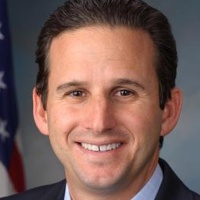
Brian Schatz
Senator
HI
Brian Schatz
Senator
HI
The CONNECT for Health Act of 2025 aims to significantly expand access to telehealth services under Medicare by permanently removing outdated geographic restrictions and broadening provider eligibility. The bill also enhances program integrity by dedicating new funding to oversight and establishing educational outreach for providers with unusual billing patterns. Finally, it mandates new resources, training, and public data reporting to ensure the quality and accessibility of virtual care for all beneficiaries.
This resolution designates March 27, 2025, as "National Women in Agriculture Day" to recognize and celebrate the vital contributions of women across the U.S. agricultural sector.

Joni Ernst
Senator
IA
Joni Ernst
Senator
IA
This resolution officially designates March 27, 2025, as "National Women in Agriculture Day." It recognizes the vital and substantial contributions of the over 1.2 million female agricultural producers to the U.S. economy and global food supply. The measure encourages citizens to acknowledge the leadership, mentorship, and economic impact women have across the entire agricultural sector.
The Paying a Fair Share Act of 2025 establishes a new "Fair Share Tax" on high-income taxpayers with an Adjusted Gross Income over $1,000,000, calculated as 30% of their income minus certain deductions, only applying to the amount exceeding existing regular income, AMT, and payroll taxes.

Sheldon Whitehouse
Senator
RI
Sheldon Whitehouse
Senator
RI
The Paying a Fair Share Act of 2025 introduces a new "Fair Share Tax" targeting high-income taxpayers with an Adjusted Gross Income (AGI) exceeding $1,000,000. This tax is calculated as 30% of AGI (minus a modified charitable deduction) but only applies to income that exceeds existing regular income tax, the Alternative Minimum Tax (AMT), and payroll taxes. The Senate views this bill as an immediate step to ensure the wealthiest pay their fair share and reduce the national deficit while encouraging broader tax reform.
This Act repeals a recent Executive Order and prohibits the Department of Government Efficiency from using federal funds to access state voter registration or immigration data related to elections.
Alejandro Padilla
Senator
CA
Alejandro Padilla
Senator
CA
The Defending America’s Future Elections Act aims to nullify Executive Order 14248, which Congress finds unconstitutional and an overreach of presidential power regarding election administration. This bill explicitly repeals the executive order and prohibits the use of federal funds by the Department of Government Efficiency to access sensitive state voter registration and immigration data. Ultimately, the Act seeks to reaffirm that Congress and the states, not the President, control federal election procedures.
This Act mandates the Department of Labor to establish comprehensive, enforceable workplace violence prevention standards for healthcare and social service workers, including required written plans, risk assessments, and rigorous training.

Tammy Baldwin
Senator
WI
Tammy Baldwin
Senator
WI
This Act mandates the Department of Labor to establish comprehensive, enforceable standards for preventing workplace violence in healthcare and social service settings. It requires covered employers to develop and implement written prevention plans, conduct risk assessments, provide thorough training, and maintain detailed incident logs. The legislation also amends the Social Security Act to ensure facilities receiving Medicare funds comply with these new federal workplace safety requirements.
The ABC Act mandates a comprehensive review and simplification of processes, forms, and communication across Medicare, Medicaid, CHIP, and Social Security programs to reduce burdens on family caregivers.
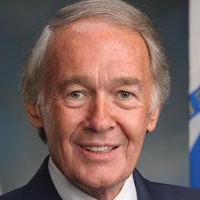
Edward Markey
Senator
MA
Edward Markey
Senator
MA
The Alleviating Barriers for Caregivers Act (ABC Act) mandates a comprehensive review of Medicare, Medicaid, CHIP, and Social Security programs to significantly simplify application processes, forms, and communications. This effort aims to reduce the burden on family caregivers by eliminating redundant information requests across agencies. The responsible officials must report their simplification plans and progress to Congress within two years of enactment.
This act requires group health plans and insurers to allow individuals to obtain a cost-free, 365-day supply of covered contraceptives, effective for plan years beginning on or after January 1, 2026.

John Fetterman
Senator
PA
John Fetterman
Senator
PA
The Convenient Contraception Act ensures that individuals covered by group health plans or insurance can obtain a full 365-day supply of their covered contraceptives at once. This upfront supply must be provided without any copays, deductibles, or coinsurance. The requirement takes effect for plan years beginning on or after January 1, 2026, and mandates federal outreach to inform providers and consumers of this new option.
The Sanctioning Russia Act of 2025 imposes sweeping economic and financial penalties on the Russian Federation and its affiliates, contingent upon Russia's failure to negotiate peace with Ukraine.
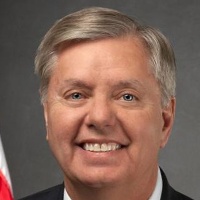
Lindsey Graham
Senator
SC
Lindsey Graham
Senator
SC
The Sanctioning Russia Act of 2025 mandates sweeping economic penalties against the Russian Federation and its affiliates for actions against Ukraine. This legislation requires the President and Treasury Secretary to impose escalating sanctions on Russian officials, financial institutions, and energy sector entities. Furthermore, the Act prohibits U.S. persons from investing in Russian debt, bans the trading of Russian securities on U.S. exchanges, and imposes a massive 500% import duty on Russian goods. Sanctions can only be terminated if Russia agrees to a verifiable peace deal with Ukraine.
This resolution designates April 2025 as "Preserving and Protecting Local News Month" to recognize the critical importance and alarming decline of local journalism across the United States.
Brian Schatz
Senator
HI
Brian Schatz
Senator
HI
This resolution officially designates April 2025 as "Preserving and Protecting Local News Month" to recognize the critical importance of local journalism. It highlights the severe decline of local news outlets across the country, which has created numerous "news deserts." The measure affirms that local news is vital for a healthy democracy and community engagement.
This bill establishes certification requirements for farmers receiving federal crop insurance or disaster assistance for growing crops on previously native sod land.
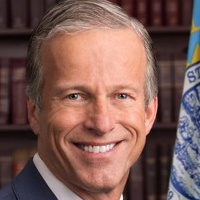
John Thune
Senator
SD
John Thune
Senator
SD
The American Prairie Conservation Act establishes new certification requirements for producers who convert native sod (untouched grassland) into cropland to receive federal crop insurance or disaster assistance. Farmers must now formally certify any newly tilled native sod acreage to the Secretary of Agriculture using specific forms and maps. Furthermore, the Secretary is required to report annually on the total amount of certified tilled native sod acreage by county and state through 2030.
This joint resolution proposes a constitutional amendment granting Congress and states the authority to regulate campaign contributions and expenditures to protect election integrity.

Jeanne Shaheen
Senator
NH
Jeanne Shaheen
Senator
NH
This joint resolution proposes a constitutional amendment granting Congress and the states the explicit authority to regulate campaign contributions and expenditures. If ratified, it would allow for setting reasonable limits on spending intended to influence elections to protect democratic fairness. The amendment also specifically empowers regulators to treat corporations and other entities differently than individuals regarding election spending, while explicitly protecting the freedom of the press.