Legislative Activity
Track Dusty's sponsored bills, co-sponsored legislation, and voting record
This Act limits the sharing of consumer reports requested in connection with a residential mortgage loan to prevent unauthorized access to homebuyers' sensitive financial information.
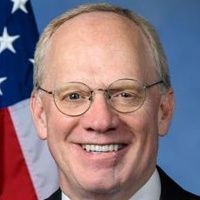
John Rose
Representative
TN
John Rose
Representative
TN
The Homebuyers Privacy Protection Act limits how consumer reporting agencies can share a consumer's report when it is requested in connection with a residential mortgage loan. Reports can only be shared with entities directly involved in the consumer's current mortgage or those providing a firm offer of credit or insurance. The Act also mandates a study by the GAO regarding the use and impact of "trigger leads" derived from credit checks.
This Act bans Members of Congress and their immediate families from trading or owning specific investments while in office, requiring divestment within 90 to 180 days or facing significant financial penalties.
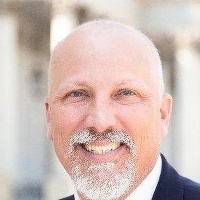
Chip Roy
Representative
TX
Chip Roy
Representative
TX
The Restore Trust in Congress Act establishes strict new rules prohibiting Members of Congress and their immediate families from owning or trading specific financial assets, referred to as "covered investments," while in office. Covered individuals must divest existing prohibited holdings within a set timeframe or face significant financial penalties, including fines and forfeiture of profits. The legislation aims to eliminate conflicts of interest arising from personal financial trading while serving in federal office.
This bill improves the Conservation Reserve Program by updating enrollment rules, tightening emergency haying restrictions, adding cost-sharing for grazing infrastructure, and increasing the annual rental payment cap.
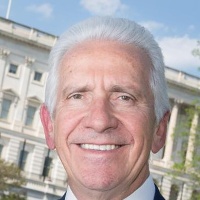
Jim Costa
Representative
CA
Jim Costa
Representative
CA
The CRP Improvement and Flexibility Act of 2025 updates the Conservation Reserve Program to enhance land management flexibility for farmers. Key changes include allowing continuous enrollment for certain state wildlife practices and providing cost-sharing for new grazing infrastructure like fencing. The bill also tightens restrictions on emergency haying while significantly raising the annual CRP rental payment cap to $\$125,000$.
The PARTNER Act authorizes the President to extend specific privileges and immunities under the International Organizations Immunities Act to ASEAN, CERN, the Pacific Islands Forum, the Caribbean Community, and the African Union Mission.
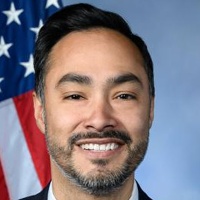
Joaquin Castro
Representative
TX
Joaquin Castro
Representative
TX
The PARTNER Act grants the President the authority to extend specific privileges and immunities under the International Organizations Immunities Act to several key international bodies. This legislation specifically targets the Association of Southeast Asian Nations (ASEAN), CERN, the Pacific Islands Forum, the Caribbean Community, and the African Union Mission. Ultimately, the bill standardizes the legal status and protections afforded to these organizations, aligning them with other international groups the U.S. cooperates with.
This act increases the flexibility for states to transfer up to 75 percent of designated federal-aid highway funds to other approved uses.
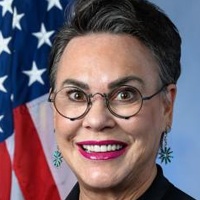
Harriet Hageman
Representative
WY
Harriet Hageman
Representative
WY
The Highway Funding Transferability Improvement Act increases the flexibility for states to manage their federal highway funds. This legislation raises the maximum percentage of designated federal-aid highway funds that a state can transfer to other approved uses from 50 percent to 75 percent. This change allows states greater autonomy in directing federal transportation dollars to meet their specific infrastructure needs.
This act mandates the EPA to swiftly finalize rules ensuring clear E15 fuel labeling and automatic compatibility for most existing underground storage tanks with up to 15% ethanol, while requiring future equipment to be compatible with 100% ethanol.
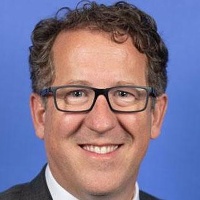
Adrian Smith
Representative
NE
Adrian Smith
Representative
NE
The Ethanol for America Act of 2025 mandates that the EPA finalize rules within 90 days regarding E15 fuel labeling and underground storage tank compatibility. This bill ensures current storage tanks are automatically deemed compatible with E15 and prevents forcing partial upgrades on station owners. Additionally, it requires all new or replacement storage system components to be compatible with up to 100% ethanol for future flexibility.
This bill requires the District of Columbia to allow Members of Congress with valid concealed carry permits from their home states to carry concealed firearms within the District.
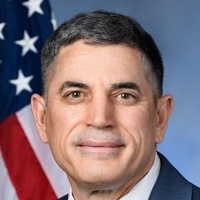
Andrew Clyde
Representative
GA
Andrew Clyde
Representative
GA
This bill would require the District of Columbia to recognize valid concealed carry permits or the legal right to carry a concealed firearm held by Members of Congress from their home states. Specifically, it allows Senators, Representatives, Delegates, and Resident Commissioners to carry a concealed firearm in D.C. provided they meet federal eligibility requirements and carry proper identification.
This bill establishes a federal right for producers to sell covered livestock and their derived products across state lines, preempting state and local regulations on the raising of animals outside their jurisdiction.
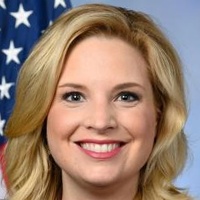
Ashley Hinson
Representative
IA
Ashley Hinson
Representative
IA
The Save Our Bacon Act establishes a federal right for producers to move and sell products derived from covered livestock across state lines, ensuring a single national market. This legislation prevents individual states from imposing unique production standards on livestock or products raised outside their borders. Essentially, it standardizes regulations to ensure free interstate commerce for meat and dairy products, excluding those primarily derived from egg-laying animals.
This Act prohibits the Federal Reserve from directly or indirectly issuing a Central Bank Digital Currency (CBDC) and bars the Fed from developing or using one for monetary policy without explicit Congressional authorization.
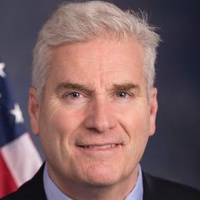
Tom Emmer
Representative
MN
Tom Emmer
Representative
MN
The Anti-CBDC Surveillance State Act strictly prohibits the Federal Reserve from directly or indirectly issuing a Central Bank Digital Currency (CBDC) to individuals. This legislation prevents the Fed from developing, testing, or implementing any digital currency that functions as a direct liability of the Federal Reserve. Furthermore, Congress asserts that any authority to create such a digital asset must explicitly come from Congress itself.
The Digital Asset Market Clarity Act establishes comprehensive regulatory frameworks for digital commodities under the CFTC and SEC, clarifies the status of digital assets, preserves self-custody rights, and explicitly prohibits the Federal Reserve from issuing a Central Bank Digital Currency (CBDC).
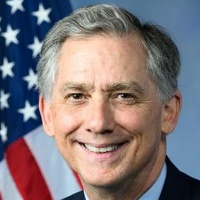
J. Hill
Representative
AR
J. Hill
Representative
AR
The Digital Asset Market Clarity Act establishes a comprehensive regulatory framework for digital assets, primarily focusing on defining and regulating "digital commodities" under the CFTC and SEC. It creates registration pathways for exchanges and intermediaries, clarifies rules for asset sales, protects individual self-custody rights, and explicitly prohibits the Federal Reserve from issuing a Central Bank Digital Currency (CBDC). Overall, the bill aims to bring clarity and consumer safeguards to the digital asset market while encouraging technological innovation.
This resolution mandates the public release of nearly all Department of Justice documents related to the Jeffrey Epstein and Ghislaine Maxwell investigations, with limited exceptions for victim privacy and ongoing legal integrity.
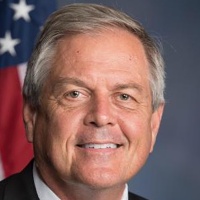
Ralph Norman
Representative
SC
Ralph Norman
Representative
SC
This resolution mandates the Department of Justice (DOJ) to publicly release nearly all documents, records, and communications related to the investigations of Jeffrey Epstein and Ghislaine Maxwell within 30 days. The bill strictly prohibits withholding information based on embarrassment or political sensitivity. Any permitted redactions, such as protecting victim privacy or grand jury secrets, must be publicly justified to Congress.
This bill grants the President the authority to extend special legal privileges and immunities to CERN, the European Organization for Nuclear Research.
Joaquin Castro
Representative
TX
Joaquin Castro
Representative
TX
The Strengthening Science Through Diplomacy Act of 2025 grants the President the authority to extend special legal privileges and immunities to CERN (the European Organization for Nuclear Research). This action would align CERN's legal status in the U.S. with that of other international organizations with which the United States cooperates. The President will determine the specific terms and conditions of this extension.
The CONNECT for Health Act of 2025 permanently expands Medicare telehealth access by removing geographic restrictions, increasing practitioner flexibility, bolstering program integrity, and mandating supports for quality remote care delivery.
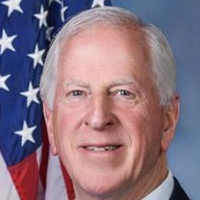
Mike Thompson
Representative
CA
Mike Thompson
Representative
CA
The CONNECT for Health Act of 2025 significantly expands and permanently secures access to Medicare telehealth services by eliminating outdated geographic restrictions and allowing more practitioners to offer remote care. The bill also strengthens program integrity by dedicating funds for telehealth oversight while clarifying rules around providing necessary technology to patients. Finally, it mandates the creation of tailored educational resources and public reporting to improve quality measurement and transparency in remote care delivery.
The PAPA Act of 2025 restricts the use of ADS-B tracking data, limits government access to it, and establishes new public disclosure and spending requirements for airports imposing fees on general aviation aircraft.
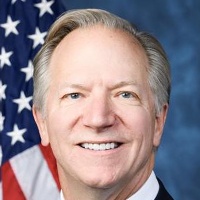
Robert Onder
Representative
MO
Robert Onder
Representative
MO
The Pilot and Aircraft Privacy Act of 2025 (PAPA Act) restricts the use of Automatic Dependent Surveillance-Broadcast (ADS-B) data to prevent unauthorized revenue collection and limits access by federal, state, and local government officials. The bill also establishes new public disclosure and oversight requirements for airports wishing to impose landing or takeoff fees specifically on general aviation aircraft. Any fees collected must be dedicated solely to airside safety projects.
This Act mandates that major internet content and service providers (edge providers) must help fund the Universal Service Fund alongside broadband providers to lower consumer costs and support service in high-cost areas.
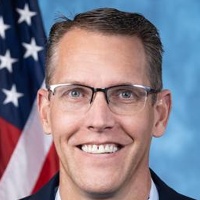
Randy Feenstra
Representative
IA
Randy Feenstra
Representative
IA
The Lowering Broadband Costs for Consumers Act of 2025 reforms the Universal Service Fund (USF) contribution system by requiring large internet content and service providers ("Edge Providers") to contribute alongside traditional broadband providers. This aims to shift the financial burden away from solely relying on phone companies to ensure continued support for universal service. The bill also directs the FCC to establish new, predictable funding mechanisms to support broadband providers serving high-cost areas.
This bill authorizes Indian Tribal Governments to directly request federal fire management assistance under the Robert T. Stafford Disaster Relief and Emergency Assistance Act.
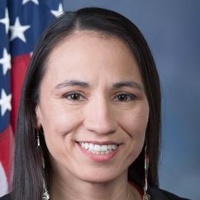
Sharice Davids
Representative
KS
Sharice Davids
Representative
KS
This bill amends the Robert T. Stafford Disaster Relief and Emergency Assistance Act to authorize Indian Tribal Governments to directly request federal fire management assistance. It ensures Tribes can seek aid similar to how States do, while maintaining the option to receive assistance through a State request if their direct application is not approved. The President is required to update regulations to implement these direct eligibility provisions after consulting with Tribal Governments.
This Act prohibits the retirement or fuel source conversion of certain dispatchable power plants in areas deemed at high or elevated risk of electricity supply shortfalls, while providing a pathway for financial relief or exemptions under specific reliability and financial hardship criteria.
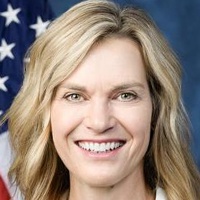
Julie Fedorchak
Representative
ND
Julie Fedorchak
Representative
ND
The Baseload Reliability Protection Act prohibits owners of certain dispatchable power plants in areas facing high or elevated risk of electricity shortages from retiring those units or switching their fuel source. Owners can seek an exemption from this ban from FERC, which must grant it if continued operation causes financial hardship or if retirement does not harm grid reliability. The Department of Energy may offer financial assistance to keep essential, money-losing plants operational.
This act establishes a federal grant program to fund search and rescue operations, equipment, and maintenance in remote areas on public lands managed by the Department of the Interior or the Department of Agriculture.
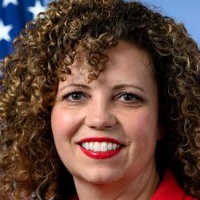
Celeste Maloy
Representative
UT
Celeste Maloy
Representative
UT
The Public Land Search and Rescue Act establishes a new federal grant program to support search and rescue operations conducted on remote federal lands managed by the Department of the Interior or Agriculture. This program prioritizes funding for high-visitation areas, covering up to 75% of eligible costs for equipment, maintenance, and direct rescue activities. Eligible recipients include state and local entities with existing legal authority and proven capability to perform these specialized remote rescues.
This resolution formally expresses Congress's support, gratitude, and recognition for the dedication and sacrifices of local law enforcement officers.
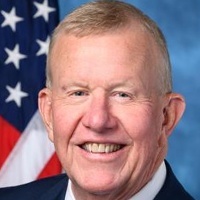
Mike Ezell
Representative
MS
Mike Ezell
Representative
MS
This Concurrent Resolution formally expresses the appreciation of Congress for the dedication and service of local law enforcement officers across the nation. It recognizes the sacrifices made by officers and their families in keeping communities safe. The resolution also encourages strong partnerships between police departments and the communities they serve.
This resolution expresses Congressional support for law enforcement professionals by recognizing the increasing dangers and mental health tolls they face while urging increased staffing, better resources, and tougher penalties for those who assault officers.
Mike Ezell
Representative
MS
Mike Ezell
Representative
MS
This resolution expresses strong Congressional support for America's law enforcement professionals, recognizing the increasing dangers and mental health tolls they face daily. It highlights significant challenges, including rising officer assaults and critical staffing shortages across the nation. The bill urges all levels of government to increase support through better funding, training, equipment, and mental health resources. Ultimately, it calls for enhanced penalties for those who harm officers and reaffirms appreciation for their service.