Legislative Activity
Track Darrell's sponsored bills, co-sponsored legislation, and voting record
This resolution formally recognizes the 250th anniversary of the United States Marine Corps, honoring its legacy, service, and core values.
Jack Bergman
Representative
MI
Jack Bergman
Representative
MI
This resolution formally recognizes the upcoming 250th anniversary of the United States Marine Corps in 2025. Congress is honoring the Corps' long history, core values of honor, courage, and commitment, and its consistent readiness to defend the nation. The bill encourages the public to join in celebrating this significant milestone and acknowledging the service and sacrifice of all Marines.
This bill establishes national reciprocity for concealed carry permits, allowing individuals legally permitted to carry in their home state to carry a handgun in any other state that allows concealed carry.
Richard Hudson
Representative
NC
Richard Hudson
Representative
NC
The Constitutional Concealed Carry Reciprocity Act of 2025 establishes a national standard for carrying concealed handguns across state lines. This act allows individuals legally permitted to carry in their home state to carry concealed in any other state that allows its residents to carry concealed firearms. The law does not override private property restrictions or prohibitions on government property, but it provides protections and legal recourse for those traveling in compliance with the new federal standard.
The Air America Act of 2025 authorizes one-time monetary awards to former Air America employees or their survivors for service supporting the CIA between 1950 and 1976.
Glenn Grothman
Representative
WI
Glenn Grothman
Representative
WI
The Air America Act of 2025 recognizes the sacrifices of former Air America employees who served the U.S. Government between 1950 and 1976. This Act authorizes a one-time monetary award, up to $40,000 plus potential additional amounts, for qualifying service members or their survivors. The CIA Director is responsible for administering these payments, which are capped at a total of $60 million, and establishing the application procedures. Decisions made by the Director regarding these awards are final and not subject to judicial review.
This bill exempts qualifying premium cigars, defined by strict manufacturing and ingredient standards, from certain regulations under the Federal Food, Drug, and Cosmetic Act.
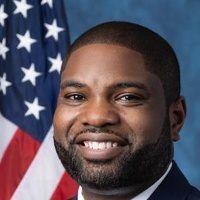
Byron Donalds
Representative
FL
Byron Donalds
Representative
FL
This bill seeks to amend the Federal Food, Drug, and Cosmetic Act to exempt "premium cigars" from certain FDA regulations. It defines a premium cigar based on strict criteria, including being hand-rolled and made entirely of natural tobacco leaf. The exemption is supported by findings that premium cigar use is rare, especially among youth, and poses lower health risks than other tobacco products.
This Act prevents the President and the Secretary of HHS from using emergency declarations to impose gun control measures and prohibits federal disaster rules from restricting the possession or transfer of firearms, ammunition, and related accessories.
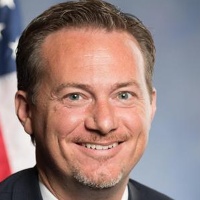
Michael Cloud
Representative
TX
Michael Cloud
Representative
TX
The Protecting the Right to Keep and Bear Arms Act of 2025 restricts the President and the Secretary of Health and Human Services from using emergency declarations to enact gun control measures. This bill specifically prevents the use of the National Emergencies Act and the Public Health Service Act for imposing new firearm restrictions. Furthermore, it amends disaster relief law to prohibit federal disaster declarations from banning the possession, sale, or transfer of firearms, ammunition, or related accessories.
This bill allows investors to defer taxes on capital gain dividends from mutual funds when those dividends are automatically reinvested until the shares are sold or the investor passes away.

Beth Van Duyne
Representative
TX
Beth Van Duyne
Representative
TX
This bill, the Generating Retirement Ownership through Long-Term Holding Act, allows individual investors to defer paying taxes on capital gain dividends from mutual funds if those dividends are automatically reinvested into more fund shares. Taxes on these deferred gains are only due when the investor sells the shares or upon death. This provision aims to encourage long-term investment in mutual funds by providing immediate tax relief on reinvested earnings.
The Department of Government Efficiency Act codifies Executive Order 14210 into law, establishing its directives with the full authority of a statute.
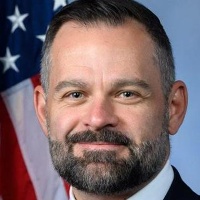
Cory Mills
Representative
FL
Cory Mills
Representative
FL
The Department of Government Efficiency Act, or DOGE Act, codifies Executive Order 14210 into permanent law. This action elevates the directives and rules established in the Executive Order to the full authority of a statute passed by Congress. Essentially, the provisions of the order are now legally binding requirements.
The FISH Act of 2025 shifts authority over anadromous and catadromous fish species from the Department of Commerce to the Department of the Interior.
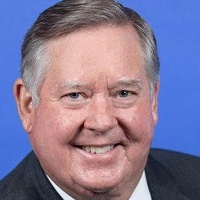
Ken Calvert
Representative
CA
Ken Calvert
Representative
CA
The FISH Act of 2025 transfers authority over anadromous and catadromous fish species from the Secretary of Commerce to the Secretary of the Interior. It redefines anadromous and catadromous species within the Endangered Species Act of 1973. The Act allows for reconsideration of certain past administrative decisions and addresses administrative and legal details related to the transfer, ensuring continuity in existing legal documents, proceedings, and lawsuits. It also defines key terms like "function" and "office" to clarify the scope and implementation of the transfer.
This resolution expresses formal condolences to the families and loved ones of the 67 victims of the January 2025 collision between American Eagle Flight 5342 and a U.S. Army flight, while honoring the victims and commending the first responders.
Ron Estes
Representative
KS
Ron Estes
Representative
KS
This resolution expresses the House of Representatives' deepest condolences to the families and loved ones of the 67 individuals who lost their lives in the January 29, 2025, collision of American Eagle Flight 5342 and a U.S. Army flight. It honors the victims, many of whom had strong ties to Wichita, Kansas, and commends the heroic efforts of the first responders and emergency personnel who managed the recovery.
The "Roberto Clemente Commemorative Coin Act" directs the Treasury to mint coins in 2027 honoring Roberto Clemente, with surcharges benefiting the Roberto Clemente Foundation.
Adriano Espaillat
Representative
NY
Adriano Espaillat
Representative
NY
The Roberto Clemente Commemorative Coin Act directs the Department of Treasury to mint and issue gold, silver, and half-dollar coins in 2027 to commemorate the life and legacy of Roberto Clemente. The coins' designs will represent Clemente's life, including his baseball achievements and humanitarian work. Surcharges from the coin sales will benefit the Roberto Clemente Foundation, supporting their educational programs, youth sports initiatives, disaster relief efforts, and historic preservation projects. The Act ensures that the coin program will not incur any net cost to the United States government.
The "Federal Firearms Licensee Protection Act of 2025" increases penalties for stealing firearms from licensed dealers, manufacturers, or importers, especially during burglaries or robberies, and clarifies related definitions.
John Rutherford
Representative
FL
John Rutherford
Representative
FL
The "Federal Firearms Licensee Protection Act of 2025" increases penalties for stealing firearms from licensed dealers. It sets stricter punishments, including up to 20 years in prison, for violating laws related to firearm theft. The act also mandates minimum prison sentences of 3 years for burglaries and 5 years for robberies targeting licensed firearm businesses.
The "Donald J. Trump $250 Bill Act" mandates the printing of $250 Federal Reserve notes featuring Donald J. Trump's portrait to commemorate the 250th anniversary of the United States, and amends title 31 to allow living presidents on currency.
Joe Wilson
Representative
SC
Joe Wilson
Representative
SC
The "Donald J. Trump $250 Bill Act" would require the Department of Treasury to print $250 Federal Reserve notes featuring a portrait of Donald J. Trump, to commemorate the 250th anniversary of the United States. This bill also amends existing law to allow the portrait of living Presidents to appear on United States currency and securities.
The PAST Act of 2025 significantly strengthens the Horse Protection Act by increasing penalties, banning specific action devices, and mandating licensed inspectors to combat the practice of horse soring.

Brian Fitzpatrick
Representative
PA
Brian Fitzpatrick
Representative
PA
The PAST Act of 2025 significantly strengthens the Horse Protection Act to combat the painful practice of soring in specific horse breeds. This bill increases penalties for violations, establishes stricter licensing and oversight for inspectors, and explicitly bans the use of "action devices" designed to cause unnatural gaits. The legislation aims to enhance enforcement, ensure fairer competition, and hold violators accountable through increased fines and disqualifications.
This resolution condemns the Iranian regime’s terrorism and human rights abuses while affirming support for the Iranian people’s right to establish a democratic, secular, and non-nuclear republic.

Tom McClintock
Representative
CA
Tom McClintock
Representative
CA
This resolution condemns the Iranian regime for its ongoing human rights abuses, state-sponsored terrorism, and regional instability. It expresses strong support for the Iranian people's struggle for a democratic, secular, and non-nuclear republic. Furthermore, the bill advocates for international accountability for the regime's crimes and calls for the protection of Iranian political refugees.
This bill recognizes the 80th anniversary of the Battle of Iwo Jima and honors the service, sacrifice, and enduring legacy of the U.S. personnel who fought in the historic 1945 campaign.
Ken Calvert
Representative
CA
Ken Calvert
Representative
CA
This resolution commemorates the 80th anniversary of the Battle of Iwo Jima, honoring the courage and sacrifice of the U.S. service members who fought in this pivotal World War II campaign. It recognizes the strategic importance of the victory, the iconic flag-raising on Mount Suribachi, and the enduring spirit of reconciliation between the United States and Japan.
The "Ocean Pollution Reduction Act II" amends the Federal Water Pollution Control Act to set new discharge and monitoring requirements for the Point Loma Plant in San Diego, including specific limits on pollutants and a mandate for potable water reuse.

Scott Peters
Representative
CA
Scott Peters
Representative
CA
The Ocean Pollution Reduction Act II amends permitting requirements for the Point Loma Plant in San Diego, setting new limits for discharge of total suspended solids into marine waters. The bill requires the plant to maintain its deep-ocean outfall system and meet specific reduction targets for pollutants by certain dates. It also mandates the production of at least 83,000,000 gallons per day of water suitable for potable reuse by December 31, 2039, and continued ocean monitoring to ensure compliance. Alternatively, the plant can submit an application that complies with standard secondary treatment requirements.
This act authorizes the creation of the Smithsonian National Museum of the American Latino on the National Mall, ensuring diverse representation in its exhibits and programs.

Nicole Malliotakis
Representative
NY
Nicole Malliotakis
Representative
NY
The Smithsonian National Museum of the American Latino Act authorizes the creation of the Smithsonian National Museum of the American Latino on the National Mall. It ensures the museum's exhibits and programs accurately represent the diverse cultures, histories, events, and values of Hispanic and Latino communities, seeking guidance from diverse sources. The Act also mandates regular reports to Congress on the museum's efforts to meet these diversity requirements.
The "More Homes on the Market Act" increases the tax exclusion for profit from the sale of a primary residence, incentivizing homeowners to sell and increasing housing supply.
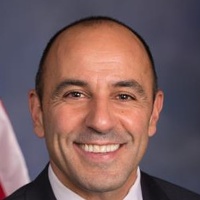
Jimmy Panetta
Representative
CA
Jimmy Panetta
Representative
CA
The "More Homes on the Market Act" increases the tax exclusion for profit from the sale of a primary residence, raising it to $500,000 for single filers and $1,000,000 for married couples filing jointly. These amounts will be adjusted for inflation starting in 2025. This change encourages homeowners to sell their properties, thereby increasing the availability of homes on the market.
The "Death Tax Repeal Act" eliminates estate and generation-skipping transfer taxes, adjusts gift tax calculations, and sets a $10,000,000 lifetime gift exemption.
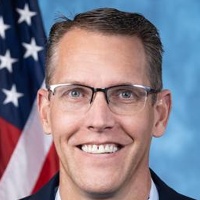
Randy Feenstra
Representative
IA
Randy Feenstra
Representative
IA
The "Death Tax Repeal Act" eliminates both estate and generation-skipping transfer taxes, effective from the date of enactment. It adjusts gift tax calculations by setting the lifetime gift exemption at $10,000,000, with inflation adjustments after 2011. The Act also includes transitional rules for applying certain sections of the Internal Revenue Code during the enactment year.
The "National Right-to-Work Act" prohibits mandatory union membership as a condition of employment, protecting employees' rights to choose whether or not to join or support a labor union.
Joe Wilson
Representative
SC
Joe Wilson
Representative
SC
The "National Right-to-Work Act" amends both the National Labor Relations Act and the Railway Labor Act to protect an employee's right to choose whether or not to join or support a labor union. It eliminates the possibility of mandatory union membership or dues payments as a condition of employment, ensuring that employees cannot be forced to join or support a union against their will.