Legislative Activity
Track Mike's sponsored bills, co-sponsored legislation, and voting record
The FAIR Exams Act establishes strict deadlines for regulatory examinations and responses, creates an independent review board for supervisory disputes, and grants financial institutions the right to an independent, *de novo* review of material supervisory determinations.
J. Hill
Representative
AR
J. Hill
Representative
AR
The Fair Audits and Inspections for Regulators’ Exams (FAIR Exams) Act establishes strict deadlines for federal regulators to complete financial examinations and issue reports. It also creates a new, independent Board to review complaints about examination practices and allows financial institutions to appeal "material supervisory determinations" *de novo*. Furthermore, the bill mandates faster regulatory responses to requests for permission or guidance and strengthens anti-retaliation protections for institutions using appeal rights.
This act, also known as the COUNTER Act, updates the Department of Defense's authority and procedures for neutralizing drone threats to U.S. assets while ensuring related security information remains confidential.
August Pfluger
Representative
TX
August Pfluger
Representative
TX
The COUNTER Act enhances the Department of Defense's authority to neutralize threats from unmanned aircraft systems targeting U.S. assets. This legislation delegates specific response powers and updates mitigation rules for drone threats. Crucially, it exempts sensitive information regarding these counter-drone technologies and procedures from public disclosure under the Freedom of Information Act. The bill also adjusts several deadlines and clarifies the applicability of certain federal laws when operating overseas to counter these threats.
This joint resolution disapproves the Department of Energy's rule concerning certification, labeling, and enforcement for certain appliance and equipment energy standards.
Andrew Clyde
Representative
GA
Andrew Clyde
Representative
GA
This Joint Resolution expresses the disapproval of Congress regarding a recent rule issued by the Department of Energy concerning energy conservation programs. Specifically, it rejects the DOE's proposed requirements for certification, labeling, and enforcement for certain consumer products and commercial equipment. If enacted, this resolution will prevent the specified DOE rule from taking effect.
This Act officially renames the Gulf of Mexico as the Gulf of America across all U.S. laws, maps, and federal documents.
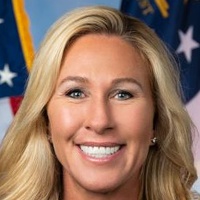
Marjorie Greene
Representative
GA
Marjorie Greene
Representative
GA
The Gulf of America Act officially renames the Gulf of Mexico to the Gulf of America. This change mandates that all federal laws, maps, and official records must immediately reflect the new designation. The Secretary of the Interior is tasked with overseeing the implementation of this name change across all federal agencies within 180 days.
This bill significantly increases mandatory minimum prison sentences for non-citizens who commit crimes after entering the U.S. illegally or after previous removal.
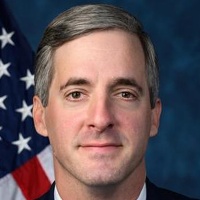
Brad Knott
Representative
NC
Brad Knott
Representative
NC
The Punishing Illegal Immigrant Felons Act of 2025 significantly increases prison sentences for non-citizens who commit crimes after entering the U.S. illegally or after being previously removed. This legislation mandates substantial minimum prison terms—including an additional five years for illegal entry followed by a felony conviction and a new ten-year minimum for re-entry after deportation coupled with a crime. The bill aims to impose much harsher penalties on undocumented immigrants who commit serious offenses.
The MOMS Act establishes a federal resource hub for expecting mothers, improves access to prenatal and postnatal care through grants, and allows for the enforcement of child support obligations for unborn children.
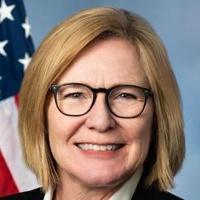
Michelle Fischbach
Representative
MN
Michelle Fischbach
Representative
MN
The MOMS Act aims to support expecting and new mothers through three main initiatives. It establishes a centralized federal resource website, Pregnancy.gov, to connect mothers with local support services and adoption agencies. The bill also creates grant programs to fund organizations offering positive alternatives to abortion and expanding access to at-home prenatal and postnatal telehealth care in underserved areas. Finally, it allows states to establish and enforce child support obligations against biological fathers for unborn children upon the mother's request.
The MEGOBARI Act suspends the U.S.-Georgia Strategic Partnership Commission and authorizes sanctions against Georgian officials who undermine democracy or Western integration, while outlining a strategy to support Georgia's Euro-Atlantic path.
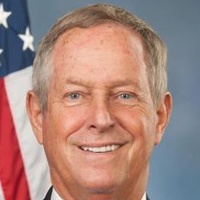
Joe Wilson
Representative
SC
Joe Wilson
Representative
SC
The MEGOBARI Act expresses Congress's concern over Georgia's democratic backsliding and growing alignment with authoritarian states. It directs the Secretary of State to suspend the U.S.-Georgia Strategic Partnership Commission until Georgia demonstrates commitment to democratic principles and EU/NATO aspirations. Furthermore, the Act establishes a policy supporting Georgia's Western trajectory while mandating reports on Russian influence and authorizing targeted sanctions against officials undermining Georgian democracy or stability.
The ACES Act mandates a National Academies study on cancer prevalence and mortality among active duty fixed-wing aircraft crew members and extends certain pension payment limits.
August Pfluger
Representative
TX
August Pfluger
Representative
TX
The ACES Act mandates a comprehensive study by the National Academies to investigate the prevalence and mortality rates of various cancers among active duty fixed-wing aircraft crew members due to potential service-related exposures. This legislation also extends the expiration date for certain limitations on veteran pension payments by one month. The study will analyze specific cancer types and utilize data from the VA, DoD, and other federal sources.
This bill establishes a permanent advisory committee to study and report on the financial market fallout from potential Chinese military aggression toward Taiwan, requiring regular reports and recommendations to bolster U.S. market resilience.
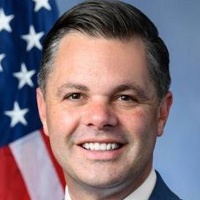
Zachary (Zach) Nunn
Representative
IA
Zachary (Zach) Nunn
Representative
IA
This bill establishes a permanent advisory committee focused on studying and reporting on the severe financial market fallout that could result from Chinese military aggression toward Taiwan. The committee, composed of market experts and regulators, will advise the Financial Stability Oversight Council on potential economic vulnerabilities. The Council must then issue an annual public report detailing market risks, potential losses, and specific recommendations for regulators to fortify U.S. financial systems against such geopolitical shocks.
The Shipbuilding and Harbor Infrastructure for Prosperity and Security for America Act of 2025 establishes a centralized maritime authority, creates a dedicated funding trust, strengthens sealift capability, mandates increased use of U.S.-flagged vessels, invests heavily in domestic shipbuilding, and enhances workforce development and tax incentives for the maritime industry.
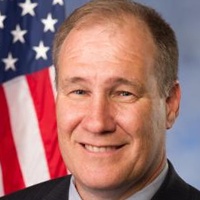
Trent Kelly
Representative
MS
Trent Kelly
Representative
MS
The **Shipbuilding and Harbor Infrastructure for Prosperity and Security for America Act of 2025** is a comprehensive bill designed to revitalize the U.S. maritime industry and secure critical supply chains. It establishes new centralized oversight for maritime policy, creates a dedicated Maritime Security Trust Fund financed by new vessel taxes, and mandates significant federal investment in domestic shipbuilding and workforce development. The legislation also imposes stricter cargo preference rules and tax incentives to ensure U.S.-flagged vessels dominate international commerce and defense sealift operations.
This Act treats spaceports like airports for the purpose of issuing tax-exempt bonds to finance their construction and operations.
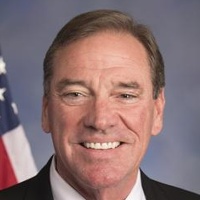
Neal Dunn
Representative
FL
Neal Dunn
Representative
FL
The Secure U.S. Leadership in Space Act of 2025 aims to bolster the commercial space industry by treating spaceports similarly to airports under tax-exempt bond rules. This allows qualifying spaceport facilities to access crucial financing benefits typically reserved for public infrastructure. The Act specifically defines what constitutes a spaceport for these purposes, including manufacturing and operational facilities, regardless of public access. This measure is designed to encourage investment in the infrastructure necessary for U.S. leadership in space activities.
This Act prohibits the use of federal funds for emergency response maps after fiscal year 2026 unless the maps meet strict digital, storage, interoperability, and detailed content requirements, and mandates a federal strategy for acquiring and distributing these compliant maps.
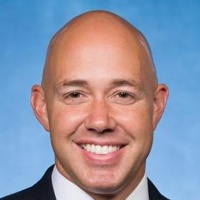
Brian Mast
Representative
FL
Brian Mast
Representative
FL
The Uniform School Mapping Act prohibits the use of federal funds to purchase emergency response maps after fiscal year 2026 unless those maps meet strict digital, storage, and content requirements. These mandated maps must detail critical building features and be easily shareable with public safety agencies at no cost. Furthermore, the Secretary of Homeland Security must develop a strategy to ensure the federal government acquires and distributes these standardized maps for critical properties.
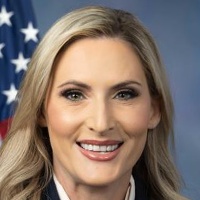
This bill establishes a special visitor category for qualifying Canadian retirees to stay in the U.S. for up to 240 days annually and grants them non-resident alien tax status.
Laurel Lee
Representative
FL
Laurel Lee
Representative
FL
The Canadian Snowbird Act creates a special visitor status for qualifying Canadian retirees, allowing them to stay in the U.S. for up to 240 days per year while maintaining their Canadian residency. This legislation also ensures that these Canadian visitors are treated as non-resident aliens for U.S. tax purposes, preventing them from being taxed like U.S. residents. The bill aims to simplify entry and tax obligations for long-term seasonal visitors from Canada.
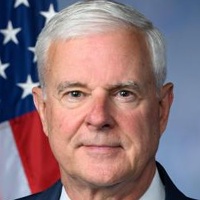
This Act clarifies the duty treatment of whiskies by updating the Harmonized Tariff Schedule and requiring the USITC to add statistical tracking codes for imported whiskies.
Steve Womack
Representative
AR
Steve Womack
Representative
AR
The Duty Drawback Clarification Act updates the U.S. tariff schedule to standardize the classification of whiskies under Chapter 22. This legislation removes an outdated whiskey classification code and requires the U.S. International Trade Commission to add new statistical tracking codes for imports. These changes will take effect 15 days after the Act is officially enacted.
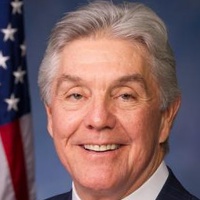
This resolution strongly supports the Second Amendment right to keep and bear arms while commending President Trump for working to reverse recent Biden administration infringements on those freedoms.
Roger Williams
Representative
TX
Roger Williams
Representative
TX
This resolution strongly affirms the constitutional right to keep and bear arms under the Second Amendment. It criticizes recent actions by the Biden administration and federal agencies, such as the ATF, for implementing what are viewed as infringements on these freedoms. The resolution commends former President Trump for his past efforts to protect Second Amendment rights against such measures.
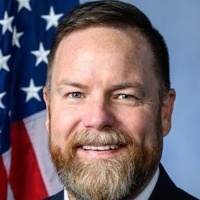
This act extends the excise tax exemption for alternative motorboat fuels to include certain vessels operating exclusively along one U.S. coast.
Aaron Bean
Representative
FL
Aaron Bean
Representative
FL
The Maritime Fuel Tax Parity Act extends the existing excise tax exemption for alternative motorboat fuels to include certain vessels operating exclusively between ports on either the Atlantic or Pacific coast. This change ensures that qualifying vessels, such as specific fishing or maritime activity vessels, benefit from the fuel tax break when trading only along a single U.S. coast. The provision applies to fuel sales occurring after December 31, 2023.
This act officially recognizes accounting education as part of a well-rounded curriculum to improve access to accounting programs, especially for underrepresented students.

Young Kim
Representative
CA
Young Kim
Representative
CA
The Accounting STEM Pursuit Act of 2025 officially recognizes accounting education as a vital component of a well-rounded K-12 curriculum. This legislation amends federal education law to ensure accounting is counted within core curriculum planning frameworks. The Act specifically directs states and districts to improve access to quality accounting programs, with a focus on increasing opportunities for underrepresented students.
The Safeguard American Voter Eligibility (SAVE) Act mandates that individuals registering to vote in federal elections must present documentary proof of U.S. citizenship.

Chip Roy
Representative
TX
Chip Roy
Representative
TX
The Safeguard American Voter Eligibility Act (SAVE Act) significantly amends federal law to require individuals registering to vote in federal elections to present documentary proof of U.S. citizenship. This legislation mandates that states actively clean their voter rolls and cooperate with federal agencies to verify citizenship status. It establishes new criminal penalties for officials who fail to enforce these documentation requirements.
This Act mandates the reimbursement of interest payments made by local governments and electric cooperatives on loans used for disaster recovery activities eligible under the Stafford Act.
Neal Dunn
Representative
FL
Neal Dunn
Representative
FL
The FEMA Loan Interest Payment Relief Act establishes a program for FEMA to reimburse local governments and electric cooperatives for interest paid on specific disaster recovery loans. This reimbursement is capped at the lesser of the actual interest paid or the interest calculated using the Federal Reserve's prime rate. The law mandates FEMA to quickly establish procedures for states to apply for reimbursement of qualifying interest paid up to nine years prior to enactment.
The S-CAP Act of 2025 increases the maximum number of shareholders a business can have to qualify as an S corporation from 100 to 250, effective for tax years beginning after December 31, 2025.
J. Hill
Representative
AR
J. Hill
Representative
AR
The S-CAP Act of 2025 significantly increases the maximum number of shareholders a business can have while qualifying for S corporation tax status, raising the limit from 100 to 250. This change is designed to allow more small businesses to benefit from pass-through taxation. This new 250-shareholder limit will take effect for tax years beginning after December 31, 2025.