Legislative Activity
Track Harriet's sponsored bills, co-sponsored legislation, and voting record
This bill establishes the Agricultural and Rural Road Improvement Program to repair and upgrade local and rural roads crucial for farm access, safety, and economic efficiency.
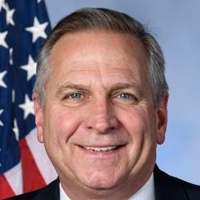
Mike Bost
Representative
IL
Mike Bost
Representative
IL
The Agricultural and Rural Road Improvement Program Act establishes a new federal program dedicated to repairing and improving critical local and rural roads essential for agriculture. This program aims to enhance access to farms and agricultural facilities, reduce weight-restricted bridges, and increase the safety and resilience of rural transportation networks. Federal funding for these projects will cover up to 90 percent of the total cost.
This bill directs the U.S. Postal Service to assign single, unique ZIP Codes to 66 specific communities across the nation.

Lauren Boebert
Representative
CO
Lauren Boebert
Representative
CO
This bill directs the United States Postal Service (USPS) to assign a single, unique ZIP Code to 66 specific communities across numerous states. The USPS is required to complete this designation process within 270 days of the law's enactment. This measure aims to ensure these designated towns and areas each have their own distinct postal code.
This bill mandates the U.S. Postal Service to establish new, unique ZIP Codes for eight specific communities across the country.
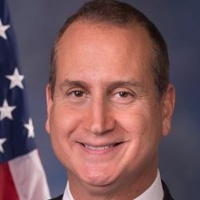
Mario Diaz-Balart
Representative
FL
Mario Diaz-Balart
Representative
FL
This bill mandates the U.S. Postal Service to establish and assign a new, unique ZIP Code for eight specific communities across the country. These communities include locations in California, Connecticut, Florida, Iowa, and Wyoming. The Postal Service has 270 days from the bill's enactment to complete the assignment of these new mailing addresses.
This Act prohibits employers from taking adverse action against employees for expressing views on the biological nature of sex or for using sex-segregated facilities, and it strengthens protections against retaliation for opposing such practices.
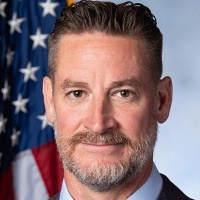
W. Steube
Representative
FL
W. Steube
Representative
FL
The Restoring Biological Truth to the Workplace Act amends employment law to prohibit employers from taking adverse action against employees for expressing views on the binary nature of biological sex or for using sex-segregated facilities. This Act also explicitly protects employees from retaliation for opposing these newly defined unlawful employment practices. Employers cannot use standard defenses like "business necessity" when facing claims related to these specific protections.
This Act prohibits the Federal Reserve from directly or indirectly issuing a Central Bank Digital Currency (CBDC) and bars the Fed from developing or using one for monetary policy without explicit Congressional authorization.
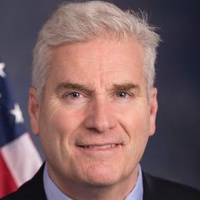
Tom Emmer
Representative
MN
Tom Emmer
Representative
MN
The Anti-CBDC Surveillance State Act strictly prohibits the Federal Reserve from directly or indirectly issuing a Central Bank Digital Currency (CBDC) to individuals. This legislation prevents the Fed from developing, testing, or implementing any digital currency that functions as a direct liability of the Federal Reserve. Furthermore, Congress asserts that any authority to create such a digital asset must explicitly come from Congress itself.
This Act exempts commercial vehicles transporting livestock, insects, or aquatic animals from federal electronic logging device and hours of service regulations.
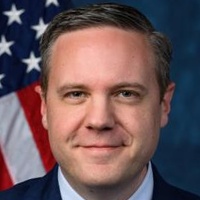
Jeff Hurd
Representative
CO
Jeff Hurd
Representative
CO
The Hauling Exemptions for Livestock Protection Act (HELP Act) exempts commercial drivers transporting livestock, insects, or aquatic animals from federal electronic logging device (ELD) requirements and hours of service regulations. This exemption applies whether the vehicle is loaded or traveling empty to pick up or return from a delivery. The goal is to provide flexibility for those involved in the transportation of live animals.
The SOIL Act of 2025 prohibits designated foreign adversaries from purchasing or leasing land near sensitive U.S. national security sites.
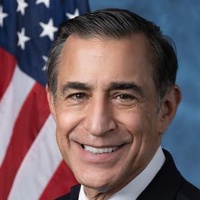
Darrell Issa
Representative
CA
Darrell Issa
Representative
CA
The Saving Our Invaluable Land Act of 2025 (SOIL Act) prohibits specified foreign adversaries, including China, Iran, North Korea, and Russia, from purchasing or leasing land within a 10-mile radius of sensitive U.S. national security sites. This measure amends the Defense Production Act to safeguard military bases, ports, and other critical government facilities from foreign acquisition or control. The goal is to prevent foreign surveillance and protect national security operations near vital infrastructure.
This Act mandates that VA medical staff promptly certify the deaths of veterans who died from natural causes within 48 hours to expedite burial and survivor benefits.
Tom Emmer
Representative
MN
Tom Emmer
Representative
MN
The Veteran Burial Timeliness and Death Certificate Accountability Act addresses significant delays in obtaining death certificates for veterans who die from natural causes, often due to VA medical staff delays. This bill mandates that VA medical providers must certify a veteran's death within 48 hours or allow the local medical examiner to step in. Furthermore, the VA must annually report on its compliance with this new timely certification requirement.
This Act prohibits the use of autopens and invalidates documents signed by unauthorized individuals for engrossed bills, Executive orders, and pardons.

Addison McDowell
Representative
NC
Addison McDowell
Representative
NC
The Ban on Inkless Directives and Executive Notarizations Act of 2025 mandates that the President must personally sign engrossed bills, Executive Orders, and pardons, explicitly banning the use of automatic signing devices for these actions. Furthermore, this Act invalidates any prior official document signed by an unauthorized individual, even if the signing occurred before the law's enactment. This legislation ensures that the highest level of presidential authority is conveyed through the President's own physical signature.
This act modernizes the Fairness to Contact Lens Consumers Act by requiring online sellers to accept electronic prescription transfers, mandating encrypted email for health information, and updating required seller contact information.
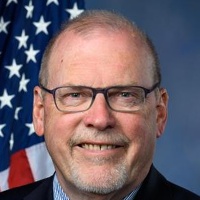
H. Griffith
Representative
VA
H. Griffith
Representative
VA
The Contact Lens Prescription Verification Modernization Act updates existing law to ensure consumers can easily obtain and use their contact lens prescriptions. This bill specifically requires online sellers to provide a HIPAA-compliant method for electronically receiving prescriptions and mandates encryption for any protected health information sent via email. Additionally, it updates seller record-keeping requirements to include customer email addresses.
This Act amends immigration law to make non-citizens inadmissible or deportable for convictions related to driving while intoxicated or impaired (DWI/DUI).
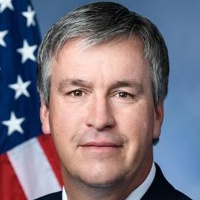
Barry Moore
Representative
AL
Barry Moore
Representative
AL
The Jeremy and Angel Seay and Sergeant Brandon Mendoza Protect Our Communities from DUIs Act of 2025 amends immigration law to address driving while intoxicated or impaired (DWI/DUI) offenses. This legislation establishes that a conviction for, or admission to the underlying acts of, a DWI/DUI offense makes a non-citizen inadmissible to the United States or deportable if already present. This applies regardless of whether the offense is classified as a misdemeanor or felony under local law.
This bill mandates that any final World Health Organization pandemic preparedness agreement resulting from the International Negotiating Body must be treated as a treaty requiring two-thirds Senate approval before the U.S. can adopt it.
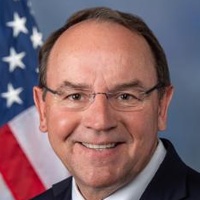
Thomas Tiffany
Representative
WI
Thomas Tiffany
Representative
WI
This bill, the No WHO Pandemic Preparedness Treaty Without Senate Approval Act, declares that any final pandemic agreement resulting from the World Health Organization's negotiations must be treated as a formal treaty. This ensures that the United States cannot implement such an agreement without receiving the advice and consent of two-thirds of the Senate. Furthermore, the policy of the United States is established to fully support Taiwan's participation in the WHO.
The CONNECT for Health Act of 2025 permanently expands Medicare telehealth access by removing geographic restrictions, increasing practitioner flexibility, bolstering program integrity, and mandating supports for quality remote care delivery.
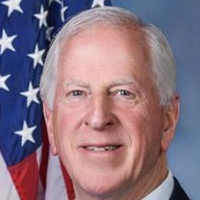
Mike Thompson
Representative
CA
Mike Thompson
Representative
CA
The CONNECT for Health Act of 2025 significantly expands and permanently secures access to Medicare telehealth services by eliminating outdated geographic restrictions and allowing more practitioners to offer remote care. The bill also strengthens program integrity by dedicating funds for telehealth oversight while clarifying rules around providing necessary technology to patients. Finally, it mandates the creation of tailored educational resources and public reporting to improve quality measurement and transparency in remote care delivery.
The Protect RAIL Act makes non-citizens inadmissible to the U.S. and deportable if they commit or conspire to commit crimes involving theft or tampering with goods shipped across state or international lines.

Paul Gosar
Representative
AZ
Paul Gosar
Representative
AZ
The Protect RAIL Act amends immigration law to prevent non-citizens convicted of or admitting to crimes involving the theft or tampering of goods shipped across state or international lines from entering the United States. Furthermore, this bill makes non-citizens already in the U.S. deportable if they have committed such offenses related to interstate or foreign shipments.
This bill updates the Congressional Review Act by clarifying the definition of a joint resolution for disapproving federal rules and making technical renumbering changes to the existing law.
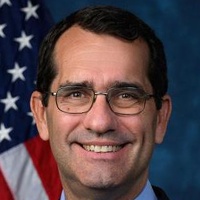
Derek Schmidt
Representative
KS
Derek Schmidt
Representative
KS
The Congressional Review Reform Act of 2025 makes technical amendments to the existing Congressional Review Act (CRA), the law governing how Congress overturns federal regulations. This bill primarily focuses on clarifying the definition of a "joint resolution" used for disapproval and reorganizing the numbering and lettering of various sections within the CRA. These changes are structural housekeeping designed to streamline the review process for new federal rules.
This bill repeals the Freedom of Access to Clinic Entrances (FACE) Act, effectively removing federal criminal penalties for obstructing access to reproductive health clinics.

Chip Roy
Representative
TX
Chip Roy
Representative
TX
The FACE Act Repeal Act of 2025 seeks to eliminate federal protections that currently prohibit the obstruction of reproductive health clinic entrances, the use of force or threats against patients and providers, and the intentional damage of clinic property. If enacted, this legislation would immediately repeal these federal criminal prohibitions and apply to all pending or future prosecutions.
The Small Business Regulatory Flexibility Improvements Act strengthens federal oversight by requiring agencies to conduct more rigorous economic impact analyses, enhance transparency, and provide greater protections for small businesses during the rulemaking process.

Ben Cline
Representative
VA
Ben Cline
Representative
VA
The Small Business Regulatory Flexibility Improvements Act strengthens protections for small businesses by requiring federal agencies to conduct more rigorous and transparent economic impact analyses for proposed regulations. The bill expands the scope of these reviews to include indirect economic effects, mandates the creation of plain-language compliance guides, and establishes a process for the periodic review of existing rules. Additionally, it empowers the Small Business Administration’s Office of Advocacy to better oversee agency compliance and requires agencies to waive civil fines for most first-time paperwork violations by small businesses.
The COAL POWER Act repeals the Environmental Protection Agency's recent rule on emission standards for coal- and oil-fired electric utility steam generating units.
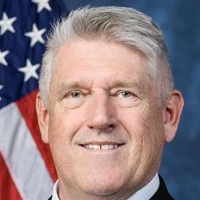
Troy Downing
Representative
MT
Troy Downing
Representative
MT
The COAL POWER Act, officially the Combating Overregulation And Limitation of Proven, Operable, Working Energy Resources Act, directly repeals a recent Environmental Protection Agency (EPA) rule concerning emission standards for coal- and oil-fired power plants. This legislation effectively nullifies the specified EPA regulation, removing its legal standing.
The Reliable Grid Act halts the enforcement of certain EPA power plant regulations until grid reliability is confirmed to be at a "normal risk" level.
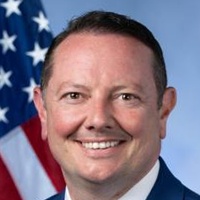
Eric Burlison
Representative
MO
Eric Burlison
Representative
MO
The Reliable Grid Act prioritizes the stability and dependability of the U.S. electric grid over environmental regulations that could force the premature retirement of essential power sources. It directs the EPA Administrator to halt the enforcement of recent rules affecting the power sector until reliability is confirmed, especially concerning dispatchable units like coal and natural gas plants. The bill mandates that new reliability standards must account for the intermittent nature of solar and wind power. Ultimately, this legislation seeks to prevent power shortages by ensuring reliable capacity remains online to meet current and future electricity demands.
This bill significantly increases criminal and civil penalties for individuals who illegally enter the country or overstay their nonimmigrant visas.

Nathaniel Moran
Representative
TX
Nathaniel Moran
Representative
TX
The Visa Overstays Penalties Act significantly increases penalties for individuals who enter the country illegally or overstay their authorized visas. This legislation establishes a new violation specifically targeting nonimmigrant visa holders who remain in the U.S. for more than 10 days past their authorized status. Consequences include increased criminal penalties, up to two years in jail for repeat offenses, and substantial civil fines ranging from $\$500$ to $\$1,000$ per violation.