Legislative Activity
Track Diana's sponsored bills, co-sponsored legislation, and voting record
This resolution formally condemns the violent attack on the U.S. Border Patrol facility in McAllen, Texas, on July 7, 2025, while expressing support for law enforcement personnel.
Mónica De La Cruz
Representative
TX
Mónica De La Cruz
Representative
TX
This resolution formally condemns the violent attack on the U.S. Border Patrol facility in McAllen, Texas, on July 7, 2025. It expresses support for the injured agents and reaffirms Congress's strong backing for the dedicated men and women of the Border Patrol. The bill emphasizes that such violence against law enforcement is unacceptable and undermines national security efforts.
This Act prohibits Federal employee health plans from contracting with insurance carriers or Pharmacy Benefit Managers that also own or control pharmacies to prevent conflicts of interest.
Raja Krishnamoorthi
Representative
IL
Raja Krishnamoorthi
Representative
IL
The Fair Pharmacies for Federal Employees Act of 2025 prohibits the Office of Personnel Management (OPM) from contracting with health insurance carriers or Pharmacy Benefit Managers (PBMs) that also own or control pharmacies. This measure aims to prevent conflicts of interest by separating the entities that manage federal employee health plans from those that dispense prescription drugs. The bill ensures that insurance carriers cannot contract with PBMs they own, and vice versa. Ultimately, this legislation seeks to promote fair competition in prescription drug benefits for federal workers.
This bill mandates that elementary, secondary, and higher education institutions must certify compliance with biological fairness requirements in women's sports to receive federal funding, with penalties for non-compliance.
Garland Barr
Representative
KY
Garland Barr
Representative
KY
The Defend Girls Athletics Act mandates that elementary, secondary, and higher education institutions must certify compliance with Executive Order 14201 regarding biological fairness in women's sports to receive federal funding. This certification must be renewed annually for K-12 districts and by July 1st for colleges and universities. Failure to comply or report results in the immediate requirement to return unobligated federal funds and ineligibility for future federal financial assistance until compliance is restored.
The PBM Reform Act of 2025 mandates sweeping changes to increase transparency, ensure fair pharmacy access in Medicare, and prohibit abusive spread pricing in Medicaid by holding Pharmacy Benefit Managers accountable for their financial dealings.
Earl Carter
Representative
GA
Earl Carter
Representative
GA
The Pharmacy Benefit Manager Reform Act of 2025 aims to increase transparency and accountability across the prescription drug supply chain. It mandates fairer pharmacy network access for Medicare beneficiaries and imposes strict new financial reporting and service fee requirements on Pharmacy Benefit Managers (PBMs) working with Medicare and private health plans. Furthermore, the bill establishes new federal mechanisms to accurately track drug acquisition costs in Medicaid and explicitly bans the practice of "spread pricing" in state Medicaid contracts.
This resolution officially honors the life, achievements, and legacy of FedEx founder Frederick W. Smith.
David Kustoff
Representative
TN
David Kustoff
Representative
TN
This resolution serves as a formal tribute honoring the life, achievements, and enduring legacy of Frederick W. Smith, the visionary founder of FedEx. It officially recognizes his pioneering role in revolutionizing the global logistics industry and his deep commitment to the Memphis community. The bill does not enact any new laws but instead places his biography and contributions into the official Congressional record.
This Act grants limited liability protection to manufacturers of critical infrastructure equipment against lawsuits related to wildfire losses unless willful misconduct in design or production is proven.
Mariannette Miller-Meeks
Representative
IA
Mariannette Miller-Meeks
Representative
IA
This bill grants limited legal immunity to manufacturers of essential critical infrastructure equipment against lawsuits stemming from wildfire-related losses. This protection applies unless a plaintiff can prove the manufacturer engaged in willful misconduct during the design or production of the equipment. The legislation aims to bolster the security and resilience of vital national systems by supporting their manufacturers.
This bill makes technical corrections and clarifications to the Camp Lejeune Justice Act of 2022, including adjusting venue options, setting standards of proof, and capping attorney fees, all retroactively applied to August 10, 2022.
Gregory Murphy
Representative
NC
Gregory Murphy
Representative
NC
The Ensuring Justice for Camp Lejeune Victims Act of 2025 makes technical corrections to the 2022 Camp Lejeune Justice Act to clarify standards for proving harm and venue for trials. This legislation sets specific caps on attorney fees and retroactively applies these changes to all existing and future claims filed under the original 2022 Act. The bill ensures that existing statutes of limitations for filing claims remain unchanged.
The LEDGER Act mandates the establishment of a comprehensive, government-wide system to track and record the exact destination and availability period of every federal expenditure.
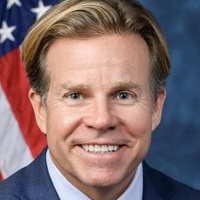
Mike Haridopolos
Representative
FL
Mike Haridopolos
Representative
FL
The LEDGER Act mandates the creation of a comprehensive, centralized system managed by the Secretary of the Treasury to track every expenditure made by all branches of the U.S. Government. This new system must detail exactly where federal funds are spent and how long those funds were available for obligation. The goal is to significantly enhance the traceability and transparency of government spending.
The Protect RAIL Act makes non-citizens inadmissible to the U.S. and deportable if they commit or conspire to commit crimes involving theft or tampering with goods shipped across state or international lines.

Paul Gosar
Representative
AZ
Paul Gosar
Representative
AZ
The Protect RAIL Act amends immigration law to prevent non-citizens convicted of or admitting to crimes involving the theft or tampering of goods shipped across state or international lines from entering the United States. Furthermore, this bill makes non-citizens already in the U.S. deportable if they have committed such offenses related to interstate or foreign shipments.
This resolution censures Representative LaMonica McIver and removes her from the Committee on Homeland Security following her alleged interference with federal officers at an immigration facility.
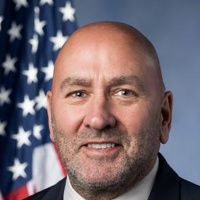
Clay Higgins
Representative
LA
Clay Higgins
Representative
LA
This resolution formally censures Representative LaMonica McIver following her indictment for allegedly interfering with federal officers at an immigration facility. As a result of her conduct, the House is officially expressing its strong disapproval and immediately removing her from the Committee on Homeland Security. This action is taken because her alleged actions are deemed not to reflect creditably upon the House.
This Act prohibits discrimination against qualified individuals with disabilities in all aspects of the organ transplant process, requiring reasonable accommodations and support structures.
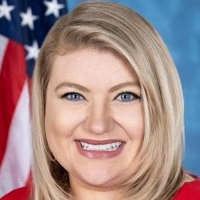
Katherine Cammack
Representative
FL
Katherine Cammack
Representative
FL
The Charlotte Woodward Organ Transplant Discrimination Prevention Act prohibits discrimination against qualified individuals with disabilities in all aspects of the organ transplant process. This legislation ensures that a disability alone cannot be a basis for denying a transplant, referral, or listing. It mandates reasonable modifications and the provision of necessary support, including recognizing support networks, unless the disability presents a medically significant barrier to the transplant itself. The Act ensures these protections apply from initial evaluation through post-transplant care and does not diminish existing state or local protections.
The Community Paramedicine Act of 2025 establishes a grant program administered by HRSA to fund specially trained paramedics providing mobile healthcare services, particularly in rural and Tribal communities.
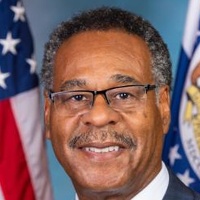
Emanuel Cleaver
Representative
MO
Emanuel Cleaver
Representative
MO
The Community Paramedicine Act of 2025 establishes a new grant program administered by HRSA to support specially trained paramedics providing mobile healthcare services outside of emergency calls, primarily in rural areas. Eligible non-profit entities can apply for up to $\$1.5$ million over five years to fund staffing, equipment, training, and medical oversight for these patient-centered services. The bill specifically reserves a portion of funding for Tribal community programs and requires rigorous reporting on program outcomes.
The Nuclear REFUEL Act amends the definition of a "production facility" under the Atomic Energy Act to exempt spent nuclear fuel reprocessing that does not separate plutonium from other transuranic elements.
Robert Latta
Representative
OH
Robert Latta
Representative
OH
The Nuclear REFUEL Act amends the Atomic Energy Act to clarify regulations surrounding nuclear fuel processing. Specifically, it excludes the reprocessing of spent nuclear fuel from the definition of a "production facility" if the process does not separate plutonium from other transuranic elements. This change aims to streamline regulatory oversight for certain fuel recycling activities.
The FIGHT Act of 2025 strengthens federal prohibitions against animal fighting, enhances enforcement mechanisms, and allows citizens to sue violators of animal fighting provisions.
Don Bacon
Representative
NE
Don Bacon
Representative
NE
The FIGHT Act of 2025 significantly strengthens federal prohibitions against animal fighting ventures, specifically targeting the sponsorship, exhibition, and gambling associated with these events. This legislation clarifies the definition of a rooster for legal purposes and bans the interstate transport of roosters for fighting. Furthermore, it empowers private citizens to file lawsuits against violators, allowing for civil penalties and the potential seizure of property used to facilitate illegal animal fighting.
This joint resolution disapproves the EPA's rule allowing California to implement its Advanced Clean Cars II vehicle pollution control standards.
John Joyce
Representative
PA
John Joyce
Representative
PA
This joint resolution expresses Congressional disapproval of the Environmental Protection Agency's (EPA) rule regarding California's "Advanced Clean Cars II" vehicle pollution standards. By rejecting this rule, Congress is effectively canceling the EPA's decision to grant California a waiver allowing it to set stricter emission standards than federal law typically permits. Consequently, the approved California standards will not take effect.
This resolution seeks to disapprove and nullify the Environmental Protection Agency's rule regarding California's Low NOX vehicle and engine pollution control standards.
Jay Obernolte
Representative
CA
Jay Obernolte
Representative
CA
This joint resolution seeks to disapprove and nullify a specific rule issued by the Environmental Protection Agency (EPA) regarding California's stringent motor vehicle and engine pollution control standards, known as the "Omnibus Low NOX Regulation." By exercising disapproval under the Congressional Review Act, this measure prevents the EPA's decision on waiving federal preemption for these California standards from taking legal effect. If passed, the EPA's rule will be entirely canceled.
This Act penalizes jurisdictions that restrict cooperation between local law enforcement and federal immigration officials by making them ineligible for certain federal development funds.
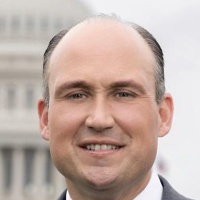
Nicholas Langworthy
Representative
NY
Nicholas Langworthy
Representative
NY
The Stop Dangerous Sanctuary Cities Act aims to penalize jurisdictions that limit cooperation with federal immigration enforcement. It defines "sanctuary jurisdictions" as those that refuse to honor detainer requests or share immigration information, with an exception for protecting crime victims and witnesses. Furthermore, the bill makes these designated sanctuary jurisdictions ineligible for specific federal development and community improvement funds, such as EDA grants and CDBG funds. Cooperating local officers are granted liability protection when honoring valid federal detainer requests.
This bill repeals the Freedom of Access to Clinic Entrances (FACE) Act, effectively removing federal criminal penalties for obstructing access to reproductive health clinics.
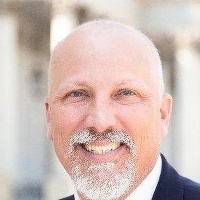
Chip Roy
Representative
TX
Chip Roy
Representative
TX
The FACE Act Repeal Act of 2025 seeks to eliminate federal protections that currently prohibit the obstruction of reproductive health clinic entrances, the use of force or threats against patients and providers, and the intentional damage of clinic property. If enacted, this legislation would immediately repeal these federal criminal prohibitions and apply to all pending or future prosecutions.
This resolution strongly condemns the rise in ideologically motivated attacks against Jewish individuals in the U.S., including the recent Boulder assault, and reaffirms the House's commitment to combating antisemitism and political violence.
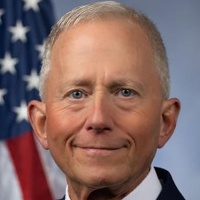
Jefferson Van Drew
Representative
NJ
Jefferson Van Drew
Representative
NJ
This resolution strongly condemns the recent rise in ideologically motivated attacks targeting Jewish individuals and institutions across the United States, including the violent assault in Boulder, Colorado. The House of Representatives reaffirms its commitment to combating antisemitism and politically motivated violence in all its forms. It calls for thorough investigation and prosecution of such incidents and urges all sectors of society to speak out against hate.
This Act codifies Executive Order 14155, legally mandating the United States' withdrawal from the World Health Organization.
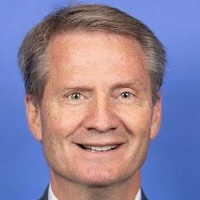
Tim Burchett
Representative
TN
Tim Burchett
Representative
TN
The EO 14155 Act of 2025 officially codifies the previous Executive Order to withdraw the United States from the World Health Organization (WHO). This legislation transforms the presidential order into statutory law, ensuring the U.S. withdrawal from the WHO is legally binding.