Legislative Activity
Track Bill's sponsored bills, co-sponsored legislation, and voting record
Calls for Nigeria to be designated as a Country of Particular Concern due to ongoing, severe violations of religious freedom, urging U.S. action to protect religious minorities and promote human rights in the region.
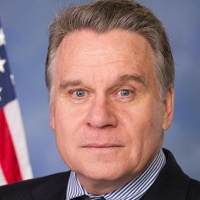
Christopher Smith
Representative
NJ
Christopher Smith
Representative
NJ
This resolution expresses the sense of Congress that Nigeria should be designated as a Country of Particular Concern due to severe violations of religious freedom. It urges the Nigerian government to protect religious minorities, prosecute those responsible for violence, and ensure religious freedom. The resolution also calls for increased U.S. diplomatic efforts and potential sanctions on individuals and groups responsible for religious freedom violations in Nigeria.
The REDI Act allows medical and dental interns and residents to defer both principal and interest payments on their student loans while in training.
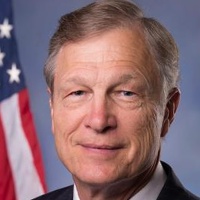
Brian Babin
Representative
TX
Brian Babin
Representative
TX
The Resident Education Deferred Interest (REDI) Act amends federal student loan regulations to provide a specific deferment for medical and dental residents. This allows borrowers currently serving in an internship or residency program to pause principal payments and prevent interest accrual on their student loans during that training period.
The Arctic Watchers Act establishes a State Department program to monitor and counter foreign influence, particularly from China and Russia, across security, economic, and political fronts in the strategically important Arctic region.
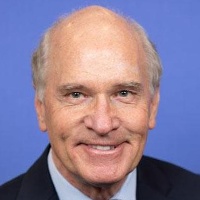
William Keating
Representative
MA
William Keating
Representative
MA
The Arctic Watchers Act establishes a new "Arctic Watcher Program" managed by the Secretary of State to closely monitor security, economic, and political activities in the Arctic. This program is specifically tasked with tracking and countering influence operations from China and Russia that threaten U.S. interests. To achieve this, designated "Arctic Watchers" will be stationed in key allied countries to report annually on their efforts to protect U.S. strategic goals in the region.
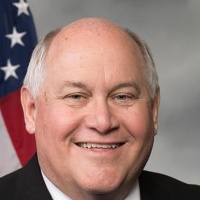
This act amends the tax code to give businesses the option to immediately deduct or amortize (spread out over at least five years) their research and experimental expenditures.
Ron Estes
Representative
KS
Ron Estes
Representative
KS
The American Innovation and R&D Competitiveness Act of 2025 revises how businesses treat research and experimental (R&E) expenditures for tax purposes. Taxpayers can now choose between immediately deducting R&E costs or amortizing them over a period of at least 60 months. This legislation also makes technical adjustments to ensure consistency between immediate deductions and claiming the research tax credit.
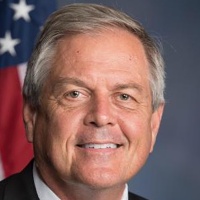
This bill disapproves the Bureau of Consumer Financial Protection's rule prohibiting creditors and consumer reporting agencies from using medical information.
Ralph Norman
Representative
SC
Ralph Norman
Representative
SC
This bill disapproves a recent rule issued by the Bureau of Consumer Financial Protection (BCFP) concerning the use of medical information by creditors and consumer reporting agencies. Utilizing the Congressional Review Act, Congress nullifies this specific BCFP regulation. Consequently, the rejected rule will have no legal effect.
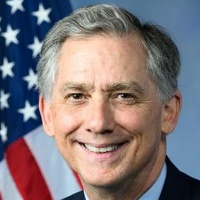
Nullifies the Consumer Financial Protection Bureau's rule on overdraft lending practices of large financial institutions.
J. Hill
Representative
AR
J. Hill
Representative
AR
This bill disapproves and invalidates the Consumer Financial Protection Bureau's rule regarding overdraft lending practices of very large financial institutions. The rule, found in the Federal Register, is nullified by this disapproval.
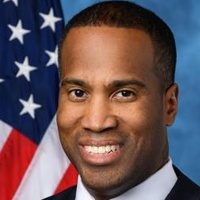
This resolution expresses support for designating March 6, 2025, as "Great Lakes Day" to recognize the region's vital environmental, economic, and cultural importance while committing to its ongoing protection.
John James
Representative
MI
John James
Representative
MI
This resolution expresses support for designating March 6, 2025, as "Great Lakes Day" to recognize the region's vital importance to the environment, economy, and public health of the United States. It highlights the Great Lakes' role as a critical source of fresh water and commerce while reaffirming a commitment to their ongoing protection and restoration. Additionally, the bill designates Lake St. Clair as the "Heart of the Great Lakes" and calls for accelerated efforts to preserve these essential natural resources.
This resolution expresses formal condolences to the families and loved ones of the 67 victims of the January 2025 collision between American Eagle Flight 5342 and a U.S. Army flight, while honoring the victims and commending the first responders.
Ron Estes
Representative
KS
Ron Estes
Representative
KS
This resolution expresses the House of Representatives' deepest condolences to the families and loved ones of the 67 individuals who lost their lives in the January 29, 2025, collision of American Eagle Flight 5342 and a U.S. Army flight. It honors the victims, many of whom had strong ties to Wichita, Kansas, and commends the heroic efforts of the first responders and emergency personnel who managed the recovery.
The "PLUS for Veterans Act of 2025" aims to protect veterans by clarifying who can assist with VA claims, regulating fees charged by agents and attorneys, and reinstating penalties for unauthorized charges.
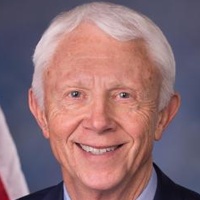
Jack Bergman
Representative
MI
Jack Bergman
Representative
MI
The PLUS for Veterans Act of 2025 aims to protect veterans by clarifying who can assist with VA claims, reinstating penalties for charging unauthorized fees, and ensuring fair representation. It requires agents and attorneys to apply for recognition, limits fees for initial claims, and mandates transparency regarding free services available to veterans. The Act also overrides conflicting state laws to ensure consistent enforcement of these protections.
To award a Congressional Gold Medal to the 761st Tank Battalion, the first Black soldiers to serve in an American armored unit, for their valor and crucial contributions to the Allied victory in Europe.
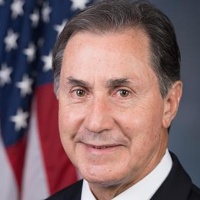
Gary Palmer
Representative
AL
Gary Palmer
Representative
AL
This bill authorizes the Speaker of the House and the President pro tempore of the Senate to award a Congressional Gold Medal to the 761st Tank Battalion, also known as the "Black Panthers," in recognition of their courageous service and crucial contributions during World War II. The medal will be given to the National Museum of African American History and Culture for display, honoring the 761st as the first Black soldiers to serve in an American armored unit and their significant role in the Allied victory in Europe. The bill also allows for the creation and sale of bronze duplicates of the medal to support the United States Mint Public Enterprise Fund.
The "Supporting Farm Operations Act of 2025" freezes wage rates for H-2A nonimmigrant workers at 2023 levels through 2026 and clarifies job classification for wage determination.

John Moolenaar
Representative
MI
John Moolenaar
Representative
MI
The "Supporting Farm Operations Act of 2025" freezes the wage rate for H-2A nonimmigrant workers at the level it was on December 31, 2023, through December 31, 2026. Additionally, the bill directs the Secretary of Labor to use a primary duties evaluation when deciding the required wage for employees who perform multiple duties or tasks.
The "Access Technology Affordability Act of 2025" creates a tax credit of up to $2,000 every three years for blind individuals who purchase qualified access technology.
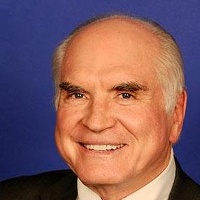
Mike Kelly
Representative
PA
Mike Kelly
Representative
PA
The "Access Technology Affordability Act of 2025" introduces a tax credit for blind individuals who purchase qualified access technology, such as hardware or software that converts visual information into accessible formats. The credit is capped at $2,000 per blind individual over any three consecutive tax years and will be adjusted for inflation after 2026. This credit is effective for tax years starting after December 31, 2025, and expires after December 31, 2030. It ensures that individuals cannot claim double benefits for the same expenses.
This bill equalizes the negotiation period for drug price negotiations under the Drug Price Negotiation Program by extending the period for small-molecule drugs from 7 years to 11 years, matching that of biologic drugs.
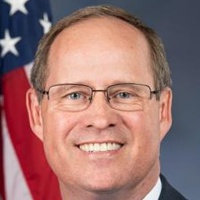
Gregory Murphy
Representative
NC
Gregory Murphy
Representative
NC
This bill amends the Social Security Act to equalize the negotiation period for drug price negotiations under the Drug Price Negotiation Program. It changes the negotiation period for small-molecule drugs from 7 years to 11 years, matching the period already in place for biologic drugs. This adjustment aims to create parity in negotiation timelines between different types of medications, effective as if included in the original legislation.
This bill authorizes the creation of a Congressional Gold Medal to honor the volunteers and communities involved with the North Platte Canteen during World War II.

Adrian Smith
Representative
NE
Adrian Smith
Representative
NE
The North Platte Canteen Congressional Gold Medal Act recognizes and honors the volunteers and donors of the North Platte Canteen in Nebraska during World War II with a Congressional Gold Medal. This medal will be presented by the Speaker of the House and the President pro tempore of the Senate, and then displayed at the Lincoln County Historical Museum. The Act also authorizes the creation and sale of bronze duplicates of the gold medal to cover production costs, with proceeds deposited into the Mint's Public Enterprise Fund.
This bill mandates payment and performance security for construction projects receiving federal water infrastructure funding, ensuring subcontractors are paid and projects are completed.
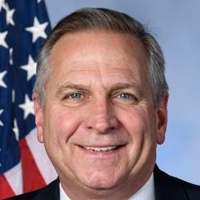
Mike Bost
Representative
IL
Mike Bost
Representative
IL
The Water Infrastructure Subcontractor and Taxpayer Protection Act of 2025 amends the Water Infrastructure Finance and Innovation Act of 2014 to ensure payment and performance security for construction projects receiving federal assistance. It allows the Secretary of Transportation or the Administrator to consider state or local laws mandating payment and performance security as fulfilling this requirement if they cover at least 50% of the construction contract. If state or local laws don't apply or meet the 50% threshold, adherence to federal bond requirements under 40 U.S.C. 3131(b)(1) and (2) is required.
The Susan Muffley Act of 2025 ensures full pension benefits for eligible participants and beneficiaries under specific terminated pension plans, recalculating benefits, providing lump-sum payments for past-due amounts, and establishing a trust fund to cover increased benefit payments.
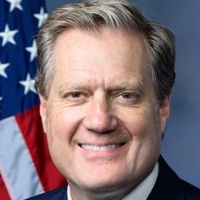
Michael Turner
Representative
OH
Michael Turner
Representative
OH
The Susan Muffley Act of 2025 ensures that eligible participants and beneficiaries under specific pension plans, like the Delphi and PHI retirement programs, receive their full vested benefits. It directs the Pension Benefit Guaranty Corporation (PBGC) to recalculate benefits, provide lump-sum payments for past-due amounts with interest, and establishes a trust fund within the Treasury to cover these increased payments. The act also includes provisions for the tax treatment of lump-sum payments, allowing recipients to spread the income over three years unless they elect otherwise.
This resolution expresses Congressional opposition to imposing new performance fees or royalties on local radio stations and businesses for broadcasting or playing music.
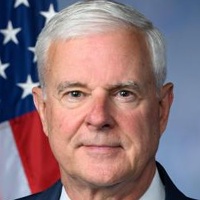
Steve Womack
Representative
AR
Steve Womack
Representative
AR
The Local Radio Freedom Act expresses Congressional opposition to imposing new performance fees, taxes, or royalties on local radio stations and businesses for playing music. It argues that the current system of free airplay provides essential promotional value to artists and that new fees would threaten the financial viability of local broadcasters and the vital community services they provide.
The "National Plan for Epilepsy Act" aims to create a comprehensive national strategy to improve epilepsy prevention, diagnosis, treatment, and research through coordinated federal efforts and an advisory council.

Jim Costa
Representative
CA
Jim Costa
Representative
CA
The "National Plan for Epilepsy Act" aims to address the significant impact of epilepsy by establishing a comprehensive national plan for its prevention, diagnosis, treatment, and cure. This act mandates the creation of an Advisory Council on Epilepsy Research, Care, and Services, composed of federal and non-federal experts, to evaluate and improve federally funded epilepsy efforts. The council will provide recommendations to enhance coordination, diagnosis, treatment, research, and public awareness, and reduce the financial burden of epilepsy on families. Ultimately, the act seeks to improve the lives of individuals with epilepsy and their caregivers through coordinated research, improved access to care, and enhanced public awareness.
This bill extends the beneficial ownership information reporting deadline for pre-existing small businesses to January 1, 2026, to reduce their administrative burden.
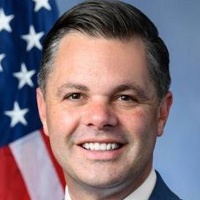
Zachary (Zach) Nunn
Representative
IA
Zachary (Zach) Nunn
Representative
IA
The Protect Small Businesses from Excessive Paperwork Act of 2025 provides regulatory relief by extending the filing deadline for beneficial ownership information reports. Under this legislation, companies formed before January 1, 2024, now have until January 1, 2026, to comply with Corporate Transparency Act requirements.
The Credit Union Board Modernization Act updates federal requirements to allow credit unions to determine board meeting frequency based on their age and financial performance ratings.
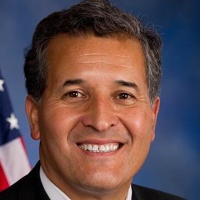
Juan Vargas
Representative
CA
Juan Vargas
Representative
CA
The Credit Union Board Modernization Act updates federal requirements for board of directors meetings, moving away from a mandatory monthly schedule. Under this bill, meeting frequency will be determined by a credit union’s age and its financial performance ratings, allowing high-performing institutions greater operational flexibility while maintaining oversight for newer or lower-rated credit unions.