Legislative Activity
Track Craig's sponsored bills, co-sponsored legislation, and voting record
Prohibits U.S. funding to UNRWA and requires a report on past funding.
Ronny Jackson
Representative
TX
Ronny Jackson
Representative
TX
The "Uncovering UNRWA's Terrorist Crimes Act" mandates a report from the Secretary of State detailing US funding to UNRWA from 2020-2024 and how those funds were spent. The act also prohibits any further direct or indirect federal funding to UNRWA upon enactment.
The Freight RAILCAR Act of 2025 incentivizes freight railcar modernization by establishing a tax credit for qualified newly built replacement railcars and qualified railcar modernization expenditures.
Darin LaHood
Representative
IL
Darin LaHood
Representative
IL
The "Freight RAILCAR Act of 2025" introduces a tax credit for modernizing freight railcars, encouraging investments in newer, more efficient railcars. Taxpayers can claim a credit equal to 10% of their freight railcar fleet modernization expenses, with a limit of 1,000 qualified freight railcars per year. The credit applies to railcars that increase capacity, improve fuel efficiency, or meet updated performance standards, and is available for three years after the Act's enactment. The Secretary of the Treasury is required to submit a report to Congress detailing the credit's usage and impact on railcar modernization and scrapping.
This bill transfers the functions, assets, and responsibilities of the Food for Peace Act from the U.S. Agency for International Development to the Department of Agriculture.
Tracey Mann
Representative
KS
Tracey Mann
Representative
KS
This bill transfers the functions, assets, and responsibilities for implementing the Food for Peace Act from the U.S. Agency for International Development (USAID) to the Department of Agriculture (USDA). The Secretary of Agriculture will now administer the program, though the Famine Early Warning Systems Network will remain under USDA control. This change allows the USDA to quickly update necessary rules to ensure a smooth transition of the program.
This bill seeks to reimburse the State of Texas for expenses incurred while securing the southern border between 2021 and 2025 due to the Federal Government's lack of action.
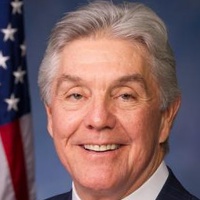
Roger Williams
Representative
TX
Roger Williams
Representative
TX
The "Operation Lone Star Reimbursement Act" seeks to reimburse the State of Texas for the $11.1 billion in expenses incurred for securing the southern border between 2021 and 2025 due to the Federal Government's lack of action. The Governor of Texas must apply for reimbursement from the Department of Homeland Security and the Treasury, including a detailed list of expenses. The Secretary of Homeland Security will review the application and determine eligible expenses, and the Treasury Secretary will then pay Texas the reimbursable amount from unallocated funds.
This bill prohibits the President from declaring a moratorium on hydraulic fracturing without explicit Congressional authorization and affirms state authority over oil and gas regulation.
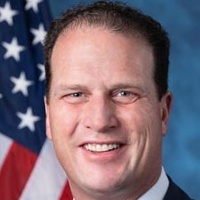
August Pfluger
Representative
TX
August Pfluger
Representative
TX
The Protecting American Energy Production Act prohibits the President from declaring a moratorium on hydraulic fracturing without explicit authorization from Congress. Additionally, the bill affirms that states should maintain primary regulatory authority over hydraulic fracturing activities on state and private lands.
This joint resolution seeks to disapprove and nullify the Environmental Protection Agency’s rule regarding the phasedown and management of hydrofluorocarbons.
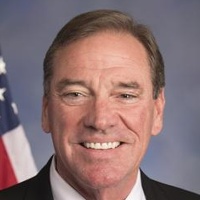
Neal Dunn
Representative
FL
Neal Dunn
Representative
FL
This joint resolution seeks to invoke the Congressional Review Act to disapprove and nullify the Environmental Protection Agency’s recent rule regarding the phasedown and management of hydrofluorocarbons. If enacted, the rule would have no force or effect, effectively blocking the EPA's regulatory framework for these substances.
The "LOCAL Act" codifies the Bureau of Land Management headquarters in Grand Junction, Colorado, mandates a study on relocating additional BLM positions to western states, and aims to improve federal land management and community coordination.
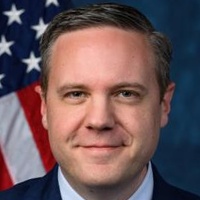
Jeff Hurd
Representative
CO
Jeff Hurd
Representative
CO
The LOCAL Act mandates the Bureau of Land Management headquarters be located in Grand Junction, Colorado. It requires a study on the feasibility of relocating additional BLM employee positions to Grand Junction or another western state. The study will assess the potential benefits of relocation on federal land management, community coordination, and various land uses. A report on the study's findings must be submitted to the House and Senate Committees on Natural Resources and Energy and Natural Resources within 365 days.
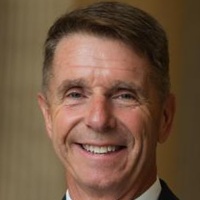
The "Freedom to Invest in Tomorrow's Workforce Act" expands the use of 529 savings accounts to cover expenses related to postsecondary credentialing programs, including tuition, fees, books, supplies, equipment, and testing fees.
Robert Wittman
Representative
VA
Robert Wittman
Representative
VA
The "Freedom to Invest in Tomorrow's Workforce Act" amends Section 529 savings accounts to include expenses related to postsecondary credentialing programs. This allows 529 funds to cover costs like tuition, fees, books, supplies, and testing fees for recognized programs and credentials, as defined by the bill. These changes would apply to distributions made after the bill is enacted.
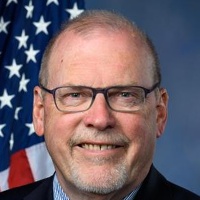
The HALT Fentanyl Act permanently classifies fentanyl-related substances as Schedule I controlled substances while streamlining registration procedures for legitimate scientific research.
H. Griffith
Representative
VA
H. Griffith
Representative
VA
The Halt All Lethal Trafficking of Fentanyl (HALT Fentanyl) Act permanently classifies fentanyl-related substances as Schedule I controlled substances to strengthen enforcement and penalties against their trafficking. Additionally, the bill streamlines registration processes for researchers to facilitate legitimate scientific study of these substances. It also includes technical corrections and mandates updated federal rulemaking to ensure effective implementation.
The "Amateur Radio Emergency Preparedness Act" protects amateur radio operators' ability to install and use antennas on their property for emergency communications by limiting private land use restrictions, while still allowing for reasonable regulations.
August Pfluger
Representative
TX
August Pfluger
Representative
TX
The "Amateur Radio Emergency Preparedness Act" aims to protect amateur radio operators' ability to install and use antennas on their property, despite private land use restrictions that may otherwise prohibit or impair such installations. It allows for reasonable restrictions based on safety and aesthetics, while limiting prior approval requirements and offering legal recourse for violations. The Act seeks to balance community interests with the need for effective emergency communication capabilities provided by amateur radio operators. The FCC is required to issue regulations to implement the act within 180 days of enactment.
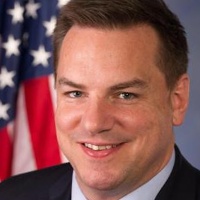
The Love Lives On Act of 2025 ensures that surviving spouses of veterans and service members retain their earned dependency compensation, survivor benefits, and TRICARE eligibility regardless of remarriage.
Richard Hudson
Representative
NC
Richard Hudson
Representative
NC
The Love Lives On Act of 2025 ensures that surviving spouses of veterans and service members retain their earned benefits, including dependency and indemnity compensation, educational assistance, and Survivor Benefit Plan annuities, regardless of remarriage. Additionally, the bill expands TRICARE eligibility to include widows and widowers whose subsequent marriages have ended. This legislation protects the financial security and healthcare access of surviving families by removing penalties associated with remarriage.
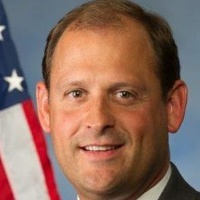
The Fair Access to Banking Act prohibits large financial institutions and payment networks from denying services to law-abiding businesses based on subjective, non-financial, or political criteria.
Garland Barr
Representative
KY
Garland Barr
Representative
KY
The Fair Access to Banking Act prohibits large financial institutions and payment networks from denying services to law-abiding businesses based on subjective, politically motivated, or reputational criteria. The bill mandates that financial institutions use impartial, quantitative, risk-based standards to evaluate customers rather than category-based exclusions. To ensure compliance, the legislation establishes enforcement mechanisms through federal regulators and provides a legal pathway for businesses to sue for damages if they are unfairly denied access to financial services.
This bill directs the Department of Education to consider the International Holocaust Remembrance Alliance's definition of antisemitism when evaluating discrimination complaints under Title VI of the Civil Rights Act of 1964, while also protecting First Amendment rights.
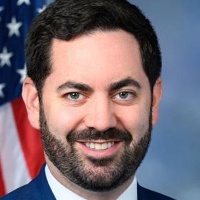
Michael Lawler
Representative
NY
Michael Lawler
Representative
NY
The Antisemitism Awareness Act of 2025 requires the Department of Education to consider the International Holocaust Remembrance Alliance's definition of antisemitism when evaluating discrimination complaints under Title VI of the Civil Rights Act of 1964, concerning race, color, and national origin. This aims to address rising antisemitism in educational settings. The Act clarifies that it does not expand the Department of Education's authority, change existing discrimination standards, reduce existing rights, or infringe upon First Amendment rights.
The Dismantle DEI Act of 2025 immediately rescinds federal diversity, equity, and inclusion (DEI) mandates across executive offices, contracting, grants, and education, while banning related training and imposing penalties for non-compliance.
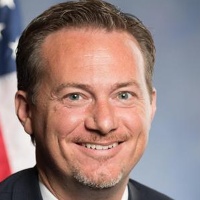
Michael Cloud
Representative
TX
Michael Cloud
Representative
TX
The Dismantle DEI Act of 2025 aims to immediately rescind diversity, equity, and inclusion (DEI) mandates across the federal government, including shutting down related offices and banning specific ideological training for federal personnel and contractors. The bill prohibits the use of federal funds for DEI activities by grant recipients and mandates that federal advisory committees cease all such practices or face termination. Furthermore, it establishes strong enforcement mechanisms, allowing individuals to sue violators and seek financial penalties for non-compliance.
This resolution disapproves and nullifies the Federal Communications Commission’s rule aimed at expanding the E-Rate program to provide home internet access for students.
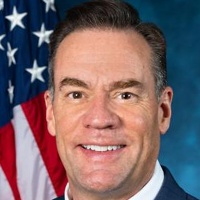
Russ Fulcher
Representative
ID
Russ Fulcher
Representative
ID
This resolution exercises congressional authority to overturn a recent Federal Communications Commission (FCC) rule regarding the E-Rate program. If passed, the resolution would nullify the FCC’s plan to expand E-Rate funding to provide home internet access for students, rendering the rule void and without legal effect.
This bill prohibits state and local jurisdictions from employing non-U.S. citizens to administer federal elections.
August Pfluger
Representative
TX
August Pfluger
Representative
TX
The "No Foreign Persons Administering Our Elections Act" prohibits state and local jurisdictions from hiring non-U.S. citizens to administer federal elections. This legislation ensures that only U.S. citizens are responsible for the management and oversight of the federal electoral process.
This bill proposes a constitutional amendment to prohibit non-citizens from voting in any federal, state, tribal, or local election in the United States, granting Congress the power to enforce this amendment.
August Pfluger
Representative
TX
August Pfluger
Representative
TX
This bill proposes a constitutional amendment to prohibit non-citizens from voting in any federal, state, tribal, or local election in the United States. It grants Congress the authority to enforce this amendment. For the amendment to be valid, it must be ratified by three-fourths of the state legislatures within seven years of its submission.
This bill provides a 6.62 percent Medicare payment increase for physicians and practitioners from April through December 2025 to help stabilize medical practices.
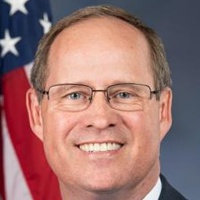
Gregory Murphy
Representative
NC
Gregory Murphy
Representative
NC
The Medicare Patient Access and Practice Stabilization Act of 2025 aims to support healthcare providers by extending Medicare payment adjustments through the end of 2025. Specifically, the bill provides a 6.62 percent payment increase for services rendered between April 1, 2025, and December 31, 2025, to help practitioners adjust to evolving Medicare payment policies.
This bill recognizes the significant contributions of tax-exempt fraternal benefit societies to communities across the United States through charitable activities, volunteer work, and financial support for their members, and expresses Congressional support for their continued promotion.
Darin LaHood
Representative
IL
Darin LaHood
Representative
IL
This bill recognizes the significant historical and ongoing contributions of tax-exempt fraternal benefit societies to communities across the United States through charitable activities, volunteer work, and financial support for members. It expresses the sense of Congress that these societies are a valuable support system that addresses unmet needs and generates substantial returns to the U.S. through their tax-exempt status. The bill also advocates for the continued promotion of fraternal benefit societies.
The Born-Alive Abortion Survivors Protection Act requires health care practitioners to provide the same level of care to infants born alive after an abortion attempt as they would to any other newborn, mandating immediate hospitalization and imposing penalties for violations, while protecting the mother from prosecution. It also allows the mother of a child born alive to file a civil action against anyone who violated the act.
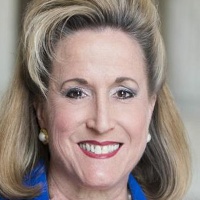
Ann Wagner
Representative
MO
Ann Wagner
Representative
MO
The "Born-Alive Abortion Survivors Protection Act" ensures that infants born alive after an abortion receive the same medical care as any other newborn, mandating immediate hospitalization and requiring healthcare practitioners to report any failures to comply. Violators face fines, imprisonment, and potential prosecution for homicide or attempted homicide, while the mother of the child cannot be prosecuted. The bill also allows the woman who had the abortion to file a civil action against anyone who violated the act. It defines abortion and attempts at abortion, and renames "Partial-Birth Abortions" to "Abortions" in relevant sections of the U.S. Code.