
Legislative Activity
Track Dan's sponsored bills, co-sponsored legislation, and voting record
This bill strengthens the Department of Homeland Security’s Office for Civil Rights and Civil Liberties by formalizing its authority, expanding its oversight and investigative powers, and mandating greater transparency and accountability in protecting civil rights across the Department.
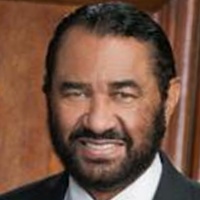
Al Green
Representative
TX
Al Green
Representative
TX
The Department of Homeland Security Office for Civil Rights and Civil Liberties Authorization Act strengthens the oversight and authority of the Office for Civil Rights and Civil Liberties. This legislation ensures the Office has the necessary resources, access, and independence to integrate civil rights protections into all Department policies, investigate potential abuses, and provide transparent reporting to Congress and the public.
The Community Housing Act of 2026 provides comprehensive federal funding and policy reforms to expand the national housing supply, increase affordable rental options, and support pathways to homeownership for low-income and rural families.
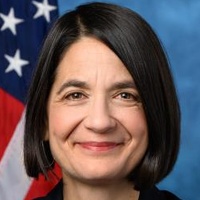
Becca Balint
Representative
VT
Becca Balint
Representative
VT
The Community Housing Act of 2026 is a comprehensive legislative package designed to increase the nation’s housing supply and improve long-term affordability. The bill provides billions in federal funding for affordable housing construction, incentivizes local zoning reform, and expands support for rural homeownership and tenant protections. By streamlining financing and removing regulatory barriers, the act aims to create more housing options for low- and middle-income families across the country.
This Act prohibits the executive branch from indefinitely suspending the entire Diversity Visa Program, requiring transparency and congressional notification for any narrower, temporary limitations.
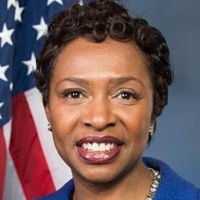
Yvette Clarke
Representative
NY
Yvette Clarke
Representative
NY
This bill, the Diversity Visa Protection and Modernization Act, aims to prevent the executive branch from indefinitely or broadly suspending the Diversity Immigrant Visa Program. It reaffirms that only Congress can halt the entire program, while allowing for narrowly tailored, temporary, or country-specific restrictions under strict transparency and notification requirements. The Act protects eligible visa selectees from losing their opportunities due to unexplained administrative pauses.
This bill authorizes a single Congressional Gold Medal to honor the individuals who defended Bataan, Corregidor, and other Pacific locations during World War II.
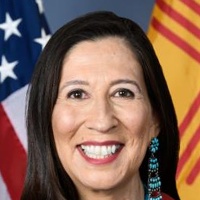
Teresa Leger Fernandez
Representative
NM
Teresa Leger Fernandez
Representative
NM
This bill authorizes the award of a single Congressional Gold Medal to recognize the collective heroism of the individuals who defended Bataan, Corregidor, and other locations in the Pacific theater during World War II. The medal honors the extraordinary sacrifice of U.S. service members and Filipino forces who fought and endured imprisonment by Imperial Japan. Following the presentation, the medal will be permanently displayed at the Smithsonian's National Museum of American History. The legislation also allows for the production and sale of bronze duplicate medals.
This bill restricts federal agencies from relocating to states with restrictive abortion laws, provides travel allowances and administrative leave for employees seeking out-of-state reproductive care, and protects employees' privacy regarding such care in security clearance and personnel decisions.
James Walkinshaw
Representative
VA
James Walkinshaw
Representative
VA
The Federal Workforce Reproductive Rights Protection Act restricts federal agencies from relocating operations to states with restrictive abortion laws. It also provides federal employees with travel allowances and administrative leave to access out-of-state reproductive healthcare services. Furthermore, the bill prohibits using reproductive health decisions as a factor in security clearance determinations or other personnel actions.
The LIFT the BAR Act restores federal public benefit eligibility, including SNAP, Medicaid, and housing assistance, for many lawfully present noncitizens by repealing restrictions from the 1996 welfare law and updating terminology.
Pramila Jayapal
Representative
WA
Pramila Jayapal
Representative
WA
The LIFT the BAR Act repeals decades-old restrictions that barred many lawfully present noncitizens from accessing essential federal public benefits. This legislation restores eligibility for programs like SNAP, Medicaid, CHIP, and housing assistance for qualified noncitizens. The bill also updates terminology, replacing "alien" with "noncitizen" throughout relevant statutes.
This Act establishes a moratorium on the construction and upgrading of new artificial intelligence data centers until Congress passes legislation ensuring AI safety, equitable economic benefits, and community approval, while also imposing export controls on related computing hardware.
Alexandria Ocasio-Cortez
Representative
NY
Alexandria Ocasio-Cortez
Representative
NY
This Act imposes an immediate moratorium on the construction and upgrading of new or existing large-scale Artificial Intelligence Data Centers. The pause will remain in effect until Congress passes legislation that mandates federal safety reviews for AI products and ensures the economic benefits of AI are shared broadly. Upon lifting the moratorium, any new or upgraded facilities must meet strict environmental, community approval, and labor standards.
This Act establishes a pilot program for a VA-run mental and behavioral health hotline connecting veterans' friends and family with licensed counselors for guidance and referrals.
Timothy Kennedy
Representative
NY
Timothy Kennedy
Representative
NY
The VA Coaching into Care Act establishes a three-year pilot program to operate a toll-free hotline connecting veterans' friends and family with licensed mental health counselors. Staffed by VA psychologists and social workers, the hotline will offer guidance on discussing mental health with veterans and provide appropriate referrals. The Secretary of Veterans Affairs must report on the program's success and recommend future continuation or expansion.
This bill directs the TSA to create guidelines to help incarcerated individuals prepare for and access the Transportation Worker Identification Credential (TWIC) program upon release to improve employment opportunities.
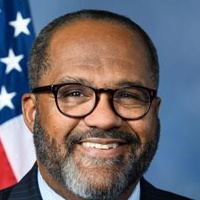
Troy Carter
Representative
LA
Troy Carter
Representative
LA
This bill directs the Transportation Security Administration (TSA) to develop guidelines to improve access to the Transportation Worker Identification Credential (TWIC) program for individuals currently in custody. Specifically, it mandates assistance for incarcerated individuals to pre-apply or prepare applications for TWIC cards before release. The goal is to reduce barriers to employment for returning citizens by streamlining the credentialing process.
This resolution urges Congress to take immediate action to restore and strengthen voting rights protections and consider structural reforms to the Senate and Supreme Court to safeguard American democracy.
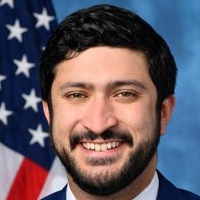
Gregorio Casar
Representative
TX
Gregorio Casar
Representative
TX
This resolution expresses the House's urgent call for Congress to restore and strengthen civil rights and fair political representation for all Americans. It specifically condemns recent Supreme Court decisions that have weakened the Voting Rights Act and enabled partisan gerrymandering. The bill asserts that Congress must act boldly, including considering Senate and Supreme Court reforms, to protect multiracial democracy.
The Latonya Reeves Freedom Act of 2026 strengthens the right of individuals eligible for long-term services and supports to live in the most integrated community setting possible, holding states and providers accountable for transitioning people out of institutions.
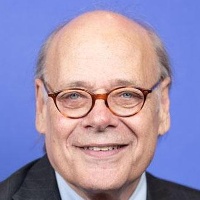
Steve Cohen
Representative
TN
Steve Cohen
Representative
TN
The Latonya Reeves Freedom Act of 2026 aims to strengthen the right of individuals eligible for long-term services and supports (LTSS) to live in the most integrated community setting possible. It prohibits discrimination by public entities and insurers against those who qualify for institutional placement but desire community-based services. The Act mandates comprehensive planning, self-evaluation, and enforcement mechanisms to speed up the transition of individuals out of institutions and ensure maximum control over their supports.
This bill authorizes a Congressional Gold Medal to honor the Americans who rescued and aided Jews and other refugees during the Holocaust.
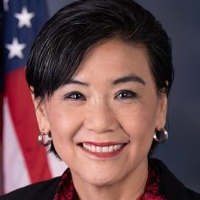
Judy Chu
Representative
CA
Judy Chu
Representative
CA
This bill authorizes the award of a single Congressional Gold Medal to honor the American citizens and organizations who rescued Jews and other refugees from Nazi persecution between 1933 and 1945. The medal recognizes their heroic efforts, which saved tens of thousands of lives during the Holocaust. Following the award, the gold medal will be permanently housed at the United States Holocaust Memorial Museum. The Act also permits the production and sale of duplicate bronze medals to cover production costs.
This bill mandates the creation of an online detainee locator system by DHS, requires notification for medical transfers, and increases public reporting on CBP arrests and enforcement operations.
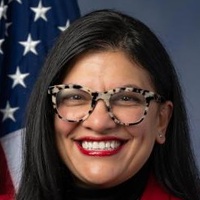
Rashida Tlaib
Representative
MI
Rashida Tlaib
Representative
MI
This bill, the "Find Our Families Act of 2026," mandates the creation of a public, online detainee locator system for individuals in CBP and ICE custody, accessible in multiple languages. It requires timely posting of custody and location information, along with new notification requirements for medical transfers to family members. Additionally, the bill requires the public reporting of detailed information regarding CBP arrests and ongoing enforcement operations.
This bill, the "Protect Local Funding Act," prohibits the finalization, implementation, or enforcement of the proposed "Regulation for Federal Financial Assistance" rule published on May 29, 2026, or any substantially similar rule.
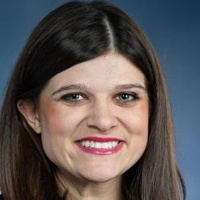
Haley Stevens
Representative
MI
Haley Stevens
Representative
MI
This bill, the "Protect Local Funding Act," prohibits the finalization, implementation, or enforcement of the proposed "Regulation for Federal Financial Assistance" published on May 29, 2026, or any substantially similar rule. It prevents federal agencies from enacting this specific regulation concerning federal financial assistance.
This bill significantly strengthens child labor protections under federal law by expanding definitions of oppressive labor, increasing penalties, enhancing supply chain accountability, and imposing new requirements on federal contractors.
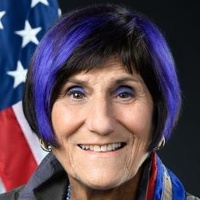
Rosa DeLauro
Representative
CT
Rosa DeLauro
Representative
CT
The CHILD Labor Act significantly strengthens protections against child labor by expanding the definition of oppressive child labor and requiring updated regulations for hazardous work under the Fair Labor Standards Act. It enhances enforcement through supply chain accountability, extended "hot goods" restrictions, liability for successor businesses, and increased civil and criminal penalties for violations. Furthermore, the Act imposes strict child labor requirements on federal contractors and recipients of federal financial assistance.
This Act establishes the United States-Abraham Accords Defense Cooperation Initiative to enhance military collaboration among the U.S. and Abraham Accords countries to deter Iranian aggression.
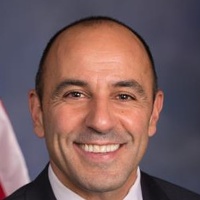
Jimmy Panetta
Representative
CA
Jimmy Panetta
Representative
CA
This Act establishes the United States-Abraham Accords Defense Cooperation Initiative to enhance military collaboration between the U.S. and Abraham Accords nations. The initiative focuses on deterring Iranian aggression and improving regional defense capabilities, such as air defense and intelligence sharing. The Secretary of Defense is required to develop a strategy and report funding needs to Congress.
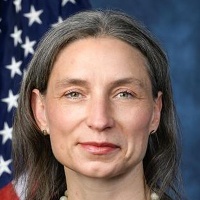
This Act establishes warrant requirements for the arrest of unaccompanied minors away from the border, prohibits military transport for immigration enforcement, and ensures children have the right to legal consultation before signing documents affecting their immigration status.
Maxine Dexter
Representative
OR
Maxine Dexter
Representative
OR
The Dignity and Due Process for Children Act of 2026 establishes new protections for unaccompanied alien children encountered in the U.S. It mandates a judicial warrant for the arrest or detention of these children away from the border and prohibits the use of military assets for immigration enforcement, except during natural disasters. Furthermore, the bill ensures children cannot be coerced into signing legal documents affecting their status without first having a confidential consultation with a lawyer.
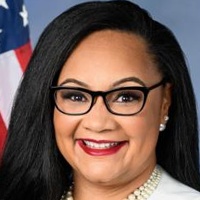
The PRIDE Act of 2026 expands federal diversity and inclusion requirements within financial agencies to explicitly include LGBTQI individuals and LGBTQI-owned businesses by renaming and updating the Office of Minority and Women Inclusion.
Nikema Williams
Representative
GA
Nikema Williams
Representative
GA
The PRIDE Act of 2026 officially renames the Offices of Minority and Women Inclusion at certain federal financial agencies to the Office of Minority, Women, and LGBTQI Inclusion. This expansion explicitly incorporates LGBTQI individuals and LGBTQI-owned businesses into existing diversity, inclusion, and contracting requirements. The bill adds specific definitions for "LGBTQI" and "LGBTQI-owned business" across relevant statutes.
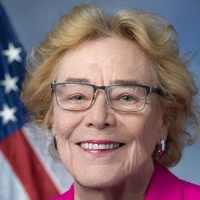
This Act guarantees government-funded legal counsel for unaccompanied children in immigration proceedings and expands document access for all noncitizens facing removal.
Zoe Lofgren
Representative
CA
Zoe Lofgren
Representative
CA
The Fair Day in Court for Kids Act of 2026 aims to improve fairness and efficiency in immigration proceedings by expanding access to legal information and counsel. The bill specifically guarantees government-funded legal representation for all unaccompanied children throughout their immigration proceedings. It also mandates timely access to case files for all noncitizens and requires the establishment of pro bono representation systems for children.
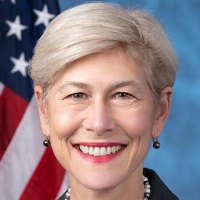
This bill protects independent music creators by allowing them to collectively negotiate fair licensing terms with dominant online music platforms and generative AI companies without facing antitrust liability.
Deborah Ross
Representative
NC
Deborah Ross
Representative
NC
The Protect Working Musicians Act of 2026 addresses the imbalance of power between dominant online music platforms and independent music creators. This bill grants independent music copyright owners the ability to collectively negotiate licensing terms without facing antitrust liability. This protection is designed to ensure fair compensation for musicians whose work is distributed online or used by generative AI.