Legislative Activity
Track Andrew's sponsored bills, co-sponsored legislation, and voting record
This bill mandates the SEC to establish data protection policies for sensitive information received from investment advisers.
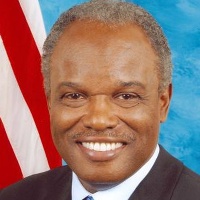
David Scott
Representative
GA
David Scott
Representative
GA
This bill, the "SEC Data Protection Act," mandates that the Securities and Exchange Commission (SEC) establish comprehensive data protection policies for sensitive, nonpublic information received from investment advisers. The SEC must adopt these rules within one year, ensuring the safeguarding and restricted access of proprietary data. This legislation aims to protect sensitive information collected by the Commission during its oversight of investment advisers.
This bill establishes an interagency task force, co-chaired by CISA and the FBI, to combat cybersecurity threats to U.S. critical infrastructure from state-sponsored actors of the People's Republic of China, including Volt Typhoon.
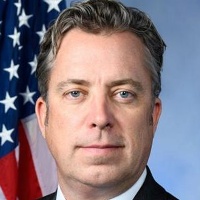
Andrew Ogles
Representative
TN
Andrew Ogles
Representative
TN
This Act establishes an interagency task force, co-chaired by CISA and the FBI, to detect, analyze, and respond to cybersecurity threats against U.S. critical infrastructure from state-sponsored actors of the People's Republic of China, including Volt Typhoon. The task force is required to submit detailed reports, including classified assessments of potential disruption during a major crisis, to Congress. These reports will also offer recommendations for improving detection and mitigation efforts across federal agencies and critical infrastructure sectors.
The PILLAR Act reauthorizes and modifies the CISA State and Local Cybersecurity Grant Program, expanding its scope to include operational technology and AI systems, and updating funding and oversight requirements through 2033.
Andrew Ogles
Representative
TN
Andrew Ogles
Representative
TN
The PILLAR Act reauthorizes and modifies the CISA State and Local Cybersecurity Grant Program through 2033. This legislation expands the program's focus to explicitly include operational technology and artificial intelligence systems in cybersecurity planning. It also updates definitions, adjusts federal cost-sharing requirements, and restricts grant use for technology from foreign entities of concern.
This resolution honors the service and sacrifice of America's veterans and reaffirms the nation's commitment to supporting them and their families.
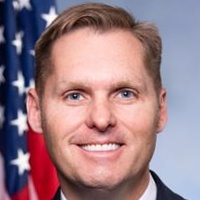
Michael Guest
Representative
MS
Michael Guest
Representative
MS
This resolution honors the service and sacrifice of America's veterans on Veterans Day, 2025, recognizing the history of the observance from Armistice Day. It affirms the nation's deep commitment to supporting the over 15 million veterans and their families. The resolution calls upon the public to observe Veterans Day and ensure veterans continue to receive the services they deserve.
This resolution urges the people of the United States to observe the month of October 2025 as Italian and Italian American Heritage Month to honor their significant contributions and rich culture.
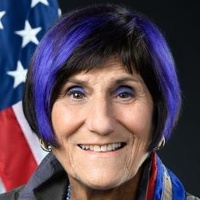
Rosa DeLauro
Representative
CT
Rosa DeLauro
Representative
CT
This resolution urges the people of the United States to observe October 2025 as Italian and Italian American Heritage Month. It seeks to honor the profound and diverse contributions made by Italian Americans throughout U.S. history and culture. The measure encourages appropriate ceremonies and activities to celebrate this rich heritage.
This resolution condemns the October 7th Hamas attacks, demands the immediate and unconditional surrender of Hamas and the release of all hostages, and reaffirms support for Israel's right to self-defense while condemning global antisemitism.
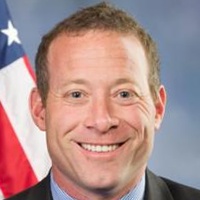
Josh Gottheimer
Representative
NJ
Josh Gottheimer
Representative
NJ
This resolution strongly condemns the brutal October 7th attacks by Hamas, demanding the immediate and unconditional surrender of the terrorist group and the release of all hostages, including Americans. It reaffirms Israel's right to self-defense while urging international action against Hamas and condemning the global surge in antisemitism. The measure serves as a formal statement of U.S. policy and support following the attacks.
This bill officially renames the Department of Veterans Affairs medical center in Northport, New York, as the Navy (SEAL) Lieutenant Michael P. Murphy VA Medical Center to honor his Medal of Honor service.
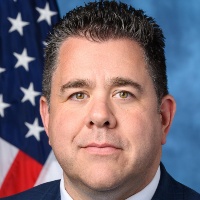
Nicolas LaLota
Representative
NY
Nicolas LaLota
Representative
NY
This bill officially renames the Department of Veterans Affairs medical center in Northport, New York, in honor of Navy SEAL Lieutenant Michael P. Murphy. The renaming recognizes his ultimate sacrifice and heroism during Operation Red Wings in Afghanistan, for which he was posthumously awarded the Medal of Honor. This designation will serve as a permanent tribute to his legacy of courage and service.
This bill officially renames the United States Postal Service facility at 240 Main Street in Northport, New York, as the "Coast Guard Petty Officer 3rd Class Nate Bruckenthal Post Office Building."
Nicolas LaLota
Representative
NY
Nicolas LaLota
Representative
NY
This bill officially renames the United States Postal Service facility at 240 Main Street in Northport, New York. The building will now be known as the "Coast Guard Petty Officer 3rd Class Nate Bruckenthal Post Office Building." This action ensures all official records reflect the new designation honoring Petty Officer Bruckenthal.
This bill officially designates the United States Postal Service facility at 47 Echo Avenue in Miller Place, New York, as the "Christopher Pendergast Post Office Building."
Nicolas LaLota
Representative
NY
Nicolas LaLota
Representative
NY
This bill officially designates the United States Postal Service facility located at 47 Echo Avenue in Miller Place, New York, as the "Christopher Pendergast Post Office Building." The legislation ensures that all official government records and documents reflect this new name for the location.
This bill officially renames the Department of Veterans Affairs clinic in Riverhead, New York, to the "Private First Class Garfield M. Langhorn VA Clinic" to honor his heroic sacrifice.
Nicolas LaLota
Representative
NY
Nicolas LaLota
Representative
NY
This bill officially renames the Department of Veterans Affairs clinic in Riverhead, New York, to honor a local hero. The facility will now be known as the "Private First Class Garfield M. Langhorn VA Clinic." This designation recognizes PFC Langhorn's extraordinary bravery and ultimate sacrifice while serving in Vietnam.
This bill officially designates the United States Postal Service facility at 170 Main Street in Westhampton Beach, New York, as the "Jolly 51 Memorial Post Office Building."
Nicolas LaLota
Representative
NY
Nicolas LaLota
Representative
NY
This bill officially renames the United States Postal Service facility at 170 Main Street in Westhampton Beach, New York. The building will henceforth be known as the "Jolly 51 Memorial Post Office Building." This designation ensures all federal references to the location use the new memorial name.
This resolution honors the life and legacy of Charles "Charlie" James Kirk, condemns his assassination as political violence, and calls for a renewed commitment to civil discourse and American founding principles.

Mike Johnson
Representative
LA
Mike Johnson
Representative
LA
This resolution honors the life and legacy of Charles "Charlie" James Kirk, founder of Turning Point USA. It strongly condemns his assassination as an act of political violence. The bill calls for a renewed national commitment to civil discourse and the founding principles of the United States.
This bill posthumously awards a Congressional Gold Medal to Welles Remy Crowther for his heroic actions during the September 11, 2001, attacks.
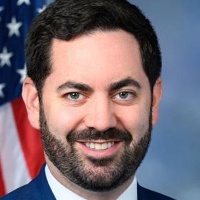
Michael Lawler
Representative
NY
Michael Lawler
Representative
NY
This bill, the Welles Remy Crowther Congressional Gold Medal Act, authorizes the posthumous presentation of a Congressional Gold Medal to Welles Remy Crowther for his extraordinary heroism and sacrifice during the September 11, 2001, attacks. The medal will be presented to his mother, Alison Crowther, on behalf of Congress. The Act also permits the creation and sale of bronze duplicates to cover production costs.
The SHINE for Autumn Act of 2025 establishes federal grants for states to improve stillbirth surveillance, data collection, and risk factor research while mandating the development of standardized educational guidelines on stillbirth.
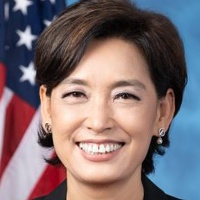
Young Kim
Representative
CA
Young Kim
Representative
CA
The SHINE for Autumn Act of 2025 aims to significantly improve federal support for state-level stillbirth research and data collection. It authorizes grants for states to enhance surveillance, track risk factors, and build local capacity for analyzing stillbirth data, provided the information remains de-identified. Furthermore, the bill mandates the development of standardized guidelines and educational materials regarding stillbirth awareness and risk factors, developed in consultation with experts and bereaved families.
This act eliminates federal income tax on overtime compensation earned by all workers.
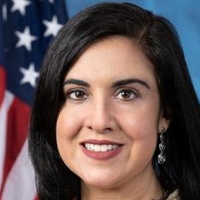
Nicole Malliotakis
Representative
NY
Nicole Malliotakis
Representative
NY
The No Tax on Overtime for All Workers Act amends the tax code to clarify and expand the definition of "qualified overtime compensation." This change ensures that overtime pay earned above a standard rate, whether mandated by the Fair Labor Standards Act or agreed upon beforehand with an employer, is treated favorably for tax purposes. The goal is to incentivize and reward workers for putting in extra hours.
This bill amends the Social Security Act to provide Medicare coverage for FDA-approved multi-cancer early detection screening tests starting in 2028.
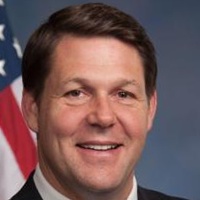
Jodey Arrington
Representative
TX
Jodey Arrington
Representative
TX
The Nancy Gardner Sewell Medicare Multi-Cancer Early Detection Screening Coverage Act amends the Social Security Act to provide Medicare Part B coverage for multi-cancer early detection screening tests starting January 1, 2028. This legislation establishes clear criteria for qualifying tests and outlines payment structures to ensure beneficiaries have access to these advanced diagnostic tools. Importantly, this coverage is designed to complement, rather than replace, existing Medicare-covered cancer screenings.
This bill establishes a six-year pilot program for selected hospitals to provide medically tailored, home-delivered meals and nutrition therapy to high-risk Medicare patients upon discharge to reduce hospital readmissions.
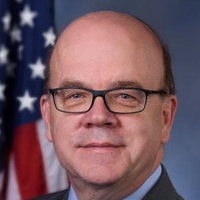
James McGovern
Representative
MA
James McGovern
Representative
MA
This bill establishes a six-year pilot program for hospitals to provide medically tailored, home-delivered meals and nutrition therapy to eligible Medicare patients upon discharge. The goal is to improve health outcomes and reduce hospital readmissions for individuals with diet-sensitive conditions who have difficulty with daily living activities. Participating hospitals will receive payment for these services, which must be provided at no out-of-pocket cost to the patient. The Secretary of Health and Human Services will evaluate the program's effectiveness using data collected from the participating sites.
This Act mandates that new passenger motor vehicles sold in the U.S. must include standard equipment capable of receiving AM broadcast radio signals.

Gus Bilirakis
Representative
FL
Gus Bilirakis
Representative
FL
The AM Radio for Every Vehicle Act of 2025 mandates that the Secretary of Transportation establish a rule requiring AM broadcast radio receivers to be installed as standard equipment in new passenger motor vehicles. This requirement aims to ensure public access to AM radio signals, which are often used for emergency alerts. The bill also directs a GAO study on the effectiveness of AM radio within the national emergency alert system compared to other technologies. Finally, the Act preempts state and local laws on this matter and includes a sunset provision eight years after enactment.
This Act ensures the automatic continuation of pay for active duty military personnel and essential civilian support staff if Congress fails to pass a budget for fiscal year 2026.
Jennifer Kiggans
Representative
VA
Jennifer Kiggans
Representative
VA
The Pay Our Troops Act of 2026 ensures that active duty military personnel and essential civilian support staff continue to receive their pay if Congress has not yet passed the full budget for fiscal year 2026. This act provides automatic continuing appropriations from the Treasury to prevent a lapse in military salaries due to budget delays. The funding automatically terminates once a new budget or continuing resolution is passed, or on January 1, 2027, whichever comes first.
This Act expands the federal funding share for the Bulletproof Vest Partnership Program from 50% to 60% and authorizes $60 million annually for the program through fiscal year 2030.
Chris Deluzio
Representative
PA
Chris Deluzio
Representative
PA
The Bipartisan Bulletproof Vest Partnership Program Expansion Act increases the federal share of grant funding for certain public safety activities from 50% to 60%. This change aims to reduce the financial burden on states for purchasing essential equipment. Additionally, the Act authorizes $60 million annually for this program from fiscal years 2026 through 2030.