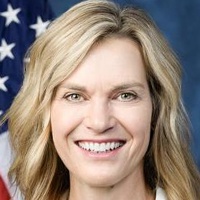
Legislative Activity
Track Julie's sponsored bills, co-sponsored legislation, and voting record
The ACRE Act of 2025 creates a federal tax exemption for qualified lenders on interest earned from loans secured by rural or agricultural real property, excluding loans to foreign adversary entities.
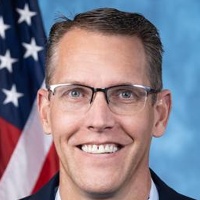
Randy Feenstra
Representative
IA
Randy Feenstra
Representative
IA
The Access to Credit for our Rural Economy Act of 2025 (ACRE Act) creates a new federal tax incentive for qualified lenders. This incentive excludes income earned from interest on loans secured by rural or agricultural real property from taxation. The goal is to encourage lending for agricultural, forestry, and certain rural home improvement purposes while prohibiting loans to foreign adversary entities.
The SECURE Notarization Act of 2025 authorizes and sets minimum standards for notary publics to perform electronic and remote notarizations for transactions affecting interstate commerce, while also requiring states and federal courts to recognize notarizations performed in other states.
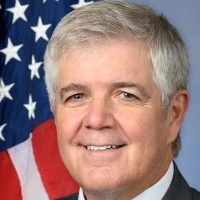
Cliff Bentz
Representative
OR
Cliff Bentz
Representative
OR
The SECURE Notarization Act of 2025 authorizes and sets minimum standards for notary publics to perform electronic and remote notarizations for transactions affecting interstate commerce. It requires recognition of notarizations across state lines and in federal courts, while also allowing states to set their own standards and requirements under certain conditions. The Act does not mandate notaries to perform electronic or remote notarizations and includes provisions to protect against fraud and false advertising.
To award a Congressional Gold Medal to the 761st Tank Battalion, the first Black soldiers to serve in an American armored unit, for their valor and crucial contributions to the Allied victory in Europe.
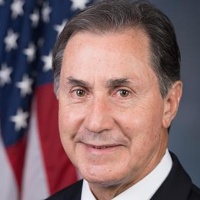
Gary Palmer
Representative
AL
Gary Palmer
Representative
AL
This bill authorizes the Speaker of the House and the President pro tempore of the Senate to award a Congressional Gold Medal to the 761st Tank Battalion, also known as the "Black Panthers," in recognition of their courageous service and crucial contributions during World War II. The medal will be given to the National Museum of African American History and Culture for display, honoring the 761st as the first Black soldiers to serve in an American armored unit and their significant role in the Allied victory in Europe. The bill also allows for the creation and sale of bronze duplicates of the medal to support the United States Mint Public Enterprise Fund.
This resolution condemns the Iranian regime’s terrorism and human rights abuses while affirming support for the Iranian people’s right to establish a democratic, secular, and non-nuclear republic.
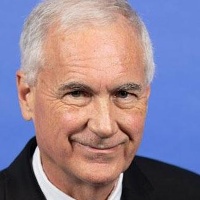
Tom McClintock
Representative
CA
Tom McClintock
Representative
CA
This resolution condemns the Iranian regime for its ongoing human rights abuses, state-sponsored terrorism, and regional instability. It expresses strong support for the Iranian people's struggle for a democratic, secular, and non-nuclear republic. Furthermore, the bill advocates for international accountability for the regime's crimes and calls for the protection of Iranian political refugees.
Prohibits the purchase of real estate near U.S. federal lands by agents or businesses associated with the government of the People's Republic of China with 25% or more equity interest.
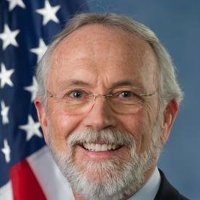
Dan Newhouse
Representative
WA
Dan Newhouse
Representative
WA
The "No American Land for Communist China Act" prohibits the President from allowing individuals or entities associated with the Chinese government from purchasing real estate near covered federal lands. Covered lands include those managed by the Departments of Interior, Defense, Agriculture (Forest Service), and Energy, as well as Indian country. This restriction applies to entities with at least 25% equity interest held by Chinese government-affiliated individuals or businesses. The Act defines "United States" broadly to include states, territories, and other U.S. possessions.
The "Bureau of Land Management Mineral Spacing Act" streamlines oil and gas drilling on private land with limited federal subsurface mineral rights, reducing federal permitting requirements and environmental reviews.
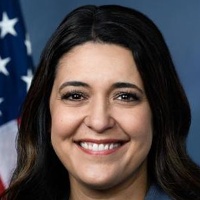
Stephanie Bice
Representative
OK
Stephanie Bice
Representative
OK
The "Bureau of Land Management Mineral Spacing Act" amends the Mineral Leasing Act to streamline oil and gas activities on non-federal surface land where the U.S. owns less than 50% of subsurface mineral rights, by removing the need for a federal drilling permit if a state permit is submitted. This exemption aims to reduce federal oversight and expedite energy resource development, but does not apply to Indian lands or alter royalty obligations. The Secretary of the Interior retains authority for audits, inspections, and royalty collection.
The "Protect and Serve Act of 2025" establishes federal penalties for intentionally causing serious harm or death to law enforcement officers because of their position, under certain circumstances, and requires Attorney General certification for federal prosecution in many cases.
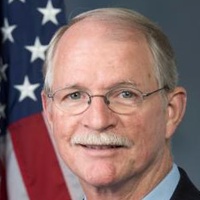
John Rutherford
Representative
FL
John Rutherford
Representative
FL
The "Protect and Serve Act of 2025" creates federal offenses for intentionally causing serious injury or death to law enforcement officers because of their status as officers. It sets penalties including imprisonment and fines, with increased penalties if death results or if kidnapping or attempted killing is involved. Federal prosecution requires certification from the Attorney General, based on a request from the state or if it is in the public interest to ensure substantial justice. The act defines "law enforcement officer" and "State" for the purposes of the new offenses.
This bill equalizes the negotiation period for drug price negotiations under the Drug Price Negotiation Program by extending the period for small-molecule drugs from 7 years to 11 years, matching that of biologic drugs.
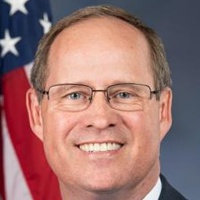
Gregory Murphy
Representative
NC
Gregory Murphy
Representative
NC
This bill amends the Social Security Act to equalize the negotiation period for drug price negotiations under the Drug Price Negotiation Program. It changes the negotiation period for small-molecule drugs from 7 years to 11 years, matching the period already in place for biologic drugs. This adjustment aims to create parity in negotiation timelines between different types of medications, effective as if included in the original legislation.
The "Rare Earth Magnet Security Act of 2025" introduces a tax credit for U.S. manufacturers of rare earth magnets, with increased incentives for magnets using domestically sourced materials, phasing out after 2034, and restrictions on materials from non-allied foreign nations.
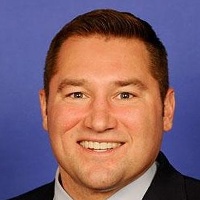
Guy Reschenthaler
Representative
PA
Guy Reschenthaler
Representative
PA
The "Rare Earth Magnet Security Act of 2025" introduces a tax credit for the production of rare earth magnets, incentivizing domestic manufacturing. The credit offers \$20 per kilogram for magnets made in the U.S. and \$30 per kilogram if 90% of the magnet's materials are U.S.-sourced. The credit phases out after 2034 and includes restrictions on sourcing materials from non-allied foreign nations, with some temporary exceptions. The act also allows manufacturers to elect to receive direct payments from the government in lieu of the tax credit.
The "ELITE Vehicles Act" repeals tax credits for clean vehicles, previously-owned clean vehicles, and qualified commercial clean vehicles, and removes electric vehicle charging stations from eligibility for the alternative fuel vehicle refueling property credit.
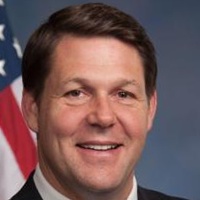
Jodey Arrington
Representative
TX
Jodey Arrington
Representative
TX
The "Eliminate Lavish Incentives To Electric Vehicles Act" repeals tax credits for new and used clean vehicles, as well as for qualified commercial clean vehicles. It also removes electric vehicle charging stations from eligibility for the alternative fuel vehicle refueling property credit. These changes would take effect 30 days after the enactment of the Act.
The "Death Tax Repeal Act" eliminates estate and generation-skipping transfer taxes, adjusts gift tax calculations, and sets a $10,000,000 lifetime gift exemption.
Randy Feenstra
Representative
IA
Randy Feenstra
Representative
IA
The "Death Tax Repeal Act" eliminates both estate and generation-skipping transfer taxes, effective from the date of enactment. It adjusts gift tax calculations by setting the lifetime gift exemption at $10,000,000, with inflation adjustments after 2011. The Act also includes transitional rules for applying certain sections of the Internal Revenue Code during the enactment year.
This Act establishes a three-year pilot program to offer donated-fund supported hyperbaric oxygen therapy for veterans with TBI or PTSD and extends certain pension payment limits.
Gregory Murphy
Representative
NC
Gregory Murphy
Representative
NC
This Act establishes a three-year pilot program to provide hyperbaric oxygen therapy (HBOT) to veterans suffering from traumatic brain injury (TBI) or PTSD, funded solely through donations. It also mandates an updated Government Accountability Office (GAO) report assessing recent clinical trials on HBOT for these conditions. Finally, the bill extends the expiration date for certain limitations on veteran pension payments.
The SAFE for America Act of 2025 eliminates the diversity visa program, effective October 1, 2025.
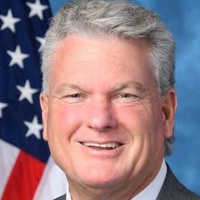
Mike Collins
Representative
GA
Mike Collins
Representative
GA
The SAFE for America Act of 2025 eliminates the Diversity Visa Program, which makes visas available to persons from countries with low rates of immigration to the United States. This is achieved through repealing subsection (c) of Section 203 of the Immigration and Nationality Act. The Act also makes corresponding technical amendments to other sections of the Immigration and Nationality Act to reflect this change. These changes would take effect beginning October 1, 2025.
The Honoring Our Fallen Heroes Act of 2025 expands public safety officer benefits to include disability and death coverage for certain cancers presumed to be caused by on-duty exposure to carcinogens, and clarifies "line of duty" definitions for first responder benefits.
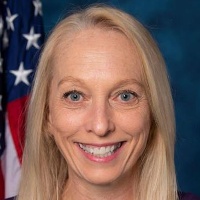
Mary Scanlon
Representative
PA
Mary Scanlon
Representative
PA
The Honoring Our Fallen Heroes Act of 2025 expands public safety officer benefits to include deaths and disabilities caused by exposure-related cancers, presuming that certain cancers diagnosed within 15 years of service are line-of-duty injuries if the officer served for at least 5 years. It defines "exposure-related cancer" and allows for updates to the list based on medical evidence, while also permitting individuals to petition for additions. The Act also clarifies "line of duty action" and applies retroactively to claims dating back to January 1, 2020, with a three-year window for filing claims based on these amendments.
This bill prohibits the President from declaring a moratorium on hydraulic fracturing without explicit Congressional authorization and affirms state authority over oil and gas regulation.
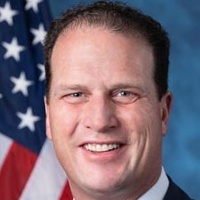
August Pfluger
Representative
TX
August Pfluger
Representative
TX
The Protecting American Energy Production Act prohibits the President from declaring a moratorium on hydraulic fracturing without explicit authorization from Congress. Additionally, the bill affirms that states should maintain primary regulatory authority over hydraulic fracturing activities on state and private lands.
Exempts family farms and small businesses from asset considerations in need analysis for federal student aid.
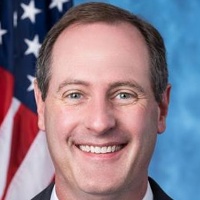
Tracey Mann
Representative
KS
Tracey Mann
Representative
KS
The "Family Farm and Small Business Exemption Act" amends the Higher Education Act of 1965 to exclude the net value of a family farm (on which the family resides) or a small business (with no more than 100 employees and owned/controlled by the family) from consideration as an asset when determining financial need for federal student aid. This change aims to make higher education more accessible for students from family farm and small business backgrounds.
The HALT Fentanyl Act permanently classifies fentanyl-related substances as Schedule I controlled substances while streamlining registration procedures for legitimate scientific research.
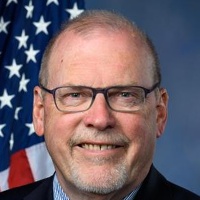
H. Griffith
Representative
VA
H. Griffith
Representative
VA
The Halt All Lethal Trafficking of Fentanyl (HALT Fentanyl) Act permanently classifies fentanyl-related substances as Schedule I controlled substances to strengthen enforcement and penalties against their trafficking. Additionally, the bill streamlines registration processes for researchers to facilitate legitimate scientific study of these substances. It also includes technical corrections and mandates updated federal rulemaking to ensure effective implementation.
The Dismantle DEI Act of 2025 immediately rescinds federal diversity, equity, and inclusion (DEI) mandates across executive offices, contracting, grants, and education, while banning related training and imposing penalties for non-compliance.
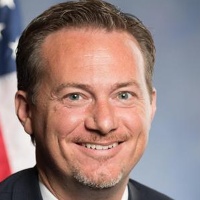
Michael Cloud
Representative
TX
Michael Cloud
Representative
TX
The Dismantle DEI Act of 2025 aims to immediately rescind diversity, equity, and inclusion (DEI) mandates across the federal government, including shutting down related offices and banning specific ideological training for federal personnel and contractors. The bill prohibits the use of federal funds for DEI activities by grant recipients and mandates that federal advisory committees cease all such practices or face termination. Furthermore, it establishes strong enforcement mechanisms, allowing individuals to sue violators and seek financial penalties for non-compliance.
This bill recognizes the significant contributions of tax-exempt fraternal benefit societies to communities across the United States through charitable activities, volunteer work, and financial support for their members, and expresses Congressional support for their continued promotion.
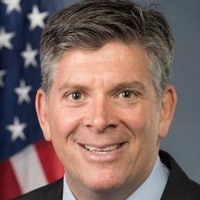
Darin LaHood
Representative
IL
Darin LaHood
Representative
IL
This bill recognizes the significant historical and ongoing contributions of tax-exempt fraternal benefit societies to communities across the United States through charitable activities, volunteer work, and financial support for members. It expresses the sense of Congress that these societies are a valuable support system that addresses unmet needs and generates substantial returns to the U.S. through their tax-exempt status. The bill also advocates for the continued promotion of fraternal benefit societies.
The CBO Show Your Work Act mandates that the Congressional Budget Office publicly release the models, data, and computational details used in its legislative cost estimates to ensure transparency and independent replicability.
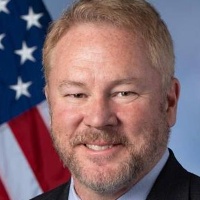
Warren Davidson
Representative
OH
Warren Davidson
Representative
OH
The CBO Show Your Work Act mandates that the Congressional Budget Office publicly release the models, data, and computational details used to estimate the fiscal and economic impacts of legislation. By requiring transparency and replicability, the bill ensures that outside parties can independently verify CBO findings. It also establishes clear protocols for handling confidential data to maintain privacy while maximizing public access to information.