Legislative Activity
Track Brad's sponsored bills, co-sponsored legislation, and voting record
This bill authorizes the Secretary of Veterans Affairs to lease space for a Vet Center in Mankato, Minnesota, for up to \$1,400,000, subject to appropriations for fiscal years 2025 through 2026.
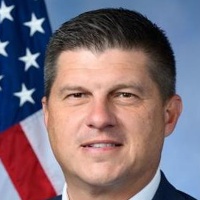
Brad Finstad
Representative
MN
Brad Finstad
Representative
MN
This bill authorizes the Secretary of Veterans Affairs to enter into a lease for a new Vet Center in Mankato, Minnesota. The authorization permits spending up to \$1,400,000 for this lease agreement. This authority is specifically available for fiscal years 2025 through 2026, contingent upon the availability of appropriations.
This act lowers the required farming experience for certain farm loan applicants from three years to one year, with provisions to waive that requirement entirely for qualified beginning farmers through relevant work experience or mentorship.
Brad Finstad
Representative
MN
Brad Finstad
Representative
MN
The Next Generation Farmer Act significantly lowers the experience requirement for certain farm loan applicants from three years to just one year. Furthermore, it allows the Secretary to waive this new one-year requirement for qualified beginning farmers who have relevant management experience as hired labor or who have secured a commitment from an approved mentor. This legislation aims to make federal farm loans more accessible to new agricultural producers.
This bill codifies Executive Order 14305, making the restoration of American airspace sovereignty the official law of the land.
Brad Finstad
Representative
MN
Brad Finstad
Representative
MN
This bill seeks to formally codify Executive Order 14305 into permanent federal law. By doing so, the provisions established in the order regarding the restoration of American airspace sovereignty will become legally binding statutes. This action elevates a presidential directive to the status of established law.
This bill mandates the relocation of Small Business Administration offices out of designated "sanctuary jurisdictions" within 120 days or face immediate shutdown and reassignment of staff.
Brad Finstad
Representative
MN
Brad Finstad
Representative
MN
The Save SBA from Sanctuary Cities Act of 2025 mandates the relocation of Small Business Administration (SBA) offices situated in designated "sanctuary jurisdictions." If an office is not moved within 120 days of being identified, it must cease operations and its employees reassigned. The bill also prohibits the establishment of any new SBA offices in these jurisdictions.
The FARMER Act modifies premium support levels for whole-farm crop insurance plans and increases the government subsidy for the supplemental coverage option, while also mandating a study on expanding that supplemental coverage.
Brad Finstad
Representative
MN
Brad Finstad
Representative
MN
The FARMER Act adjusts federal premium support for certain whole-farm and enterprise-unit crop insurance plans, setting specific subsidy percentages for those options. It also increases the government's premium subsidy rate for the supplemental coverage option from 65% to 80%. Finally, the bill mandates a study on expanding the geographic scope of this supplemental coverage option.
The LAST ACRE Act establishes a federal program to provide grants and loans to expand high-speed, precision agriculture connectivity to unserved and underserved farmland.
Brad Finstad
Representative
MN
Brad Finstad
Representative
MN
The LAST ACRE Act of 2025 establishes a new federal program to deliver high-speed, precision agriculture connectivity to the most remote and underserved farmland. This program will provide competitive grants and loans to broadband providers to ensure eligible agricultural land receives at least 100/20 Mbps service. Additionally, the bill mandates updates to key agricultural surveys to accurately track broadband adoption and speed on farms nationwide.
The Prove It Act establishes a formal process for small businesses to challenge agency claims about the economic impact of proposed rules and strengthens requirements for agencies to consider indirect costs on small entities.
Brad Finstad
Representative
MN
Brad Finstad
Representative
MN
The Prove It Act aims to strengthen protections for small businesses against burdensome federal regulations. It establishes a formal process for small entities to challenge agency claims that a proposed rule will not significantly impact them. The bill also expands the required analysis of indirect costs and imposes consequences if agencies fail to periodically review existing rules on time.
This bill significantly increases federal loan limits for farm ownership, operating, and microloans, updates inflation calculations for rural programs, and establishes conditions for refinancing distressed guaranteed loans into direct FSA loans.
Brad Finstad
Representative
MN
Brad Finstad
Representative
MN
The Producer and Agricultural Credit Enhancement Act of 2025 significantly increases the maximum loan amounts available through federal farm ownership and operating loan programs, effective in fiscal year 2025. The bill also updates the calculation method for inflation adjustments in rural development programs and raises the cap for agricultural microloans from $\$50,000$ to $\$100,000$. Finally, it establishes conditions under which distressed FSA guaranteed loans may be refinanced into direct loans, provided the operation has a reasonable chance of success.
The "Farm and Food Cybersecurity Act of 2025" mandates regular risk assessments of cybersecurity threats to the agriculture and food sector and requires annual simulation exercises to enhance food security and cyber resilience.
Brad Finstad
Representative
MN
Brad Finstad
Representative
MN
The Farm and Food Cybersecurity Act of 2025 aims to bolster the cybersecurity of the agriculture and food critical infrastructure sector by requiring the Secretary of Agriculture to conduct regular risk assessments of cybersecurity threats and vulnerabilities. It also mandates annual cross-sector crisis simulation exercises to assess preparedness, identify gaps, and improve coordination in the food supply chain. These exercises will involve government and private sector entities, with reports submitted to Congress to enhance cybersecurity and resilience in the agriculture and food sector. Finally, the Act authorizes $1,000,000 per fiscal year from 2026 through 2030 to carry out the simulation exercises.
Prohibits federal funding for the FDA's rule on laboratory developed tests.
Brad Finstad
Representative
MN
Brad Finstad
Representative
MN
This bill prohibits the use of federal funds to implement or enforce the Food and Drug Administration's final rule regarding the regulation of laboratory developed tests as medical devices.
The GRAIN DRY Act amends the Food, Conservation, and Energy Act of 2008 to allow agricultural producers to construct or upgrade storage facilities for propane used for agricultural production.
Brad Finstad
Representative
MN
Brad Finstad
Representative
MN
The GRAIN DRY Act amends the Food, Conservation, and Energy Act of 2008 to allow agricultural producers to construct or upgrade storage facilities for propane used in agricultural production. This expansion of the USDA's Farm Storage Facility Loan Program aims to support the infrastructure needs of farmers.
This bill reaffirms the Farm Credit Administration’s status as an independent regulator and mandates that Farm Credit System institutions collect and report voluntary demographic data from small farmer loan applicants.
Brad Finstad
Representative
MN
Brad Finstad
Representative
MN
The Farm Credit Administration Independent Authority Act reaffirms the Farm Credit Administration’s role as the sole independent regulator of the Farm Credit System. The bill establishes a new, voluntary process for collecting and publicly reporting demographic data on small farmer loan applicants to ensure transparency while protecting borrower privacy. Additionally, it provides regulatory consistency by exempting Farm Credit System institutions from overlapping requirements under the Equal Credit Opportunity Act.
This bill amends the Rural Surface Transportation Grant Program to expand project eligibility and prioritize infrastructure funding for very small rural communities.
Brad Finstad
Representative
MN
Brad Finstad
Representative
MN
The Protecting Infrastructure Investments for Rural America Act updates the Rural Surface Transportation Grant Program to better support smaller communities by redefining rural eligibility and expanding project scope. The bill mandates that at least 5% of program funding be dedicated to communities with populations of 5,000 or less. Additionally, it broadens project eligibility to include infrastructure improvements aimed at fostering economic growth and enhancing quality of life in rural areas.