Legislative Activity
Track Ron's sponsored bills, co-sponsored legislation, and voting record
The Pet Food Uniform Regulatory Reform (PURR) Act of 2025 establishes a streamlined, uniform federal regulatory framework for pet food labeling, ingredient review, and marketing to replace inconsistent state-level requirements.
Steve Womack
Representative
AR
Steve Womack
Representative
AR
The Pet Food Uniform Regulatory Reform (PURR) Act of 2025 establishes a streamlined, uniform federal regulatory framework for pet food to replace the current patchwork of state-level requirements. By centralizing oversight under the FDA’s Center for Veterinary Medicine, the bill standardizes ingredient reviews, labeling, and marketing claims to improve marketplace certainty and innovation. Ultimately, this Act aims to enhance the nationwide availability of safe, nutritious, and affordable food for companion animals.
This bill removes the lesser prairie-chicken from the Endangered Species Act and permanently prohibits its future listing as a threatened or endangered species.
Tracey Mann
Representative
KS
Tracey Mann
Representative
KS
This bill mandates the immediate removal of the lesser prairie-chicken from the federal lists of threatened and endangered species. Furthermore, it amends the Endangered Species Act to permanently prohibit the Secretary of the Interior from designating the species as threatened or endangered in the future.
This bill mandates the destruction of existing firearm transaction records from closed businesses and prohibits the ATF from collecting such records in the future.
Michael Cloud
Representative
TX
Michael Cloud
Representative
TX
The "No Retaining Every Gun In a System That Restricts Your Rights Act" mandates the destruction of all firearm transaction records currently held by the ATF from discontinued businesses. Furthermore, it amends federal law to prohibit the future collection and transfer of these records to the government when a firearms business ceases operations. The bill also requires the ATF to submit a formal report to Congress confirming the number of records destroyed.
This legislation permanently increases the standard deduction for head of household and single filers while establishing a new formula for annual inflation adjustments.

Max Miller
Representative
OH
Max Miller
Representative
OH
The Permanent Tax Cuts for American Families Act of 2025 permanently increases the standard deduction for head of household and single filers. This legislation also establishes a new formula for annual inflation adjustments to ensure these deduction amounts remain current. These changes take effect for taxable years beginning after the date of enactment.
This bill increases the railroad track maintenance tax credit, introduces annual inflation adjustments, and extends the eligibility period for qualifying expenditures.

Mike Kelly
Representative
PA
Mike Kelly
Representative
PA
This bill amends the Internal Revenue Code to expand the railroad track maintenance credit by increasing the per-mile tax credit to $6,100 and implementing annual inflation adjustments starting in 2026. It also extends the eligibility window for qualifying maintenance expenditures to include costs incurred through 2023. These updates aim to provide greater financial support for ongoing railroad infrastructure improvements.
This bill amends federal law to require express Congressional authorization for the establishment or expansion of national monuments, effectively removing the President’s unilateral authority to designate them.

Celeste Maloy
Representative
UT
Celeste Maloy
Representative
UT
The Ending Presidential Overreach on Public Lands Act seeks to remove the President’s unilateral authority to establish or expand national monuments. Under this legislation, any new national monument designation or extension would require express authorization and a direct vote from Congress.
* **Title I:** Reduces taxes on Taiwanese residents and businesses operating in the U.S., contingent upon Taiwan offering reciprocal benefits to U.S. individuals and companies. * **Title II:** Authorizes the President to negotiate a tax agreement with Taiwan to avoid double taxation, subject to Congressional approval and adherence to U.S. tax laws.
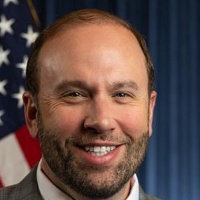
Jason Smith
Representative
MO
Jason Smith
Representative
MO
The United States-Taiwan Expedited Double-Tax Relief Act aims to reduce double taxation and encourage economic activity between the U.S. and Taiwan by lowering tax rates on certain income for Taiwanese residents and businesses in the U.S., contingent upon Taiwan offering reciprocal benefits to U.S. individuals and companies. Additionally, the United States-Taiwan Tax Agreement Authorization Act outlines the process for establishing a tax agreement with Taiwan, ensuring congressional oversight and adherence to existing U.S. tax laws, to further reduce double taxation.
This bill reclassifies silencers under federal tax law, removes federal registration requirements for legally transferred silencers, preempts state taxation and registration of silencers in commerce, and mandates the destruction of existing federal silencer registration records.

Ben Cline
Representative
VA
Ben Cline
Representative
VA
The Hearing Protection Act aims to remove silencers from the purview of the National Firearms Act (NFA) by treating them similarly to standard firearms under federal tax law. This legislation preempts certain state and local taxes and registration requirements related to silencers involved in interstate commerce. Furthermore, the bill mandates the destruction of existing federal silencer registration records and updates federal marking requirements for manufacturers.
The FAIR PREP Act of 2025 prohibits the Treasury Secretary from developing or operating government-run electronic tax preparation services, excluding existing programs like IRS Free File.

Adrian Smith
Representative
NE
Adrian Smith
Representative
NE
The FAIR PREP Act of 2025 prohibits the IRS from developing or operating its own electronic tax preparation and filing services. The bill restricts the Treasury Secretary from preparing tax returns or refund claims, while explicitly protecting existing programs like IRS Free File and volunteer tax assistance services. Additionally, it prevents the use of federal funds for the development of new government-run tax preparation systems without explicit congressional authorization.
This bill amends Title IX to prohibit schools receiving federal funds from allowing males to participate in female athletic programs, defining "sex" as determined at birth, while allowing males to train with female teams if it doesn't deprive females of opportunities or benefits. It also requires a study on the impact of male participation in female sports.
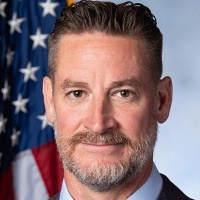
W. Steube
Representative
FL
W. Steube
Representative
FL
The "Protection of Women and Girls in Sports Act of 2025" amends Title IX to prohibit schools receiving federal funds from allowing males to participate in female athletic programs. Sex is defined as based on reproductive biology and genetics at birth. The bill allows males to train with female teams if it doesn't deprive females of opportunities. It also requires a study on the benefits lost to women when males participate in female sports.
The REMAIN in Mexico Act of 2025 mandates the implementation of the Migrant Protection Protocols, requiring asylum seekers to wait in Mexico while their claims are processed.

Brandon Gill
Representative
TX
Brandon Gill
Representative
TX
The REMAIN in Mexico Act of 2025 mandates that the Secretary of Homeland Security reinstate the Migrant Protection Protocols (MPP). This legislation requires that asylum seekers be returned to Mexico to await their U.S. immigration proceedings, effectively codifying the 2019 policy guidance into law.
The Natural Gas Tax Repeal Act repeals Section 136 of the Clean Air Act and rescinds all associated unobligated funds.
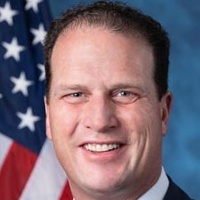
August Pfluger
Representative
TX
August Pfluger
Representative
TX
The Natural Gas Tax Repeal Act seeks to eliminate the methane emissions charge established under Section 136 of the Clean Air Act. Additionally, the bill rescinds all unobligated funds previously appropriated for the implementation of this provision.
The Regulations from the Executive in Need of Scrutiny (REINS) Act of 2025 increases congressional accountability by requiring federal agencies to obtain legislative approval for all "major" rules before they can take effect.

Katherine Cammack
Representative
FL
Katherine Cammack
Representative
FL
The Regulations from the Executive in Need of Scrutiny (REINS) Act of 2025 aims to increase federal regulatory accountability by requiring Congress to approve any "major" rule before it can take effect. Under this legislation, rules with a significant economic impact require a joint resolution of approval from both chambers of Congress to become law. By shifting this authority back to the legislative branch, the Act seeks to ensure greater transparency and oversight of the federal rulemaking process.
This bill rescinds certain unobligated funds previously appropriated to the Internal Revenue Service.
Adrian Smith
Representative
NE
Adrian Smith
Representative
NE
The Family and Small Business Taxpayer Protection Act rescinds unobligated funding previously appropriated to the Internal Revenue Service. This legislation effectively cancels these unused funds and returns them to the U.S. Treasury.
The FIND Act prohibits federal agencies from contracting with entities that discriminate against the firearm and ammunition industry, ensuring fair access to government contracts for these businesses. Contractors must certify they do not discriminate against firearm entities, with violations leading to contract termination.
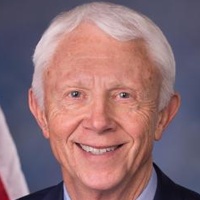
Jack Bergman
Representative
MI
Jack Bergman
Representative
MI
The FIND Act prohibits federal agencies from contracting with entities that discriminate against the firearm and ammunition industry. It requires federal contractors to certify they do not discriminate against firearm entities and prohibits them from awarding subcontracts to entities that do not provide a similar certification. Violations of these clauses will result in contract termination. The act defines "discriminate" as making judgments or refusing/limiting services based on biased criteria, rather than case-by-case evaluations, empirical data, financial risk, or legal non-compliance.
The TCJA Permanency Act makes the individual tax reforms and Alternative Minimum Tax exemptions from the Tax Cuts and Jobs Act permanent, simplifying tax filing while adjusting credits, deductions, and exemptions for families and small businesses.

Vern Buchanan
Representative
FL
Vern Buchanan
Representative
FL
The TCJA Permanency Act makes the individual tax reforms of the Tax Cuts and Jobs Act permanent, including lowered income tax rates, an increased standard deduction, and an expanded Child Tax Credit. The legislation also solidifies higher exemptions for the Alternative Minimum Tax to protect more households from the parallel tax system. By locking in these provisions, the bill aims to simplify tax filing while providing long-term stability for families, small business owners, and individual taxpayers.
This bill proposes a constitutional amendment mandating a balanced federal budget, requiring congressional supermajorities to raise the debt limit or increase revenue, and tasking the President with submitting a balanced budget to Congress annually. These rules can be waived during declared wars or serious military conflicts.

Zachary (Zach) Nunn
Representative
IA
Zachary (Zach) Nunn
Representative
IA
This bill proposes a constitutional amendment mandating a balanced federal budget, requiring that government spending not exceed income unless a supermajority in Congress approves. It also necessitates a supermajority to increase the national debt and a majority vote to raise revenue. The amendment includes exceptions for declared wars or serious military threats and would take effect five years after ratification, tasking Congress with its enforcement.
The Federal Reserve Transparency Act of 2025 mandates a comprehensive audit of the Federal Reserve System by the Comptroller General, ensuring greater transparency and accountability. This act requires a detailed report to Congress with findings and recommendations, while also repealing audit limitations.

Thomas Massie
Representative
KY
Thomas Massie
Representative
KY
The Federal Reserve Transparency Act of 2025 mandates a comprehensive audit of the Federal Reserve System by the Comptroller General within one year. Following the audit, a detailed report must be submitted to Congress, including findings and recommendations. This act aims to increase transparency and accountability within the Federal Reserve System by repealing audit limitations.