Legislative Activity
Track Mark's sponsored bills, co-sponsored legislation, and voting record
This act modifies the Family and Medical Leave Act (FMLA) to establish specific eligibility criteria and leave calculation methods for paraprofessionals and other essential education support staff.
Sean Casten
Representative
IL
Sean Casten
Representative
IL
This bill, the ESP, Paraprofessional, and Education Support Staff Family Leave Act, updates eligibility requirements for certain school employees under the Family and Medical Leave Act (FMLA). It adjusts how paraprofessionals and education support staff meet the required hours of service by using a percentage of expected monthly hours worked during the school year. Furthermore, the bill mandates clear guidelines for calculating FMLA leave entitlement for these employees to account for non-standard school schedules.
This resolution expresses support for designating September 9, 2025, as "National Firearm Suicide Prevention Day" to raise awareness about firearm suicide and promote safe and secure firearm storage as a key suicide prevention measure.
Julia Brownley
Representative
CA
Julia Brownley
Representative
CA
This resolution expresses support for designating September 9, 2025, as "National Firearm Suicide Prevention Day." The goal is to raise awareness about the growing crisis of firearm suicides across the United States. It emphasizes that safe and secure firearm storage is a critical component of suicide prevention efforts. The resolution encourages professionals to discuss gun safety and suicide prevention with their patients.
The FEMA Act of 2025 establishes FEMA as an independent, cabinet-level agency and enacts sweeping reforms across public assistance, individual aid, and mitigation programs to speed up recovery and increase transparency.
Sam Graves
Representative
MO
Sam Graves
Representative
MO
The FEMA Act of 2025 establishes the Federal Emergency Management Agency (FEMA) as an independent, cabinet-level agency to lead a unified, all-hazards approach to national emergency management. The bill enacts sweeping reforms across Public Assistance, Individual Assistance, and Mitigation programs to accelerate recovery, streamline funding, and reduce bureaucratic hurdles for disaster survivors and communities. Furthermore, it mandates significant new transparency measures, including public data reporting and GAO oversight, to ensure accountability for federal disaster spending.
This bill establishes a national system and interagency committee to coordinate federal efforts, fund community resilience projects, and study data gaps to prevent health emergencies and deaths related to extreme heat.
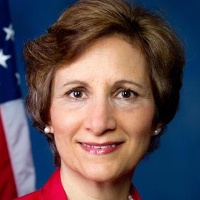
Suzanne Bonamici
Representative
OR
Suzanne Bonamici
Representative
OR
The Preventing HEAT Illness and Deaths Act of 2025 aims to combat the nation's leading weather-related killer by establishing a comprehensive federal strategy against extreme heat. The bill creates an Interagency Committee and a National Integrated Heat Health Information System (NIHHIS) within NOAA to coordinate research, data sharing, and preparedness efforts across government agencies. Furthermore, it authorizes significant financial assistance for community projects focused on heat resilience, prioritizing historically disadvantaged areas. The Act also mandates a national study to identify critical gaps in current heat response policies and infrastructure.
This resolution terminates the President's declared crime emergency in the District of Columbia, asserting that the emergency is unwarranted and the legal basis for federal MPD control is flawed.
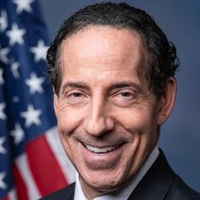
Jamie Raskin
Representative
MD
Jamie Raskin
Representative
MD
This resolution terminates the President's August 11, 2025, declaration of a crime emergency in the District of Columbia. Congress asserts that the President lacks the legal authority under the D.C. Home Rule Act to take operational control of the Metropolitan Police Department. Furthermore, the bill notes that local violent crime rates have been declining significantly.
This Act prohibits grocery stores from price gouging, using personal surveillance data to set individualized prices, and mandates disclosure of facial recognition use, while banning electronic shelf labels in larger stores.
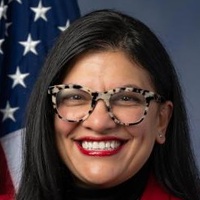
Rashida Tlaib
Representative
MI
Rashida Tlaib
Representative
MI
The Stop Price Gouging in Grocery Stores Act of 2025 aims to protect consumers by prohibiting grocery stores from charging "grossly excessive" prices for food items. The bill also bans stores from adjusting prices based on personal tracking data, such as facial recognition, and requires clear signage if facial recognition technology is used. Furthermore, it mandates that large physical grocery stores must use printed signs instead of electronic shelf labels for displaying prices.
This bill authorizes the award of a Congressional Gold Medal to honor the service and sacrifice of Army and Navy nurses who served during World War II.
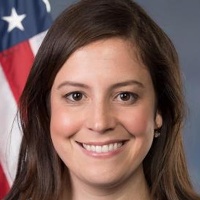
Elise Stefanik
Representative
NY
Elise Stefanik
Representative
NY
This bill authorizes Congress to award the Congressional Gold Medal to the nurses who served in the Army and Navy Nurse Corps during World War II to recognize their extraordinary service and sacrifice. The legislation highlights the dangerous conditions these nurses faced, often without full military status or benefits. The Secretary of the Treasury will strike the medal, which will ultimately be housed at the Smithsonian Institution. The Act also permits the sale of bronze duplicates to cover production costs.
This act mandates that the Department of Veterans Affairs must provide abortion care, counseling, and related services and medication to eligible veterans and certain other individuals.
Julia Brownley
Representative
CA
Julia Brownley
Representative
CA
The Reproductive Freedom for Veterans Act mandates that the Department of Veterans Affairs (VA) must now provide abortion care, counseling, and related medication as part of the medical services offered to eligible veterans and certain other beneficiaries. This legislation formally amends existing VA health care provisions to include these reproductive health services.
This Act mandates that the U.S. government's annual human rights reports abroad must include detailed findings on the status of reproductive rights, aligning U.S. foreign policy with international human rights standards.
Julie Johnson
Representative
TX
Julie Johnson
Representative
TX
The Reproductive Rights are Human Rights Act of 2025 establishes that reproductive rights are fundamental human rights based on international commitments. This bill mandates that the State Department must include a detailed, required section on the status of reproductive rights in every country within its annual human rights reports. These reports must cover access to contraception, abortion services, and instances of reproductive coercion or discrimination against marginalized groups. The Act aims to ensure robust U.S. monitoring and accountability regarding global reproductive health and autonomy.
The LOAN Act significantly expands Pell Grants, eliminates loan fees, restructures repayment and forgiveness for federal loans, stops interest capitalization, and ties future federal loan interest rates to Treasury yields while creating refinancing options.
Robert Scott
Representative
VA
Robert Scott
Representative
VA
The LOAN Act significantly overhauls federal student aid by dramatically expanding Pell Grants, making higher education more accessible through increased funding and eligibility pathways. It also restructures federal student loans by eliminating origination fees, introducing new income-driven repayment plans, and stopping interest capitalization to reduce borrower debt. Furthermore, the bill establishes new fixed interest rate formulas for future loans and creates refinancing options for both existing federal and private student loans. Overall, the legislation aims to lower the cost of college and ease the burden of repayment for millions of borrowers.
This act repeals the prohibition on Medicaid payments to certain healthcare entities and mandates retroactive payment for services already rendered under the repealed ban.
Laura Friedman
Representative
CA
Laura Friedman
Representative
CA
The Restoring Essential Healthcare Act repeals an outdated ban that prevented Medicaid from making payments to certain healthcare providers. This legislation ensures that these previously prohibited entities will now be reimbursed for medical services rendered between the enactment of the original ban and the passage of this Act. In short, it restores payment eligibility and retroactively covers past services.
The EATS Act of 2025 expands eligibility for SNAP benefits by removing previous restrictions for students enrolled at least half-time in recognized educational programs.
Jimmy Gomez
Representative
CA
Jimmy Gomez
Representative
CA
The EATS Act of 2025 significantly updates eligibility for the Supplemental Nutrition Assistance Program (SNAP) by removing previous restrictions that often disqualified students. This legislation explicitly includes bona fide students enrolled at least half-time in recognized educational programs as eligible participants for food assistance. These changes take effect on January 2, 2026.
The Protected Time Off Act establishes a federal minimum accrual rate of one hour of paid annual leave for every 25 hours worked, while protecting employees' rights to use and enforce this earned time off.
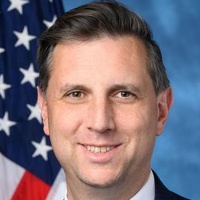
Seth Magaziner
Representative
RI
Seth Magaziner
Representative
RI
The Protected Time Off Act establishes a federal minimum standard for earned paid annual leave, requiring employers to grant employees at least one hour of paid time off for every 25 hours worked, up to 80 hours annually. This law specifies how leave is accrued, used, and rolled over, while protecting employees from retaliation for exercising these rights. It also ensures that existing state laws or agreements that provide more generous leave benefits remain in effect. Enforcement mechanisms are established, largely mirroring those under the Fair Labor Standards Act, allowing both government investigation and direct employee lawsuits.
This bill establishes a federal grant program to help low-income households pay for their drinking water and sewer services.
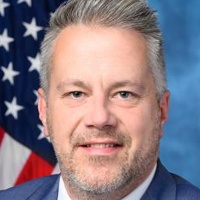
Eric Sorensen
Representative
IL
Eric Sorensen
Representative
IL
This bill establishes the Low-Income Household Water Assistance Program to provide grants to states and tribes. These funds will help public water systems cover the water and sewer bills for eligible low-income households. The program aims to supplement existing aid by assisting families whose income is at or below 150% of the poverty level or 60% of the state median income. Funding is authorized at $500 million annually from fiscal years 2026 through 2030.
This bill updates the eligibility requirements for creating records of lawful admission for long-term residents by changing the qualifying entry date to a minimum of seven years of U.S. residency prior to application.
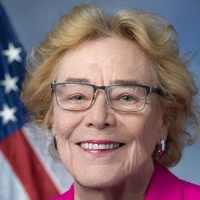
Zoe Lofgren
Representative
CA
Zoe Lofgren
Representative
CA
This bill, the Renewing Immigration Provisions of the Immigration Act of 1929, updates the eligibility requirements for creating records of lawful admission for long-term residents. It replaces a fixed entry date with a new standard requiring applicants to have resided in the U.S. for at least seven years prior to applying. These revised provisions will take effect 60 days after the Act is enacted.
This Act prohibits the shackling and detention of pregnant and postpartum noncitizens except in extraordinary, narrowly defined circumstances, while mandating comprehensive healthcare access and staff training.
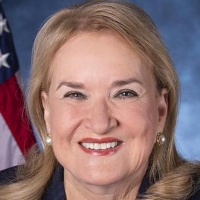
Sylvia Garcia
Representative
TX
Sylvia Garcia
Representative
TX
The Stop Shackling and Detaining Pregnant Women Act aims to significantly reform the detention of pregnant and postpartum noncitizens by establishing a presumption against their detention. This bill strictly limits the use of physical restraints on pregnant detainees and mandates comprehensive reproductive healthcare access. Furthermore, it requires detailed quarterly and annual reporting on the treatment and outcomes of pregnant individuals in custody.
This bill establishes a new system for distributing up to 2,000 additional Medicare-funded residency positions annually from 2026 through 2032, prioritizing hospitals serving underserved areas, and mandates a study on strategies to increase workforce diversity.
Terri Sewell
Representative
AL
Terri Sewell
Representative
AL
The Resident Physician Shortage Reduction Act of 2025 establishes a structured process for distributing up to 2,000 additional, federally funded residency positions annually between fiscal years 2026 and 2032. This distribution prioritizes hospitals serving in underserved areas, those already training above their limit, and those committed to primary care and general surgery training. The bill also mandates a study and report by the Comptroller General on effective strategies to increase diversity within the health professional workforce.
This bill mandates the swift re-establishment of the Charting My Path for Future Success Project to train educators in helping students with disabilities set and achieve post-secondary goals through personalized action plans.
Lucy McBath
Representative
GA
Lucy McBath
Representative
GA
The Charting My Path for Future Success Act mandates the immediate restart and re-award of a contract for the "Charting My Path for Future Success Project." This project focuses on training high school teachers to help students with disabilities develop clear post-secondary goals and create actionable success plans. The legislation ensures the project maintains its established scope of supporting 1,600 students across numerous schools and protects the newly awarded contract from cancellation without Congressional approval.
This constitutional amendment prohibits immunity from criminal prosecution for federal officials based on their official duties and bars the President from self-pardoning.
Joseph Morelle
Representative
NY
Joseph Morelle
Representative
NY
This proposed constitutional amendment would eliminate immunity from criminal prosecution for federal officials, including the President, based on their official duties. It also explicitly prohibits the President from issuing a self-pardon for any federal crimes. If ratified, these changes would take effect immediately.
The EACH Act of 2025 mandates that all federally funded health programs and facilities must cover and provide abortion services, while also prohibiting federal interference with private insurance coverage.
Ayanna Pressley
Representative
MA
Ayanna Pressley
Representative
MA
The EACH Act of 2025 aims to ensure equal access to abortion coverage by requiring all federally funded health programs and facilities to cover abortion services. This legislation prohibits federal interference with state or private insurance coverage of abortion and repeals Section 1303 of the Affordable Care Act. Ultimately, the bill seeks to eliminate financial and insurance barriers to abortion care, particularly for low-income individuals relying on programs like Medicaid.