Legislative Activity
Track Chris's sponsored bills, co-sponsored legislation, and voting record
This constitutional amendment grants Congress and the states the power to set reasonable limits on campaign spending by individuals and entities to ensure fair elections, while explicitly protecting freedom of the press.
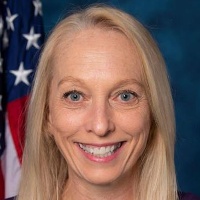
Mary Scanlon
Representative
PA
Mary Scanlon
Representative
PA
This proposed constitutional amendment grants Congress and the states the authority to establish reasonable limits on campaign spending by candidates and outside groups to ensure fair elections. It allows for different spending regulations for individuals versus corporations or other entities. Crucially, this new power cannot be used to restrict the freedom of the press.
This bill establishes a regulated process for pension plan fiduciaries to transfer eligible unclaimed retirement distributions to state unclaimed property programs, protecting them from liability if proper search and notification procedures are followed.
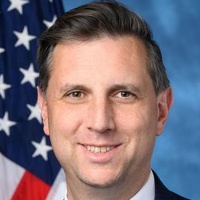
Seth Magaziner
Representative
RI
Seth Magaziner
Representative
RI
The Unclaimed Retirement Rescue Plan establishes a process for pension plan administrators to transfer forgotten retirement funds to state unclaimed property programs via a national clearinghouse. Before transferring distributions of $50 or more, plans must attempt to locate the owner using databases and send a warning notice if new contact information is found. This act protects plan fiduciaries from liability for following these new transfer rules and mandates confidential reporting of all transfers to the Department of Labor.
This resolution recognizes suicide as a serious public health crisis and expresses support for designating September as National Suicide Prevention Month and September 10, 2025, as World Suicide Prevention Day.
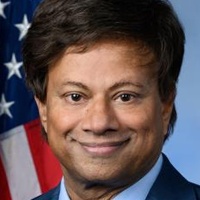
Shri Thanedar
Representative
MI
Shri Thanedar
Representative
MI
This resolution officially recognizes suicide as a serious public health crisis in the United States, highlighting the urgent need for prevention efforts across all demographics. It expresses strong support for designating September as "National Suicide Prevention Month" and September 10th as "World Suicide Prevention Day" to raise awareness. The measure calls for prioritizing comprehensive, tailored strategies to improve access to mental health and suicide prevention services nationwide.
This Act establishes sanctions against Pakistani officials undermining democracy and human rights, while urging the U.S. government to promote democratic institutions in Pakistan until September 30, 2030.
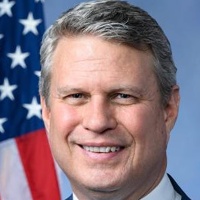
Bill Huizenga
Representative
MI
Bill Huizenga
Representative
MI
The Pakistan Freedom and Accountability Act expresses strong U.S. support for democracy and human rights in Pakistan, citing concerns over military influence and recent election interference. This legislation directs the President to identify and impose sanctions on Pakistani officials responsible for undermining democratic processes or committing serious human rights abuses. The Act emphasizes the need for civilian control over the military and sets an expiration date for its provisions in September 2030.
The REAL Health Providers Act mandates that Medicare Advantage plans maintain and regularly verify accurate, detailed provider directories, protecting patients from incorrect network listings with cost-sharing safeguards.
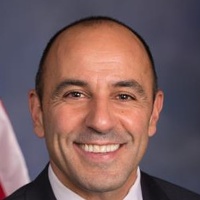
Jimmy Panetta
Representative
CA
Jimmy Panetta
Representative
CA
The REAL Health Providers Act mandates that Medicare Advantage plans maintain accurate and up-to-date public directories of their network providers starting in 2028. This legislation requires regular verification of provider information and establishes cost-sharing protections for patients who see listed providers who are ultimately out-of-network. Furthermore, plans must annually report their directory accuracy scores to the Secretary, which will eventually be made public.
This resolution expresses support for designating September 9, 2025, as "National Firearm Suicide Prevention Day" to raise awareness about firearm suicide and promote safe and secure firearm storage as a key suicide prevention measure.
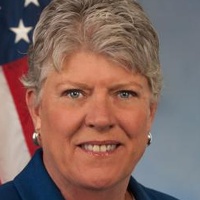
Julia Brownley
Representative
CA
Julia Brownley
Representative
CA
This resolution expresses support for designating September 9, 2025, as "National Firearm Suicide Prevention Day." The goal is to raise awareness about the growing crisis of firearm suicides across the United States. It emphasizes that safe and secure firearm storage is a critical component of suicide prevention efforts. The resolution encourages professionals to discuss gun safety and suicide prevention with their patients.
This act modifies the Family and Medical Leave Act (FMLA) to establish specific eligibility criteria and leave calculation methods for paraprofessionals and other essential education support staff.
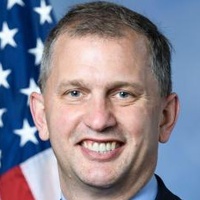
Sean Casten
Representative
IL
Sean Casten
Representative
IL
This bill, the ESP, Paraprofessional, and Education Support Staff Family Leave Act, updates eligibility requirements for certain school employees under the Family and Medical Leave Act (FMLA). It adjusts how paraprofessionals and education support staff meet the required hours of service by using a percentage of expected monthly hours worked during the school year. Furthermore, the bill mandates clear guidelines for calculating FMLA leave entitlement for these employees to account for non-standard school schedules.
The Mental Health in Aviation Act of 2025 mandates the FAA to update mental health regulations, improve medical clearance processes, fund more aviation medical examiners, and launch an anti-stigma campaign for aviation workers.
Sean Casten
Representative
IL
Sean Casten
Representative
IL
The Mental Health in Aviation Act of 2025 directs the FAA to update regulations to encourage aviation workers to seek mental health support without fear of stigma. The bill mandates annual reviews of the medical clearance process and allocates funding to hire more Aviation Medical Examiners. Furthermore, it requires the FAA to implement recommendations from a recent mental health task force and launch a public awareness campaign to reduce stigma.
This Act establishes a framework for striking workers to access unemployment insurance benefits after a two-week waiting period or the hiring of permanent replacements.
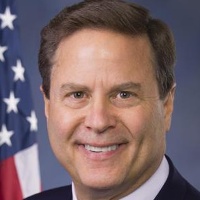
Donald Norcross
Representative
NJ
Donald Norcross
Representative
NJ
The Empowering Striking Workers Act of 2025 establishes a pathway for workers involved in a strike or lockout to receive unemployment insurance benefits after a mandatory 14-day waiting period. This legislation also exempts striking workers from the standard requirement to actively search for new employment while they are unable to work due to the labor dispute.
This bill formally integrates Puerto Rico into the federal Supplemental Nutrition Assistance Program (SNAP) structure, outlining a transition plan away from its current block grant system.
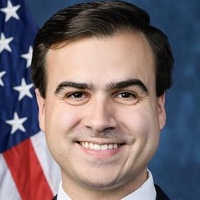
Pablo José Hernández Rivera
Representative
PR
Pablo José Hernández Rivera
Representative
PR
The Puerto Rico Nutrition Assistance Fairness Act aims to integrate Puerto Rico into the federal Supplemental Nutrition Assistance Program (SNAP) structure, aligning it with other territories like Guam. The bill mandates a transition period where Puerto Rico must submit a plan of operation to the Secretary of Agriculture for approval to join SNAP. During this transition, existing block grant funding may continue for up to five years while the territory moves toward full participation under federal SNAP rules.
This Act requires social media companies to block platform access on K-12 school grounds during school hours using geofencing, enforced by the FTC and state Attorneys General.
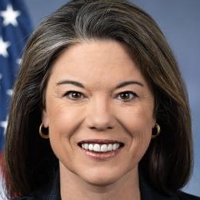
Angie Craig
Representative
MN
Angie Craig
Representative
MN
The No Social Media at School Act requires social media companies to use geofencing technology to block access to their platforms on K-12 school grounds during school hours. This enforcement mechanism is overseen by the Federal Trade Commission (FTC), with State Attorneys General also empowered to file civil lawsuits. The law specifically exempts emergency public safety messages and does not mandate new age verification measures for companies.
This Act bans Members of Congress and their immediate families from trading or owning specific investments while in office, requiring divestment within 90 to 180 days or facing significant financial penalties.
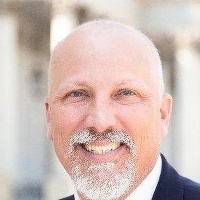
Chip Roy
Representative
TX
Chip Roy
Representative
TX
The Restore Trust in Congress Act establishes strict new rules prohibiting Members of Congress and their immediate families from owning or trading specific financial assets, referred to as "covered investments," while in office. Covered individuals must divest existing prohibited holdings within a set timeframe or face significant financial penalties, including fines and forfeiture of profits. The legislation aims to eliminate conflicts of interest arising from personal financial trading while serving in federal office.
The MORE Act seeks to federally decriminalize cannabis, expunge past non-violent federal cannabis convictions, establish reinvestment programs, and open up SBA access for cannabis-related businesses.
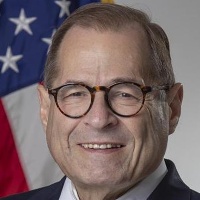
Jerrold Nadler
Representative
NY
Jerrold Nadler
Representative
NY
The Marijuana Opportunity Reinvestment and Expungement (MORE) Act seeks to federally decriminalize cannabis by removing it from the Controlled Substances Act, which will retroactively apply to past offenses. The bill establishes an Opportunity Trust Fund, financed by new cannabis taxes, to reinvest in communities harmed by prohibition. Furthermore, it mandates the expungement of non-violent federal cannabis convictions and opens up Small Business Administration (SBA) programs to legitimate cannabis businesses.
This act officially designates the Peter J. McGuire Memorial and gravesite in New Jersey as a National Commemorative Site to honor the labor leader who proposed the first Labor Day.
Donald Norcross
Representative
NJ
Donald Norcross
Representative
NJ
The Peter J. McGuire Labor Day Landmark Act officially designates the Peter J. McGuire Memorial and gravesite in Pennsauken, New Jersey, as the Peter J. McGuire Memorial National Commemorative Site. This designation honors McGuire's pivotal role in founding major labor organizations and proposing the concept of Labor Day. The bill allows for partnerships to support educational programming at the site without altering existing property rights.
The INFORM Act of 2025 mandates that Homeland Security must notify the immediate family of a transferred immigration detainee within 24 hours, providing details about the relocation and the new facility's contact information.
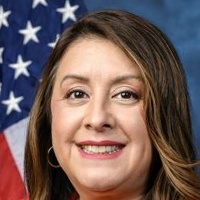
Luz Rivas
Representative
CA
Luz Rivas
Representative
CA
The INFORM Act of 2025 mandates that Homeland Security must notify the immediate family of any individual transferred between immigration detention facilities within 24 hours. This notification must include the reason for the transfer and contact information for the new location. The Act broadly defines "immediate family" to cover a wide range of relatives, including step- and foster-family members.
This resolution terminates the President's declared crime emergency in the District of Columbia, asserting that the emergency is unwarranted and the legal basis for federal MPD control is flawed.
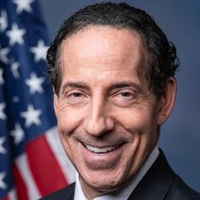
Jamie Raskin
Representative
MD
Jamie Raskin
Representative
MD
This resolution terminates the President's August 11, 2025, declaration of a crime emergency in the District of Columbia. Congress asserts that the President lacks the legal authority under the D.C. Home Rule Act to take operational control of the Metropolitan Police Department. Furthermore, the bill notes that local violent crime rates have been declining significantly.
This Act prohibits grocery stores from price gouging, using personal surveillance data to set individualized prices, and mandates disclosure of facial recognition use, while banning electronic shelf labels in larger stores.
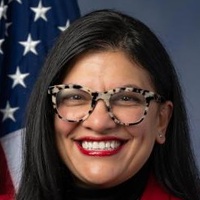
Rashida Tlaib
Representative
MI
Rashida Tlaib
Representative
MI
The Stop Price Gouging in Grocery Stores Act of 2025 aims to protect consumers by prohibiting grocery stores from charging "grossly excessive" prices for food items. The bill also bans stores from adjusting prices based on personal tracking data, such as facial recognition, and requires clear signage if facial recognition technology is used. Furthermore, it mandates that large physical grocery stores must use printed signs instead of electronic shelf labels for displaying prices.
This bill penalizes companies that move call center jobs overseas while requiring transparency about agent location and AI use during customer service communications.
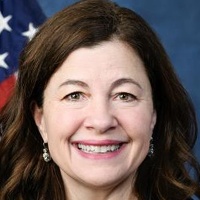
Kristen McDonald Rivet
Representative
MI
Kristen McDonald Rivet
Representative
MI
The Keep Call Centers in America Act of 2025 aims to incentivize keeping customer service jobs in the U.S. by penalizing companies that move call centers overseas with loss of federal grants and contracts. The bill also mandates transparency, requiring businesses to disclose an agent's physical location or the use of AI during customer service communications. Furthermore, it ensures that all call center work performed under a federal contract must be completed within the United States.
This Act establishes new federal grants to help public wastewater treatment plants upgrade their systems to treat or eliminate emerging contaminants like PFAS.
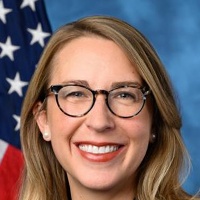
Hillary Scholten
Representative
MI
Hillary Scholten
Representative
MI
The Public Utility Remediation and Enhancement for Water Act establishes a new federal grant program administered by the EPA to help public wastewater treatment plants upgrade facilities. These grants specifically target the planning, design, and construction needed to treat or eliminate emerging contaminants like PFAS chemicals. The federal government will cover at least 75% of eligible project costs to improve water quality.
This Act establishes a multi-sector Task Force, led by the Treasury Secretary, to study, recommend strategies for, and report on preventing evolving electronic payment scams.
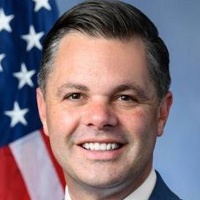
Zachary (Zach) Nunn
Representative
IA
Zachary (Zach) Nunn
Representative
IA
The Taskforce for Recognizing and Averting Payment Scams Act (TRAPS Act) establishes a new Task Force led by the Secretary of the Treasury. This diverse group, including federal agencies, industry experts, and consumer advocates, will study evolving payment scams. The Task Force is charged with developing cross-sector prevention strategies and submitting comprehensive recommendations for new laws and improved coordination to combat these fraudulent activities.