
Legislative Activity
Track Chris's sponsored bills, co-sponsored legislation, and voting record
This Act prohibits foreign corporations or governments from owning public utility holding companies after a 180-day grace period.

Josh Riley
Representative
NY
Josh Riley
Representative
NY
The Keep the Lights Local Act prohibits foreign corporations or governments from owning public utility holding companies. This measure aims to secure domestic control over essential utility infrastructure. The ban on foreign ownership will take effect 180 days after the Act is signed into law.
This Act mandates that most health insurance plans, Medicare Part D, Medicaid, and CHIP must cover specific, currently recommended vaccines without out-of-pocket costs for a limited time.

Frank Pallone
Representative
NJ
Frank Pallone
Representative
NJ
The Protecting Free Vaccines Act mandates that most private health insurance plans must cover specific vaccines recommended by the CDC's Advisory Committee on Immunization Practices (ACIP) without any out-of-pocket costs until January 1, 2030. This requirement also updates coverage rules for Medicare Part D, Medicaid, and CHIP to ensure continuity of coverage for these recommended immunizations. The bill locks in coverage based on the ACIP recommendations in place as of October 25, 2024, across various federal health programs.
The Preparing And Retaining All (PARA) Educators Act establishes a federal grant program to help states fund local efforts aimed at recruiting, retaining, and credentialing school paraprofessionals, prioritizing high-need and low-income districts.
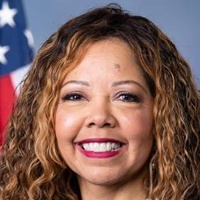
Lucy McBath
Representative
GA
Lucy McBath
Representative
GA
The Preparing And Retaining All (PARA) Educators Act establishes a new federal grant program to help states recruit and retain school paraprofessionals. Funds will be distributed to states based on their existing Title I allocations to support local districts. States must use these competitive subgrants to improve paraprofessional wages, offer professional development, and support credentialing, prioritizing high-need and rural schools. The law requires annual reporting on compensation improvements and retention efforts.
This Act mandates that new passenger motor vehicles sold in the U.S. must include standard equipment capable of receiving AM broadcast radio signals.

Gus Bilirakis
Representative
FL
Gus Bilirakis
Representative
FL
The AM Radio for Every Vehicle Act of 2025 mandates that the Secretary of Transportation establish a rule requiring AM broadcast radio receivers to be installed as standard equipment in new passenger motor vehicles. This requirement aims to ensure public access to AM radio signals, which are often used for emergency alerts. The bill also directs a GAO study on the effectiveness of AM radio within the national emergency alert system compared to other technologies. Finally, the Act preempts state and local laws on this matter and includes a sunset provision eight years after enactment.
This constitutional amendment grants Congress and the states the authority to regulate campaign contributions and expenditures, and to establish public financing systems for political campaigns.

Joe Neguse
Representative
CO
Joe Neguse
Representative
CO
This constitutional amendment seeks to grant Congress and the states the authority to regulate contributions and expenditures in political campaigns. It specifically allows for the establishment of public financing systems to offset the influence of private money in elections. The amendment ensures that any regulations enacted must not infringe upon the freedom of the press.
This bill mandates that the wealthiest Americans pay annual taxes on the unrealized gains of their covered assets and removes several existing tax deferral mechanisms for these "applicable taxpayers."

Steve Cohen
Representative
TN
Steve Cohen
Representative
TN
The Billionaires Income Tax Act fundamentally changes how the wealthiest Americans are taxed by eliminating the ability to defer taxes on investment gains, requiring annual recognition of appreciation on covered assets. This legislation treats transfers like gifts or death as taxable sales and imposes stricter tax rules across various investment and compensation scenarios for "applicable taxpayers." Ultimately, the bill aims to ensure immediate taxation on wealth accumulation for high-net-worth individuals and associated entities starting in 2026.
This bill amends the Social Security Act to provide Medicare coverage for FDA-approved multi-cancer early detection screening tests starting in 2028.
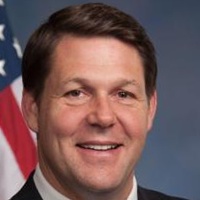
Jodey Arrington
Representative
TX
Jodey Arrington
Representative
TX
The Nancy Gardner Sewell Medicare Multi-Cancer Early Detection Screening Coverage Act amends the Social Security Act to provide Medicare Part B coverage for multi-cancer early detection screening tests starting January 1, 2028. This legislation establishes clear criteria for qualifying tests and outlines payment structures to ensure beneficiaries have access to these advanced diagnostic tools. Importantly, this coverage is designed to complement, rather than replace, existing Medicare-covered cancer screenings.
This bill mandates dedicated, funded resources for specialized 988 Suicide Prevention Lifeline services for LGBTQ+ youth.
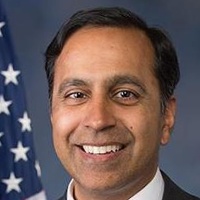
Raja Krishnamoorthi
Representative
IL
Raja Krishnamoorthi
Representative
IL
The **988 LGBTQ+ Youth Access Act of 2025** addresses the high rates of suicide risk among LGBTQ youth by strengthening specialized support through the national crisis hotline. This bill mandates that dedicated resources and services, such as a specific dialing option, must be maintained for LGBTQ individuals contacting 988. Furthermore, it requires that at least 9 percent of appropriated funds for the hotline be specifically reserved to ensure these specialized services for LGBTQ youth remain fully operational.
This Act ensures the automatic continuation of pay for active duty military personnel and essential civilian support staff if Congress fails to pass a budget for fiscal year 2026.
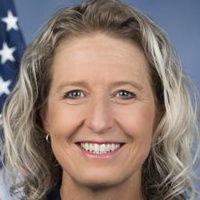
Jennifer Kiggans
Representative
VA
Jennifer Kiggans
Representative
VA
The Pay Our Troops Act of 2026 ensures that active duty military personnel and essential civilian support staff continue to receive their pay if Congress has not yet passed the full budget for fiscal year 2026. This act provides automatic continuing appropriations from the Treasury to prevent a lapse in military salaries due to budget delays. The funding automatically terminates once a new budget or continuing resolution is passed, or on January 1, 2027, whichever comes first.
This resolution formally recognizes and celebrates the 180th anniversary of the United States Naval Academy, honoring its history, distinguished alumni, and enduring mission to develop leaders for the Navy and Marine Corps.
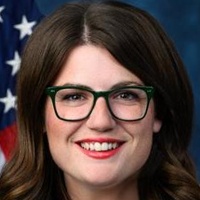
Sarah Elfreth
Representative
MD
Sarah Elfreth
Representative
MD
This resolution formally recognizes and celebrates the 180th anniversary of the United States Naval Academy. It honors the institution's history, its mission to instill honor and courage in future leaders, and the significant achievements of its distinguished alumni. Congress reaffirms its commitment to supporting the Academy as it continues to prepare leaders for the Navy and Marine Corps.
The FAMILY Act establishes a national paid family and medical leave insurance program administered by the Social Security Administration, providing benefits for caregiving related to serious health conditions or victims of violence.

Rosa DeLauro
Representative
CT
Rosa DeLauro
Representative
CT
The FAMILY Act establishes a national Paid Family and Medical Leave Insurance program administered by a new office within the Social Security Administration. This program provides monthly benefits to eligible individuals who take time off for qualified caregiving reasons, including serious health conditions or victims of violence. The Act also sets forth detailed eligibility requirements, benefit calculation formulas, and job protection guarantees for employees utilizing the leave. Finally, it creates a funding mechanism to support existing state-level paid leave programs that meet federal standards.
This bill mandates key federal agencies to coordinate housing research and submit a joint report to Congress outlining policy solutions for improving housing affordability and availability.
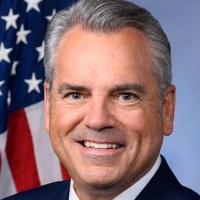
Mark Alford
Representative
MO
Mark Alford
Representative
MO
The Saving the American Dream Act mandates that key federal housing agencies collaborate to share research and data through a formal agreement. This legislation requires these agencies to jointly submit a comprehensive report to Congress outlining policy solutions for improving housing finance coordination, reducing mortgage costs, and addressing barriers to new home construction. The goal is to ensure federal housing policy is based on coordinated, evidence-based analysis.
This bill allows authorized VA healthcare professionals to prescribe and dispense controlled medications to veterans via telemedicine under specific conditions.
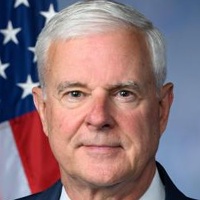
Steve Womack
Representative
AR
Steve Womack
Representative
AR
The Protecting Veteran Access to Telemedicine Services Act of 2025 allows authorized Department of Veterans Affairs (VA) healthcare professionals to prescribe and dispense controlled medications to eligible veterans via telemedicine. This provision removes the prior requirement for an initial in-person visit before prescribing these medications remotely. The VA is required to establish specific regulations detailing the process for this telemedicine delivery while ensuring compliance with existing federal drug control laws.
The George Floyd Justice in Policing Act of 2025 comprehensively reforms policing by increasing accountability, mandating transparency through data collection, restricting dangerous tactics, and prohibiting sexual misconduct by officials acting under color of law.
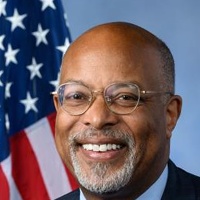
Glenn Ivey
Representative
MD
Glenn Ivey
Representative
MD
The George Floyd Justice in Policing Act of 2025 is a comprehensive bill designed to increase police accountability and transparency nationwide through federal mandates and funding incentives. It reforms standards for prosecuting civil rights violations, eliminates qualified immunity, and establishes national registries for police misconduct and use-of-force data. Furthermore, the Act bans specific dangerous police tactics like chokeholds and restricts the transfer of military equipment to local departments.
The FAIR Act of 2025 invalidates pre-dispute arbitration agreements and joint-action waivers for employment, consumer, antitrust, and civil rights claims, while preserving the right to voluntary arbitration after a dispute arises.

Henry Johnson
Representative
GA
Henry Johnson
Representative
GA
The FAIR Act of 2025 invalidates pre-dispute arbitration agreements and class action waivers for employment, consumer, antitrust, and civil rights claims. This law restores the right for individuals to pursue these disputes in court or through collective legal action. The provisions apply to all covered disputes arising on or after the date the Act is enacted.
This bill establishes the National Infrastructure Bank to finance major U.S. infrastructure projects while granting the Bank and its investors favorable federal tax exemptions.
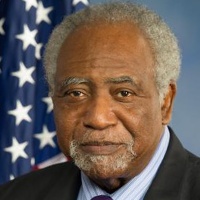
Danny Davis
Representative
IL
Danny Davis
Representative
IL
The National Infrastructure Bank Act of 2025 establishes a new, mixed-ownership federal corporation chartered to finance major infrastructure projects across the nation. This legislation authorizes the Bank to raise substantial capital and issue significant loans to spur economic growth while prioritizing projects in disadvantaged communities. Furthermore, the bill grants the Bank and its specific investors favorable tax exemptions to encourage participation and operation.
The Equal Tax Act limits preferential capital gains rates for high earners, imposes deemed realization of capital gains upon gift or death, creates exclusions for inherited family farm/business gains, and places new caps and reporting requirements on various tax benefits.
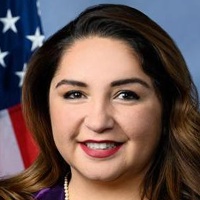
Delia Ramirez
Representative
IL
Delia Ramirez
Representative
IL
The Equal Tax Act aims to increase tax fairness by limiting preferential tax rates for high earners and treating property transfers at death or as a gift as a taxable event. It introduces new rules for capital gains exclusions on inherited family farms and businesses, while also capping the use of like-kind exchanges for non-farming real estate. Finally, the Act adjusts the calculation for the Qualified Business Income deduction based on income thresholds.
This bill establishes a regulated process for pension plan fiduciaries to transfer eligible unclaimed retirement distributions to state unclaimed property programs, protecting them from liability if proper search and notification procedures are followed.
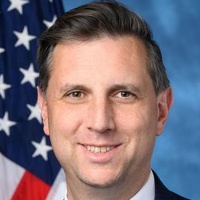
Seth Magaziner
Representative
RI
Seth Magaziner
Representative
RI
The Unclaimed Retirement Rescue Plan establishes a process for pension plan administrators to transfer forgotten retirement funds to state unclaimed property programs via a national clearinghouse. Before transferring distributions of $50 or more, plans must attempt to locate the owner using databases and send a warning notice if new contact information is found. This act protects plan fiduciaries from liability for following these new transfer rules and mandates confidential reporting of all transfers to the Department of Labor.
This constitutional amendment grants Congress and the states the power to set reasonable limits on campaign spending by individuals and entities to ensure fair elections, while explicitly protecting freedom of the press.
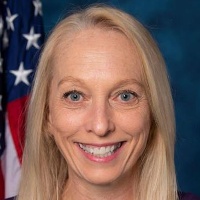
Mary Scanlon
Representative
PA
Mary Scanlon
Representative
PA
This proposed constitutional amendment grants Congress and the states the authority to establish reasonable limits on campaign spending by candidates and outside groups to ensure fair elections. It allows for different spending regulations for individuals versus corporations or other entities. Crucially, this new power cannot be used to restrict the freedom of the press.
This act increases the corporate tax rate for companies whose CEO-to-worker pay ratio exceeds 50 to 1, based on a five-year average calculation.
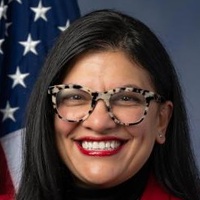
Rashida Tlaib
Representative
MI
Rashida Tlaib
Representative
MI
The Tax Excessive CEO Pay Act of 2025 imposes a federal income tax penalty on corporations whose CEO-to-worker pay ratio exceeds 50-to-1, calculated using a five-year average. If the ratio is too high, the standard 21% corporate tax rate will increase according to a specified penalty table. This measure applies to tax years beginning after December 31, 2025, with exceptions for smaller companies below a $100 million revenue threshold.