Legislative Activity
Track Donald's sponsored bills, co-sponsored legislation, and voting record
This bill significantly increases federal penalties for economic espionage and mishandling defense information when committed to benefit a foreign adversary.
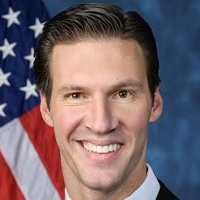
Pat Harrigan
Representative
NC
Pat Harrigan
Representative
NC
The Foreign Adversary Federal Offense Act of 2025 significantly increases penalties for economic espionage and the mishandling of defense information when committed to benefit a "covered nation." This bill establishes new minimum prison sentences, higher fines for both individuals and organizations, and removes supervised release eligibility for these specific offenses. It also clarifies that espionage causing severe harm to critical infrastructure falls under the strictest penalties.
This Act directs the Secretary of HHS to issue guidance on Medicaid/CHIP coverage for postpartum pelvic health services and establishes a national education campaign on the topic.
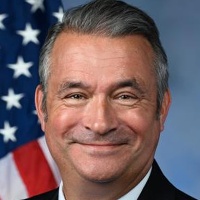
Don Bacon
Representative
NE
Don Bacon
Representative
NE
The Optimizing Postpartum Outcomes Act of 2025 aims to improve women's health after childbirth by clarifying Medicaid/CHIP coverage for essential pelvic health services. It mandates federal guidance for states on covering services like pelvic floor exams and physical therapy, alongside establishing a national education campaign for both providers and new mothers. The bill also directs the GAO to study existing coverage gaps for postpartum women under Medicaid.
This act clarifies Medicare coverage and payment rules for occupational therapy services when used to treat mental health or substance use disorders.
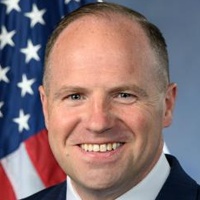
Timothy Kennedy
Representative
NY
Timothy Kennedy
Representative
NY
The Occupational Therapy Mental Health Parity Act aims to clarify and ensure proper coverage of occupational therapy services under Medicare for treating mental health and substance use disorders. It mandates the Secretary of Health and Human Services to educate stakeholders on billing and payment rules within the Medicare Benefit Policy Manual. This ensures providers are correctly reimbursed when using occupational therapy for mental health treatment.
This act establishes regional centers to research, develop, and train for enhanced cybersecurity across the American food and agriculture supply chain.
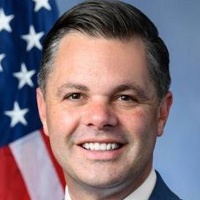
Zachary (Zach) Nunn
Representative
IA
Zachary (Zach) Nunn
Representative
IA
The Cybersecurity in Agriculture Act of 2025 establishes a program to create five Regional Agriculture Cybersecurity Centers. These centers will focus on research, development, and training to secure the nation's food supply chain against cyber threats. The bill authorizes $25 million annually through fiscal year 2030 to fund these university-led initiatives.
The Community Paramedicine Act of 2025 establishes a grant program administered by HRSA to fund specially trained paramedics providing mobile healthcare services, particularly in rural and Tribal communities.
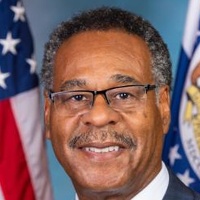
Emanuel Cleaver
Representative
MO
Emanuel Cleaver
Representative
MO
The Community Paramedicine Act of 2025 establishes a new grant program administered by HRSA to support specially trained paramedics providing mobile healthcare services outside of emergency calls, primarily in rural areas. Eligible non-profit entities can apply for up to $\$1.5$ million over five years to fund staffing, equipment, training, and medical oversight for these patient-centered services. The bill specifically reserves a portion of funding for Tribal community programs and requires rigorous reporting on program outcomes.
This act ensures that time spent receiving outpatient observation services in a hospital counts toward the required 3-day inpatient stay for Medicare coverage of skilled nursing facility services.
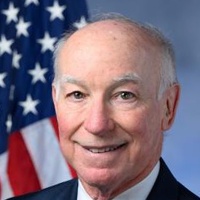
Joe Courtney
Representative
CT
Joe Courtney
Representative
CT
The Improving Access to Medicare Coverage Act of 2025 ensures that time spent receiving outpatient observation services in a hospital counts toward the required 3-day inpatient stay needed to qualify for Medicare coverage of skilled nursing facility (SNF) services. This change effectively removes a significant barrier to accessing post-hospital care for many Medicare beneficiaries. The Secretary of HHS is authorized to implement this rule immediately.
This Act establishes a grant program to provide up to \$500,000 to nonprofit emergency departments for improving operations, staffing, and equipment.

Michael Lawler
Representative
NY
Michael Lawler
Representative
NY
The Streamline Emergency Care Act establishes a new federal grant program to help nonprofit hospitals improve the efficiency and operations of their emergency departments. These grants, capped at $500,000 per award, can be used for staffing, facility upgrades, and staff training. The goal is to modernize emergency care delivery and enhance patient throughput.
This bill grants a federal charter to the Veterans Association of Real Estate Professionals to support veterans' housing, financial literacy, and economic stability.
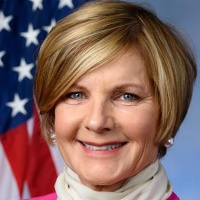
Susie Lee
Representative
NV
Susie Lee
Representative
NV
This bill grants a Federal charter to the Veterans Association of Real Estate Professionals, officially recognizing it as a nonprofit veterans service organization. The organization is tasked with promoting sustainable homeownership, financial literacy, and economic opportunity for veterans and service members. It must adhere to strict operational rules, including prohibitions on political activity and the distribution of profits to members. The charter remains contingent upon the organization maintaining its tax-exempt status and compliance with California corporate law.
The FIGHT Act of 2025 strengthens federal prohibitions against animal fighting, enhances enforcement mechanisms, and allows citizens to sue violators of animal fighting provisions.
Don Bacon
Representative
NE
Don Bacon
Representative
NE
The FIGHT Act of 2025 significantly strengthens federal prohibitions against animal fighting ventures, specifically targeting the sponsorship, exhibition, and gambling associated with these events. This legislation clarifies the definition of a rooster for legal purposes and bans the interstate transport of roosters for fighting. Furthermore, it empowers private citizens to file lawsuits against violators, allowing for civil penalties and the potential seizure of property used to facilitate illegal animal fighting.
This act permits the placement of a U.S. flag securely next to the grave of any service member or veteran, overriding existing flag code restrictions.
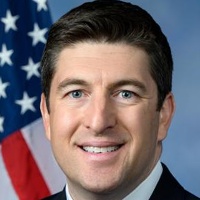
Bryan Steil
Representative
WI
Bryan Steil
Representative
WI
The American Flags to Honor Our Veterans Act of 2025 specifically authorizes the placement of the U.S. flag directly next to the gravesite of any individual who served in the Armed Forces or is a veteran. This provision ensures that flags can be displayed securely and upright next to individual graves, regardless of other existing flag display regulations.
This Act establishes a project to significantly improve the forecasting of coastal marine fog through enhanced data collection, better modeling, and clearer public advisories to increase safety and reduce economic losses.
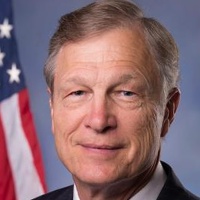
Brian Babin
Representative
TX
Brian Babin
Representative
TX
The Fog Observations and Geographic Forecasting Act establishes a new project to significantly improve the prediction of coastal marine fog. This initiative focuses on gathering enhanced real-time ocean data and developing more accurate forecasting models. The ultimate goal is to increase safety for marine operations and reduce economic losses caused by unexpected fog events.
This act reauthorizes and updates mandatory funding levels for federal programs aimed at preventing, surveilling, and rapidly responding to foreign animal diseases in the United States through 2031.
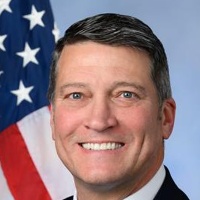
Ronny Jackson
Representative
TX
Ronny Jackson
Representative
TX
The Foreign Animal Disease Prevention, Surveillance, and Rapid Response Act of 2025 reauthorizes and significantly increases mandatory funding levels for critical animal disease prevention and management programs through 2031. This legislation ensures sustained financial support for national animal health laboratories, surveillance efforts, and preparedness initiatives. The bill updates funding allocations to enhance the nation's ability to rapidly respond to potential foreign animal disease outbreaks.
The Community TEAMS Act of 2025 establishes grants for medical schools to partner with rural and underserved health facilities to expand community-based clinical training for medical students.
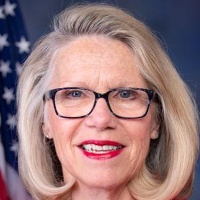
Carol Miller
Representative
WV
Carol Miller
Representative
WV
The Community TEAMS Act of 2025 establishes new federal grants to fund partnerships between medical schools and local health facilities in rural and medically underserved communities. These grants aim to expand clinical training opportunities for medical students in high-need areas. The ultimate goal is to encourage these students to establish long-term medical practices within those communities after graduation.
This bill authorizes a Congressional Gold Medal to honor U.S. citizens who voluntarily served in the Canadian or British Armed Forces during World War II before the U.S. entered the conflict.
Eugene Vindman
Representative
VA
Eugene Vindman
Representative
VA
This bill, the American Patriots of WWII through Service with the Canadian and British Armed Forces Gold Medal Act of 2025, authorizes the creation of a Congressional Gold Medal. This medal will honor U.S. citizens who voluntarily served in the Canadian or British Armed Forces and associated groups before the United States officially entered World War II. The medal will be presented on behalf of Congress and ultimately housed at the Smithsonian Institution.
This resolution officially recognizes and honors the 250th anniversary of the United States Army, celebrating its history, valor, and enduring commitment to national defense.
Jason Crow
Representative
CO
Jason Crow
Representative
CO
This resolution formally recognizes and honors the 250th birthday of the United States Army, celebrating its 250 years of service, valor, and dedication to defending American freedom. Congress expresses deep appreciation for the Army's history, its commitment to core values, and its current readiness to meet any future global challenge. The resolution encourages the American public to observe this significant anniversary with appropriate ceremonies.
The EMS Counts Act mandates the Department of Labor to accurately classify dual-role firefighter-EMTs and firefighter-paramedics in federal occupational statistics to ensure proper resource allocation for emergency services.
Glenn Thompson
Representative
PA
Glenn Thompson
Representative
PA
The EMS Counts Act addresses the critical undercounting of Emergency Medical Services (EMS) personnel by the Bureau of Labor Statistics. This bill mandates that the Secretary of Labor update occupational classifications to explicitly recognize dual-role firefighter-EMTs and firefighter-paramedics. By accurately counting all EMS practitioners, this legislation aims to improve federal planning for emergency response and disaster preparedness.
This Act officially defines plant biostimulants, clarifies their distinction from plant regulators, and mandates a USDA study on their effectiveness for improving soil health.
Jimmy Panetta
Representative
CA
Jimmy Panetta
Representative
CA
The Plant Biostimulant Act of 2025 establishes clear federal definitions for "plant biostimulant" and "nutritional chemical," explicitly carving them out from existing regulations for "plant regulators." This legislation also mandates the EPA to update relevant regulations to reflect these new definitions within 120 days of enactment. Furthermore, the bill directs the Secretary of Agriculture to conduct a comprehensive study on how biostimulants and farming practices impact soil health, carbon sequestration, and nutrient efficiency.
This bill establishes the Border Operations Service Medal to honor military personnel and federal employees involved in designated national security operations along the U.S.-Mexico border starting January 1, 2025.
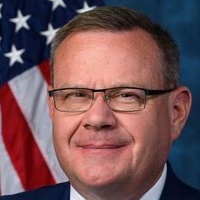
Tim Moore
Representative
NC
Tim Moore
Representative
NC
The Border Operations Service Medal Act establishes a new military decoration, the Border Operations Service Medal, to recognize service members and federal employees involved in designated national security operations along the U.S.-Mexico border starting January 2025. This medal will be awarded to active-duty, National Guard, and Reserve members who participated in these specific border security efforts. The Secretary of Defense is tasked with designing and implementing the medal within 60 days of the Act's enactment.
This bill mandates a Department of Defense study on the feasibility and impact of providing housing for civilian workers at four key naval shipyards.
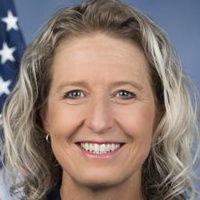
Jennifer Kiggans
Representative
VA
Jennifer Kiggans
Representative
VA
The Defense Shipyard Workforce Housing Act of 2025 mandates a Department of Defense study to assess the feasibility, costs, and benefits of providing housing for civilian workers at four key naval shipyards. This comprehensive review will examine options for building or leasing housing and its potential impact on recruitment and retention. The findings, including recommendations, must be reported to Congress within 18 months of enactment.
This Act mandates comprehensive, no-cost-sharing coverage for prenatal, childbirth, neonatal, perinatal, and postpartum health care under the Affordable Care Act.
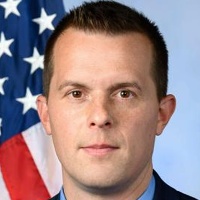
Jared Golden
Representative
ME
Jared Golden
Representative
ME
The Supporting Healthy Moms and Babies Act mandates that essential health benefits under the ACA must comprehensively cover prenatal, childbirth, neonatal, perinatal, and postpartum care for one full year. This legislation explicitly bans all cost-sharing, including copays and deductibles, for these essential maternity and newborn health services. The bill ensures robust coverage, including specific requirements like mandatory ultrasounds and mental health services for new parents.