Legislative Activity
Track Troy's sponsored bills, co-sponsored legislation, and voting record
The MAIN Event Ticketing Act strengthens the BOTS Act by clarifying illegal bot activity, imposing strict new security and reporting requirements on ticket sellers, and significantly increasing penalties for circumvention.
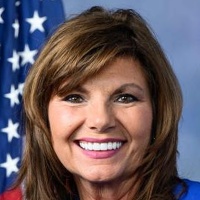
Diana Harshbarger
Representative
TN
Diana Harshbarger
Representative
TN
The MAIN Event Ticketing Act significantly strengthens the BOTS Act to crack down on automated ticket buying by explicitly banning the use of software to bypass ticket purchasing rules. This legislation imposes new mandatory security and reporting requirements on ticket sellers to protect their systems and customer data from circumvention. Violators face substantially increased civil penalties, and the FTC is empowered to enforce these new standards.
This Act establishes federal minimum standards for public employee collective bargaining rights, allowing states to maintain their own laws if they meet or exceed these standards, otherwise the Federal Labor Relations Authority will enforce federal rules.
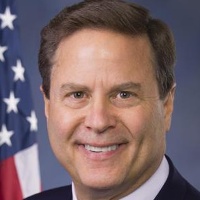
Donald Norcross
Representative
NJ
Donald Norcross
Representative
NJ
The Public Service Freedom to Negotiate Act of 2025 establishes federal minimum standards for collective bargaining rights for public employees across the nation. It requires the Federal Labor Relations Authority (FLRA) to review state laws to ensure they substantially provide these minimum rights, including the right to organize and bargain collectively. If a state fails to meet these standards, the FLRA will administer federal labor relations rules for the uncovered employees. The Act also prohibits strikes or lockouts that would measurably disrupt emergency or public safety services.
This Act directs the Department of Homeland Security to develop and implement a comprehensive strategy to bolster security against threats posed by ghost guns, including cross-border smuggling and terrorism.
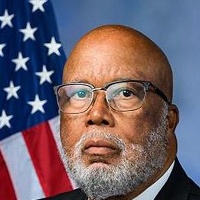
Bennie Thompson
Representative
MS
Bennie Thompson
Representative
MS
The Bolstering Security Against Ghost Guns Act directs the Department of Homeland Security (DHS) to develop a comprehensive strategy to counter threats posed by unserialized, privately made firearms, commonly known as "ghost guns." This legislation mandates specific actions across DHS components, including threat assessments on cross-border smuggling and research on preventing targeted violence involving these weapons. Furthermore, the bill requires regular reporting from the TSA on airport firearm violations and mandates intelligence sharing regarding terrorist threats linked to ghost guns.
The No Tax Breaks for Union Busting Act denies businesses tax deductions for expenses incurred while influencing employees regarding union organization and activities.
Donald Norcross
Representative
NJ
Donald Norcross
Representative
NJ
The No Tax Breaks for Union Busting (NTBUB) Act aims to disallow businesses from deducting federal income taxes for expenses incurred while attempting to influence employees regarding union organization or activities. This change is intended to stop companies from subsidizing anti-union campaigns through tax write-offs. The bill also establishes new, significant reporting requirements and penalties for businesses and third-party consultants who engage in these influence expenditures.
This act authorizes $20 million annually through fiscal year 2030 for the NINDS to supplement research specifically focused on unruptured brain aneurysms across diverse populations.
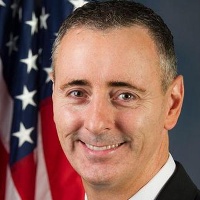
Brian Fitzpatrick
Representative
PA
Brian Fitzpatrick
Representative
PA
The Ellie Helton, Lisa Colagrossi, Kristen Shafer Englert, Teresa Anne Lawrence, and Jennifer Sedney Focused Research Act, or "Ellies Law," addresses the high incidence and devastating impact of brain aneurysms in the U.S. The bill authorizes $20 million annually from Fiscal Year 2026 through 2030 for the National Institute of Neurological Disorders and Stroke (NINDS). This dedicated funding is specifically intended to supplement existing research efforts focused on unruptured intracranial aneurysms across diverse populations.
This Act directs the Department of Homeland Security to review and conduct research and development on the impacts of climate change on national security and disaster response capabilities.
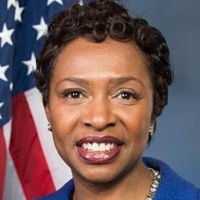
Yvette Clarke
Representative
NY
Yvette Clarke
Representative
NY
The Department of Homeland Security Climate Change Research Act directs the Under Secretary for Science and Technology to review existing federal research on climate change impacts to homeland security operations. This review will assess effects on emergency preparedness and disaster funding structures. Based on these findings, the Under Secretary is authorized to conduct new research and development to mitigate climate change impacts on DHS missions, requiring annual reporting to Congress.
This Act allows employees to fully deduct union dues above the line and restores the itemized deduction for certain other job-related business expenses.
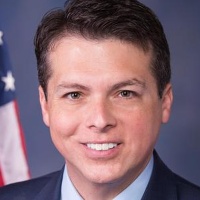
Brendan Boyle
Representative
PA
Brendan Boyle
Representative
PA
The Tax Fairness for Workers Act restores key federal tax deductions for employees, effective after 2024. This legislation makes union dues fully deductible "above the line," meaning they reduce Adjusted Gross Income without itemizing. Additionally, it allows itemizers to deduct certain other job-related business expenses that were previously limited.
This Act overhauls federal firearm dealer regulations by mandating enhanced physical security, stricter inventory tracking, increased licensing fees, and new oversight for online firearm facilitators.
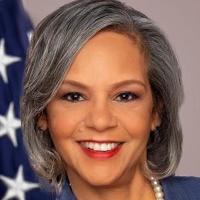
Robin Kelly
Representative
IL
Robin Kelly
Representative
IL
The Federal Firearm Licensee Act significantly overhauls federal regulation of gun dealers by mandating enhanced physical security, stricter inventory tracking, and increased record-keeping requirements. The bill repeals outdated restrictions on the ATF, increases licensing fees, and establishes new regulations for online firearm transfer facilitators. Furthermore, it strengthens enforcement by increasing penalties for compliance failures and mandating more frequent inspections for high-risk dealers.
This bill caps out-of-pocket insulin costs at the lesser of \$35 or 25% of the negotiated price for individuals aged 26 and under covered by private health plans, starting in 2026.
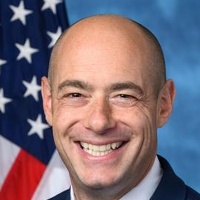
Greg Landsman
Representative
OH
Greg Landsman
Representative
OH
The Making Insulin Affordable for All Children Act caps the out-of-pocket cost for selected insulin products for individuals aged 26 and under with private health insurance. For these younger individuals, cost-sharing for covered insulin will be limited to the lesser of \$35 or 25% of the negotiated price per 30-day supply, and no deductible may be applied to these specific drugs. These new protections apply to group and individual health plans starting in plan years beginning on or after January 1, 2026.
This Act prohibits the State Department from implementing any reorganization without specific statutory authorization from Congress and the submission of a detailed plan outlining the impact of the changes.
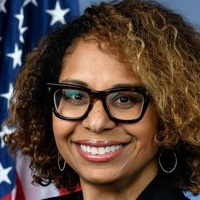
Sydney Kamlager-Dove
Representative
CA
Sydney Kamlager-Dove
Representative
CA
The Defending American Diplomacy Act prohibits the Secretary of State from implementing any reorganization of the State Department without specific statutory authorization from Congress and the submission of a detailed plan. This plan must thoroughly analyze the impact on foreign policy goals, operations, and personnel. If the Secretary proceeds without authorization, specific funding restrictions against the Department of Government Efficiency and official travel for high-level appointees will take effect.
The IDEA Full Funding Act establishes mandatory, increasing funding levels for the Individuals with Disabilities Education Act (IDEA) from 2026 through 2035, contingent upon offsetting budget cuts.
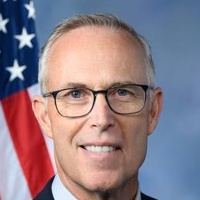
Jared Huffman
Representative
CA
Jared Huffman
Representative
CA
The IDEA Full Funding Act establishes mandatory, increasing funding levels for the Individuals with Disabilities Education Act (IDEA) programs through fiscal year 2035. This legislation sets specific appropriation targets based on student counts and national average spending to ensure greater financial support for special education services. Furthermore, the bill requires that these new IDEA appropriations adhere to "cut-as-you-go" budget offset rules.
The Building Child Care for a Better Future Act dramatically increases federal funding for state child care entitlements and establishes a new annual $\$5$ billion grant program to specifically address workforce, supply, quality, and access in high-need areas.
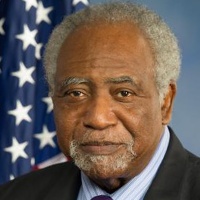
Danny Davis
Representative
IL
Danny Davis
Representative
IL
The Building Child Care for a Better Future Act dramatically increases federal funding for state child care entitlements and establishes a new \$5 billion annual grant program to address critical shortages in the child care workforce, supply, and quality in identified high-need areas. These funds are intended to supplement existing spending and support providers through facility improvements, workforce training, and ensuring living wages for staff. The legislation also sets specific requirements for planning, reporting, and evaluation to track the impact of these investments.
This Act establishes the Youth Mental Health Research Initiative, coordinating national research efforts to improve understanding, prevention, and treatment of mental health challenges in young people.
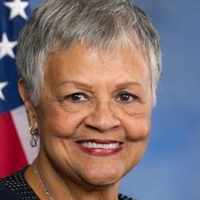
Bonnie Watson Coleman
Representative
NJ
Bonnie Watson Coleman
Representative
NJ
The Youth Mental Health Research Act establishes a new, coordinated research initiative led by the NIMH Director to improve understanding and treatment of youth mental health. This effort will focus on building resilience, improving early identification, and enhancing the accessibility of mental health care in community settings. The Act authorizes $100 million in funding annually through fiscal year 2030 to support this vital research.
This bill prohibits the use of federal funds for the removal of 3 percent or more of the Department of Health and Human Services (HHS) employees or any of its sub-agencies within any 60-day period.
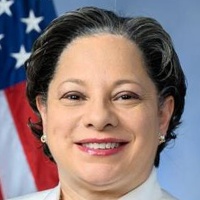
Jennifer McClellan
Representative
VA
Jennifer McClellan
Representative
VA
This bill restricts the use of federal funds to carry out large-scale removals of employees within the Department of Health and Human Services (HHS). Specifically, it prohibits using federal money for terminations if 3% or more of the total HHS workforce, or 3% or more of any individual sub-agency's staff, are removed within a 60-day period. This measure aims to prevent sudden, mass layoffs across the department and its major divisions.
This Act imposes sweeping, mandatory sanctions, tariffs, and investment prohibitions on the Russian Federation and its affiliates until Russia negotiates a lasting peace with Ukraine.
Brian Fitzpatrick
Representative
PA
Brian Fitzpatrick
Representative
PA
The Sanctioning Russia Act of 2025 imposes sweeping economic penalties on the Russian Federation in response to its aggression against Ukraine. This legislation mandates severe, immediate sanctions against key Russian officials, financial institutions, and energy sector entities, including asset freezes and trade prohibitions. Furthermore, the Act dramatically increases import duties on Russian goods and requires the President to review and reimpose these measures until Russia negotiates a lasting peace with Ukraine.
This Act mandates the Department of Labor to establish and enforce comprehensive workplace violence prevention standards for healthcare and social service workers, while also tying compliance to Medicare funding for certain facilities.
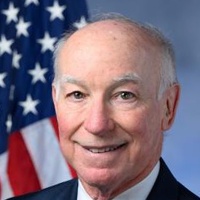
Joe Courtney
Representative
CT
Joe Courtney
Representative
CT
This Act mandates the Secretary of Labor to establish an interim and then a final standard requiring comprehensive workplace violence prevention plans for employers in the healthcare and social service sectors. These plans must be developed with employee input and detail risk assessments, hazard controls, reporting procedures, and annual training. Furthermore, the bill amends the Social Security Act to require Medicare-funded hospitals and skilled nursing facilities not covered by OSHA to comply with these new federal workplace violence prevention standards. The legislation also establishes clear definitions for workplace violence and includes strong anti-retaliation protections for employees who exercise their rights under the Act.
This Act establishes a federal grant program to fund specialized mental health crisis response training for state, local, and Tribal law enforcement and corrections officers.

Marcy Kaptur
Representative
OH
Marcy Kaptur
Representative
OH
The Law Enforcement Training for Mental Health Crisis Response Act of 2025 establishes a grant program to fund specialized behavioral health crisis response training for state, local, and Tribal law enforcement and corrections officers. This initiative aims to improve officer and public safety by equipping personnel with the necessary skills to safely de-escalate encounters involving individuals experiencing mental health emergencies. Grants will be administered by the Attorney General to supplement existing agency funds dedicated to this critical training.
This resolution officially recognizes and supports the goals of National Women's History Month for March 2025, honoring the ongoing struggle and achievements of women throughout American history.
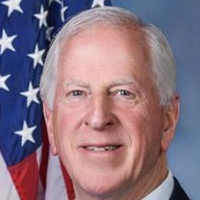
Mike Thompson
Representative
CA
Mike Thompson
Representative
CA
This resolution officially recognizes and celebrates National Women's History Month for March 2025, honoring the long struggle and significant achievements of women throughout American history. It highlights key milestones in women's suffrage, political leadership, and social progress. The House of Representatives supports the goals of ensuring women's history is taught and recognizes the 2025 theme, "Moving Forward Together! Women Educating Inspiring Generations!"
This Act establishes federal grant programs to improve medical education, expand community health center capacity, and increase rural provider training in gender-affirming care for transgender individuals.
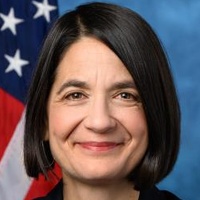
Becca Balint
Representative
VT
Becca Balint
Representative
VT
The Transgender Health Care Access Act aims to improve access to gender-affirming care by addressing critical gaps in medical education and provider capacity. The bill establishes grant programs to develop and implement comprehensive training curricula for medical professionals across various settings, including rural areas. Furthermore, it provides funding to expand the ability of community health centers to deliver culturally competent and necessary care to transgender individuals. Ultimately, this legislation seeks to ensure that healthcare providers are adequately trained and equipped to meet the medical needs of the transgender population.
The Sarah Katz Caffeine Safety Act mandates clearer caffeine labeling on restaurant menus and packaged foods, initiates federal safety reviews by the FDA and NIH, and establishes public education and marketing studies regarding caffeine consumption.
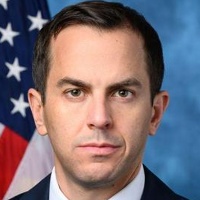
Robert Menendez
Representative
NJ
Robert Menendez
Representative
NJ
The Sarah Katz Caffeine Safety Act mandates clearer caffeine labeling for restaurant chains and packaged foods, requiring warnings for items exceeding 150mg of caffeine. It also directs the FDA and NIH to conduct urgent safety reviews concerning caffeine consumption in the general population and vulnerable groups. Furthermore, the bill establishes a public education campaign on safe caffeine use and requires a GAO study on the marketing of caffeinated beverages, particularly toward youth.