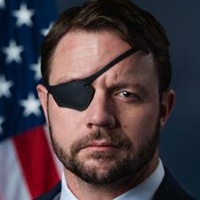
Legislative Activity
Track Dan's sponsored bills, co-sponsored legislation, and voting record
Mandates sanctions on Ansarallah (the Houthi movement) and its affiliates for international terrorism.
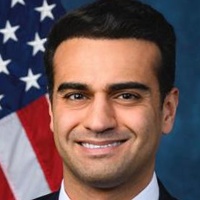
Abraham Hamadeh
Representative
AZ
Abraham Hamadeh
Representative
AZ
This bill mandates the President to designate Ansarallah (the Houthi movement) as a foreign terrorist organization within 30 days. It further requires the President to determine and report to Congress if specific individuals are officials, agents, or affiliates of Ansarallah within 30 days of the designation.
The United States-Israel Defense Partnership Act of 2025 bolsters defense cooperation between the U.S. and Israel through joint programs, funding increases, and extended authorities related to countering unmanned systems, anti-tunnel technology, emerging technologies, and war reserve stockpiles, while also exploring Israel's inclusion in the national technology and industrial base and assessing integrated air and missile defense in the CENTCOM region.
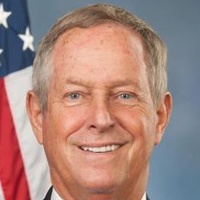
Joe Wilson
Representative
SC
Joe Wilson
Representative
SC
The United States-Israel Defense Partnership Act of 2025 seeks to bolster the defense relationship between the United States and Israel through joint initiatives and increased cooperation. It establishes programs to counter unmanned systems, extend anti-tunnel and counter-UAS cooperation, and promote collaboration in emerging technologies like AI and cybersecurity. The act also mandates the establishment of a Defense Innovation Unit office in Israel and assesses integrated air and missile defense in the U.S. Central Command region. Finally, it explores Israel's potential inclusion in the national technology and industrial base.
The "Stop Human Trafficking of Unaccompanied Migrant Children Act of 2025" aims to protect unaccompanied alien children by establishing stricter vetting standards for sponsors, mandating home visits, and requiring detailed reports to Congress.
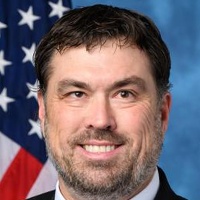
Morgan Luttrell
Representative
TX
Morgan Luttrell
Representative
TX
The "Stop Human Trafficking of Unaccompanied Migrant Children Act of 2025" aims to protect unaccompanied alien children by establishing stricter vetting standards for sponsors, including background checks for all adults in the household and mandatory home visits. It also requires retroactive vetting of past sponsors and detailed monthly reports to Congress on the placement and well-being of these children. The goal is to prevent human trafficking and ensure the safety of unaccompanied migrant children placed with sponsors in the United States.
The "Protect Medicaid Act" prohibits federal Medicaid funding for state administrative costs related to providing health benefits to unauthorized immigrants and requires a report on state practices and funding mechanisms for healthcare provided to non-lawfully admitted noncitizens.
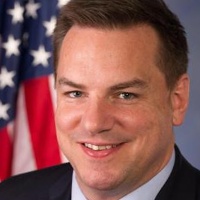
Richard Hudson
Representative
NC
Richard Hudson
Representative
NC
The "Protect Medicaid Act" prohibits federal Medicaid funding for state administrative costs associated with providing healthcare benefits to unauthorized immigrants. It requires a report from the Inspector General of the Department of Health and Human Services on how states that offer health benefits to non-lawfully admitted noncitizens handle Medicaid program administration costs separately. The report will also cover how these states fund programs for non-lawfully admitted noncitizens and analyze the impact of these non-lawfully admitted noncitizens receiving outpatient drugs purchased under the Medicaid Drug Rebate Program or the 340B drug discount program.
This bill seeks to reimburse the State of Texas for expenses incurred while securing the southern border between 2021 and 2025 due to the Federal Government's lack of action.
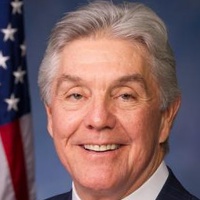
Roger Williams
Representative
TX
Roger Williams
Representative
TX
The "Operation Lone Star Reimbursement Act" seeks to reimburse the State of Texas for the $11.1 billion in expenses incurred for securing the southern border between 2021 and 2025 due to the Federal Government's lack of action. The Governor of Texas must apply for reimbursement from the Department of Homeland Security and the Treasury, including a detailed list of expenses. The Secretary of Homeland Security will review the application and determine eligible expenses, and the Treasury Secretary will then pay Texas the reimbursable amount from unallocated funds.
This bill amends the Internal Revenue Code to clarify that temporary healthcare providers (locum tenens) are not employees for tax purposes, aiming to reduce healthcare provider shortages.
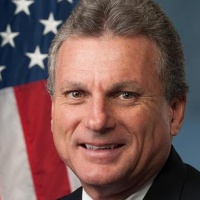
Earl Carter
Representative
GA
Earl Carter
Representative
GA
The "Health Care Provider Shortage Minimization Act of 2025" aims to address healthcare provider shortages by clarifying the tax status of qualified locum tenens physicians and advanced care practitioners. It ensures that these temporary healthcare providers are not classified as employees for tax purposes, provided they meet specific conditions such as working under a written contract and for no more than one continuous year at a service site. This clarification applies to services performed after the Act's enactment.
The bill requires the Secretary of Health and Human Services to create and regularly update a plan for the rapid development, validation, production, and distribution of diagnostic tests in response to public health emergencies.
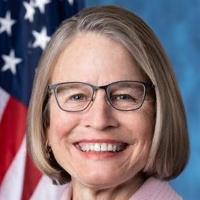
Mariannette Miller-Meeks
Representative
IA
Mariannette Miller-Meeks
Representative
IA
The "Diagnostics Testing Preparedness Plan Act of 2025" requires the Secretary of Health and Human Services to develop and regularly update a plan for the rapid development, validation, production, and distribution of diagnostic tests in response to public health emergencies. This plan aims to improve coordination between public and private entities, consider new technologies, address medical supply needs, and ensure efficient test distribution. The Secretary is authorized to contract with public and private entities to enhance domestic diagnostic testing capacity and must release the plan within one year, updating it every three years thereafter.
The HALT Fentanyl Act permanently classifies fentanyl-related substances as Schedule I controlled substances while streamlining registration procedures for legitimate scientific research.
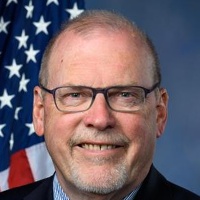
H. Griffith
Representative
VA
H. Griffith
Representative
VA
The Halt All Lethal Trafficking of Fentanyl (HALT Fentanyl) Act permanently classifies fentanyl-related substances as Schedule I controlled substances to strengthen enforcement and penalties against their trafficking. Additionally, the bill streamlines registration processes for researchers to facilitate legitimate scientific study of these substances. It also includes technical corrections and mandates updated federal rulemaking to ensure effective implementation.
The CARTEL Act of 2025 mandates U.S. Customs and Border Protection to publish monthly operational statistics and requires the Secretary of Homeland Security to report annually to Congress on foreign terrorist organizations and transnational criminal organizations attempting to infiltrate the U.S.
Morgan Luttrell
Representative
TX
Morgan Luttrell
Representative
TX
The CARTEL Act of 2025 mandates U.S. Customs and Border Protection to publish detailed monthly reports on various border security operational statistics, including alien encounters, drug seizures, and terrorist watchlist matches. It also requires the Secretary of Homeland Security to submit an annual report to Congress assessing attempts by foreign terrorist organizations and transnational criminal organizations to infiltrate the United States.
The "Primary Care Enhancement Act of 2025" clarifies the tax treatment of direct primary care (DPC) arrangements, excluding them from being considered a health plan for HSA purposes under certain conditions, and allowing DPC fees to be considered medical expenses.
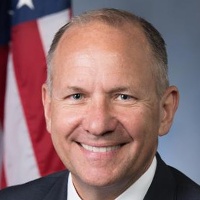
Lloyd Smucker
Representative
PA
Lloyd Smucker
Representative
PA
The "Primary Care Enhancement Act of 2025" modifies the treatment of direct primary care (DPC) arrangements for health savings account (HSA) purposes. It excludes DPC arrangements from being considered a health plan under certain conditions, such as DPC arrangements solely covering primary care services from primary care practitioners for a fixed periodic fee, with limits on monthly fees, and it treats DPC fees as medical expenses. This act also mandates the reporting of DPC fees on W-2 forms and adjusts fee limits for inflation.
The Fair Access to Banking Act prohibits large financial institutions and payment networks from denying services to law-abiding businesses based on subjective, non-financial, or political criteria.
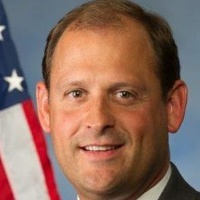
Garland Barr
Representative
KY
Garland Barr
Representative
KY
The Fair Access to Banking Act prohibits large financial institutions and payment networks from denying services to law-abiding businesses based on subjective, politically motivated, or reputational criteria. The bill mandates that financial institutions use impartial, quantitative, risk-based standards to evaluate customers rather than category-based exclusions. To ensure compliance, the legislation establishes enforcement mechanisms through federal regulators and provides a legal pathway for businesses to sue for damages if they are unfairly denied access to financial services.
Mandates comprehensive annual health assessments for armed forces members, including EKGs and blood work, starting in 2026.
Morgan Luttrell
Representative
TX
Morgan Luttrell
Representative
TX
The Specialist Joey Lenz Act of 2025 mandates the Secretary of Defense to include a sports physical, electrocardiogram, and comprehensive blood work as part of the annual health assessment for armed forces members, beginning in 2026. This blood work includes a comprehensive metabolic panel and complete blood count, with additional tests as needed, along with any legally required tests or evaluations. The goal of this act is to ensure comprehensive health monitoring for service members.
The PATROL Act prevents the federal government from using the Rivers and Harbors Act of 1899 to legally challenge state-led efforts to construct physical border barriers.
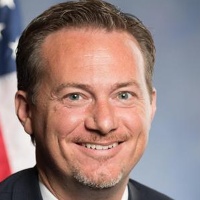
Michael Cloud
Representative
TX
Michael Cloud
Representative
TX
The PATROL Act (Preventing Aliens Through Rivers or Land Act) prohibits the federal government from using the Rivers and Harbors Act of 1899 to legally challenge states that construct physical barriers along their international borders. This legislation aims to protect state-led border security initiatives, such as walls, fences, or floating buoys, from federal civil lawsuits.
This bill mandates the reinstatement of cancelled mineral leases and streamlines the regulatory review process for mining operations within the Superior National Forest in Minnesota.
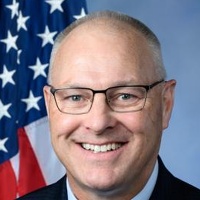
Pete Stauber
Representative
MN
Pete Stauber
Representative
MN
The Superior National Forest Restoration Act of 2025 seeks to reopen federal lands in Minnesota to mineral leasing by rescinding previous withdrawal orders and mandating the reissuance of cancelled mineral leases. The bill also establishes strict 18-month timelines for the federal government to complete environmental and regulatory reviews for new mine plans. Additionally, it directs the immediate issuance of preference right leases for previously rejected applications to facilitate mineral exploration and development.
This bill directs the Secretary of Homeland Security to provide a one-time grant of $5 to $10 million to support the operation, security, and maintenance of the National September 11 Memorial and Museum.
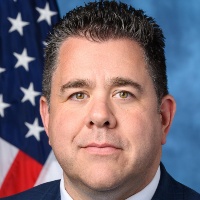
Nicolas LaLota
Representative
NY
Nicolas LaLota
Representative
NY
The 9/11 Memorial and Museum Act authorizes the Secretary of Homeland Security to provide a one-time grant of $5 million to $10 million to support the operation, security, and maintenance of the National September 11 Memorial & Museum. To receive these funds, the organization must meet specific requirements, including providing free admission to first responders, military personnel, and victims' families, as well as submitting to annual federal audits.
The "ORPHAN Cures Act" amends the Social Security Act to refine the orphan drug exclusion within the Drug Price Negotiation Program, modifying criteria for orphan drug designation.
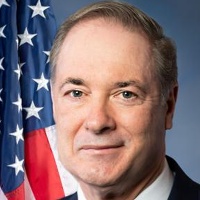
John Joyce
Representative
PA
John Joyce
Representative
PA
The "ORPHAN Cures Act" amends the Social Security Act to refine the orphan drug exclusion within the Drug Price Negotiation Program. It excludes time periods when a drug was designated as an orphan drug from counting towards its eligibility for price negotiation. The bill also modifies the criteria for orphan drug designation, allowing it to apply to drugs treating "one or more rare diseases or conditions" instead of "only one rare disease or condition."
The Dismantle DEI Act of 2025 immediately rescinds federal diversity, equity, and inclusion (DEI) mandates across executive offices, contracting, grants, and education, while banning related training and imposing penalties for non-compliance.
Michael Cloud
Representative
TX
Michael Cloud
Representative
TX
The Dismantle DEI Act of 2025 aims to immediately rescind diversity, equity, and inclusion (DEI) mandates across the federal government, including shutting down related offices and banning specific ideological training for federal personnel and contractors. The bill prohibits the use of federal funds for DEI activities by grant recipients and mandates that federal advisory committees cease all such practices or face termination. Furthermore, it establishes strong enforcement mechanisms, allowing individuals to sue violators and seek financial penalties for non-compliance.
This bill prohibits state and local governments from imposing special taxes, insurance requirements, or user fees as a condition for the ownership, manufacture, or transfer of firearms and ammunition.
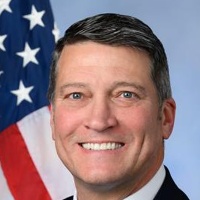
Ronny Jackson
Representative
TX
Ronny Jackson
Representative
TX
The "No User Fees for Gun Owners Act" prohibits state and local governments from imposing special taxes, insurance requirements, or user fees as a condition for owning, manufacturing, or transferring firearms and ammunition. The bill ensures that firearms are only subject to standard, generally applicable sales taxes, preventing discriminatory financial barriers to gun ownership.
This bill directs the Secretary of State to designate specific Mexican drug cartels as foreign terrorist organizations and requires a formal report on their eligibility for such a designation.
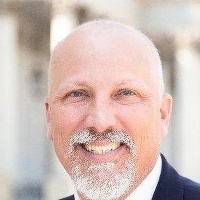
Chip Roy
Representative
TX
Chip Roy
Representative
TX
The Drug Cartel Terrorist Designation Act directs the Secretary of State to designate four major Mexican drug cartels as foreign terrorist organizations. The bill mandates a comprehensive report to Congress evaluating these groups against federal terrorism criteria and requires the designation of any additional cartels that meet these standards. It also clarifies that these designations do not expand asylum eligibility for individuals.
The Educational Choice for Children Act of 2025 establishes federal tax credits for contributions to scholarship-granting organizations, providing lower- and middle-income families with financial support for K–12 educational expenses.
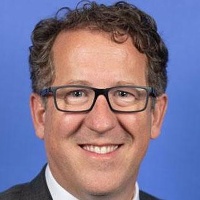
Adrian Smith
Representative
NE
Adrian Smith
Representative
NE
The Educational Choice for Children Act of 2025 establishes federal tax credits for individuals and corporations that contribute to scholarship-granting organizations. These organizations provide K–12 education scholarships to students from lower- and middle-income households to cover tuition, tutoring, and other qualified educational expenses. The bill also protects the autonomy of participating schools and scholarship organizations from government interference while ensuring that scholarship funds remain tax-free for recipient families.