
Legislative Activity
Track Ben's sponsored bills, co-sponsored legislation, and voting record
Prohibits federal funding to the United Nations' immigration and refugee relief organizations IOM, UNHCR, and UNRWA, and requires a study and audit of past funding.
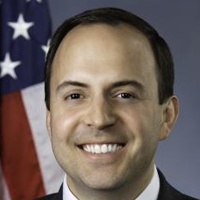
Lance Gooden
Representative
TX
Lance Gooden
Representative
TX
The "No Tax Dollars for the United Nations Immigration Invasion Act" prohibits the U.S. government from financially contributing to the United Nations International Organization for Migration (IOM), the United Nations High Commissioner for Refugees (UNHCR), and the United Nations Relief and Works Agency for Palestine Refugees in the Near East (UNRWA). It also mandates a study by the Comptroller General to identify all federal assistance programs that provide funds to these organizations, detailing amounts, restrictions, and potential repayments, as well as an audit of the Department of State’s Refugee Travel Loan Program. A report summarizing the study and audit results must be submitted to Congress within 180 days of the Act's enactment.
The "Grown in America Act of 2025" establishes a tax credit for businesses that use domestically produced agricultural commodities in their products, aiming to incentivize the use of American-grown ingredients.
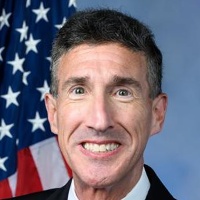
David Kustoff
Representative
TN
David Kustoff
Representative
TN
The "Grown in America Act of 2025" introduces a tax credit for businesses that use domestic agricultural commodities in their products for human consumption. This credit, capped at $100,000,000, aims to incentivize the use of U.S.-produced agricultural inputs by offering a tax benefit based on the percentage of domestic agricultural commodities used. The percentage of domestic inputs required to receive the full credit increases over time, with the Secretary of Agriculture maintaining a list of agricultural commodities that cannot be produced domestically. These provisions will be effective for taxable years starting after December 31, 2025.
The "FARM Act of 2025" restricts tax credits for renewable energy production, specifically solar and wind, on agricultural land used by public utilities.
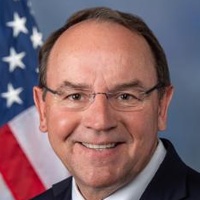
Thomas Tiffany
Representative
WI
Thomas Tiffany
Representative
WI
The FARM Act of 2025 restricts federal tax credits for renewable energy production, specifically solar and wind facilities, when placed on agricultural land by public utilities. This act amends the Internal Revenue Code to deny these credits, aiming to preserve agricultural land.
This resolution condemns the Iranian regime’s terrorism and human rights abuses while affirming support for the Iranian people’s right to establish a democratic, secular, and non-nuclear republic.
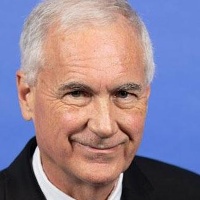
Tom McClintock
Representative
CA
Tom McClintock
Representative
CA
This resolution condemns the Iranian regime for its ongoing human rights abuses, state-sponsored terrorism, and regional instability. It expresses strong support for the Iranian people's struggle for a democratic, secular, and non-nuclear republic. Furthermore, the bill advocates for international accountability for the regime's crimes and calls for the protection of Iranian political refugees.
The No Censors on our Shores Act of 2025 makes foreign government officials who censor U.S. citizens inadmissible to and deportable from the United States.
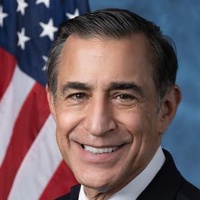
Darrell Issa
Representative
CA
Darrell Issa
Representative
CA
The No Censors on our Shores Act of 2025 seeks to hold foreign government officials accountable for suppressing the free speech of U.S. citizens. The bill amends the Immigration and Nationality Act to make any foreign official who has engaged in such censorship inadmissible to the United States and subject to deportation if already present.
To award a Congressional Gold Medal to the 761st Tank Battalion, the first Black soldiers to serve in an American armored unit, for their valor and crucial contributions to the Allied victory in Europe.
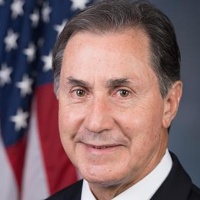
Gary Palmer
Representative
AL
Gary Palmer
Representative
AL
This bill authorizes the Speaker of the House and the President pro tempore of the Senate to award a Congressional Gold Medal to the 761st Tank Battalion, also known as the "Black Panthers," in recognition of their courageous service and crucial contributions during World War II. The medal will be given to the National Museum of African American History and Culture for display, honoring the 761st as the first Black soldiers to serve in an American armored unit and their significant role in the Allied victory in Europe. The bill also allows for the creation and sale of bronze duplicates of the medal to support the United States Mint Public Enterprise Fund.
The "Freedom from Government Competition Act of 2025" aims to limit federal agencies' ability to compete with private businesses by requiring them to procure goods and services from the private sector unless specific conditions are met, such as national security concerns or lack of private sector alternatives.
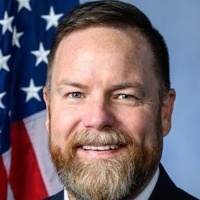
Aaron Bean
Representative
FL
Aaron Bean
Representative
FL
The "Freedom from Government Competition Act of 2025" aims to limit federal government competition with the private sector by requiring agencies to procure goods and services from private sources unless specific exemptions apply, such as national security concerns or lack of private sector alternatives. It mandates a review process for existing agency activities and encourages the transfer of commercial activities to the private sector. The Office of Management and Budget is tasked with issuing regulations and reporting to Congress on the implementation of this Act.
This bill increases the standard mileage rate for charitable contributions to match the rate used for business expenses.
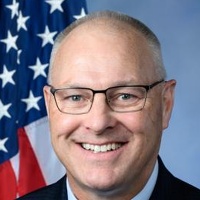
Pete Stauber
Representative
MN
Pete Stauber
Representative
MN
The "Volunteer Driver Tax Appreciation Act of 2025" aims to increase tax benefits for individuals who use their personal vehicles for charitable purposes. Starting after 2024, the bill allows the Secretary to set a higher mileage rate for charitable contributions, matching the standard rate used for business expenses. This adjustment seeks to provide greater financial relief to volunteer drivers by increasing their eligible deductions.
The "Protecting Life from Chemical Abortions Act" restricts the Department of Health and Human Services (including the FDA) from reducing Risk Evaluation and Mitigation Strategy (REMS) protections for abortion drugs and mandates the collection of standardized abortion data.
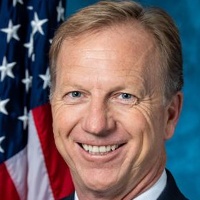
Kevin Hern
Representative
OK
Kevin Hern
Representative
OK
The "Protecting Life from Chemical Abortions Act" restricts the Department of Health and Human Services and the FDA, requiring them to enforce Risk Evaluation and Mitigation Strategy (REMS) requirements for abortion drugs, reinstate the in-person dispensing requirement, and prohibits reducing REMS protections until standardized abortion data is collected by the CDC from every state. It also defines key terms such as "abortion," "abortion drug," and "unborn child" and prohibits the HHS secretary from declaring a public health emergency with respect to abortion.
This bill encourages the deployment and use of automated external defibrillators (AEDs) by providing nationwide legal protections from civil liability for those who use them in emergencies, own them, or manage properties where they are used.
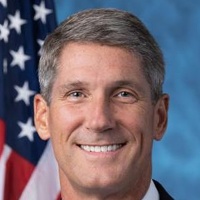
C. Franklin
Representative
FL
C. Franklin
Representative
FL
The Cardiac Arrest Survival Act of 2025 aims to establish a national standard of legal protection from civil liability for individuals using automated external defibrillators (AEDs) in emergencies, as well as for AED owners and property managers where AEDs are used. This bill amends the Public Health Service Act to encourage broader AED deployment by providing Good Samaritan protections for those who use or attempt to use an AED, premises owner/lessee/manager protections, and device owner-acquirer protections, with certain exceptions for misconduct or failure to maintain the device. The Act seeks to preempt inconsistent state laws and clarify that it does not mandate AED placement or create new causes of action. By creating consistent, nationwide legal protection, this bill intends to save lives from cardiac arrest.
This bill authorizes the creation of a Congressional Gold Medal to honor the volunteers and communities involved with the North Platte Canteen during World War II.

Adrian Smith
Representative
NE
Adrian Smith
Representative
NE
The North Platte Canteen Congressional Gold Medal Act recognizes and honors the volunteers and donors of the North Platte Canteen in Nebraska during World War II with a Congressional Gold Medal. This medal will be presented by the Speaker of the House and the President pro tempore of the Senate, and then displayed at the Lincoln County Historical Museum. The Act also authorizes the creation and sale of bronze duplicates of the gold medal to cover production costs, with proceeds deposited into the Mint's Public Enterprise Fund.
This resolution designates February 15–22, 2025, as "National FFA Week" to celebrate the organization's impact on agricultural education and its historic milestones.
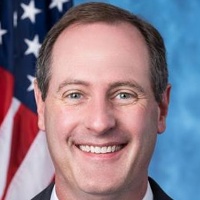
Tracey Mann
Representative
KS
Tracey Mann
Representative
KS
This resolution designates February 15–22, 2025, as "National FFA Week" to honor the National FFA Organization’s vital role in cultivating the next generation of agricultural leaders. It celebrates the organization’s commitment to personal growth and career readiness while commemorating the 90th anniversary of the New Farmers of America and the 75th anniversary of the FFA’s federal charter.
Prohibits securities exchanges from processing transactions involving securities issued by "natural asset companies" that manage land for conservation and ecological performance.
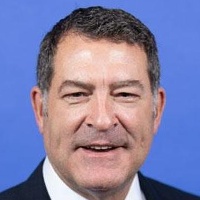
Mark Green
Representative
TN
Mark Green
Representative
TN
The "Protect America's Lands Act" prevents national securities exchanges from handling transactions of securities issued by "natural asset companies." These companies manage land for conservation and aim to enhance the value of natural assets and ecosystem services. The bill defines specific criteria for what constitutes a "natural asset company" to ensure the prohibition is appropriately applied.
The "Death Tax Repeal Act" eliminates estate and generation-skipping transfer taxes, adjusts gift tax calculations, and sets a $10,000,000 lifetime gift exemption.
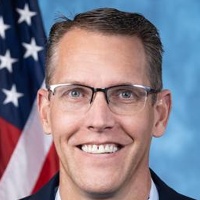
Randy Feenstra
Representative
IA
Randy Feenstra
Representative
IA
The "Death Tax Repeal Act" eliminates both estate and generation-skipping transfer taxes, effective from the date of enactment. It adjusts gift tax calculations by setting the lifetime gift exemption at $10,000,000, with inflation adjustments after 2011. The Act also includes transitional rules for applying certain sections of the Internal Revenue Code during the enactment year.
The "Alternatives to PAIN Act" aims to improve Medicare Part D coverage for non-opioid pain management drugs by reducing cost-sharing and removing barriers like step therapy and prior authorization, starting in 2026.
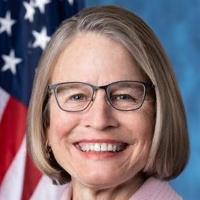
Mariannette Miller-Meeks
Representative
IA
Mariannette Miller-Meeks
Representative
IA
The "Alternatives to PAIN Act" amends Medicare Part D to improve access to non-opioid pain management drugs by waiving deductibles and ensuring they are placed on the lowest cost-sharing tier starting in 2026. The Act also prohibits the use of step therapy and prior authorization requirements for these drugs, further easing access for patients. These changes aim to provide more accessible alternatives for pain management, reducing reliance on opioids.
The "National Right-to-Work Act" prohibits mandatory union membership as a condition of employment, protecting employees' rights to choose whether or not to join or support a labor union.
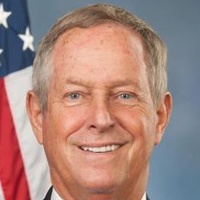
Joe Wilson
Representative
SC
Joe Wilson
Representative
SC
The "National Right-to-Work Act" amends both the National Labor Relations Act and the Railway Labor Act to protect an employee's right to choose whether or not to join or support a labor union. It eliminates the possibility of mandatory union membership or dues payments as a condition of employment, ensuring that employees cannot be forced to join or support a union against their will.
The United States-Israel Defense Partnership Act of 2025 bolsters defense cooperation between the U.S. and Israel through joint programs, funding increases, and extended authorities related to countering unmanned systems, anti-tunnel technology, emerging technologies, and war reserve stockpiles, while also exploring Israel's inclusion in the national technology and industrial base and assessing integrated air and missile defense in the CENTCOM region.
Joe Wilson
Representative
SC
Joe Wilson
Representative
SC
The United States-Israel Defense Partnership Act of 2025 seeks to bolster the defense relationship between the United States and Israel through joint initiatives and increased cooperation. It establishes programs to counter unmanned systems, extend anti-tunnel and counter-UAS cooperation, and promote collaboration in emerging technologies like AI and cybersecurity. The act also mandates the establishment of a Defense Innovation Unit office in Israel and assesses integrated air and missile defense in the U.S. Central Command region. Finally, it explores Israel's potential inclusion in the national technology and industrial base.
The SAFE for America Act of 2025 eliminates the diversity visa program, effective October 1, 2025.
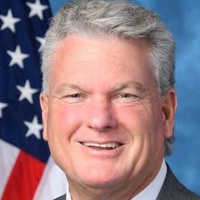
Mike Collins
Representative
GA
Mike Collins
Representative
GA
The SAFE for America Act of 2025 eliminates the Diversity Visa Program, which makes visas available to persons from countries with low rates of immigration to the United States. This is achieved through repealing subsection (c) of Section 203 of the Immigration and Nationality Act. The Act also makes corresponding technical amendments to other sections of the Immigration and Nationality Act to reflect this change. These changes would take effect beginning October 1, 2025.
Repeals the Impoundment Control Act of 1974, eliminating congressional oversight of presidential decisions to withhold funds.
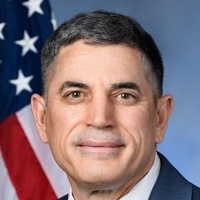
Andrew Clyde
Representative
GA
Andrew Clyde
Representative
GA
This bill repeals the Impoundment Control Act of 1974, eliminating the requirements for the President to report to Congress on decisions to withhold or delay spending of appropriated funds. This removes the process by which Congress can approve or disapprove of these presidential actions.
This joint resolution disapproves the Federal Trade Commission’s rule regarding premerger notification, reporting, and waiting period requirements, rendering it without legal force or effect.
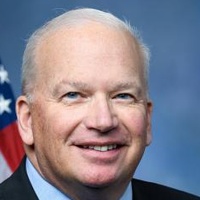
Scott Fitzgerald
Representative
WI
Scott Fitzgerald
Representative
WI
This resolution invokes the Congressional Review Act to formally disapprove the Federal Trade Commission’s recent rule regarding premerger notification, reporting, and waiting period requirements. If enacted, this measure would nullify the rule, rendering it without legal force or effect.