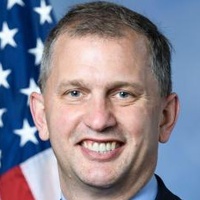
Legislative Activity
Track Sean's sponsored bills, co-sponsored legislation, and voting record
This Act formally establishes the science-based Advisory Committee on Immunization Practices (ACIP) and mandates that changes to the National Vaccine Injury Compensation Program's injury table must be supported by a preponderance of the best available scientific evidence.

Frank Pallone
Representative
NJ
Frank Pallone
Representative
NJ
The Family Vaccine Protection Act formally establishes the Advisory Committee on Immunization Practices (ACIP) into law, requiring all its vaccine recommendations to be based on the preponderance of the best available, peer-reviewed scientific evidence. This legislation mandates strict procedures for the CDC Director to adopt or reject ACIP advice, including notifying Congress if a recommendation is rejected. Furthermore, the Act requires that any changes to the National Vaccine Injury Compensation Program's injury table must also be supported by strong scientific evidence.
This act mandates that FHA loan disclosures include comparable VA loan information and requires lenders to ask about military service on standard loan applications.

Brittany Pettersen
Representative
CO
Brittany Pettersen
Representative
CO
The VA Loan Informed Disclosure Act of 2025 (VALID Act) aims to increase awareness of VA loan options among homebuyers. It requires lenders to include comparative information about potential VA loan terms on standard FHA disclosure forms. Furthermore, the Act mandates that the Uniform Residential Loan Application include a prominent question regarding the applicant's military service.
This act bans the interstate transportation of horses using vehicles with two or more stacked levels.

Steve Cohen
Representative
TN
Steve Cohen
Representative
TN
The Horse Transportation Safety Act of 2025 prohibits the interstate transport of horses using any truck or trailer with two or more stacked levels. This measure aims to enhance animal welfare during cross-state travel by banning multilevel transport configurations. Violators who knowingly break this rule face civil penalties ranging from $\$100$ to $\$500$ per violation.
The Menstrual Equity For All Act of 2025 mandates the provision of free menstrual products across schools, correctional facilities, federal buildings, and workplaces, while also expanding coverage under Medicaid and eliminating sales tax on these essential items.

Grace Meng
Representative
NY
Grace Meng
Representative
NY
The Menstrual Equity For All Act of 2025 aims to eliminate period poverty by ensuring access to free menstrual products across various sectors of society. This comprehensive bill mandates the availability of these essential supplies in K-12 schools, colleges, correctional facilities, federal buildings, and workplaces with over 100 employees. Furthermore, it expands coverage under Medicaid, allocates specific funding through social service block grants and TANF programs, and prohibits states from taxing menstrual products.
This Act mandates the National Park Service to establish a program to reduce and eliminate the sale and distribution of disposable plastic products, like single-use water bottles and utensils, across all national park units.

Mike Quigley
Representative
IL
Mike Quigley
Representative
IL
The Reducing Waste in National Parks Act mandates the National Park Service (NPS) to establish a program to significantly reduce or eliminate the sale and distribution of disposable plastic products, including single-use water bottles, across all park units. Regional directors must implement these changes while considering operational costs, visitor safety regarding water access, and vendor contracts. The law also requires proactive visitor education and biennial reviews to assess the program's effectiveness and public impact.
This act establishes fixed, non-renewable 18-year terms for future Supreme Court Justices and outlines a staggered appointment schedule, while also creating a temporary mechanism for filling vacancies below the nine-justice quorum.

Henry Johnson
Representative
GA
Henry Johnson
Representative
GA
The Supreme Court Tenure Establishment and Retirement Modernization Act of 2025 establishes fixed, non-renewable 18-year terms for all future Supreme Court Justices, with appointments staggered every two years. This legislation also outlines a process for phasing out current Justices upon the confirmation of new appointees. Finally, it grants the Chief Justice the authority to temporarily fill sudden vacancies below the standard nine-justice level using a randomly selected retired Justice.
This Act restricts the use of federal funds for a U.S. nuclear first strike unless the President deems it necessary and Congress is notified seven days prior, except in cases of declared war, prior nuclear attack, or launch-on-warning scenarios.

Scott Peters
Representative
CA
Scott Peters
Representative
CA
The Nuclear First-Strike Security Act of 2025 places strict limitations on the use of federal funds to initiate a nuclear attack. Under this Act, a first-use nuclear strike requires a presidential determination that it is in the U.S. best interest, followed by a mandatory seven-day notification to top Congressional leaders. This notification requirement is waived only in cases of a formal declaration of war, a prior nuclear attack on the U.S. or an ally, or during a confirmed launch-on-warning scenario.
This bill prohibits high-ranking government officials and their families from trading, profiting from, or controlling digital assets while in office to prevent conflicts of interest.

Maxine Waters
Representative
CA
Maxine Waters
Representative
CA
The Stop TRUMP in Crypto Act of 2025 prohibits covered government officials and their immediate families from trading, owning, or profiting from digital assets while in office. This legislation specifically bans insider trading of crypto and prevents officials from using intermediaries or complex ownership structures to bypass these restrictions. The Act aims to eliminate conflicts of interest by ensuring high-ranking officials cannot benefit financially from involvement with cryptocurrencies.
This bill protects striking and locked-out workers by preventing employers from terminating or altering their group health plan coverage during a labor dispute and establishes significant civil penalties for violations.

Chris Deluzio
Representative
PA
Chris Deluzio
Representative
PA
The Striking and Locked Out Workers Healthcare Protection Act ensures that employers cannot terminate or alter group health plan coverage for employees during a lawful strike or an employer-initiated lockout. This legislation aims to prevent employers from using health benefits as leverage during labor disputes. The bill also establishes significant civil penalties, including fines up to \$150,000 per violation, for employers who interfere with this coverage, and allows for individual liability for directors and officers involved in such violations.
This resolution expresses strong support for designating May 2025 as Mental Health Awareness Month to highlight the national mental health crisis and encourage greater action and access to care.

Andrea Salinas
Representative
OR
Andrea Salinas
Representative
OR
This resolution expresses strong support for designating May 2025 as Mental Health Awareness Month to combat a growing national crisis. It highlights alarming statistics regarding rising mental illness rates, significant barriers to accessing care, and disproportionate impacts on youth and marginalized communities. Ultimately, the bill declares mental health a national priority and encourages increased public awareness and support for mental health services.
The Real Education and Access for Healthy Youth Act of 2025 establishes federal grant programs to fund comprehensive, evidence-informed, and culturally responsive sex education and youth-friendly sexual health services, prioritizing underserved communities.
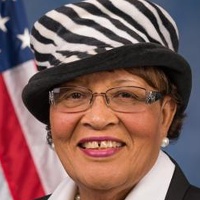
Alma Adams
Representative
NC
Alma Adams
Representative
NC
The Real Education and Access for Healthy Youth Act of 2025 aims to establish comprehensive, evidence-based, and culturally responsive sex education and health services for young people aged 10 to 29. The bill creates competitive grant programs to fund sex education in K-12 schools and higher education, support educator training, and improve access to youth-friendly sexual health services, especially for underserved communities. It explicitly mandates that all funded programs must be medically accurate, inclusive of all identities, and centered on principles of consent and reproductive justice. The Act authorizes $100 million annually and repeals prior funding streams dedicated to abstinence-only education.
This Act establishes mandatory ethics codes, recusal standards, and enhanced financial disclosure requirements for Supreme Court Justices and federal judges.
Henry Johnson
Representative
GA
Henry Johnson
Representative
GA
The Supreme Court Ethics, Recusal, and Transparency Act of 2025 establishes a mandatory, public code of conduct and a formal complaint process for Supreme Court Justices, modeled after procedures for lower federal judges. The bill also institutes stricter disclosure requirements for gifts and financial ties, and mandates judicial disqualification in cases involving recent lobbying contact or significant financial relationships with involved parties. Furthermore, it creates new review panels for disqualification motions and requires parties and *amici* to disclose financial supporters connected to the case.
The SNAP Administrator Retention Act of 2025 mandates that states align SNAP administrator pay with comparable federal wages in exchange for 100% federal funding of approved administrative staffing costs.
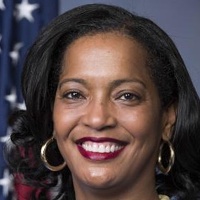
Jahana Hayes
Representative
CT
Jahana Hayes
Representative
CT
The SNAP Administrator Retention Act of 2025 aims to improve staffing and retention for the Supplemental Nutrition Assistance Program (SNAP) by setting new minimum pay standards for state administrators based on comparable federal salaries. If states adopt these standards and have their pay structure approved, the federal government will cover 100% of their administrative personnel costs. This increased federal funding must supplement, not replace, existing state spending on SNAP administration.
This Act establishes a new federal grant program to provide operating support for high-quality public transit that prioritizes service improvements in underserved communities, while also increasing the federal share for rural transit operating costs.
Henry Johnson
Representative
GA
Henry Johnson
Representative
GA
The Stronger Communities through Better Transit Act establishes a new federal grant program to provide operating support for high-quality public transit services. This funding is specifically targeted to improve mobility and environmental outcomes, with a requirement that the majority of funds benefit underserved communities or areas of persistent poverty. The Act also increases the federal share for rural transit operating assistance up to 80%.
This Act amends budget control laws to reinforce Congress's exclusive power of the purse, clarify when funds can be withheld, and establish legal remedies, including private lawsuits, for improper impoundments.
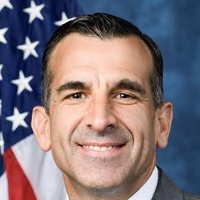
Sam Liccardo
Representative
CA
Sam Liccardo
Representative
CA
The Protecting Our Constitution and Communities Act aims to reassert Congress's exclusive constitutional authority over federal spending by clarifying that the President cannot unilaterally withhold appropriated funds. It strengthens the Comptroller General's oversight role and establishes new legal avenues for private citizens and governments to sue for damages if funds are improperly impounded. Furthermore, the bill tightens the definition of budgetary "contingencies" and ensures that judicial review of these spending disputes remains robust.
This Act mandates the delivery of documents and a report regarding the proposed transfer of an aircraft from Qatar to a Trump-controlled entity, while prohibiting federal funding for such transfers.

Gregory Meeks
Representative
NY
Gregory Meeks
Representative
NY
This bill mandates the Secretary of State to immediately provide Congress with all documents and a detailed report concerning the proposed transfer of an aircraft from Qatar to an entity controlled by former President Trump. Furthermore, it prohibits the use of any federal funding for aircraft transfers involving foreign governments to the U.S. Government, the President, or the Trump Presidential Library. The Act aims to ensure transparency and halt federal financial support for these specific property transfers.
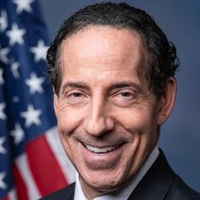
This resolution expresses the House's view that President Trump must immediately submit plans to Congress for accepting a jumbo jet gift from Qatar to comply with the Foreign Emoluments Clause.
Jamie Raskin
Representative
MD
Jamie Raskin
Representative
MD
This resolution expresses the sense of the House that President Trump must comply with the Foreign Emoluments Clause regarding a reported gift of a jumbo jet from Qatar. It calls on the President to immediately submit all plans for accepting this significant gift to Congress. The bill emphasizes that the Constitution requires Congressional consent before the President can accept valuable items from foreign governments.
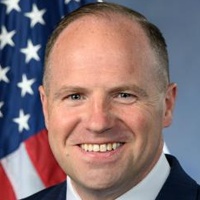
This bill prohibits civilians from purchasing, owning, or possessing enhanced body armor, with exceptions for government entities and law enforcement personnel.
Timothy Kennedy
Representative
NY
Timothy Kennedy
Representative
NY
The Aaron Salter, Jr., Responsible Body Armor Possession Act prohibits civilians from purchasing, owning, or possessing "enhanced body armor," defined as gear meeting or exceeding NIJ RF1 protection standards. This ban includes exceptions for federal, state, and local government agencies, as well as covered law enforcement officers. Knowingly violating this new federal prohibition carries penalties including fines and up to five years in prison.
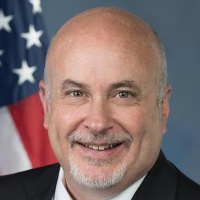
This bill mandates that school food service worker training must be paid, occur during work hours when possible, and prohibits penalizing staff for non-attendance.
Mark Pocan
Representative
WI
Mark Pocan
Representative
WI
The Improving Training for School Food Service Workers Act of 2025 establishes new federal standards for required training programs for school food service personnel. This bill mandates that all required training must be paid for by the employer, conducted during regular work hours whenever possible, and offered at no cost to the employee. Furthermore, the Act strictly prohibits employers from penalizing staff who are unable to attend training sessions.
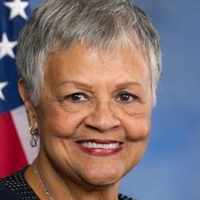
The Water Affordability, Transparency, Equity, and Reliability Act of 2025 establishes a dedicated trust fund financed by a corporate tax increase to improve water infrastructure, mandate affordability and equity reporting, and expand job training and assistance for underserved communities.
Bonnie Watson Coleman
Representative
NJ
Bonnie Watson Coleman
Representative
NJ
The Water Affordability, Transparency, Equity, and Reliability Act of 2025 establishes a dedicated federal Trust Fund, financed by an increase in the corporate tax rate, to support water infrastructure and affordability programs nationwide. The bill mandates a comprehensive EPA report analyzing water affordability, civil rights compliance, and public participation in water planning. It also significantly increases funding for household water well systems and revises state revolving loan fund rules to expand eligible projects, including lead line replacement and PFAS contamination cleanup. Finally, the Act creates new job training grants for the water sector and enhances drinking water assistance for colonias.