Legislative Activity
Track Christopher's sponsored bills, co-sponsored legislation, and voting record
This resolution affirms diversity, equity, inclusion, and accessibility as fundamental U.S. values and emphasizes the ongoing need to address systemic discrimination across all sectors of American life.

Mazie Hirono
Senator
HI
Mazie Hirono
Senator
HI
This resolution affirms that diversity, equity, inclusion, and accessibility (DEIA) are fundamental American values necessary to address persistent discrimination. It highlights widespread disparities across housing, employment, education, and healthcare affecting marginalized groups. The bill encourages all sectors of society to adopt policies that promote DEIA to ensure equal opportunity and strengthen the nation.
The Second Chance Reauthorization Act of 2025 extends and expands federal grant programs supporting successful reentry for formerly incarcerated individuals, specifically adding coverage for substance use disorder treatment and housing services.

Shelley Capito
Senator
WV
Shelley Capito
Senator
WV
The Second Chance Reauthorization Act of 2025 extends and improves critical federal grant programs designed to support successful reentry for formerly incarcerated individuals. This legislation specifically reauthorizes key demonstration projects through 2030 and broadens the scope of services these grants can cover. Updates now explicitly allow funding for substance use disorder treatment, including peer recovery support and reentry housing services. Overall, the bill ensures continued federal investment in evidence-based reentry initiatives through the end of the decade.
This Act establishes a pilot program to expedite the patent examination process for inventions in critical and emerging technologies like AI, semiconductors, and quantum science.

Marsha Blackburn
Senator
TN
Marsha Blackburn
Senator
TN
The Leadership in CET Act establishes a pilot program to expedite the patent examination process for inventions in critical and emerging technologies, specifically Artificial Intelligence, Semiconductors, and Quantum Science. This initiative aims to accelerate U.S. innovation leadership in these vital sectors by prioritizing relevant patent applications. The program will run for five years or until 15,000 applications are accepted, with provisions for potential renewal. Applicants must meet specific criteria, including not being a "foreign entity of concern," to qualify for this expedited review.
This Act mandates the inclusion of Asian American, Native Hawaiian, and Pacific Islander history across federally supported American history and civics education programs.
Mazie Hirono
Senator
HI
Mazie Hirono
Senator
HI
This Act mandates the inclusion of Asian American, Native Hawaiian, and Pacific Islander (AAPI) history across federally supported K-12 American history and civics education programs. It recognizes the significant, yet often erased, contributions and historical injustices faced by AAPI communities, including discriminatory immigration laws and internment. The legislation specifically updates federal education authorizations to ensure AAPI history is explicitly taught and partners the Presidential and Congressional Academies with the Smithsonian's Asian Pacific American Center.
This resolution honors the service and memory of four U.S. soldiers who died during a training mission in Lithuania while supporting NATO's deterrence efforts.

Richard Durbin
Senator
IL
Richard Durbin
Senator
IL
This resolution honors the service and memory of Army Staff Sgt. Jose Duenez Jr., Staff Sgt. Edvin F. Franco, Staff Sgt. Troy S. Knutson-Collins, and Pfc. Dante D. Taitano, who tragically died during a training support mission in Lithuania. It recognizes their distinguished service while supporting critical NATO deterrence efforts in the region. The resolution also acknowledges the international cooperation involved in their recovery and reaffirms the commitment to regional security.
The Supreme Court Ethics, Recusal, and Transparency Act of 2025 establishes a formal code of conduct, mandates stricter disclosure requirements for gifts and financial ties, and creates new procedures for judicial disqualification and complaint review.

Sheldon Whitehouse
Senator
RI
Sheldon Whitehouse
Senator
RI
The Supreme Court Ethics, Recusal, and Transparency Act of 2025 establishes a formal, publicly accessible code of conduct for Supreme Court Justices and creates a judicial investigation panel to handle related ethics complaints. The bill also mandates stricter disclosure requirements for gifts and income received by Justices, and significantly expands the circumstances under which a federal judge must recuse themselves due to financial ties or lobbying influence. Finally, it institutes new disclosure rules for parties and *amici curiae* in cases before the Court, alongside studies to monitor judicial compliance.
This bill mandates new electronic, transparent, and timely prior authorization requirements for Medicare Advantage plans to improve seniors' access to care.

Roger Marshall
Senator
KS
Roger Marshall
Senator
KS
The Improving Seniors’ Timely Access to Care Act of 2025 aims to modernize and increase transparency in the prior authorization process for Medicare Advantage plans. This bill mandates the adoption of electronic prior authorization systems and requires plans to publicly report detailed data on their approval, denial, and appeal rates. Furthermore, it establishes new standards to protect enrollees and grants the Secretary authority to enforce faster decision timelines for care requests.
This resolution designates May 29, 2025, as "Mental Health Awareness in Agriculture Day" to highlight the severe mental health challenges faced by the agricultural workforce and reduce associated stigma.
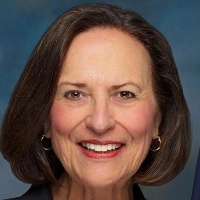
Deb Fischer
Senator
NE
Deb Fischer
Senator
NE
This resolution supports designating May 29, 2025, as "Mental Health Awareness in Agriculture Day." It aims to raise awareness about the significant mental health challenges faced by farmers and farmworkers, who experience disproportionately high rates of suicide. The day seeks to reduce the stigma associated with seeking mental health support within the agricultural industry.
This bill reauthorizes crucial support and treatment programs for officers in crisis through 2029.
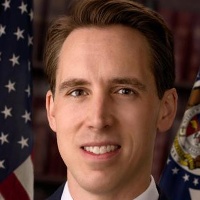
Joshua Hawley
Senator
MO
Joshua Hawley
Senator
MO
The Reauthorizing Support and Treatment for Officers in Crisis Act of 2025 extends critical support for law enforcement officers. This bill reauthorizes a vital program designed to provide necessary treatment and support services. Specifically, it renews the program's authorization from 2025 through 2029.
The Honoring Our Fallen Heroes Act of 2025 establishes a presumption that certain cancers leading to death or disability in public safety officers are the result of on-duty exposure to carcinogens.

Amy Klobuchar
Senator
MN
Amy Klobuchar
Senator
MN
The Honoring Our Fallen Heroes Act of 2025 establishes a presumption that certain cancers leading to death or disability in public safety officers were caused by on-duty exposure to recognized carcinogens. This law defines specific exposure-related cancers and sets conditions, such as five years of service, for the presumption to apply. It also updates review processes for adding new cancers to the list and grants retroactive application and filing extensions for eligible past and present claims.
The Strong Communities Act of 2025 establishes a grant program for local law enforcement agencies to fund specialized officer training in exchange for a commitment to serve in their community afterward, while also requiring annual transparency reports on grant usage.
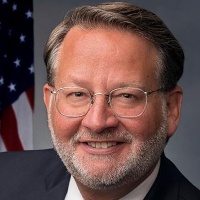
Gary Peters
Senator
MI
Gary Peters
Senator
MI
The Strong Communities Act of 2025 establishes the COPS Strong Communities Program to provide competitive grants for local law enforcement training. These funds support officers and recruits attending specialized programs, contingent upon a commitment to serve in their local community for at least four years afterward. The bill also mandates annual reporting to Congress detailing grant recipients, training plans, and officer retention rates to ensure transparency.
This Act expands Medicare coverage for clinical social worker services, including mental health treatment, for seniors in skilled nursing facilities and certain hospital inpatients.
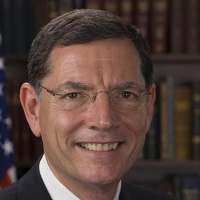
John Barrasso
Senator
WY
John Barrasso
Senator
WY
The Expanding Seniors Access to Mental Health Services Act aims to improve mental health care for seniors in skilled nursing facilities (SNFs). This bill revises Medicare payment rules to allow clinical social workers to provide and bill for a broader range of diagnostic and treatment services for mental illnesses within these facilities. These changes will take effect for services provided on or after January 1, 2026.
This bill mandates the Department of Justice to submit an annual public report detailing its efforts to counter national security threats and espionage from the Chinese Communist Party.
Marsha Blackburn
Senator
TN
Marsha Blackburn
Senator
TN
The Countering Chinese Espionage Reporting Act mandates that the Department of Justice (DOJ) submit an annual public report detailing its efforts to combat national security threats and espionage from the Chinese Communist Party. This report must outline specific operations, resource allocation against these threats, and measures taken to protect civil liberties. The requirement ensures transparency regarding the DOJ's activities countering intellectual property theft and threats from non-traditional collectors over the next seven years.
This bill reauthorizes and updates the PROTECT Our Children Act of 2008, focusing on modernizing the National Strategy to combat child exploitation and refining the operations, structure, and liability protections for Internet Crimes Against Children (ICAC) Task Forces.

John Cornyn
Senator
TX
John Cornyn
Senator
TX
The PROTECT Our Children Reauthorization Act of 2025 updates and extends key federal efforts to combat child exploitation. This bill revises the National Strategy to focus on emerging technology trends and mandates detailed resource planning for law enforcement. It also modifies the operations of Internet Crimes Against Children (ICAC) Task Forces, clarifying their duties, expanding partnerships, and providing liability protections for lead prioritization decisions. Finally, the Act adjusts grant funding allocations and authorizes specific funding levels through fiscal year 2028.
This Act establishes a grant program for law enforcement agencies to hire retired officers for specialized civilian support roles and training.
Amy Klobuchar
Senator
MN
Amy Klobuchar
Senator
MN
The Retired Law Enforcement Officers Continuing Service Act establishes the "Civilian Law Enforcement Task Grants" program. This program allows local law enforcement agencies to receive federal funding to hire retired officers for specialized tasks or to train current civilian staff. The grants aim to enhance agency capabilities in areas like complex investigations and digital forensics while ensuring strict accountability through mandatory annual audits.
This Act establishes protections against retaliation for employees who report security vulnerabilities or violations related to Artificial Intelligence systems.
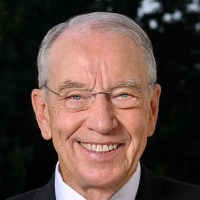
Charles Grassley
Senator
IA
Charles Grassley
Senator
IA
The AI Whistleblower Protection Act establishes clear definitions for AI security issues and protects employees who report them from retaliation by their employers. Covered individuals can report vulnerabilities or violations to various authorities and have recourse through the Department of Labor or federal court if punished. Successful claimants are entitled to remedies including job reinstatement, double back pay, and compensatory damages.
This Act authorizes federal funding to provide first responders with the necessary training and equipment to prevent secondary exposure to dangerous substances like fentanyl.
Charles Grassley
Senator
IA
Charles Grassley
Senator
IA
The Protecting First Responders from Secondary Exposure Act of 2025 updates federal law to specifically address the dangers first responders face from substances like fentanyl. This legislation ensures federal funding is available to states and agencies for purchasing necessary protective equipment and providing specialized training on handling dangerous drugs safely. The goal is to equip first responders with the tools needed to prevent accidental secondary exposure while on duty.
This bill codifies the U.S. policy of non-recognition of Russia's sovereignty over Crimea or any other territory forcibly seized from Ukraine.
Richard Durbin
Senator
IL
Richard Durbin
Senator
IL
This bill officially codifies the long-standing United States policy of refusing to recognize Russia's claim of sovereignty over Crimea or any other territory in Ukraine seized by force. It prohibits all federal departments and agencies from taking any action that implies acceptance of Russia's control over these forcibly seized areas. Recognition of Russian sovereignty is only permissible if formally agreed to by the democratically elected government of Ukraine.
This Act streamlines the nuclear licensing process by allowing the Nuclear Regulatory Commission to issue permits and licenses without mandatory public hearings unless requested by an affected party.

Tim Scott
Senator
SC
Tim Scott
Senator
SC
The Efficient Nuclear Licensing Hearings Act aims to streamline and accelerate the process for issuing atomic energy licenses by the Nuclear Regulatory Commission (NRC). This bill allows the NRC to generally skip mandatory public hearings for certain permits and licenses unless an affected party requests one. If no hearing is requested, the NRC can proceed after a thirty-day notice period, utilizing informal procedures when hearings are held. These changes apply immediately to pending applications.
This bill mandates that school food service worker training must occur during paid work hours, be free for employees, and prohibits penalizing staff for not attending outside-of-hours sessions.
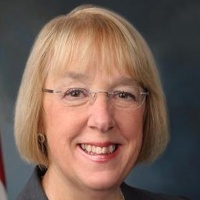
Patty Murray
Senator
WA
Patty Murray
Senator
WA
The Improving Training for School Food Service Workers Act of 2025 establishes new federal standards for training programs for local school food service personnel. This bill mandates that required training must occur during paid work hours and be provided at no cost to the employee. It also ensures that staff are fairly compensated, including overtime, for any training conducted outside of regular hours, and prohibits retaliation against employees who cannot attend.