Legislative Activity
Track André's sponsored bills, co-sponsored legislation, and voting record
This bill establishes six mandatory fee-free days annually for entry to federal recreational lands and waters to encourage public service and national pride.
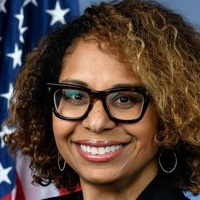
Sydney Kamlager-Dove
Representative
CA
Sydney Kamlager-Dove
Representative
CA
This bill, the "Encouraging Public Service in Our National Parks and Public Land Act," amends existing law to mandate six specific fee-free days annually for entry to federal recreational lands and waters. These free admission days are set to coincide with significant holidays like Martin Luther King Jr. Day and Veterans Day. The goal is to promote national pride and encourage public volunteerism by increasing access to these public lands.
This act repeals the federal tax credit for contributions to scholarship organizations and eliminates the income exclusion for certain scholarship amounts received from those organizations.
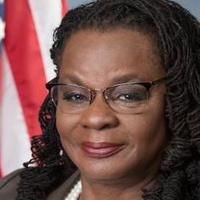
Gwen Moore
Representative
WI
Gwen Moore
Representative
WI
The Keep Public Funds in Public Schools Act of 2026 aims to redirect funding by eliminating federal tax incentives for private school scholarships. Specifically, it repeals the tax credit for contributions to scholarship-granting organizations and removes the income exclusion for certain scholarship amounts received. These changes are set to take effect starting in 2027.
The PRIDE Act of 2026 expands federal diversity and inclusion requirements within financial agencies to explicitly include LGBTQI individuals and LGBTQI-owned businesses by renaming and updating the Office of Minority and Women Inclusion.
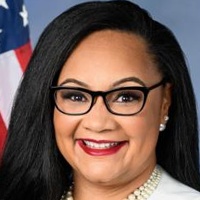
Nikema Williams
Representative
GA
Nikema Williams
Representative
GA
The PRIDE Act of 2026 officially renames the Offices of Minority and Women Inclusion at certain federal financial agencies to the Office of Minority, Women, and LGBTQI Inclusion. This expansion explicitly incorporates LGBTQI individuals and LGBTQI-owned businesses into existing diversity, inclusion, and contracting requirements. The bill adds specific definitions for "LGBTQI" and "LGBTQI-owned business" across relevant statutes.
This proposed constitutional amendment establishes a federal right to vote for all eligible citizens and mandates that states adhere to federal election standards, including same-day registration and voting.
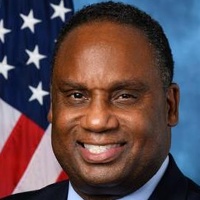
Jonathan Jackson
Representative
IL
Jonathan Jackson
Representative
IL
This proposed constitutional amendment establishes a fundamental federal right to vote for all eligible U.S. citizens. It prohibits denying or restricting this right and mandates that states administer elections according to federal standards, including requiring same-day registration and voting. Congress is authorized to pass legislation to enforce these provisions.
This bill, the TSP Modernization Act, mandates the electronic transfer of Thrift Savings Fund account balances to qualified retirement plans one year after enactment.
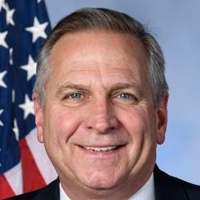
Mike Bost
Representative
IL
Mike Bost
Representative
IL
The TSP Modernization Act facilitates the electronic transfer of funds from Thrift Savings Plan (TSP) accounts to qualified retirement plans. This change will take effect one year after the bill is enacted, allowing participants to move their savings more efficiently. The Federal Retirement Thrift Investment Board is responsible for implementing this new electronic transfer process.
This Act formalizes the commitment to strengthen trilateral cooperation between the US, Japan, and South Korea and establishes a formal Inter-Parliamentary Dialogue to deepen engagement.
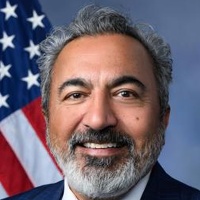
Ami Bera
Representative
CA
Ami Bera
Representative
CA
This Act formalizes and strengthens the trilateral partnership between the United States, Japan, and the Republic of Korea to promote a free and open Indo-Pacific. It expresses Congressional support for continuing the strategic alignment established at the Camp David summit. Crucially, it mandates the establishment of a formal US-Japan-ROK Inter-Parliamentary Dialogue to deepen legislative engagement between the three nations.
This resolution directs the President to remove all United States Armed Forces from Lebanon within seven days of its adoption.
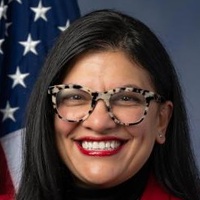
Rashida Tlaib
Representative
MI
Rashida Tlaib
Representative
MI
This resolution invokes the War Powers Resolution to mandate the withdrawal of all United States Armed Forces from Lebanon. It directs the President to complete this removal within seven days of the resolution's adoption.
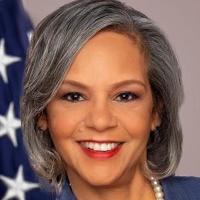
This bill expresses support for designating June 5, 2026, as "National Gun Violence Awareness Day" and June 2026 as "National Gun Violence Awareness Month" to honor victims and promote awareness of gun violence.
Robin Kelly
Representative
IL
Robin Kelly
Representative
IL
This bill expresses support for designating June 5, 2026, as "National Gun Violence Awareness Day" and the entire month of June 2026 as "National Gun Violence Awareness Month." The designations aim to honor the nearly 47,000 people killed by gunfire each year and raise public awareness about the devastating impact of gun violence. The resolution encourages the public to wear orange on that day and focus on community efforts to promote gun safety.
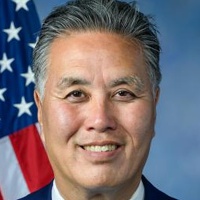
This bill mandates that political committees clearly disclose when they pay individuals to post content on digital platforms.
Mark Takano
Representative
CA
Mark Takano
Representative
CA
The Promoting Authenticity with Influencer Disclaimers Act mandates that political committees clearly disclose when they have paid an individual to post content online. This ensures that consumers can easily identify paid political messaging across digital platforms. The law sets standards for conspicuous disclaimers and establishes an effective date of January 1, 2027.
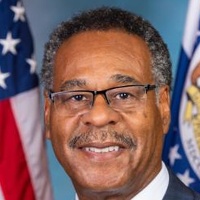
This act amends federal law to require labeling of foods containing gluten-containing grains as a major food allergen.
Emanuel Cleaver
Representative
MO
Emanuel Cleaver
Representative
MO
The Celiac Safety Act of 2026 amends federal law to officially classify gluten-containing grains (wheat, rye, and barley) as a major food allergen. This change mandates that foods containing these grains must be clearly labeled as such, similar to existing major allergens like peanuts or milk. This new labeling requirement will take effect 18 months after the Act's enactment.
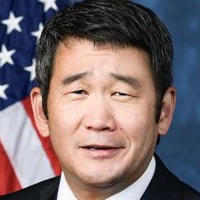
This concurrent resolution marks the 250th anniversary of the U.S. by reaffirming a national commitment to reducing gun violence and strengthening public safety through evidence-informed measures.
Dave Min
Representative
CA
Dave Min
Representative
CA
This concurrent resolution marks the U.S. 250th anniversary by reaffirming a national commitment to reducing gun violence and strengthening public safety. It recognizes the devastating impact of gun violence and supports evidence-informed measures like community intervention and universal background checks. The resolution calls for prioritizing support for law enforcement, investing in proactive violence prevention, and ensuring robust funding for victim services. Ultimately, it commits the nation to making gun violence prevention a priority for the next 250 years.
This bill establishes rigorous fitness-to-operate standards for offshore oil and gas operators and mandates fully funded, interest-bearing escrow accounts to cover all future decommissioning liabilities.
Dave Min
Representative
CA
Dave Min
Representative
CA
The Offshore Leasing Standards and Accountability Act of 2026 establishes rigorous "fitness-to-operate" standards for offshore oil and gas operators, requiring certification based on environmental compliance, safety records, and financial solvency before issuing or extending leases. The bill also mandates that leaseholders fully fund future decommissioning liabilities through interest-bearing escrow accounts, with required payments scheduled to cover estimated costs within five years. Furthermore, it restricts the temporary abandonment of offshore wells to a maximum of three years, subject to strict operational or environmental justification.
This Act directs the Secretary of Defense to analyze and report on the feasibility of establishing a separate criminal offense for hazing under the Uniform Code of Military Justice.
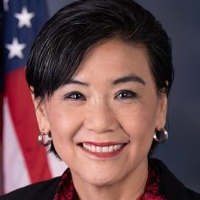
Judy Chu
Representative
CA
Judy Chu
Representative
CA
The Harry Lew and Danny Chen Military Justice Reform Act directs the Secretary of Defense to study the feasibility of creating a separate, specific criminal offense for hazing within the Uniform Code of Military Justice. This analysis must include developing a proposed definition of hazing. The Secretary is required to submit a report detailing these findings and recommendations to Congress within 180 days of the Act's enactment.
This act establishes a pilot grant program to fund the renovation and development of vital community gathering places, known as "third spaces," especially in underserved areas.
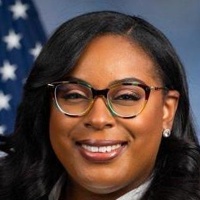
LaMonica McIver
Representative
NJ
LaMonica McIver
Representative
NJ
The RESTORE Third Spaces Act of 2026 establishes a three-year pilot grant program to renovate and develop vital community gathering places, known as "third spaces," outside of homes and workplaces. Administered by the Secretary of Commerce, the program prioritizes projects in underserved communities that strengthen local economies and combat social isolation. Grantees must ensure the resulting spaces remain free or low-cost to the public to foster social cohesion and civic engagement.
This Act amends bankruptcy law to prioritize environmental cleanup costs and employee wages over shareholder claims when fossil fuel companies file for bankruptcy, while also preventing the abandonment of related assets.
Dave Min
Representative
CA
Dave Min
Representative
CA
The Ending Fossil Fuel Bailouts Act of 2026 fundamentally reforms federal bankruptcy law concerning fossil fuel companies. This legislation prioritizes cleanup and employee obligations over other claims when these companies file for bankruptcy. It also prevents fossil fuel assets from being abandoned and makes certain environmental debts non-dischargeable.
The American High-Speed Rail Act significantly expands federal support for high-speed rail development by increasing funding, broadening eligibility, updating safety and technology requirements, and facilitating property acquisition and freight right-of-way transfers.
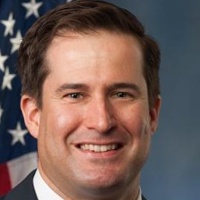
Seth Moulton
Representative
MA
Seth Moulton
Representative
MA
The American High-Speed Rail Act significantly expands federal support for high-speed and higher-speed rail development by increasing funding limits, broadening eligibility for public-private partnerships, and establishing new planning and safety requirements. The bill authorizes substantial funding through 2031 for corridor development and planning, while also creating pathways for acquiring necessary right-of-way property and ensuring labor protections on federally-funded infrastructure. It also refines definitions, setting the threshold for true "high-speed rail" at 186 mph or more, and introduces a new category for "higher-speed rail."
This bill establishes the Smithsonian American Women's History Museum, designates its site on the National Mall, and sets requirements for its mission, construction, and diverse representation of viewpoints.
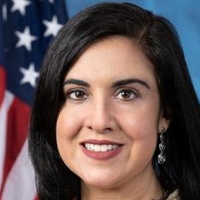
Nicole Malliotakis
Representative
NY
Nicole Malliotakis
Representative
NY
This act officially establishes the Smithsonian American Women’s History Museum and designates its location on the National Mall, requiring the transfer of land jurisdiction to the Smithsonian Institution. The museum is mandated to preserve and present the history and achievements of biological women in the United States. Furthermore, the legislation requires that exhibits and programs reflect diverse political viewpoints and authentic experiences of women, as guided by a broad array of knowledgeable sources.
This Act establishes a program for eligible noncitizen veterans removed or facing removal to adjust their status to lawful permanent residents and protects current noncitizen service members and veterans from removal except for convictions of violent crimes.
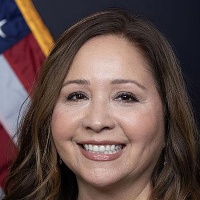
Adelita Grijalva
Representative
AZ
Adelita Grijalva
Representative
AZ
The Veterans Visa and Protection Act of 2026 establishes a program for noncitizen veterans removed or facing removal to return to the U.S. and adjust their status to lawful permanent residents. This Act prohibits the removal of noncitizen veterans and service members unless they have committed a qualifying crime of violence. Furthermore, it streamlines the path to naturalization and ensures eligible veterans receive all corresponding military and veterans benefits.
The Provider Reimbursement Stability Act of 2026 reforms Medicare physician payment policies by updating budget neutrality thresholds, establishing a correction process for utilization estimates, mandating periodic updates to practice expense data, and limiting annual conversion factor fluctuations.
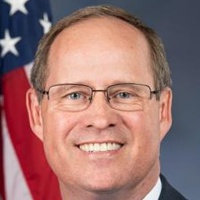
Gregory Murphy
Representative
NC
Gregory Murphy
Representative
NC
The Provider Reimbursement Stability Act of 2026 aims to improve the accuracy and predictability of Medicare physician payments. The bill reforms budget neutrality calculations, mandates periodic updates to practice expense cost data, and establishes a 2.5% cap on annual conversion factor fluctuations. These measures are designed to ensure more stable reimbursement rates for healthcare providers.
This bill condemns the mass shooting at the Islamic Center of San Diego on May 18, 2026, honors the victims, and addresses the rise of Islamophobia.
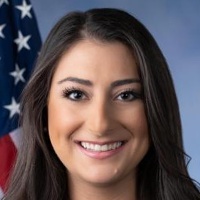
Sara Jacobs
Representative
CA
Sara Jacobs
Representative
CA
This resolution condemns the tragic mass shooting at the Islamic Center of San Diego on May 18, 2026, and honors the victims who lost their lives. It recognizes the attack as an act of domestic terrorism fueled by rising Islamophobia and anti-Muslim hate. Congress affirms its responsibility to condemn such violence and stands in solidarity with the affected community.