Legislative Activity
Track André's sponsored bills, co-sponsored legislation, and voting record
This bill establishes a non-legislative Permanent Select Committee on Aging in the House of Representatives to comprehensively study and coordinate policies affecting older Americans.
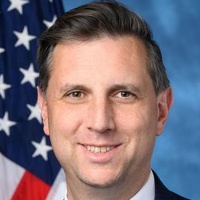
Seth Magaziner
Representative
RI
Seth Magaziner
Representative
RI
This bill proposes establishing a **Permanent Select Committee on Aging** within the House of Representatives. This committee will focus on conducting comprehensive studies regarding the challenges and needs of older Americans across various areas like health, income, and housing. It is important to note that this committee will not have legislative authority to write or vote on bills.
This Act mandates federal agencies to establish civil rights offices and report biennially on efforts to mitigate bias and discrimination in covered algorithmic systems that affect protected characteristics.
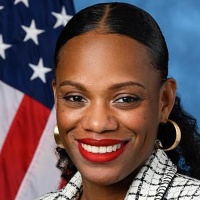
Summer Lee
Representative
PA
Summer Lee
Representative
PA
The Eliminating Bias in Algorithmic Systems Act of 2026 mandates that federal agencies address bias and discrimination in automated systems that materially affect individuals based on protected characteristics. This requires covered agencies to establish specialized civil rights offices focused on algorithmic harms. These offices must submit biennial reports to Congress detailing risks, mitigation efforts, stakeholder engagement, and legislative recommendations regarding biased algorithms.
This bill establishes a Department of Justice Task Force to combat anti-Sikh hate and discrimination through definition, education, and reporting.
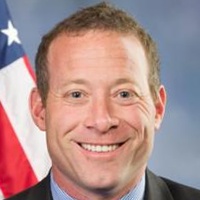
Josh Gottheimer
Representative
NJ
Josh Gottheimer
Representative
NJ
The Sikh American Anti-Discrimination Act of 2026 establishes a Department of Justice Task Force dedicated to combating anti-Sikh hate and discrimination. This Task Force is charged with formally defining anti-Sikh hate, developing educational programs for law enforcement and schools, and collaborating with the Sikh community. The bill mandates annual reporting to Congress on hate crimes, legal actions, and ongoing threats against Sikhs.
This act rescinds specific prior appropriations and redirects those funds to extend the application of certain healthcare tax credits while establishing new transparency and accountability measures.
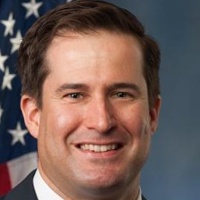
Seth Moulton
Representative
MA
Seth Moulton
Representative
MA
The Healthcare Reinvestment Act rescinds specific prior appropriations and redirects those funds to extend the availability of certain tax credits under the Internal Revenue Code. This legislation ensures continued financial support for healthcare affordability measures. Furthermore, it mandates annual public reporting and independent audits to ensure transparency and accountability in the use of these reinvested funds.
This bill impeaches Secretary of Homeland Security Kristi Lynn Arnold Noem for high crimes and misdemeanors, citing willful refusal to comply with oversight law, violating the Impoundment Control Act, directing unlawful ICE misconduct, and misusing federal funds for personal gain.
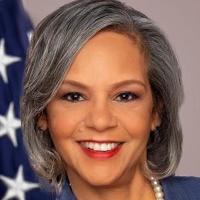
Robin Kelly
Representative
IL
Robin Kelly
Representative
IL
This resolution initiates impeachment proceedings against Secretary of Homeland Security Kristi Lynn Arnold Noem for high crimes and misdemeanors. The articles of impeachment charge her with willfully refusing to comply with Congressional oversight laws and violating the Impoundment Control Act by improperly withholding funds. Further articles allege she directed widespread misconduct by ICE agents that violated federal law and constitutional rights, and misused taxpayer funds for personal gain through improper contracting.
This resolution demands the President and Secretary of State provide the House with documents detailing the Administration's stance, policies, and related communications concerning U.S. interest in Greenland.
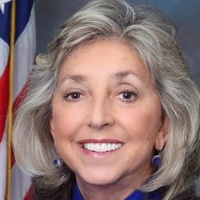
Dina Titus
Representative
NV
Dina Titus
Representative
NV
This resolution is an official inquiry demanding the President and Secretary of State provide the House of Representatives with specific documents regarding the Administration's stance on Greenland. It specifically seeks records concerning U.S. ownership plans, policy toward Danish sovereignty, and security assessments related to the U.S.-Denmark defense agreement. The bill also requires documentation of all related communications between U.S. officials and private citizens, Danish/Greenlandic authorities, or NATO allies.
This resolution designates January 13th as Korean American Day to honor the contributions of Korean Americans and recognize the anniversary of the first Korean immigrants' arrival.
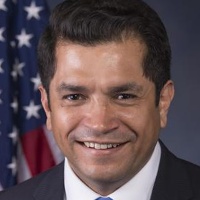
Jimmy Gomez
Representative
CA
Jimmy Gomez
Representative
CA
This resolution officially designates January 13th as Korean American Day. It expresses support for the day's ideals and encourages Americans to observe it. The resolution also honors the 123rd anniversary of the first Korean immigrants arriving in the United States.
This Act establishes federal minimum salary and wage floors for school paraprofessionals and support staff, providing federal funding to help states meet these new pay standards within four years.
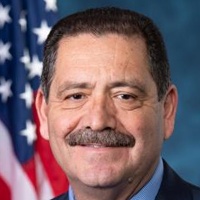
Jesús García
Representative
IL
Jesús García
Representative
IL
The Pay Paraprofessionals and Support Staff Act establishes minimum federal salary and wage floors for school support staff, requiring states to implement higher state-level standards. It authorizes significant federal funding through grants to help states and local districts meet these new pay requirements within four years. States must prioritize funding distribution to districts serving high numbers of low-income students to ensure compliance with the mandated pay increases.
This resolution recognizes and honors Delta Sigma Theta Sorority, Incorporated, on its 113th anniversary for its extensive legacy of service, global reach, and commitment to community upliftment.
Summer Lee
Representative
PA
Summer Lee
Representative
PA
This resolution recognizes and honors Delta Sigma Theta Sorority, Incorporated, on its 113th anniversary. It celebrates the sorority's founding by 22 women at Howard University and commends its legacy of service through its Five-Point Program Thrust. The bill further acknowledges the organization's vast global impact and commitment to democratic participation and humanitarian efforts.
This act prohibits the use of federal funds and official action for any invasion of NATO member territory.
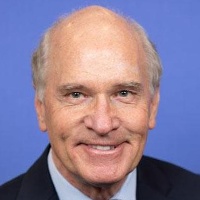
William Keating
Representative
MA
William Keating
Representative
MA
The **No Funds for NATO Invasion Act** prohibits the use of any federal funds for an invasion of any territory belonging to a member nation of the North Atlantic Treaty Organization (NATO). Furthermore, the bill bars U.S. officials from taking any action to execute such an invasion.
This bill designates Burma for Temporary Protected Status (TPS) for eligible nationals present in the U.S. since enactment.
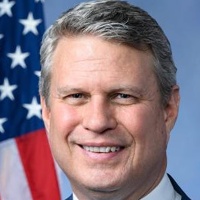
Bill Huizenga
Representative
MI
Bill Huizenga
Representative
MI
This bill designates Burma for Temporary Protected Status (TPS) for an initial period of 18 months, beginning November 25, 2025. It establishes eligibility requirements for Burmese nationals already present in the U.S. and outlines conditions for emergency travel authorization.
This act prohibits federal officials and employees from trading prediction market contracts while possessing material nonpublic government information.
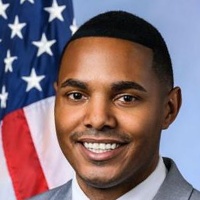
Ritchie Torres
Representative
NY
Ritchie Torres
Representative
NY
The Public Integrity in Financial Prediction Markets Act of 2026 prohibits federal officials and employees from trading in prediction market contracts while possessing material, nonpublic government information. This ban specifically targets transactions related to government policy, actions, or political outcomes. The goal is to prevent insider trading within these emerging financial markets by those with privileged access to government knowledge.
This bill explicitly prohibits discrimination based on sex, sexual orientation, and gender identity in all places of public accommodation.
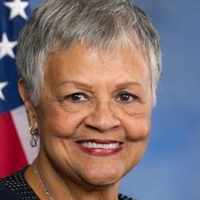
Bonnie Watson Coleman
Representative
NJ
Bonnie Watson Coleman
Representative
NJ
The Customer Non-Discrimination Act amends the Civil Rights Act of 1964 to explicitly prohibit discrimination in public accommodations based on sex, sexual orientation, and gender identity. This expansion covers a wide range of establishments, including retailers, service providers, and transportation services. The bill also provides clear definitions for these protected characteristics and clarifies that existing federal sex discrimination laws already cover these areas.
This resolution declares elective declawing of cats inhumane and urges states to prohibit the practice except when medically necessary.
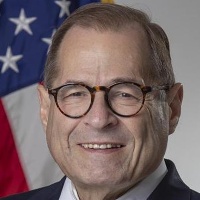
Jerrold Nadler
Representative
NY
Jerrold Nadler
Representative
NY
This resolution expresses strong opposition to elective declawing (onychectomy) of cats, deeming the procedure inhumane due to the lifelong pain and adverse behavioral effects it causes. It defines declawing broadly to include any procedure that disables a cat's claws and affirms that it should only be performed when medically necessary for the cat's health. The bill urges states to prohibit the practice on animal welfare and public health grounds, noting that humane alternatives exist.
This resolution recognizes the 15th anniversary of the 2011 Tucson shooting, honoring the victims, survivors, and the ongoing advocacy of Gabby Giffords.
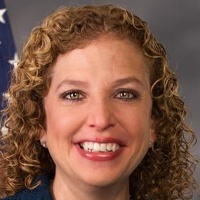
Debbie Wasserman Schultz
Representative
FL
Debbie Wasserman Schultz
Representative
FL
This resolution commemorates the 15th anniversary of the tragic January 8, 2011, Tucson shooting, honoring the six lives lost and the thirteen injured. It specifically commends the courage and ongoing advocacy of gun violence survivor and former Congresswoman Gabby Giffords. The resolution also recognizes the resilience of the community and reaffirms a commitment to ending political violence.
This bill mandates regular federal reporting on the air quality, water usage, and electricity consumption impacts of data centers across the United States.
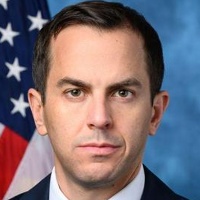
Robert Menendez
Representative
NJ
Robert Menendez
Representative
NJ
The Data Center Transparency Act establishes new federal reporting requirements to monitor the environmental and energy impacts of data centers across the United States. This legislation mandates regular reports from the EPA detailing data center water consumption, reuse, and pollution discharge, as well as reports from the EIA on total electricity consumption broken down by state. These measures aim to provide transparency regarding how data centers affect local air quality, water resources, and household energy costs.
This bill establishes an annual preventative health evaluation for veterans with spinal cord injuries or disorders to assess their needs, including access to new assistive technologies like spinal cord neuromodulation.
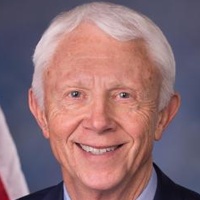
Jack Bergman
Representative
MI
Jack Bergman
Representative
MI
The Veterans Spinal Trauma Access to New Devices (STAND) Act mandates an annual preventative health evaluation for veterans with spinal cord injuries or disorders. This comprehensive assessment will cover risks, pain management, nutrition, and the need for advanced assistive technologies, including neuromodulation devices. The VA is required to consult with specialists and manufacturers when developing implementation guidelines. Furthermore, the Secretary must report biennially to Congress on the utilization and outcomes of these evaluations and assistive technologies.
The Vaccine Transportation Access Act establishes a grant program and increases federal Medicaid funding to eliminate transportation barriers for individuals seeking essential vaccinations.
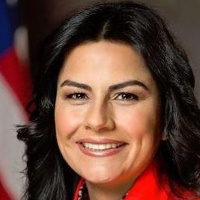
Nanette Barragán
Representative
CA
Nanette Barragán
Representative
CA
The Vaccine Transportation Access Act establishes a grant program for community organizations to provide reliable transportation services, helping individuals in underserved or low-income areas reach vaccination appointments. Additionally, the bill increases federal Medicaid support by covering 100% of the costs for nonemergency transportation specifically related to receiving eligible vaccines. These measures aim to remove critical mobility barriers and improve equitable access to essential immunizations.
The American Affordability Act of 2025 is a comprehensive bill designed to lower costs for families through expanded housing assistance, clean energy tax credits, monthly child payments, education relief, and enhanced healthcare subsidies.
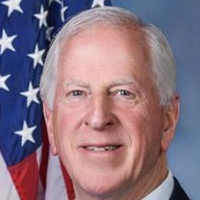
Mike Thompson
Representative
CA
Mike Thompson
Representative
CA
The American Affordability Act of 2025 is a comprehensive bill designed to lower costs across five key areas: housing, energy, family care, education, and healthcare. It achieves this by expanding tax credits for housing construction and homebuyers, extending incentives for clean energy manufacturing and consumer adoption, replacing the Child Tax Credit with larger monthly payments, making higher education expenses more affordable, and permanently expanding subsidies to lower health insurance premiums for millions. Overall, the legislation aims to provide direct financial relief and increase access to essential services for American families and workers.
This bill temporarily funds the FAA using the Aviation Insurance Revolving Fund during a lapse in appropriations and extends non-premium war risk insurance provisions.
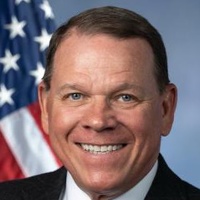
Sam Graves
Representative
MO
Sam Graves
Representative
MO
The Aviation Funding Solvency Act establishes a temporary mechanism to ensure the Federal Aviation Administration (FAA) can continue essential operations if Congress fails to pass regular appropriations. This allows the FAA Administrator to draw upon the Aviation Insurance Revolving Fund to maintain operations at the previous year's funding rate. The temporary funding ceases once a new appropriation or continuing resolution is enacted. The bill also makes a technical amendment regarding non-premium war risk insurance.