Legislative Activity
Track Tom's sponsored bills, co-sponsored legislation, and voting record
This act repeals the joint resolution aimed at promoting peace and stability in the Middle East.
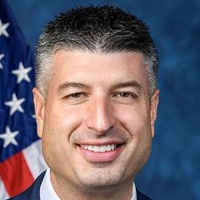
Tom Barrett
Representative
MI
Tom Barrett
Representative
MI
This act formally repeals the outdated joint resolution aimed at promoting peace and stability in the Middle East that was enacted during the Cold War era. It removes this historical measure from the U.S. legal code.
This act amends the War Powers Resolution to apply existing priority procedures for concurrent resolutions to joint resolutions concerning the removal of U.S. Armed Forces from hostilities.
Tom Barrett
Representative
MI
Tom Barrett
Representative
MI
This bill, the War Powers Priority Procedures Modernization Act, updates the War Powers Resolution to include joint resolutions in its procedures. It ensures that joint resolutions regarding the removal of U.S. Armed Forces from hostilities receive priority consideration in both chambers of Congress. Furthermore, it establishes specific time limits for debate on a veto override of such a joint resolution.
The Safety in Shared Skies Act of 2026 mandates regular testing, certification, and oversight of ADS-B Out transponder systems on Department of Defense aircraft operating within U.S. airspace.
Tom Barrett
Representative
MI
Tom Barrett
Representative
MI
The Safety in Shared Skies Act of 2026 mandates rigorous, recurring testing and certification of ADS-B Out transponder systems on all Department of Defense aircraft operating within U.S. airspace. The bill ensures accountability through regular reporting to Congress and independent audits by the Department of Defense Inspector General. These measures are designed to enhance aviation safety and oversight for military aircraft.
The Stop ACA Enrollment Fraud Act of 2026 mandates new verification systems to prevent duplicate health insurance enrollments and requires direct consumer consent for all agent-assisted plan applications.
Tom Barrett
Representative
MI
Tom Barrett
Representative
MI
The Stop ACA Enrollment Fraud Act of 2026 aims to protect the integrity of health insurance Exchanges by preventing duplicate enrollments and fraudulent activity. The bill mandates a new verification system to block duplicate premium tax credit payments and requires individuals to provide direct, verified consent before an agent or broker can finalize their health plan enrollment.
The Care Over Profits Act of 2026 increases medical loss ratio requirements for health insurers and establishes strict civil and criminal penalties for agents or brokers who submit fraudulent enrollment information.
Tom Barrett
Representative
MI
Tom Barrett
Representative
MI
The Care Over Profits Act of 2026 mandates that health insurers in the individual and small group markets spend at least 85% of premium revenue on direct patient care and quality improvements. Additionally, the bill establishes strict civil and criminal penalties for insurance agents and brokers who provide false or fraudulent information on health insurance exchange applications.
This bill directs a study on the feasibility of allowing borrowers to transfer their existing federally backed mortgage to a new home.
Tom Barrett
Representative
MI
Tom Barrett
Representative
MI
The Take Your Rate Act of 2026 mandates a joint study by HUD and the FHFA on the feasibility and impact of allowing borrowers to transfer their existing federally backed mortgages to a new home. This study will explore administrative challenges, market effects, and necessary regulatory changes for implementing mortgage portability. The agencies must report their findings and recommendations to Congress within 180 days of enactment.
This bill establishes a 15-day exclusive window for first-time homebuyers to purchase certain government-owned residential properties at fair market value.
Tom Barrett
Representative
MI
Tom Barrett
Representative
MI
The First Look for First-time Homebuyers Act of 2026 creates a 15-day exclusive window for first-time homebuyers to purchase government-owned residential properties before they are made available to the general public. This legislation requires these properties to be sold at fair market value and prohibits the bundling of multiple homes to ensure equitable access. By prioritizing individual buyers, the act aims to increase homeownership opportunities for those entering the market for the first time.
This bill establishes tax-advantaged savings accounts to help first-time homebuyers save for down payments and qualified home-related expenses.
Tom Barrett
Representative
MI
Tom Barrett
Representative
MI
The First-time Homebuyer Savings Account Act of 2026 establishes tax-advantaged savings accounts designed to help individuals save for their first home. Eligible participants can deduct annual contributions from their taxable income, with withdrawals remaining tax-free when used for qualified home purchase or improvement expenses.
This bill mandates a HUD study on the feasibility of offering zero-downpayment FHA mortgages to first responders and school teachers.
Tom Barrett
Representative
MI
Tom Barrett
Representative
MI
The Housing for Our Hometown Heroes Act directs the Department of Housing and Urban Development (HUD) to study the feasibility of offering zero-downpayment FHA mortgage insurance for first responders and school teachers. This report must analyze the financial impact and structure of such a program within 180 days of enactment. The goal is to explore pathways to make homeownership more accessible for these essential workers.
The Time to Heal Act increases the capital gains tax exclusion for home sales by surviving spouses from $250,000 to $500,000 under specific conditions.
Tom Barrett
Representative
MI
Tom Barrett
Representative
MI
The Time to Heal Act modifies tax law to provide relief for surviving spouses selling a primary residence. It increases the capital gains exclusion on the sale of a jointly owned home from \$250,000 to \$500,000, provided certain ownership and marital status conditions are met. This aims to ease the financial burden on those who have recently lost a spouse.
This bill proposes a constitutional amendment to limit federal judges, including Supreme Court justices, to 20-year terms.
Tom Barrett
Representative
MI
Tom Barrett
Representative
MI
This proposed constitutional amendment seeks to establish 20-year term limits for all federal judges, including Supreme Court justices, contingent upon good behavior. Upon completing a term, a judge would be ineligible for reappointment to the same court. This change would only apply to judicial appointments made after the amendment is ratified.
This bill mandates the FAA to create and publish an action plan for deploying advanced Airborne Collision Avoidance System-X (ACASX) technology across U.S. airspace.
Tom Barrett
Representative
MI
Tom Barrett
Representative
MI
The Next-Gen Collision Avoidance Act mandates that the Federal Aviation Administration (FAA) develop and publish a comprehensive action plan for deploying advanced collision avoidance technology, such as ACASX, across U.S. airspace. This plan must outline a strategic roadmap, necessary funding, and stakeholder engagement strategies to advance the technology's adoption and certification. The FAA is required to submit this plan to Congress within 180 days of enactment.
The Military ADS–B Out Loophole Act mandates stricter oversight and reporting requirements for government agencies to limit the use of exemptions that allow aircraft to disable tracking systems during sensitive missions.
Tom Barrett
Representative
MI
Tom Barrett
Representative
MI
The Military ADSB Out Loophole Act tightens regulations on when government aircraft can disable their tracking systems during sensitive missions. It mandates stricter oversight, requires regular reporting to Congress, and tasks the FAA and the Government Accountability Office with ensuring these exceptions are used only when necessary for safety and mission integrity.
This bill prohibits the Council of the District of Columbia from enacting any law to permit euthanasia and assisted suicide and repeals the existing Death With Dignity Act of 2016.
Tom Barrett
Representative
MI
Tom Barrett
Representative
MI
This bill amends the District of Columbia Home Rule Act to explicitly prohibit the D.C. Council from enacting any law that permits euthanasia or assisted suicide. It also repeals the existing Death With Dignity Act of 2016. The legislation prevents the District from authorizing or reducing penalties for activities related to assisted suicide.
This bill mandates a citizenship question on the decennial census, excludes noncitizens from congressional apportionment counts, and limits post-apportionment congressional redistricting.
Tom Barrett
Representative
MI
Tom Barrett
Representative
MI
The Make It Count Act mandates the inclusion of a detailed citizenship question on the 2030 and future decennial censuses. It then excludes noncitizens from the population counts used for congressional apportionment and the allocation of electoral votes. Finally, the bill restricts states from redrawing congressional districts between decennial apportionments, except by court order.
This bill proposes a constitutional amendment requiring a two-thirds vote in both Houses of Congress for the admission of new states and restricts the formation of new states from existing ones.
Tom Barrett
Representative
MI
Tom Barrett
Representative
MI
This proposed constitutional amendment would significantly raise the bar for admitting new states to the Union, requiring a two-thirds majority vote in both the House and the Senate. It also establishes stricter rules regarding the formation of new states from existing ones or through the combination of multiple states. The amendment is contingent upon ratification by three-fourths of the states within seven years.
This bill expands Department of Veterans Affairs (VA) home loan eligibility for certain members of the National Guard and military reserves by broadening the definition of "active duty" and creating a pathway for those with 14 days of service to qualify, potentially with an increased loan fee.
Tom Barrett
Representative
MI
Tom Barrett
Representative
MI
The Home Affordability for Guard and Reserve Act expands eligibility for VA-guaranteed home loans to more members of the National Guard and Reserves by broadening the definition of "active duty." This change retroactively covers qualifying service performed on or after September 11, 2001. Additionally, the bill creates a path to eligibility for certain Guard and Reserve members who complete at least 14 days of active duty, subject to an increased loan fee.
The Acquisition Reform and Cost Assessment Act of 2025 fundamentally reorganizes the Department of Veterans Affairs' major acquisition process by establishing a dedicated Chief Acquisition Officer, mandating independent cost assessments, and strengthening program management and oversight for large-scale projects.
Tom Barrett
Representative
MI
Tom Barrett
Representative
MI
The Acquisition Reform and Cost Assessment Act of 2025 significantly restructures the Department of Veterans Affairs' (VA) acquisition process, particularly for major programs exceeding specified cost thresholds. This bill establishes a centralized Office of Acquisition led by a dedicated Assistant Secretary to oversee and manage all major acquisition efforts. Furthermore, it mandates independent verification, validation, and rigorous cost assessment for these programs to improve transparency and performance. The Act also aims to strengthen the acquisition workforce by prioritizing internship hiring and standardizing requirements development.
This Act modernizes Department of Veterans Affairs outreach by expanding communication methods for new veterans and allowing beneficiaries to opt into digital correspondence for education benefits, while also extending certain pension payment limits.
Tom Barrett
Representative
MI
Tom Barrett
Representative
MI
The Delivering Digitally to Our Veterans Act of 2025 modernizes how the Department of Veterans Affairs communicates with veterans by expanding outreach methods beyond traditional calling and mail to include texts and electronic messaging. This legislation specifically updates the Solid Start program and allows veterans to opt-in for digital correspondence regarding their educational assistance benefits. Additionally, the Act extends the expiration date for certain existing limits on pension payments.
The VA Extenders Act of 2025 extends numerous existing VA healthcare, benefits, housing, and administrative programs for one year to ensure continuity of services and oversight through September 30, 2026.
Tom Barrett
Representative
MI
Tom Barrett
Representative
MI
The VA Extenders Act of 2025 is a comprehensive bill designed to ensure the continuity of numerous existing Department of Veterans Affairs (VA) programs and authorities for another year, generally through September 30, 2026. It extends key provisions across healthcare, benefits administration, housing support, and oversight functions, preventing lapses in critical services like suicide prevention grants, homeless veteran support, and educational assistance protections. The legislation also includes structural improvements and increased accountability measures for the VA's mortgage protection programs.