Legislative Activity
Track Tom's sponsored bills, co-sponsored legislation, and voting record
This bill prohibits federal agencies from overriding state and local authority over the land use, zoning, and permitting of data centers on non-federal land.
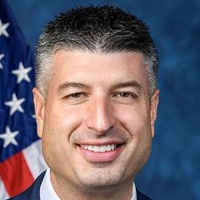
Tom Barrett
Representative
MI
Tom Barrett
Representative
MI
The Protecting Local Control of Data Centers Act ensures that state and local governments retain exclusive authority over the zoning, siting, and permitting of data centers on non-federal land. The bill prohibits federal agencies from bypassing these local land-use decisions or conditioning federal funding on the surrender of local regulatory control.
The No Data Center NDAs Act prohibits Members of Congress from signing nondisclosure agreements as a condition for accessing information regarding the planning or development of data centers.
Tom Barrett
Representative
MI
Tom Barrett
Representative
MI
The "No Data Center NDAs Act" prohibits Members of Congress from signing nondisclosure agreements as a condition for accessing information regarding the planning, development, or resource consumption of data centers. The bill further restricts the use of federal funds to enforce such agreements and mandates that congressional ethics committees establish regulations to ensure compliance.
The Healthy Commissaries, Healthy Families Act mandates that the Defense Commissary Agency increase the availability, affordability, and promotion of healthy food options for military families through interagency cooperation and local agricultural partnerships.
Tom Barrett
Representative
MI
Tom Barrett
Representative
MI
The Healthy Commissaries, Healthy Families Act directs the Department of Defense to improve the availability, affordability, and promotion of healthy food options at military commissaries. The bill mandates interagency collaboration to integrate local farmers and nutrition education into the commissary system. Additionally, it requires the establishment of a Director of Healthy Foods and regular reporting to Congress to ensure the program's success through 2030.
The Healthy Recess for Learning Act encourages school districts to provide students with at least 60 minutes of daily physical activity to improve student health and academic performance.
Tom Barrett
Representative
MI
Tom Barrett
Representative
MI
The Healthy Recess for Learning Act encourages school districts to provide students with at least 60 minutes of daily physical activity, including recess and physical education. By amending the Elementary and Secondary Education Act, the bill supports schools in integrating these healthy habits to improve student focus, behavior, and academic performance.
The Safe Baby Formula Act of 2026 mandates a study on heavy metals in infant formula and requires the establishment of federal safety standards to limit arsenic, cadmium, mercury, and lead levels.
Tom Barrett
Representative
MI
Tom Barrett
Representative
MI
The Safe Baby Formula Act of 2026 mandates a comprehensive study on the health impacts of heavy metals in infant formula. Furthermore, it requires the Secretary of Health and Human Services to establish and enforce strict, evidence-based action levels for arsenic, cadmium, mercury, and lead to ensure product safety.
The Know What’s on the Tray Act of 2026 requires schools to publish detailed ingredient, sourcing, and manufacturer information for all school breakfast and lunch menu items on a public website at least one week in advance.
Tom Barrett
Representative
MI
Tom Barrett
Representative
MI
The Know What’s on the Tray Act of 2026 requires schools participating in federal meal programs to publish detailed information about their breakfast and lunch offerings on a public website at least one week in advance. This mandate ensures transparency by requiring schools to disclose ingredient lists, manufacturers, and the sourcing origins of all food items served.
This bill designates the United States Postal Service facility at 117 West Lovett Street in Charlotte, Michigan, as the "Francis C. Flaherty Post Office Building."
Tom Barrett
Representative
MI
Tom Barrett
Representative
MI
This bill officially designates the United States Postal Service facility located at 117 West Lovett Street in Charlotte, Michigan, as the "Francis C. Flaherty Post Office Building." All official references to this facility will be updated to reflect this new name.
The Outside Influence Prevention Act requires that at least half of the funding for independent expenditures in U.S. House elections come from donors residing within the state where the election is held.
Tom Barrett
Representative
MI
Tom Barrett
Representative
MI
The Outside Influence Prevention Act requires that political committees funding independent expenditures in U.S. House elections receive at least 50% of their contributions from donors residing within the state where the election is held. This legislation aims to ensure that local representation remains driven by the interests of in-state constituents rather than outside financial influence.
The Campaign Accountability and Parity Act (CAP Act) limits annual campaign spending for House of Representatives candidates to the average annual Members' Representational Allowance.
Tom Barrett
Representative
MI
Tom Barrett
Representative
MI
The Campaign Accountability and Parity (CAP) Act seeks to level the playing field in congressional elections by capping annual campaign spending for House candidates. Under this legislation, a candidate’s total expenditures may not exceed the average annual Members' Representational Allowance (MRA) from the previous year.
This bill mandates that the Department of Defense develop and submit a strategic plan for the deployment of Airborne Collision Avoidance SystemX (ACASX) technology across all military aircraft.
Tom Barrett
Representative
MI
Tom Barrett
Representative
MI
The Military Next-Gen Collision Avoidance Act of 2026 mandates that the Department of Defense develop and submit a strategic action plan for deploying Airborne Collision Avoidance SystemX (ACASX) technology across its military aircraft fleet. This legislation requires the Secretary of Defense to outline necessary funding, research, and implementation steps to enhance aviation safety and ensure compatibility with existing surveillance systems.
This bill reaffirms the nation's commitment to the phrase "one Nation under God" in the Pledge of Allegiance as a unifying affirmation of shared American values.
Tom Barrett
Representative
MI
Tom Barrett
Representative
MI
This bill reaffirms the nation's commitment to the phrase "one Nation under God" in the Pledge of Allegiance. It highlights the historical context of this phrase and its role in expressing the principle that individual rights stem from a higher authority. The legislation also acknowledges the upcoming 250th anniversary of the Declaration of Independence and a related rededication event.
This constitutional amendment explicitly grants Congress and the states the authority to regulate and limit campaign contributions and spending for public office elections and ballot initiatives.
Tom Barrett
Representative
MI
Tom Barrett
Representative
MI
This proposed constitutional amendment grants Congress and the states explicit authority to regulate and limit campaign contributions and spending for public office elections and ballot initiatives. It affirms the government's interest in protecting free speech and political equality by allowing reasonable restrictions on money in politics. This includes the power to treat corporations and unions differently than individual persons in campaign finance.
This Act directs the Secretary of Defense to study and report on service members separated for refusing the COVID-19 vaccine and the status of their transferred education benefits for dependents.
Tom Barrett
Representative
MI
Tom Barrett
Representative
MI
This Act directs the Secretary of Defense to study and report on service members separated for refusing the COVID-19 vaccine mandate. The report must detail the number of separated members and the status of any education benefits they transferred to dependents. This information will be made publicly available to ensure transparency regarding these separations and benefit transfers.
The Sharri Briley and Eric Edmundson Veterans Benefits Expansion Act of 2026 increases disability compensation, enhances Dependency and Indemnity Compensation adjustments, extends certain VA home loan fee structures, and broadens VA home loan eligibility for National Guard and Reserve members.
Tom Barrett
Representative
MI
Tom Barrett
Representative
MI
The Sharri Briley and Eric Edmundson Veterans Benefits Expansion Act of 2026 significantly enhances benefits for veterans and service members. It increases disability compensation with a new monthly allowance for certain veterans and ties future Dependency and Indemnity Compensation (DIC) adjustments to Social Security cost-of-living increases plus an extra percentage. The bill also expands VA home loan eligibility to include National Guard and Reserve members with at least 14 days of qualifying service, though these borrowers will pay a higher loan fee. Finally, it extends the current VA home loan fee structure and modifies definitions of active duty for Guard and Reserve components.
This bill mandates the VA to create a single electronic scheduling system for both VA and community care appointments and extends certain veterans' pension payment limits.
Tom Barrett
Representative
MI
Tom Barrett
Representative
MI
The Veterans Community Care Scheduling Improvement Act mandates the VA to create a single electronic system for scheduling appointments at both VA facilities and with community providers under the Veterans Community Care Program. This system requires specific functionalities, implementation deadlines, mandatory training, and regular reporting to Congress on its operation and impact on wait times. Additionally, the bill extends certain existing limits on veterans' pension payments.
This bill, the CRUISE Act, centralizes and expedites the Department of Veterans Affairs' payment process to automobile sellers for vehicles purchased for disabled veterans.
Tom Barrett
Representative
MI
Tom Barrett
Representative
MI
The CRUISE Act aims to improve the process by which the Department of Veterans Affairs reimburses automobile sellers for vehicles purchased for disabled veterans. This legislation mandates timely payments to sellers, requiring the VA to adhere to federal payment standards and publicly report delays. Furthermore, it centralizes the payment process within the VA's Central Office to ensure better tracking and resolution of outstanding claims.
This bill authorizes the President to use military force against Iran for specific purposes, including targeting its nuclear program and addressing imminent threats, while prohibiting sustained ground combat operations within Iran.
Tom Barrett
Representative
MI
Tom Barrett
Representative
MI
This bill, the "2026 Authorization for Use of Military Force Against Iran," grants the President specific authority to use U.S. Armed Forces to counter Iran's nuclear program and address imminent threats. It explicitly prohibits deploying ground troops for sustained combat or occupation within Iran. The authorization is temporary, expiring on July 30, 2026, and requires regular reporting to Congress on all related military actions.
This bill exempts stinger-steered automobile transporters carrying assembled vehicles from the federal requirement to display warning flags on projecting loads.
Tom Barrett
Representative
MI
Tom Barrett
Representative
MI
This bill exempts certain stinger-steered automobile transporters from the federal requirement to display warning flags on loads that project beyond the vehicle. The exemption is effective immediately upon enactment and directs the Secretary of Transportation to permanently revise the relevant federal regulation as soon as possible. This change streamlines operations for transporters carrying assembled highway vehicles.
This act amends the War Powers Resolution to apply existing priority procedures for concurrent resolutions to joint resolutions concerning the removal of U.S. Armed Forces from hostilities.
Tom Barrett
Representative
MI
Tom Barrett
Representative
MI
This bill, the War Powers Priority Procedures Modernization Act, updates the War Powers Resolution to include joint resolutions in its procedures. It ensures that joint resolutions regarding the removal of U.S. Armed Forces from hostilities receive priority consideration in both chambers of Congress. Furthermore, it establishes specific time limits for debate on a veto override of such a joint resolution.
This act amends the War Powers Resolution to remove expedited congressional procedures for authorizations of military force lasting longer than five years or for an unspecified duration.
Tom Barrett
Representative
MI
Tom Barrett
Representative
MI
The Prevent Endless Wars Act amends the War Powers Resolution to remove expedited congressional procedures for any authorization of military force lasting longer than five years or for an indefinite period. This change aims to ensure that prolonged military engagements receive standard legislative scrutiny rather than fast-tracking.