Legislative Activity
Track Tom's sponsored bills, co-sponsored legislation, and voting record
The "Amateur Radio Emergency Preparedness Act" protects amateur radio operators' ability to install and use antennas on their property for emergency communications by limiting private land use restrictions, while still allowing for reasonable regulations.
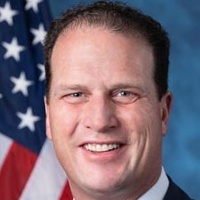
August Pfluger
Representative
TX
August Pfluger
Representative
TX
The "Amateur Radio Emergency Preparedness Act" aims to protect amateur radio operators' ability to install and use antennas on their property, despite private land use restrictions that may otherwise prohibit or impair such installations. It allows for reasonable restrictions based on safety and aesthetics, while limiting prior approval requirements and offering legal recourse for violations. The Act seeks to balance community interests with the need for effective emergency communication capabilities provided by amateur radio operators. The FCC is required to issue regulations to implement the act within 180 days of enactment.
This bill directs the Department of Education to consider the International Holocaust Remembrance Alliance's definition of antisemitism when evaluating discrimination complaints under Title VI of the Civil Rights Act of 1964, while also protecting First Amendment rights.
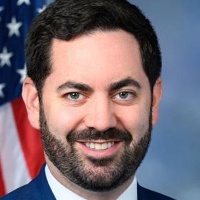
Michael Lawler
Representative
NY
Michael Lawler
Representative
NY
The Antisemitism Awareness Act of 2025 requires the Department of Education to consider the International Holocaust Remembrance Alliance's definition of antisemitism when evaluating discrimination complaints under Title VI of the Civil Rights Act of 1964, concerning race, color, and national origin. This aims to address rising antisemitism in educational settings. The Act clarifies that it does not expand the Department of Education's authority, change existing discrimination standards, reduce existing rights, or infringe upon First Amendment rights.
The Love Lives On Act of 2025 ensures that surviving spouses of veterans and service members retain their earned dependency compensation, survivor benefits, and TRICARE eligibility regardless of remarriage.

Richard Hudson
Representative
NC
Richard Hudson
Representative
NC
The Love Lives On Act of 2025 ensures that surviving spouses of veterans and service members retain their earned benefits, including dependency and indemnity compensation, educational assistance, and Survivor Benefit Plan annuities, regardless of remarriage. Additionally, the bill expands TRICARE eligibility to include widows and widowers whose subsequent marriages have ended. This legislation protects the financial security and healthcare access of surviving families by removing penalties associated with remarriage.
The Educational Choice for Children Act of 2025 establishes federal tax credits for contributions to scholarship-granting organizations, providing lower- and middle-income families with financial support for K–12 educational expenses.

Adrian Smith
Representative
NE
Adrian Smith
Representative
NE
The Educational Choice for Children Act of 2025 establishes federal tax credits for individuals and corporations that contribute to scholarship-granting organizations. These organizations provide K–12 education scholarships to students from lower- and middle-income households to cover tuition, tutoring, and other qualified educational expenses. The bill also protects the autonomy of participating schools and scholarship organizations from government interference while ensuring that scholarship funds remain tax-free for recipient families.
The Illegitimate Court Counteraction Act sanctions individuals assisting the International Criminal Court (ICC) in investigating, arresting, or prosecuting protected persons, including U.S. citizens and allies, and rescinds funding for the ICC.

Chip Roy
Representative
TX
Chip Roy
Representative
TX
The Illegitimate Court Counteraction Act imposes sanctions on individuals and their families who assist the International Criminal Court (ICC) in investigating, arresting, detaining, or prosecuting "protected persons," which include U.S. citizens, military personnel, government officials, and citizens/residents of U.S. allies not consenting to the ICC. It requires the President to block the property of those who aid the ICC, deny them entry into the U.S., and rescinds any funds for the ICC. The bill allows for waivers of these sanctions if vital to U.S. national security and termination of sanctions if the ICC ceases action against protected persons.
This bill establishes a three-year pilot program to improve health outcomes and care coordination for veterans enrolled in both the VA health care system and Medicare.
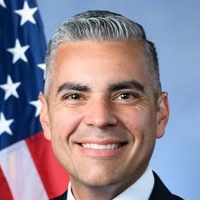
Juan Ciscomani
Representative
AZ
Juan Ciscomani
Representative
AZ
The Coordinating Care for Senior Veterans and Wounded Warriors Act establishes a three-year pilot program to improve health outcomes and care coordination for veterans enrolled in both VA health care and Medicare. By utilizing dedicated case managers and private sector care models, the program aims to streamline access to services, reduce costs, and eliminate gaps in care. The initiative will be implemented across select regions, including rural and medically underserved areas, to ensure better integration between VA and Medicare systems.
Designates January 26 - February 1, 2025 as "National School Choice Week", supporting diverse education options and parental empowerment in K-12 education. Encourages awareness events and recognition of contributions from students, parents, teachers, and school leaders.

John Moolenaar
Representative
MI
John Moolenaar
Representative
MI
This bill expresses support for designating January 26 - February 1, 2025, as "National School Choice Week" to recognize the importance of diverse K-12 education options and the role of parents in choosing the best learning environment for their children. It encourages raising awareness about the benefits of educational choice and congratulates those involved in education.
The Main Street Tax Certainty Act makes the 20% pass-through business income deduction permanent by removing its scheduled expiration after 2025.
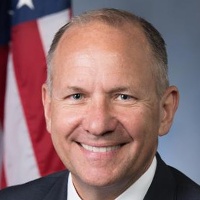
Lloyd Smucker
Representative
PA
Lloyd Smucker
Representative
PA
The Main Street Tax Certainty Act makes the 20% pass-through business income deduction permanent. By removing the current 2025 expiration date, this legislation ensures long-term tax relief for owners of qualified pass-through entities.
This bill proposes a constitutional amendment to permanently set the number of Supreme Court justices at nine, requiring ratification by three-fourths of the states within seven years.

Dusty Johnson
Representative
SD
Dusty Johnson
Representative
SD
This bill proposes a constitutional amendment to fix the number of Supreme Court justices at nine. For this amendment to be valid, three-fourths of the state legislatures must ratify it within seven years of its submission.
The NO GOTION Act prohibits companies linked to China, Russia, Iran, or North Korea from claiming federal green energy tax credits and deductions.
John Moolenaar
Representative
MI
John Moolenaar
Representative
MI
The NO GOTION Act prohibits companies with ties to China, Russia, Iran, or North Korea from claiming federal green energy tax credits and deductions. By restricting these financial benefits, the bill aims to ensure that U.S. taxpayer-funded incentives are not used to support entities controlled by designated foreign adversaries.
This bill streamlines and strengthens the disciplinary process for Department of Veterans Affairs supervisors and employees by establishing clear standards for removal, demotion, or suspension based on performance or misconduct.
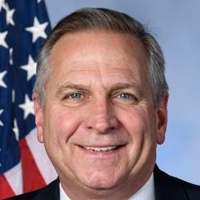
Mike Bost
Representative
IL
Mike Bost
Representative
IL
The Restore VA Accountability Act of 2025 streamlines the disciplinary process for Department of Veterans Affairs supervisors and senior executives by establishing clear standards for removal, demotion, or suspension based on performance or misconduct. The bill mandates that these personnel actions be supported by substantial evidence and limits the ability of external bodies to overturn or reduce imposed penalties. Additionally, it provides specific protections for whistleblowers while ensuring that disciplinary procedures take precedence over conflicting collective bargaining agreements.
This bill increases the railroad track maintenance tax credit, introduces annual inflation adjustments, and extends the eligibility period for qualifying expenditures.

Mike Kelly
Representative
PA
Mike Kelly
Representative
PA
This bill amends the Internal Revenue Code to expand the railroad track maintenance credit by increasing the per-mile tax credit to $6,100 and implementing annual inflation adjustments starting in 2026. It also extends the eligibility window for qualifying maintenance expenditures to include costs incurred through 2023. These updates aim to provide greater financial support for ongoing railroad infrastructure improvements.
The AMERICANS Act provides remedies, reinstatement, and record expungement for military service members who faced adverse actions or discharge due to the COVID-19 vaccine mandate.
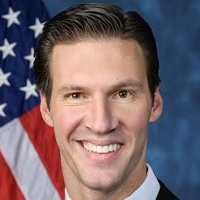
Pat Harrigan
Representative
NC
Pat Harrigan
Representative
NC
The AMERICANS Act of 2025 provides relief to military service members who faced discharge or adverse action due to the COVID-19 vaccine mandate. The bill mandates the correction of service records, offers pathways for reinstatement and back pay, and prohibits future COVID-19 vaccine mandates without explicit Congressional authorization. Additionally, it establishes clear exemption processes for deployment and ensures equal professional treatment for unvaccinated personnel.
This Act directs the Secretary of the Treasury to mint commemorative coins in 2028 to honor the diverse women who served on the Home Front during World War II, with proceeds supporting the Rosie the Riveter WWII Home Front National Historical Park.

John Garamendi
Representative
CA
John Garamendi
Representative
CA
The Rosie the Riveter Commemorative Coin Act directs the Secretary of the Treasury to mint and issue a series of commemorative coins in 2028 to honor the diverse women who served on the Home Front during World War II. Proceeds from the sale of these coins will support the Rosie the Riveter Trust in its efforts to maintain the Rosie the Riveter/WWII Home Front National Historical Park and fund educational programs. This initiative ensures the legacy of these essential workers is preserved and recognized through a national numismatic program.
This bill nullifies the recent federal rule restricting short-term, limited-duration insurance plans, thereby preserving broader access to these coverage options.

Earl Carter
Representative
GA
Earl Carter
Representative
GA
The Healthcare Freedom and Choice Act nullifies a recent federal rule that restricted the availability of short-term, limited-duration insurance plans. By overturning this regulation, the bill ensures that these alternative health insurance options remain accessible to consumers, regardless of their compliance with Affordable Care Act mandates.
The Family First Act permanently expands the child tax credit, introduces a new tax credit for pregnant mothers, simplifies the Earned Income Tax Credit, and makes permanent the $10,000 cap on state and local tax deductions while eliminating the head of household filing status.

Blake Moore
Representative
UT
Blake Moore
Representative
UT
The Family First Act permanently expands the federal Child Tax Credit and introduces a new tax credit for pregnant mothers starting in 2026. Additionally, the bill simplifies the Earned Income Tax Credit, eliminates the "head of household" filing status, and makes the $10,000 cap on state and local tax (SALT) deductions permanent. These comprehensive tax code reforms aim to restructure federal support for families and adjust individual tax filing requirements.
The Great Lakes Restoration Initiative Act of 2025 authorizes $500 million annually from 2027 through 2031 to support ongoing restoration efforts for the Great Lakes.
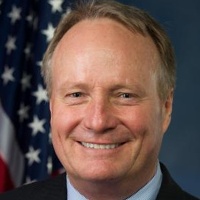
David Joyce
Representative
OH
David Joyce
Representative
OH
The Great Lakes Restoration Initiative (GLRI) Act of 2025 reauthorizes critical funding for the protection and restoration of the Great Lakes ecosystem. This legislation secures $500 million annually from fiscal years 2027 through 2031 to support ongoing environmental recovery efforts.
The REMAIN in Mexico Act of 2025 mandates the implementation of the Migrant Protection Protocols, requiring asylum seekers to wait in Mexico while their claims are processed.

Brandon Gill
Representative
TX
Brandon Gill
Representative
TX
The REMAIN in Mexico Act of 2025 mandates that the Secretary of Homeland Security reinstate the Migrant Protection Protocols (MPP). This legislation requires that asylum seekers be returned to Mexico to await their U.S. immigration proceedings, effectively codifying the 2019 policy guidance into law.
The Federal Employee Return to Work Act prohibits federal teleworkers from receiving annual pay adjustments and mandates that their basic pay be set to the "Rest of U.S." locality rate.

Dan Newhouse
Representative
WA
Dan Newhouse
Representative
WA
The Federal Employee Return to Work Act mandates that federal employees who telework at least one day per week are ineligible for annual pay adjustments. Additionally, the bill requires that these employees be compensated based on the "Rest of U.S." locality pay scale, regardless of their actual work location. Certain groups, including employees with disabilities and law enforcement officers, are exempt from these provisions.
This bill proposes a constitutional amendment to limit members of the House of Representatives to three terms and Senators to two terms, with specific provisions for partial terms. Terms served before the amendment's ratification would not be counted towards these limits, and the amendment must be ratified within seven years to be valid.

Ralph Norman
Representative
SC
Ralph Norman
Representative
SC
This bill proposes a constitutional amendment to limit the number of terms a member of Congress can serve. Representatives would be limited to 3 terms and Senators to 2 terms, with specific rules for partial terms. Terms served before the amendment's ratification would not be counted. The amendment must be ratified by three-fourths of the states within seven years to be valid.