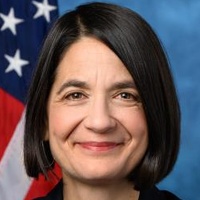
Legislative Activity
Track Becca's sponsored bills, co-sponsored legislation, and voting record
The Family Grocery and Farmer Relief Act aims to lower food prices and strengthen the food supply by breaking up dominant meatpacking monopolies, restricting foreign control, and empowering independent farmers and small businesses.
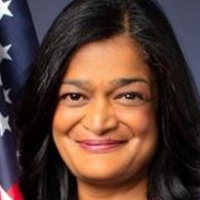
Pramila Jayapal
Representative
WA
Pramila Jayapal
Representative
WA
The Family Grocery and Farmer Relief Act aims to lower food prices and increase market competition by breaking up dominant, multi-protein meatpacking enterprises. The legislation empowers the Federal Trade Commission to enforce divestitures, restrict foreign control, and prevent excessive market concentration in the beef industry. By prioritizing sales to farmer cooperatives and small businesses, the bill seeks to create a more resilient food supply chain that benefits both independent producers and American consumers.
This bill mandates electronic prior authorization, increases transparency through required data reporting, and establishes faster decision timelines for Medicare Advantage plans to improve timely access to care for seniors.
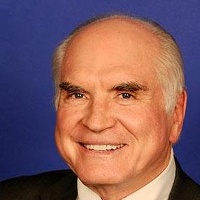
Mike Kelly
Representative
PA
Mike Kelly
Representative
PA
The Improving Seniors’ Timely Access to Care Act of 2025 aims to streamline and modernize the prior authorization process within Medicare Advantage plans. This bill mandates the adoption of electronic prior authorization systems and significantly increases transparency regarding approval rates and decision times starting in 2027. Furthermore, it establishes new enrollee protections and grants the Secretary authority to enforce faster decision timeframes for medical services.
The High Court Gift Ban Act prohibits federal judicial officers from accepting gifts exceeding $50 per instance or $100 annually from a single source, with specific exceptions and enforcement penalties.
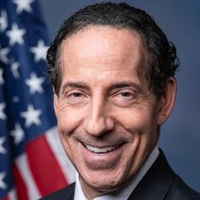
Jamie Raskin
Representative
MD
Jamie Raskin
Representative
MD
The High Court Gift Ban Act establishes strict limits on gifts accepted by federal judicial officers, prohibiting any gift valued over $50 or exceeding $100 in total annual value from a single source. The bill includes specific exemptions for personal hospitality, professional events, and family gifts, while mandating enforcement through the Judicial Conference and potential civil or criminal penalties for violations.
The Save MEDICARE Act of 2026 reforms Medicare Advantage by tightening payment accuracy, enhancing audit and enforcement authority, and requiring private insurers to reimburse the VA for veteran healthcare services.
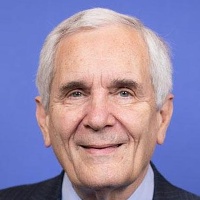
Lloyd Doggett
Representative
TX
Lloyd Doggett
Representative
TX
The Save MEDICARE Act of 2026 aims to increase transparency and accountability within the Medicare Advantage program by reforming payment methodologies, tightening oversight of diagnosis coding, and accelerating audit processes. The bill also enhances the Department of Veterans Affairs' ability to recover healthcare costs from private insurers and empowers states to enforce federal requirements for Medicare Advantage plans. These measures are designed to ensure more accurate payments, reduce deceptive practices, and protect resources for all Medicare enrollees.
This bill renames and revises the Great American Outdoors Act's maintenance fund, increases dedicated funding through new, higher fees for foreign visitors, and sets spending priorities for deferred maintenance across public lands agencies.
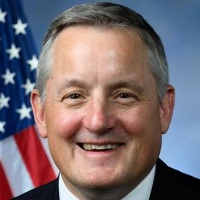
Bruce Westerman
Representative
AR
Bruce Westerman
Representative
AR
This bill, the Great American Outdoors Act 250, significantly reforms and renames the existing public lands restoration fund to the America’s Legacy Restoration Fund. It secures dedicated funding streams, primarily from energy revenues and new fees on foreign visitors, to address critical deferred maintenance across the National Park Service, Forest Service, and other public land agencies. The legislation establishes strict spending priorities for infrastructure repair while also creating pilot programs for enhancing outdoor recreation and sportsmen's access. Finally, it mandates increased transparency and accountability through standardized metrics and public reporting on all funded projects.
The LIFT the BAR Act restores federal public benefit eligibility, including SNAP, Medicaid, and housing assistance, for many lawfully present noncitizens by repealing restrictions from the 1996 welfare law and updating terminology.
Pramila Jayapal
Representative
WA
Pramila Jayapal
Representative
WA
The LIFT the BAR Act repeals decades-old restrictions that barred many lawfully present noncitizens from accessing essential federal public benefits. This legislation restores eligibility for programs like SNAP, Medicaid, CHIP, and housing assistance for qualified noncitizens. The bill also updates terminology, replacing "alien" with "noncitizen" throughout relevant statutes.
This bill calls for the restoration of the U.S. Refugee Admissions Program and reaffirms America's commitment to protecting refugees and displaced persons globally.
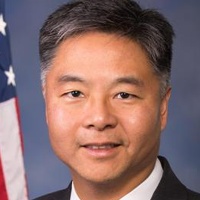
Ted Lieu
Representative
CA
Ted Lieu
Representative
CA
This resolution reaffirms the United States' commitment to refugee protection both domestically and globally, condemning recent policy actions that suspended refugee admissions. It calls for the immediate restoration of the U.S. Refugee Admissions Program and stronger support for displaced persons worldwide. The bill emphasizes the legal, moral, and economic benefits of robust refugee resettlement policies.
This act repeals the federal tax credit for contributions to scholarship organizations and eliminates the income exclusion for certain scholarship amounts received from those organizations.
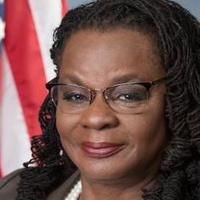
Gwen Moore
Representative
WI
Gwen Moore
Representative
WI
The Keep Public Funds in Public Schools Act of 2026 aims to redirect funding by eliminating federal tax incentives for private school scholarships. Specifically, it repeals the tax credit for contributions to scholarship-granting organizations and removes the income exclusion for certain scholarship amounts received. These changes are set to take effect starting in 2027.
The DASH Act is a comprehensive legislative package designed to combat homelessness and increase housing affordability through expanded rental vouchers, increased construction funding, zoning reform, and broad tax incentives for renters, developers, and first-time homebuyers.
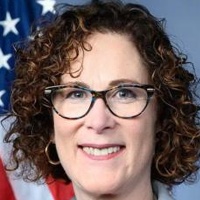
Valerie Hoyle
Representative
OR
Valerie Hoyle
Representative
OR
The DASH Act is a comprehensive legislative effort to combat homelessness and expand housing affordability through increased federal funding, tax incentives, and zoning reform. The bill establishes new rental voucher programs, funds the construction of affordable units, and provides tax credits for both renters and first-time homebuyers. Additionally, it incentivizes local governments to remove restrictive zoning barriers to increase housing supply and density.
This Act establishes a nonregulatory partnership program and a voluntary grant program to coordinate and fund restoration and protection activities across the five-state Connecticut River Watershed.
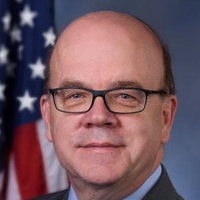
James McGovern
Representative
MA
James McGovern
Representative
MA
This Act establishes the nonregulatory Connecticut River Watershed Partnership program to coordinate restoration and protection activities across the five-state region. It also creates a voluntary grant program to fund projects focused on habitat restoration, water quality improvement, and community resilience. The legislation emphasizes collaboration with federal, state, Tribal, and local partners, with special consideration for environmental justice communities. Funding is authorized through 2030 to support these coordinated conservation efforts.
This bill expresses support for designating June 5, 2026, as "National Gun Violence Awareness Day" and June 2026 as "National Gun Violence Awareness Month" to honor victims and promote awareness of gun violence.
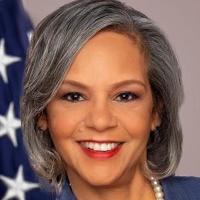
Robin Kelly
Representative
IL
Robin Kelly
Representative
IL
This bill expresses support for designating June 5, 2026, as "National Gun Violence Awareness Day" and the entire month of June 2026 as "National Gun Violence Awareness Month." The designations aim to honor the nearly 47,000 people killed by gunfire each year and raise public awareness about the devastating impact of gun violence. The resolution encourages the public to wear orange on that day and focus on community efforts to promote gun safety.
This resolution expresses support for designating May 2026 as Mental Health Awareness Month to address the worsening mental health crisis and promote access to care.
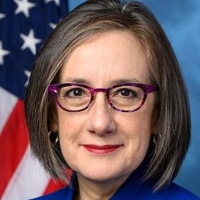
Andrea Salinas
Representative
OR
Andrea Salinas
Representative
OR
This resolution expresses support for designating May 2026 as Mental Health Awareness Month. It highlights the urgent and worsening national mental health crisis, citing alarming statistics across various demographics, including youth and high-risk groups. The bill aims to remove stigma, declare mental health a national priority, and support expanded funding and access to necessary services.
This bill establishes the Smithsonian American Women's History Museum, designates its site on the National Mall, and sets requirements for its mission, construction, and diverse representation of viewpoints.
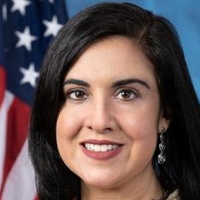
Nicole Malliotakis
Representative
NY
Nicole Malliotakis
Representative
NY
This act officially establishes the Smithsonian American Women’s History Museum and designates its location on the National Mall, requiring the transfer of land jurisdiction to the Smithsonian Institution. The museum is mandated to preserve and present the history and achievements of biological women in the United States. Furthermore, the legislation requires that exhibits and programs reflect diverse political viewpoints and authentic experiences of women, as guided by a broad array of knowledgeable sources.
This bill expands Medicare Part B coverage to reimburse for specific pharmacist services related to testing and treatment for certain public health threats, effective January 1, 2026.
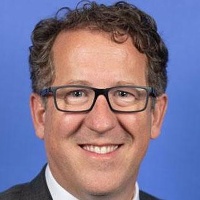
Adrian Smith
Representative
NE
Adrian Smith
Representative
NE
The Ensuring Community Access to Pharmacist Services Act expands Medicare Part B coverage to include services provided by pharmacists starting January 1, 2026. This coverage is specifically for testing or treatment related to COVID-19, the flu, RSV, strep throat, or during a declared public health emergency. The bill outlines payment structures, generally covering 80% of the cost, and prohibits pharmacists from balance billing Medicare patients for these covered services.
This bill extends the Rural Community Hospital Demonstration Program for an additional five years and modifies extension criteria for participating hospitals.
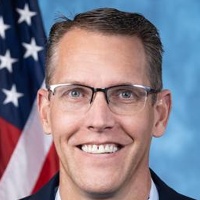
Randy Feenstra
Representative
IA
Randy Feenstra
Representative
IA
This bill, the "Rural Community Hospital Demonstration Program Reauthorization," extends the existing rural community hospital demonstration program for an additional five years, making it a 20-year program. It also updates the criteria for an additional extension period to cover certain hospitals that join the program between late 2024 and early 2027.
The Elder Pride Act of 2026 establishes a rural outreach grant program to connect older LGBTQI individuals and members of other protected classes in rural areas with essential services, reduce isolation, and improve sexual health care access.
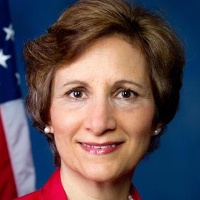
Suzanne Bonamici
Representative
OR
Suzanne Bonamici
Representative
OR
The Elder Pride Act of 2026 establishes a new rural outreach grant program under the Older Americans Act. This program aims to reduce isolation and improve care access for older LGBTQI individuals and members of other protected classes in rural areas. Grants will fund partnerships that provide essential services, including comprehensive sexual health support for all older residents.
This bill disapproves the Department of Education's final rule on federal student loan programs, preventing its implementation.
Suzanne Bonamici
Representative
OR
Suzanne Bonamici
Representative
OR
This bill seeks to disapprove the Department of Education's final rule regarding the "Reimagining and Improving Student Education-Federal Student Loan Program." By utilizing the Congressional Review Act, this legislation prevents the new regulations from taking legal effect. Consequently, the Department of Education cannot implement the changes outlined in that specific rule.
This bill authorizes the minting and sale of commemorative gold and silver coins to honor the 25th anniversary of the September 11, 2001, terrorist attacks, with surcharges supporting the National September 11 Memorial and Museum.

Dan Goldman
Representative
NY
Dan Goldman
Representative
NY
This bill authorizes the Secretary of the Treasury to mint and issue commemorative gold and silver coins marking the 25th anniversary of the September 11, 2001, terrorist attacks. The coins will honor the victims, first responders, and survivors, with designs selected in consultation with the National September 11 Memorial and Museum. All surcharges from the sale of these coins will be paid directly to the Memorial and Museum to support its operations and maintenance.
This bill prohibits using federal funds for specific settlement payments, particularly those related to the *Trump, et al. v. IRS, et al.* case, and restricts certain compromise settlements from the Judgment Fund to high-ranking officials and specific types of claims.
Jamie Raskin
Representative
MD
Jamie Raskin
Representative
MD
This Act prohibits the use of federal funds for specific settlement payments, including those related to the *Trump, et al. v. IRS, et al.* case. It places new restrictions on the Judgment Fund, barring payments to high-ranking officials, their relatives, and certain entities for specific types of claims. The bill also establishes strict reporting and notification requirements for large government compromise settlements.
The NO FAKES Act of 2026 establishes a federal right for individuals, living or dead, to control the commercial use of their digital voice and visual likeness replicas, enforced through civil liability and a notice-and-takedown system for online platforms.
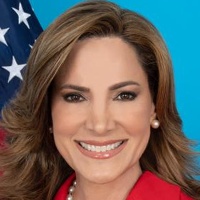
Maria Salazar
Representative
FL
Maria Salazar
Representative
FL
The NO FAKES Act of 2026 establishes a federal property right for individuals, living or deceased, to control the use of their voice or visual likeness in unauthorized, highly realistic digital replicas. This law outlines specific licensing requirements, post-mortem rights, and creates civil liability for unauthorized creation or distribution of these digital likenesses. It also implements a notice-and-takedown system for online service providers to manage infringing user-uploaded content.