This bill calls for the restoration of the U.S. Refugee Admissions Program and reaffirms America's commitment to protecting refugees and displaced persons globally.
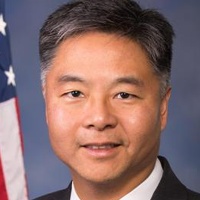
Ted Lieu
Representative
CA-36
This resolution reaffirms the United States' commitment to refugee protection both domestically and globally, condemning recent policy actions that suspended refugee admissions. It calls for the immediate restoration of the U.S. Refugee Admissions Program and stronger support for displaced persons worldwide. The bill emphasizes the legal, moral, and economic benefits of robust refugee resettlement policies.
New Resolution Calls for Immediate Restart of Refugee Admissions and Restoration of Asylum Protections
This resolution serves as a major policy reset, aiming to undo years of restrictive immigration rules and get the U.S. Refugee Admissions Program back on its feet. It explicitly calls for lifting Executive Order 14163—which has kept admissions suspended—and demands that the government meet robust resettlement goals. The proposal isn't just a suggestion; it’s a detailed critique of recent shifts, like the 2026 cap that was limited to just 7,500 people, and the pause on family reunification for Afghan allies. For anyone who’s been following the news, this is the 'reopening the doors' moment, prioritizing the processing of over 100,000 refugees who are already conditionally approved but stuck in limbo.
The Economic and Security Playbook
Beyond the humanitarian aspect, the resolution makes a hard-nosed case for why this matters to the average taxpayer. It points to data showing that between 2005 and 2019, refugees and asylum seekers contributed roughly $581 billion in total revenue to federal, state, and local governments. In plain terms, these are people who move into our neighborhoods, fill local jobs, and pay into the tax system that funds our roads and schools. The resolution also argues that a predictable refugee process is a national security win, as it stabilizes regions in crisis and prevents the chaotic, unplanned migration that often happens when legal pathways are shut down.
Clearing the Backlog and Fixing the Process
The resolution specifically targets the 'fine print' issues that have stalled the system. It calls for the immediate implementation of the Lautenberg-Specter Program to help religious minorities from Iran and the former Soviet Union, and demands an end to the practice of detaining approved refugees for repetitive case re-examinations. For a family waiting to reunite with a relative who worked alongside U.S. troops, or a local church group waiting to sponsor a refugee family, these changes mean moving from endless 'pending' status to actual flights and arrivals. It also pushes for better infrastructure for refugees with disabilities, ensuring that the 'welcome' includes practical support like accessible housing and medical services.
A Global Strategy for Local Stability
This isn't just about who comes to the U.S.; it’s about what happens everywhere else. The resolution pushes the State Department and the UN Ambassador to increase aid to 'frontline' countries—the low- and middle-income nations that currently host 68 percent of the world’s refugees. By funding food rations and schools in camps abroad, the goal is to alleviate the pressure that leads to mass migration crises. For the busy professional or trade worker, this strategy is about moving from a reactive 'crisis mode' to a managed, proactive system that addresses the root causes of displacement before they reach the U.S. border.