Legislative Activity
Track Nanette's sponsored bills, co-sponsored legislation, and voting record
The IDEA Full Funding Act establishes mandatory, increasing funding levels for the Individuals with Disabilities Education Act (IDEA) from 2026 through 2035, contingent upon offsetting budget cuts.
Jared Huffman
Representative
CA
Jared Huffman
Representative
CA
The IDEA Full Funding Act establishes mandatory, increasing funding levels for the Individuals with Disabilities Education Act (IDEA) programs through fiscal year 2035. This legislation sets specific appropriation targets based on student counts and national average spending to ensure greater financial support for special education services. Furthermore, the bill requires that these new IDEA appropriations adhere to "cut-as-you-go" budget offset rules.
The Delete DOGE Act prohibits the use of federal funds to implement, manage, or enforce specific executive orders related to the DOGE operation and defunds associated government entities.
Sara Jacobs
Representative
CA
Sara Jacobs
Representative
CA
The Delete DOGE Act aims to completely defund and halt operations related to the government entity known as DOGE. This bill specifically prohibits the use of federal funds to implement, manage, or enforce the executive orders that established or involve DOGE entities. Furthermore, it places strict limitations on the U.S. Digital Service to prevent them from funding any new DOGE-related projects initiated after January 19, 2025.
This Act establishes a program, managed by the Librarian of Congress, to create and disseminate educational resources countering denial of the Armenian Genocide.
Dina Titus
Representative
NV
Dina Titus
Representative
NV
The Armenian Genocide Education Act establishes a program managed by the Librarian of Congress to develop and share educational resources combating denial of the 1915-1923 Armenian Genocide. This initiative will create online materials, train educators, and encourage the integration of accurate history into school curricula. The Act authorizes $2 million annually for five years to support these educational efforts aimed at promoting awareness and preventing future atrocities.
This Act mandates the Department of Labor to establish and enforce comprehensive workplace violence prevention standards for healthcare and social service workers, while also tying compliance to Medicare funding for certain facilities.
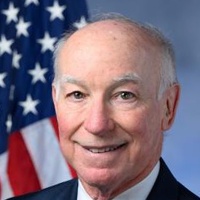
Joe Courtney
Representative
CT
Joe Courtney
Representative
CT
This Act mandates the Secretary of Labor to establish an interim and then a final standard requiring comprehensive workplace violence prevention plans for employers in the healthcare and social service sectors. These plans must be developed with employee input and detail risk assessments, hazard controls, reporting procedures, and annual training. Furthermore, the bill amends the Social Security Act to require Medicare-funded hospitals and skilled nursing facilities not covered by OSHA to comply with these new federal workplace violence prevention standards. The legislation also establishes clear definitions for workplace violence and includes strong anti-retaliation protections for employees who exercise their rights under the Act.
The FISCAL Act updates the National School Lunch Program requirements to mandate that schools offer both traditional fluid milk and plant-based milk options.
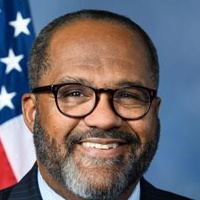
Troy Carter
Representative
LA
Troy Carter
Representative
LA
The FISCAL Act updates the National School Lunch Program requirements regarding milk offerings. This legislation mandates that schools must offer both traditional fluid milk and plant-based milk options to students. Furthermore, the bill establishes a framework for the Secretary to set nutritional standards for any qualifying plant-based milk offered under the program.
The Reentry Act of 2025 allows inmates to receive Medicaid assistance during the 30 days preceding their release and mandates a comprehensive report on healthcare standards within correctional facilities.
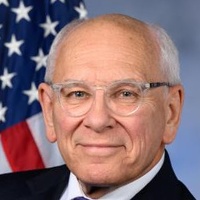
Paul Tonko
Representative
NY
Paul Tonko
Representative
NY
The Reentry Act of 2025 allows incarcerated individuals to receive medical assistance through Medicaid during the 30 days immediately preceding their release. This legislation also mandates a comprehensive report from MACPAC analyzing current healthcare standards within correctional facilities. The report will examine the impact of this coverage change and offer recommendations for improving healthcare access for those transitioning back into the community.
This bill prohibits the use of federal funds for the removal of 3 percent or more of the Department of Health and Human Services (HHS) employees or any of its sub-agencies within any 60-day period.
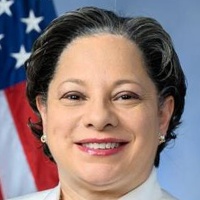
Jennifer McClellan
Representative
VA
Jennifer McClellan
Representative
VA
This bill restricts the use of federal funds to carry out large-scale removals of employees within the Department of Health and Human Services (HHS). Specifically, it prohibits using federal money for terminations if 3% or more of the total HHS workforce, or 3% or more of any individual sub-agency's staff, are removed within a 60-day period. This measure aims to prevent sudden, mass layoffs across the department and its major divisions.
This Act imposes sweeping, mandatory sanctions, tariffs, and investment prohibitions on the Russian Federation and its affiliates until Russia negotiates a lasting peace with Ukraine.
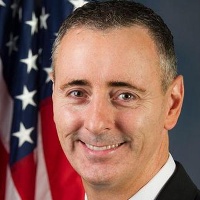
Brian Fitzpatrick
Representative
PA
Brian Fitzpatrick
Representative
PA
The Sanctioning Russia Act of 2025 imposes sweeping economic penalties on the Russian Federation in response to its aggression against Ukraine. This legislation mandates severe, immediate sanctions against key Russian officials, financial institutions, and energy sector entities, including asset freezes and trade prohibitions. Furthermore, the Act dramatically increases import duties on Russian goods and requires the President to review and reimpose these measures until Russia negotiates a lasting peace with Ukraine.
The Nutrition CARE Act of 2025 expands Medicare coverage to include medical nutrition therapy services provided by registered dietitians for beneficiaries diagnosed with an eating disorder, effective January 1, 2026.
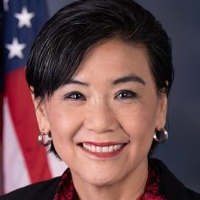
Judy Chu
Representative
CA
Judy Chu
Representative
CA
The Nutrition CARE Act of 2025 addresses the critical need for comprehensive eating disorder treatment under Medicare. This bill expands Medicare coverage to include essential medical nutrition therapy services for beneficiaries diagnosed with an eating disorder, starting January 1, 2026. It establishes initial and ongoing annual coverage limits for these crucial dietitian-led services, requiring a referral from a physician or psychologist. By covering this vital component of care, the Act aims to improve health outcomes and reduce the significant economic burden associated with these serious mental illnesses.
This resolution honors the life, accomplishments, and enduring legacy of labor leader and civil rights activist César Estrada Chávez.
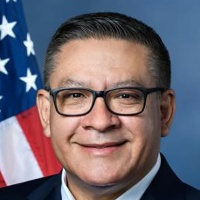
Salud Carbajal
Representative
CA
Salud Carbajal
Representative
CA
This resolution officially honors the life, accomplishments, and enduring legacy of labor leader César Estrada Chávez. It recognizes his pivotal role in advocating for farmworker rights, fair wages, and human dignity through nonviolent activism. The bill encourages all Americans to commemorate his work and remember his rallying cry, "Sí se puede!"
This Act expands and reforms the Low-Income Home Energy Assistance Program (LIHEAP) to increase funding, simplify eligibility, mandate energy efficiency upgrades, and protect low-income families from high utility costs and shutoffs.
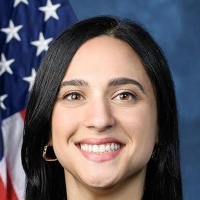
Yassamin Ansari
Representative
AZ
Yassamin Ansari
Representative
AZ
The Heating and Cooling Relief Act aims to significantly expand and modernize energy assistance for low-income families facing high utility costs and extreme weather. It increases funding for the Low-Income Home Energy Assistance Program (LIHEAP), streamlines eligibility requirements, and mandates that energy suppliers take steps to prevent shutoffs and eliminate late fees for recipients. Furthermore, the bill prioritizes using funds for weatherization and home retrofitting to reduce fossil fuel dependence and improve climate resilience for vulnerable households.
The Hot Foods Act of 2025 lifts the general ban on purchasing ready-to-eat hot foods with SNAP benefits while imposing a sales cap on retailers that primarily sell such items.

Grace Meng
Representative
NY
Grace Meng
Representative
NY
The Hot Foods Act of 2025 removes the general federal ban on using Supplemental Nutrition Assistance Program (SNAP) benefits to purchase hot, ready-to-eat foods. This legislation clarifies that hot foods are now eligible for purchase with SNAP benefits, while also setting a new rule that limits SNAP-participating retailers to deriving no more than 50% of their gross sales from these ready-to-eat hot items. The act updates existing statutes to reflect this expanded purchasing power for recipients.
This resolution officially recognizes and supports the goals of National Women's History Month for March 2025, honoring the ongoing struggle and achievements of women throughout American history.
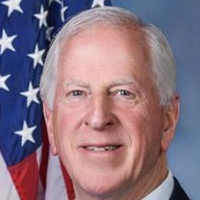
Mike Thompson
Representative
CA
Mike Thompson
Representative
CA
This resolution officially recognizes and celebrates National Women's History Month for March 2025, honoring the long struggle and significant achievements of women throughout American history. It highlights key milestones in women's suffrage, political leadership, and social progress. The House of Representatives supports the goals of ensuring women's history is taught and recognizes the 2025 theme, "Moving Forward Together! Women Educating Inspiring Generations!"
This bill establishes federal funding for states and eligible entities to create and improve programs for the early detection, intervention, and coordinated care of vision impairments in children.
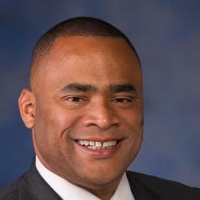
Marc Veasey
Representative
TX
Marc Veasey
Representative
TX
The Early Detection of Vision Impairments for Children Act of 2025 establishes federal funding to help states and eligible groups create comprehensive programs for early vision screening and intervention in children. These grants will support activities such as improving data collection, reaching underserved populations, and building coordinated public health systems for eye care. The bill also authorizes technical assistance grants through the CDC to support states in developing and improving their screening and intervention strategies. Funding is authorized at $5 million annually from fiscal years 2026 through 2030 for the main grant program.
This Act restores immediate U.S. funding to UNRWA contingent upon the agency's commitment to increased accountability and transparency reforms following an independent review.
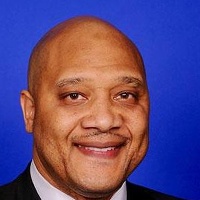
André Carson
Representative
IN
André Carson
Representative
IN
The UNRWA Funding Emergency Restoration Act of 2025 aims to immediately restart U.S. funding for the UN agency assisting Palestinian refugees, which was previously frozen. This bill mandates the cancellation of existing restrictions and requires the Secretary of State to resume aid payments while ensuring accountability based on an independent review. Furthermore, it urges Israel to cooperate with UNRWA investigations to maintain agency neutrality.
This act requires federal agencies to conduct detailed cost-benefit analyses for significant job relocations, which are then reviewed by the Inspector General and reported to Congress to ensure transparency.
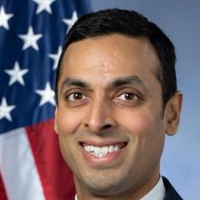
Suhas Subramanyam
Representative
VA
Suhas Subramanyam
Representative
VA
The COST of Relocations Act mandates that Federal agencies conduct a detailed, OMB-guided cost-benefit analysis before executing any "covered relocation" of jobs. Agencies must submit this analysis to their Inspector General (OIG), who then reviews the methodology and findings before reporting directly to Congress. This process ensures transparency and rigorous economic justification for significant federal job moves.
This resolution formally recognizes the significant heritage, culture, and economic contributions of Latinas in the United States while acknowledging the ongoing disparities they face.
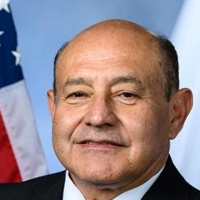
J. Correa
Representative
CA
J. Correa
Representative
CA
This resolution formally recognizes the significant heritage, culture, and vital contributions of Latinas throughout U.S. history across all sectors of American life. It celebrates their achievements while acknowledging the ongoing economic and societal disparities they continue to face. The bill calls for continued investment to help break down barriers and ensure Latinas can fully achieve their potential.
This Act establishes a 20% federal tax credit for converting eligible commercial buildings into affordable housing units, subject to state allocation and specific income restrictions.
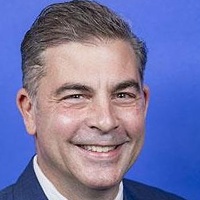
Mike Carey
Representative
OH
Mike Carey
Representative
OH
The Revitalizing Downtowns and Main Streets Act establishes a new 20% federal tax credit for converting eligible, older commercial buildings into affordable housing. This incentive aims to increase housing supply by requiring that at least 20% of the converted units remain rent-restricted for low-income residents for 30 years. State agencies will allocate these credits, which are subject to a national cap of $12 billion, based on approved plans prioritizing financially necessary projects.
This Act raises the minimum age for Federal Firearms Licensees to sell certain semiautomatic rifles and shotguns to 21, with exceptions for qualified individuals aged 18-20, and mandates an FBI report on its public access line operations.
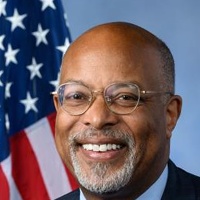
Glenn Ivey
Representative
MD
Glenn Ivey
Representative
MD
The Raise the Age Act of 2025 generally prohibits Federal Firearms Licensees from selling certain semiautomatic centerfire rifles or shotguns capable of holding magazines over five rounds to anyone under 21, with exceptions for qualified military or government personnel. The bill also maintains the existing minimum age of 18 for general firearm purchases, excluding the newly restricted categories. Finally, it mandates that the FBI Director report on the operational procedures of its public access line within 90 days of enactment.
The SCREENS for Cancer Act of 2025 reauthorizes and updates the National Breast and Cervical Cancer Early Detection Program to enhance cancer prevention, reduce disparities, and ensure equitable access to screening services through increased funding and new reporting requirements.
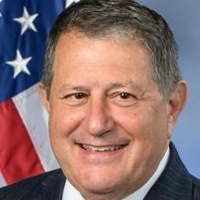
Joseph Morelle
Representative
NY
Joseph Morelle
Representative
NY
The **SCREENS for Cancer Act of 2025** seeks to reauthorize and update the National Breast and Cervical Cancer Early Detection Program (NBCCEDP). This legislation expands the program's focus to include cancer prevention and aims to reduce health disparities in screening access. The bill authorizes $235 million annually for fiscal years 2026 through 2030 and mandates a GAO study on program eligibility and service trends.