Legislative Activity
Track Brian's sponsored bills, co-sponsored legislation, and voting record
This resolution supports designating June as Family Month to recognize the traditional nuclear family as the foundation of a healthy society and to rededicate the nation to its importance, while also opposing the observance of Pride Month.
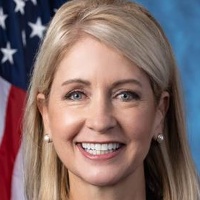
Mary Miller
Representative
IL
Mary Miller
Representative
IL
This resolution supports designating June as Family Month to recognize the traditional nuclear family as the foundation of a healthy society. It calls for a national rededication to the importance of marriage and family, asserting that children thrive best in a home with a married mother and father. The bill also explicitly states that the House of Representatives no longer recognizes Pride Month.
This bill amends the Immigration and Nationality Act to make noncitizens associated with criminal gangs inadmissible and deportable, while mandating their detention and restricting their eligibility for immigration relief.

Tom McClintock
Representative
CA
Tom McClintock
Representative
CA
The Deport Alien Gang Members Act amends the Immigration and Nationality Act to establish new grounds for inadmissibility and deportability for noncitizens associated with criminal gangs. The bill authorizes the Secretary of Homeland Security to formally designate criminal organizations, mandates the detention of identified gang members, and restricts their eligibility for various forms of immigration relief.
This resolution calls upon Americans to honor the service members who died defending freedom and peace on Memorial Day, 2026.
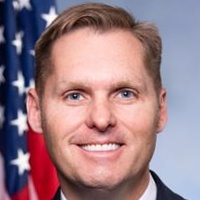
Michael Guest
Representative
MS
Michael Guest
Representative
MS
This resolution calls upon all Americans to honor the service members who died defending freedom and peace, particularly on Memorial Day 2026. It recognizes the ultimate sacrifice of over one million Americans in pursuit of these ideals. The bill emphasizes the importance of continuing to express gratitude and commemorate these patriots.
This bill prohibits the VA from reporting veterans to the NICS background check system solely because a fiduciary has been appointed to manage their benefits, unless a judicial authority deems them a danger to themselves or others.
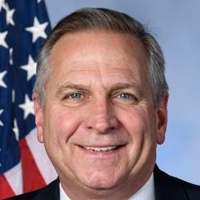
Mike Bost
Representative
IL
Mike Bost
Representative
IL
The Veterans 2nd Amendment Protection Act prohibits the VA from reporting veterans to the NICS background check system solely because a fiduciary was appointed to manage their benefits. This legislation ensures that a VA finding of mental incompetence or the appointment of a fiduciary alone is not used to treat a veteran as a "mental defective" for gun control purposes. Furthermore, the VA must notify the Attorney General about past transmissions of this information that lacked a proper legal basis.
The Provider Reimbursement Stability Act of 2026 reforms Medicare physician payment policies by updating budget neutrality thresholds, establishing a correction process for utilization estimates, mandating periodic updates to practice expense data, and limiting annual conversion factor fluctuations.
Gregory Murphy
Representative
NC
Gregory Murphy
Representative
NC
The Provider Reimbursement Stability Act of 2026 aims to improve the accuracy and predictability of Medicare physician payments. The bill reforms budget neutrality calculations, mandates periodic updates to practice expense cost data, and establishes a 2.5% cap on annual conversion factor fluctuations. These measures are designed to ensure more stable reimbursement rates for healthcare providers.
This bill designates the America 250 flag as a national symbol to commemorate the 250th anniversary of the Declaration of Independence.

Barry Loudermilk
Representative
GA
Barry Loudermilk
Representative
GA
This bill officially designates the "America 250 flag" as a national symbol to commemorate the 250th anniversary of the Declaration of Independence. It authorizes this special flag, featuring the number 250 within the circle of stars, to be flown alongside the U.S. flag at government buildings worldwide during the Semiquincentennial celebration. The act recognizes the flag as a symbol of the nation's founding and commitment to liberty.
This bill authorizes the minting and sale of commemorative gold and silver coins to honor the 25th anniversary of the September 11, 2001, terrorist attacks, with surcharges supporting the National September 11 Memorial and Museum.

Dan Goldman
Representative
NY
Dan Goldman
Representative
NY
This bill authorizes the Secretary of the Treasury to mint and issue commemorative gold and silver coins marking the 25th anniversary of the September 11, 2001, terrorist attacks. The coins will honor the victims, first responders, and survivors, with designs selected in consultation with the National September 11 Memorial and Museum. All surcharges from the sale of these coins will be paid directly to the Memorial and Museum to support its operations and maintenance.
This bill mandates the prominent display of the national motto, "In God We Trust," on every federal public building within one year of enactment.
Mary Miller
Representative
IL
Mary Miller
Representative
IL
The "In God We Trust Act" mandates the prominent display of the national motto, "In God We Trust," on every federal public building. This requirement applies to all buildings owned or leased by the federal government within one year of the bill's enactment.
This bill fundamentally overhauls U.S. immigration by replacing family-based and diversity systems with a strict merit-based structure, severely limiting family reunification, tightening naturalization requirements, and mandating E-Verify for all employment.

Andrew Ogles
Representative
TN
Andrew Ogles
Representative
TN
The American System for Sustainable Immigration and Mass Immigration Limitations Achieved Through Imposing Oversight Nationally Act fundamentally restructures U.S. immigration by replacing family-based and diversity visa systems with a strict merit-based approach focused on national interest. This bill tightens standards for citizenship, drastically limits family reunification, raises the bar for asylum, and mandates universal E-Verify for employment. Overall, the legislation aims to prioritize economic self-sufficiency, cultural cohesion, and national security while significantly reducing overall immigration levels and executive discretion.
This resolution expresses strong support for law enforcement officers and recognizes their vital role in protecting communities while opposing efforts to defund police departments.
Zachary (Zach) Nunn
Representative
IA
Zachary (Zach) Nunn
Representative
IA
This resolution expresses strong support for law enforcement officers, recognizing their vital role in protecting communities and upholding the rule of law. It acknowledges the daily sacrifices officers make and affirms their essential contributions to public safety. The resolution also opposes policies that undermine law enforcement, such as defunding efforts and sanctuary policies.
This resolution designates specific dates to honor law enforcement officers killed in the line of duty and expresses support for all officers.
Michael Guest
Representative
MS
Michael Guest
Representative
MS
This resolution officially designates May 15, 2026, as Peace Officers Memorial Day and the week of May 10-16, 2026, as National Police Week. It honors the service and sacrifice of law enforcement officers killed in the line of duty, specifically recognizing 363 officers lost in 2025. The bill expresses unwavering support for law enforcement and acknowledges the need for proper resources to ensure officer safety.
This act mandates the U.S. representative at international financial institutions to oppose funding for foreign shrimp farming, processing, or export projects, with a limited waiver option.
Troy Nehls
Representative
TX
Troy Nehls
Representative
TX
The Save Our Shrimpers Act mandates that the U.S. representative at international financial institutions must vote against and formally oppose any financial assistance for projects related to shrimp farming, processing, or exports in borrowing countries. This action aims to protect the domestic shrimping industry. The Treasury Secretary can waive this requirement if deemed in the U.S. national interest, and the mandate is set to expire after seven years.
This resolution honors mothers, recognizes the significance of motherhood, and affirms that mothers are women.
Randy Weber
Representative
TX
Randy Weber
Representative
TX
This resolution honors mothers and recognizes the significance of motherhood in raising the next generation, coinciding with Mother's Day. It affirms that mothers are, by definition, women, while also acknowledging the roles of stepmothers, adopted mothers, and single mothers. The bill expresses concern over recent challenges to the definition of "mother" and encourages the public to celebrate the women who bring life into the world.
This bill mandates the VA to share a veteran's opioid prescription history with their Community Care health care providers.
Mike Collins
Representative
GA
Mike Collins
Representative
GA
This bill mandates that the Department of Veterans Affairs (VA) share a veteran's history of opioid prescriptions with their non-VA healthcare providers participating in the Community Care program. This information sharing will occur through a designated Third Party Administrator. The goal is to ensure community providers have critical prescription history for safer veteran care.
The PEAT Act of 2026 clarifies that biologics cannot be classified solely based on the presence of a clinically inactive protein component.

Michael Rulli
Representative
OH
Michael Rulli
Representative
OH
The PEAT Act of 2026 clarifies the classification of certain biologics under the Public Health Service Act. This legislation ensures that a biologic cannot be regulated solely based on the presence of a clinically inactive protein component. The bill aims to streamline regulatory requirements by focusing on active components.
This bill reauthorizes and significantly expands the National Quantum Initiative to advance quantum science, engineering, and technology across federal agencies, focusing on workforce development, supply chain security, and commercialization.
Randy Weber
Representative
TX
Randy Weber
Representative
TX
The National Quantum Initiative Reauthorization Act aims to significantly expand and update the U.S. national strategy for quantum information science, engineering, and technology. This bill focuses on strengthening research, developing a robust domestic workforce, securing the supply chain, and enhancing international cooperation in quantum technologies. It achieves this by updating program definitions, expanding agency responsibilities across the federal government, and establishing new centers and coordination hubs.
This bill increases immediate tax deductions for reforestation expenses and creates a new, substantial deduction for replanting timber damaged by federally declared natural disasters.
Earl Carter
Representative
GA
Earl Carter
Representative
GA
The Save America’s Family Forests Act of 2026 aims to encourage forest restoration through tax incentives. It significantly increases the immediate deduction limit for standard reforestation expenses and introduces a new, substantial deduction for reforestation costs following a qualified natural disaster. These provisions are designed to support landowners by making forest recovery more financially feasible, with adjustments for inflation built in for future years.
This bill pauses H-1B visa issuance for three years while enacting sweeping reforms, including eliminating dual intent, imposing a $100,000 employer fee, setting a $200,000 wage floor, eliminating the lottery, banning dependent visas, prohibiting federal employment, eliminating OPT, and severely restricting status adjustments for nonimmigrants.
Eli Crane
Representative
AZ
Eli Crane
Representative
AZ
The End H–1B Visa Abuse Act of 2026 institutes a three-year pause on new H-1B visa issuance while enacting sweeping reforms to the program, including eliminating dual intent and drastically increasing employer fees. The bill significantly restricts H-1B employment by setting a low annual cap, mandating high minimum wages, and prohibiting third-party staffing arrangements. Furthermore, it eliminates dependent visas for H nonimmigrants, bars federal employment of visa holders, and severely restricts nonimmigrants from adjusting status or changing visa classifications while in the U.S.
This bill encourages businesses nationwide to voluntarily offer military appreciation discounts in honor of the 250th anniversary of the United States.
Mike Collins
Representative
GA
Mike Collins
Representative
GA
This resolution encourages businesses nationwide to voluntarily offer military appreciation discounts to service members, veterans, and their families. This gesture is intended to honor the 250th anniversary of the United States in 2026. Participation is entirely voluntary, requiring no government mandate or taxpayer funding.
This resolution expresses the sense of the House supporting the designation of a Veterans Appreciation Month in 2026 to honor those who have protected American freedom over the past 250 years.
Mike Collins
Representative
GA
Mike Collins
Representative
GA
This resolution expresses the sense of the House of Representatives to establish a "Veterans Appreciation Month" in 2026, coinciding with the nation's 250th anniversary. The goal is to focus national attention on honoring veterans and their families for their service in protecting American freedom. It encourages widespread participation from businesses, schools, and civic organizations to recognize these contributions.