Legislative Activity
Track Brian's sponsored bills, co-sponsored legislation, and voting record
This resolution expresses the sense of the House supporting the designation of a Veterans Appreciation Month in 2026 to honor those who have protected American freedom over the past 250 years.
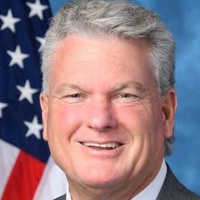
Mike Collins
Representative
GA
Mike Collins
Representative
GA
This resolution expresses the sense of the House of Representatives to establish a "Veterans Appreciation Month" in 2026, coinciding with the nation's 250th anniversary. The goal is to focus national attention on honoring veterans and their families for their service in protecting American freedom. It encourages widespread participation from businesses, schools, and civic organizations to recognize these contributions.
This bill encourages businesses nationwide to voluntarily offer military appreciation discounts in honor of the 250th anniversary of the United States.
Mike Collins
Representative
GA
Mike Collins
Representative
GA
This resolution encourages businesses nationwide to voluntarily offer military appreciation discounts to service members, veterans, and their families. This gesture is intended to honor the 250th anniversary of the United States in 2026. Participation is entirely voluntary, requiring no government mandate or taxpayer funding.
This bill establishes new terrorism-related attestations for naturalization, creates presumptions for denaturalization based on terrorism convictions or conduct, and mandates the revocation of immigration benefits for noncitizens convicted of covered terrorism offenses.
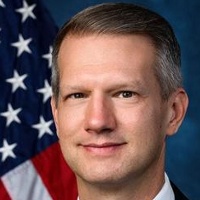
Riley Moore
Representative
WV
Riley Moore
Representative
WV
The Denaturalization and Expulsion of Persons who Orchestrate Radical Terrorism Act of 2026 (DEPORT Act of 2026) establishes new terrorism-related attestations required for naturalization. It allows terrorism convictions and conduct to serve as evidence that citizenship was illegally procured, potentially leading to denaturalization. Furthermore, the bill makes individuals convicted of covered terrorism offenses inadmissible, subject to mandatory revocation of existing immigration benefits, and permanently barred from future admission.
This bill mandates comprehensive safety upgrades for civilian and military aviation, focusing on collision avoidance technology, air traffic control training, and enhanced airspace transparency, particularly around high-traffic airports.
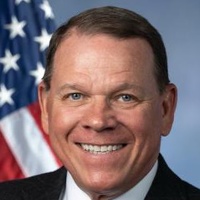
Sam Graves
Representative
MO
Sam Graves
Representative
MO
The Airspace Location and Enhanced Risk Transparency Act of 2026 mandates significant safety upgrades across both civilian and military aviation to prevent midair collisions. It requires the FAA to implement advanced collision avoidance systems and new air traffic controller training, while also compelling the Department of Defense to equip most military helicopters with transponders for increased visibility. The bill establishes new transparency measures, including public tracking of safety rule implementation and enhanced reporting on near-miss incidents, particularly around major airports like Reagan National.
This bill mandates the designation of the Council on American-Islamic Relations (CAIR) as a Specially Designated Global Terrorist, requiring the freezing of its assets and the revocation of its tax-exempt status.
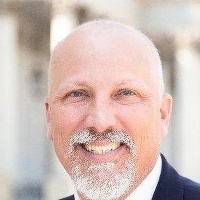
Chip Roy
Representative
TX
Chip Roy
Representative
TX
The Designating Hamas Affiliates in America Act of 2026 mandates the designation of the Council on American-Islamic Relations (CAIR) as a Specially Designated Global Terrorist under Executive Order 13224. This legislation requires the freezing of all CAIR assets, prohibits transactions with the organization, and revokes its tax-exempt status. Additionally, it directs the Secretary of State and the Secretary of the Treasury to submit a formal report to Congress regarding CAIR’s eligibility for this designation.
The Words Matter Act of 2025 updates federal law by replacing the terms "mentally retarded" and "mental retardation" with "intellectual disability" or "individuals with intellectual disabilities" without altering existing rights or benefits.
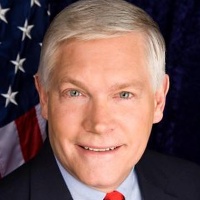
Pete Sessions
Representative
TX
Pete Sessions
Representative
TX
The Words Matter Act of 2025 mandates a comprehensive update across all federal laws, replacing the outdated terms "mentally retarded" and "mental retardation" with "intellectual disability" or "individuals with intellectual disabilities." This change is strictly a linguistic update intended to align federal statutes with current, respectful terminology. The Act explicitly states that this language revision does not alter eligibility for benefits, rights, or responsibilities under any existing federal program. Agencies are required to update their regulations to reflect this new terminology while maintaining a record of the previous language used.
This bill prohibits federal agencies from banning the use of lead ammunition and tackle on federal lands and waters unless specific, evidence-based criteria and state-level coordination requirements are met.

Robert Wittman
Representative
VA
Robert Wittman
Representative
VA
The Protecting Access for Hunters and Anglers Act prevents federal agencies from banning the use of lead ammunition and tackle on federal lands and waters open to hunting and fishing. Exceptions to this rule are only permitted if specific, site-based field data proves lead is causing a wildlife population decline and the action is approved by or consistent with state wildlife policies.
This Act establishes new federal standards and requirements for states issuing commercial driver's licenses (CDLs) to individuals who are not residents of that issuing state, particularly focusing on drivers from foreign countries and U.S. territories.
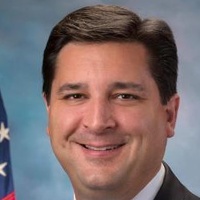
David Rouzer
Representative
NC
David Rouzer
Representative
NC
The Non-Domiciled CDL Integrity Act establishes new federal standards for states issuing Commercial Driver's Licenses (CDLs) to individuals who do not reside in that state. This bill sets specific, strict requirements for foreign nationals seeking a CDL, including proof of lawful status and job-related visas, while also outlining distinct procedures for applicants residing in U.S. territories. The legislation mandates enhanced record-keeping and reporting by states to the Secretary of Transportation regarding these non-domiciled licenses.
The IDA Act of 2026 amends ERISA to exempt state-level dental benefit regulations from federal preemption, allowing states greater authority to oversee dental insurance administration.
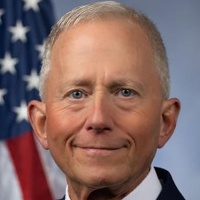
Jefferson Van Drew
Representative
NJ
Jefferson Van Drew
Representative
NJ
The Improving Dental Administration (IDA) Act of 2026 protects state-level dental benefit regulations by exempting them from federal ERISA preemption. This legislation empowers states to oversee and administer dental benefit laws more effectively without interference from federal oversight, provided they remain consistent with core ERISA provisions.
The Halo Act establishes federal criminal penalties for individuals who threaten, harass, or intentionally obstruct federal immigration enforcement officers in the performance of their duties.
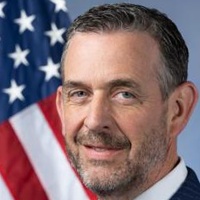
Michael Rulli
Representative
OH
Michael Rulli
Representative
OH
The Halo Act establishes new federal criminal penalties for individuals who obstruct, threaten, or harass federal immigration enforcement officers while they are performing their lawful duties. The legislation mandates that individuals must maintain a 25-foot distance from officers after receiving a warning, with violations punishable by fines and up to five years in prison.
This act reforms the Public Safety Officers’ Benefits (PSOB) program by streamlining claims processing, establishing new benefits for permanent partial disabilities, and mandating expedited approvals for 9/11-related claims.
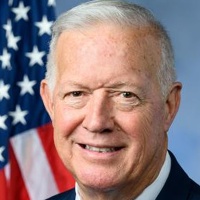
Randy Weber
Representative
TX
Randy Weber
Representative
TX
The Officer John Barnes and Chief Michael Ansbro Public Safety Officers’ Benefits Program Expansion Act of 2026 improves the Public Safety Officers’ Benefits (PSOB) program by establishing stricter timelines for claim processing, creating a new benefit for permanent partial disabilities, and mandating expedited approvals for 9/11-related claims. The bill also enhances program transparency through increased outreach, mandatory audits, and the implementation of key GAO recommendations to ensure timely support for officers and their families.
This bill prohibits federal agencies from providing funding or support for the creation or maintenance of state-level firearm ownership databases, with exceptions for records of lost or stolen weapons.

Paul Gosar
Representative
AZ
Paul Gosar
Representative
AZ
The Gun Owner Registration Information Protection Act prohibits federal agencies from providing funding or support for the creation and maintenance of state-level firearm ownership databases. This legislation ensures that federal resources cannot be used to track lawful gun owners, with a specific exception for databases tracking lost or stolen firearms.
This resolution recognizes the 10th anniversary of the first U.S. liquefied natural gas export shipment, celebrating its impact on American energy leadership and global security.
Randy Weber
Representative
TX
Randy Weber
Representative
TX
This resolution recognizes the 10th anniversary of the first liquefied natural gas (LNG) export shipment from the lower 48 states in February 2016. It celebrates this milestone as a turning point that established the U.S. as a leading global LNG supplier, significantly boosting economic growth and strengthening international energy security. The bill honors the innovation and hard work that supported this vital sector.
This bill expresses support for the National FFA Organization by designating February 21-28, 2026, as National FFA Week and celebrating the 50th anniversary of the Alaska State FFA Association.
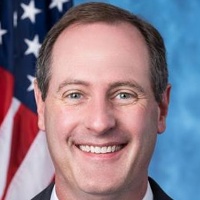
Tracey Mann
Representative
KS
Tracey Mann
Representative
KS
This resolution expresses support for the National FFA Organization and designates February 21–28, 2026, as National FFA Week. It recognizes the FFA's vital role in developing future leaders through agricultural education. The bill also celebrates the 50th anniversary of the chartering of the Alaska State FFA Association.
This act establishes stricter criteria and limitations for hospitals seeking rural geographic reclassification for Medicare payment purposes, effective in 2026.
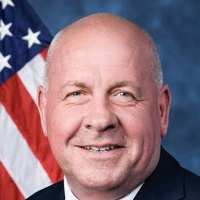
David Taylor
Representative
OH
David Taylor
Representative
OH
The Defend Rural Health Act of 2026 establishes stricter criteria for hospitals seeking rural geographic reclassification for Medicare payment purposes starting in late 2026. It limits eligibility to hospitals meeting specific designations like Rural Referral Center or Sole Community Hospital, and phases out existing reclassifications after 2029 unless new criteria are met. Furthermore, the bill prohibits hospitals from holding dual geographic classifications simultaneously for payment purposes.
This bill establishes eligibility requirements for amateur athletic organizations based on biological sex, prohibiting individuals whose sex is male from competing in female-designated amateur athletic competitions.
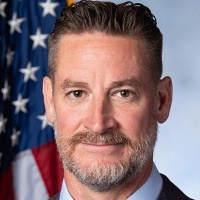
W. Steube
Representative
FL
W. Steube
Representative
FL
This Act establishes specific definitions for "female," "male," and "sex" based on biological reproductive systems for amateur athletics. It mandates that organizations recognized by the U.S. Olympic & Paralympic Committee must prohibit individuals identified as male from competing in competitions designated for females. This aims to protect competitive opportunities specifically for biological females in amateur sports.
This bill establishes federal standards for voter identification, registration, election administration, and mail-in ballot procedures for federal elections.
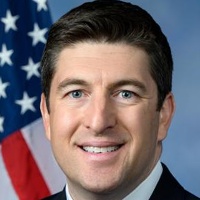
Bryan Steil
Representative
WI
Bryan Steil
Representative
WI
The Make Elections Great Again Act establishes new federal standards for voter identification, citizenship verification for registration, and statewide voter list maintenance for federal elections. It also standardizes election administration by mandating paper ballots, banning ranked-choice voting, and implementing strict new rules for requesting and returning mail-in ballots. The bill aims to increase election integrity through enhanced documentation and procedural uniformity across states.
This bill mandates proof of U.S. citizenship for federal voter registration and requires photo identification showing citizenship status for voting in federal elections.
Chip Roy
Representative
TX
Chip Roy
Representative
TX
The Safeguard American Voter Eligibility Act (SAVE America Act) mandates that individuals must provide documentary proof of U.S. citizenship to register to vote in federal elections. It also establishes a federal requirement for voters to present a photo ID indicating U.S. citizenship when casting a ballot in federal elections. The bill outlines specific acceptable forms of proof and requires states to implement verification programs to ensure only citizens are registered and voting.
This bill officially designates a portion of Interstate Route 680 in Omaha, Nebraska, as the "Hal Daub Freeway."
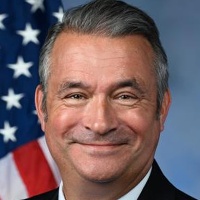
Don Bacon
Representative
NE
Don Bacon
Representative
NE
This bill officially designates a specific section of Interstate Route 680 in Omaha, Nebraska, as the "Hal Daub Freeway." The designation covers the portion from mile post 0 to the Missouri River. All federal records and documents will be updated to reflect this new official name.
This bill modifies deposits into the Crime Victims Fund by excluding certain False Claims Act recoveries and mandates an Inspector General audit of the Fund's sustainability.
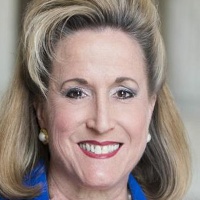
Ann Wagner
Representative
MO
Ann Wagner
Representative
MO
This bill amends the Victims of Crime Act of 1984 to temporarily exclude certain False Claims Act recoveries from being deposited into the Crime Victims Fund through fiscal year 2029. It also mandates a comprehensive audit by the Department of Justice Inspector General on the Fund's sustainability and the impact of recent legislative changes. The resulting report will provide recommendations for improving the Fund's effectiveness and oversight.