
Legislative Activity
Track Gus's sponsored bills, co-sponsored legislation, and voting record
This resolution expresses support for designating the week of May 4-10, 2025, as Tardive Dyskinesia Awareness Week to educate the public and healthcare providers about this involuntary movement disorder.

Scott Peters
Representative
CA
Scott Peters
Representative
CA
This resolution expresses the support of the House of Representatives for designating the week of May 4–10, 2025, as "Tardive Dyskinesia Awareness Week." The measure aims to raise public and medical community awareness about tardive dyskinesia (TD), an involuntary movement disorder often caused by long-term use of certain medications. By promoting education, the bill encourages better monitoring and diagnosis for the estimated 600,000 Americans currently affected by this condition.
This Act establishes U.S. policy to cease cooperation with China on organ transplantation, imposes sanctions on individuals involved in forced organ harvesting, and mandates a comprehensive report on China's transplant practices and the persecution of Falun Gong.
Scott Perry
Representative
PA
Scott Perry
Representative
PA
The Falun Gong Protection Act establishes a firm U.S. policy to cease cooperation with China on organ transplantation until the practice of state-sponsored organ harvesting ends. The bill mandates sanctions, including asset freezes and travel bans, against foreign individuals knowingly involved in forced organ harvesting in China. Furthermore, it requires a comprehensive report assessing China's transplant practices and directs the U.S. to coordinate international pressure against these abuses.
The SAFE STEPS for Veterans Act of 2025 establishes a dedicated VA Office of Falls Prevention to standardize care, boost research, and implement educational campaigns to reduce falls among veterans.
Nicole (Nikki) Budzinski
Representative
IL
Nicole (Nikki) Budzinski
Representative
IL
The SAFE STEPS for Veterans Act of 2025 establishes a dedicated Office of Falls Prevention within the VA to centralize and standardize all efforts to reduce falls among veterans. This office will set care standards, oversee national education campaigns, and promote research into evidence-based prevention programs. The Act also mandates specific falls risk assessments and prevention services for veterans in VA nursing homes and updates requirements for extended care services.
This Act establishes federal penalties for assaulting hospital personnel and creates a grant program to help medical facilities improve workforce safety.

Madeleine Dean
Representative
PA
Madeleine Dean
Representative
PA
The Save Healthcare Workers Act aims to protect hospital personnel by making assault against them a federal crime with severe penalties. It also establishes a new federal grant program to help hospitals implement crucial safety measures, such as violence prevention training and physical security upgrades. This legislation seeks to reduce workplace violence in healthcare settings across the nation.
The App Store Accountability Act establishes federal standards for app stores and developers regarding age verification, parental consent for minors' data use, and clear age-based disclosures.

John James
Representative
MI
John James
Representative
MI
The App Store Accountability Act establishes federal standards for app stores and developers regarding user age verification and parental consent. It mandates that app stores accurately determine user age and secure verifiable parental permission before allowing minors to access certain app features or content. The law grants the FTC and state Attorneys General enforcement authority, treating violations as deceptive practices. This federal framework preempts conflicting state or local regulations concerning these specific requirements.
This bill establishes a special visitor category for qualifying Canadian retirees to stay in the U.S. for up to 240 days annually and grants them non-resident alien tax status.
Laurel Lee
Representative
FL
Laurel Lee
Representative
FL
The Canadian Snowbird Act creates a special visitor status for qualifying Canadian retirees, allowing them to stay in the U.S. for up to 240 days per year while maintaining their Canadian residency. This legislation also ensures that these Canadian visitors are treated as non-resident aliens for U.S. tax purposes, preventing them from being taxed like U.S. residents. The bill aims to simplify entry and tax obligations for long-term seasonal visitors from Canada.
This Act officially designates the POW/MIA Memorial and Museum in Jacksonville, Florida, as the National POW/MIA Memorial and Museum, establishing reporting requirements for its future operation.
Aaron Bean
Representative
FL
Aaron Bean
Representative
FL
This bill officially designates the memorial and museum currently under construction in Jacksonville, Florida, as the **National POW/MIA Memorial and Museum**. The legislation recognizes the museum's crucial role in honoring and educating the public about service members who were prisoners of war or remain missing in action. To maintain this designation, the museum must submit a comprehensive operational report to Congress within 90 days of enactment. Failure to open satisfactorily within five years or submit the required report will result in the loss of this official federal title.
This bill temporarily exempts certain physician practices from Stark Law restrictions to allow them to dispense designated Medicare Part D prescription drugs directly to their patients while mandating a GAO study on in-office dispensing trends.

Diana Harshbarger
Representative
TN
Diana Harshbarger
Representative
TN
The Seniors’ Access to Critical Medications Act of 2025 temporarily modifies the physician self-referral prohibition (Stark Law) to allow physician practices to dispense certain Medicare Part D prescription drugs directly to their patients between 2026 and 2030. This exception is subject to specific conditions regarding prescribing, patient history, and dispensing location. The bill also mandates a GAO study to examine trends in physician office drug dispensing and makes a minor adjustment to the allocation for the Medicare Improvement Fund.
This resolution expresses Congressional support for designating April 2025 as Parkinson's Awareness Month to promote research, education, and support for those affected by the disease.

Wesley Bell
Representative
MO
Wesley Bell
Representative
MO
This resolution expresses the strong support of Congress for designating April 2025 as Parkinson's Awareness Month. It highlights the significant impact of Parkinson's disease, which affects over a million Americans, and underscores the urgent need for increased research into treatments and a cure. The bill also recognizes the dedication of patients, caregivers, researchers, and organizations working to improve the lives of those affected by this growing neurological disorder.
This resolution officially designates April 2025 as Community College Month to recognize the vital role over 1,000 community colleges play in providing accessible education, workforce training, and economic prosperity across the United States.

Joe Courtney
Representative
CT
Joe Courtney
Representative
CT
This resolution officially designates April 2025 as "Community College Month" to celebrate the vital role of over 1,000 community colleges nationwide. It recognizes these institutions for providing accessible, affordable higher education and critical workforce training. The bill highlights their significant economic contributions and commitment to local community needs.
The Safeguard American Voter Eligibility (SAVE) Act mandates that individuals registering to vote in federal elections must present documentary proof of U.S. citizenship.

Chip Roy
Representative
TX
Chip Roy
Representative
TX
The Safeguard American Voter Eligibility Act (SAVE Act) significantly amends federal law to require individuals registering to vote in federal elections to present documentary proof of U.S. citizenship. This legislation mandates that states actively clean their voter rolls and cooperate with federal agencies to verify citizenship status. It establishes new criminal penalties for officials who fail to enforce these documentation requirements.
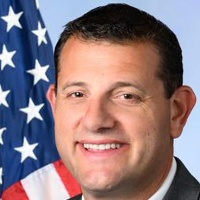
The SOAR Act of 2025 reforms Medicare oxygen benefits by removing competitive bidding, establishing specific supplier responsibilities, enhancing fraud protection through electronic documentation, and enshrining patient rights for supplemental oxygen recipients.
David Valadao
Representative
CA
David Valadao
Representative
CA
The SOAR Act of 2025 aims to significantly reform Medicare access to supplemental oxygen by removing it from the competitive bidding program and establishing new payment rates. The bill also mandates clearer documentation requirements for medical necessity using electronic templates and restores clinical judgment in claim audits. Finally, it establishes specific rights for oxygen beneficiaries and improves reimbursement for respiratory therapists.
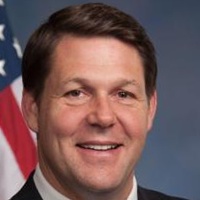
This Act makes amounts paid for accredited private umbilical cord blood or tissue banking services deductible as medical care expenses for federal tax purposes beginning after 2024.
Jodey Arrington
Representative
TX
Jodey Arrington
Representative
TX
The Family Cord Blood Banking Act amends the tax code to allow individuals to treat payments for private umbilical cord blood or tissue banking services as deductible medical expenses. This change makes the cost of utilizing accredited private cord blood banks potentially tax-deductible for federal tax years beginning after December 31, 2024.
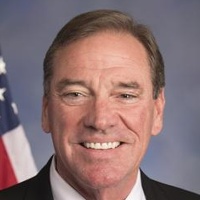
This Act mandates the reimbursement of interest payments made by local governments and electric cooperatives on loans used for disaster recovery activities eligible under the Stafford Act.
Neal Dunn
Representative
FL
Neal Dunn
Representative
FL
The FEMA Loan Interest Payment Relief Act establishes a program for FEMA to reimburse local governments and electric cooperatives for interest paid on specific disaster recovery loans. This reimbursement is capped at the lesser of the actual interest paid or the interest calculated using the Federal Reserve's prime rate. The law mandates FEMA to quickly establish procedures for states to apply for reimbursement of qualifying interest paid up to nine years prior to enactment.
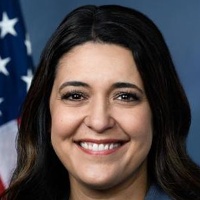
The National Biotechnology Initiative Act of 2025 establishes a coordinated federal effort, led by a new Coordination Office, to advance U.S. national security, economic productivity, and competitiveness through biotechnology research, development, and commercialization.
Stephanie Bice
Representative
OK
Stephanie Bice
Representative
OK
The National Biotechnology Initiative Act of 2025 establishes a comprehensive, whole-of-government effort to advance U.S. leadership in biotechnology for national security and economic competitiveness. This Act creates the National Biotechnology Initiative, overseen by a new National Biotechnology Coordination Office within the Executive Office of the President. Participating federal agencies are mandated to coordinate strategies across research, data management, biomanufacturing, regulatory streamlining, and workforce development. The law also establishes mechanisms for interagency coordination, public reporting, and the development of a national biotechnology strategy.
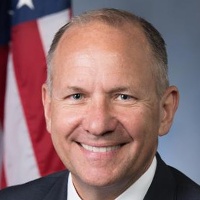
The Medicare Enrollment Protection Act of 2025 establishes a special enrollment period for Medicare Part B for individuals transitioning off COBRA continuation coverage, preventing late enrollment penalties for that period.
Lloyd Smucker
Representative
PA
Lloyd Smucker
Representative
PA
The Medicare Enrollment Protection Act of 2025 establishes a special enrollment period for individuals transitioning from COBRA continuation coverage to Medicare Part B. This allows those currently on COBRA when they become Medicare-eligible to sign up without incurring late enrollment penalties. The Act also clarifies how COBRA plans must treat individuals eligible for, but not yet enrolled in, Medicare Part B.
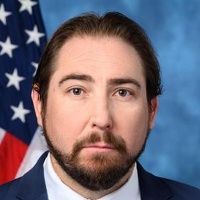
This Act redefines immediate relatives for immigration, caps family-sponsored visas, and creates a new, non-work, temporary visa for parents of adult U.S. citizens.
Eli Crane
Representative
AZ
Eli Crane
Representative
AZ
The Nuclear Family Priority Act significantly restructures U.S. family-based immigration by redefining "immediate relatives" to only include spouses and children of U.S. citizens, removing parents from that top category. It also establishes a new, temporary nonimmigrant visa for parents of adult U.S. citizens, which prohibits work and public benefits. Furthermore, the bill revises the annual cap for family-sponsored visas and makes numerous technical amendments across immigration law to align with these changes.
This Act permanently prohibits new oil and natural gas exploration, development, and production leases in designated areas off the coast of Florida while preserving existing leases.

Kathy Castor
Representative
FL
Kathy Castor
Representative
FL
The Florida Coastal Protection Act permanently prohibits the issuance of new oil and natural gas exploration, development, and production leases in designated areas off Florida's coast, including parts of the Eastern Gulf of Mexico and the South Atlantic. This measure establishes firm boundaries against new offshore drilling activities in these sensitive regions. Importantly, the Act does not affect any valid leases that were already in place prior to its enactment.
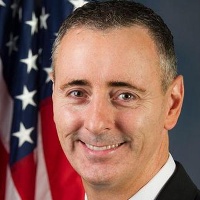
This act authorizes $20 million annually through fiscal year 2030 for the NINDS to supplement research specifically focused on unruptured brain aneurysms across diverse populations.
Brian Fitzpatrick
Representative
PA
Brian Fitzpatrick
Representative
PA
The Ellie Helton, Lisa Colagrossi, Kristen Shafer Englert, Teresa Anne Lawrence, and Jennifer Sedney Focused Research Act, or "Ellies Law," addresses the high incidence and devastating impact of brain aneurysms in the U.S. The bill authorizes $20 million annually from Fiscal Year 2026 through 2030 for the National Institute of Neurological Disorders and Stroke (NINDS). This dedicated funding is specifically intended to supplement existing research efforts focused on unruptured intracranial aneurysms across diverse populations.
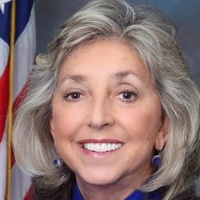
This Act establishes a program, managed by the Librarian of Congress, to create and disseminate educational resources countering denial of the Armenian Genocide.
Dina Titus
Representative
NV
Dina Titus
Representative
NV
The Armenian Genocide Education Act establishes a program managed by the Librarian of Congress to develop and share educational resources combating denial of the 1915-1923 Armenian Genocide. This initiative will create online materials, train educators, and encourage the integration of accurate history into school curricula. The Act authorizes $2 million annually for five years to support these educational efforts aimed at promoting awareness and preventing future atrocities.