Legislative Activity
Track Jake's sponsored bills, co-sponsored legislation, and voting record
This Act allows former federally funded highway land to be transferred to local entities or approved private developers for the purpose of building long-term affordable housing.
Kevin Mullin
Representative
CA
Kevin Mullin
Representative
CA
The Empty Lots to Housing Act streamlines the process for transferring federally funded, unneeded real property to local entities or qualified private developers. This transfer is contingent upon the recipient agreeing to long-term affordability requirements for the resulting housing. Specifically, at least 40% of new units must be affordable for low-income families, with a portion reserved for extremely low-income households.
This resolution condemns Hamas for its brutal October 7th terrorist attacks on Israel and demands the immediate release of all remaining hostages.
Haley Stevens
Representative
MI
Haley Stevens
Representative
MI
This resolution strongly condemns Hamas for its premeditated and brutal terrorist attacks against Israel on October 7, 2023. It details the resulting casualties and the ongoing hostage crisis, emphasizing the severe mistreatment of those held captive. The bill demands that Hamas immediately release all remaining hostages and allow them safe return.
This Act mandates that health plans cover medically necessary treatment for congenital anomalies or birth defects affecting the eyes, ears, teeth, mouth, or jaw to restore normal function and appearance.
Neal Dunn
Representative
FL
Neal Dunn
Representative
FL
The Ensuring Lasting Smiles Act mandates that group health plans and insurance policies provide comprehensive coverage for medically necessary treatment related to congenital anomalies or birth defects affecting the eyes, ears, teeth, mouth, or jaw. This coverage must include services needed to restore normal function and appearance, including necessary dental and orthodontic support. Plans must apply cost-sharing rules no more restrictive than those for other medical benefits, excluding purely cosmetic procedures.
This Act prohibits the advertising and provision of paid conversion therapy intended to change an individual's sexual orientation or gender identity, empowering the FTC and State Attorneys General to enforce these prohibitions.
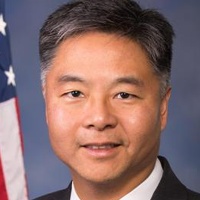
Ted Lieu
Representative
CA
Ted Lieu
Representative
CA
The Therapeutic Fraud Prevention Act of 2025 declares that practices attempting to change an individual's sexual orientation or gender identity for payment constitute an unfair and deceptive business practice. Citing professional consensus on the ineffectiveness and harm of such "conversion therapy," the bill prohibits its provision and advertising. Enforcement authority is granted to the Federal Trade Commission (FTC), and the law allows both the U.S. Attorney General and State Attorneys General to file civil actions against violators.
This resolution expresses support for designating July 16, 2025, as "Glioblastoma Awareness Day" to highlight the urgent need for increased research and better treatments for this deadly brain cancer.
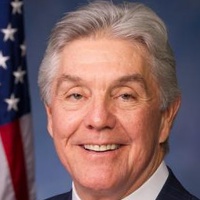
Roger Williams
Representative
TX
Roger Williams
Representative
TX
This resolution expresses the support of Congress for designating July 16, 2025, as "Glioblastoma Awareness Day." It highlights the devastating impact and slow progress in treating glioblastoma, the deadliest common brain tumor. The bill urges increased public awareness, research funding, and collaboration to develop better treatments and improve patient outcomes.
This resolution supports designating the first week of April as "Adolescent Immunization Action Week" to encourage increased vaccination rates among adolescents and young adults to protect against serious illness.
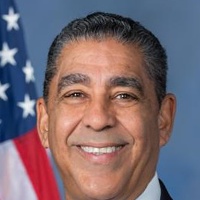
Adriano Espaillat
Representative
NY
Adriano Espaillat
Representative
NY
This resolution supports designating the first week of April as "Adolescent Immunization Action Week" to raise awareness about the importance of vaccinating adolescents and young adults. It recognizes that current vaccination rates are lagging and highlights the need to combat misinformation. The bill encourages federal, state, and local entities, along with healthcare providers, to actively promote immunization to protect the health of young people.
This act establishes research grants and training programs to develop and implement PFAS-free, next-generation turnout gear to protect firefighters from occupational illness and injury.

Debbie Dingell
Representative
MI
Debbie Dingell
Representative
MI
The PFAS Alternatives Act aims to protect firefighters by funding research and development for next-generation turnout gear that eliminates harmful PFAS chemicals. The bill establishes grants through NIOSH to create safer, PFAS-free protective equipment and separate funding for training programs on the proper care of this new gear. Ultimately, this legislation seeks to reduce occupational illness and injury among fire and EMS personnel.
This bill bans the manufacture, sale, and transfer of specific semiautomatic assault weapons and large-capacity ammunition feeding devices while grandfathering existing possessions and establishing new transfer requirements.
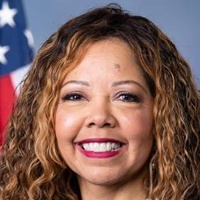
Lucy McBath
Representative
GA
Lucy McBath
Representative
GA
The Assault Weapons Ban of 2025 comprehensively defines and bans the manufacture, sale, and transfer of specific semiautomatic assault weapons and large capacity ammunition feeding devices. The bill grandfathers existing weapons but imposes new requirements for their secure storage and mandates dealer involvement for future private transfers. It also allows federal grant money to be used by states for buy-back programs targeting these banned items.
The Equality Act comprehensively prohibits discrimination based on sex, sexual orientation, and gender identity across key areas including public accommodations, employment, housing, credit, and jury service.
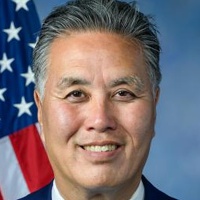
Mark Takano
Representative
CA
Mark Takano
Representative
CA
The Equality Act comprehensively expands federal civil rights protections against discrimination based on sex, sexual orientation, and gender identity across key areas of American life. It amends existing laws to prohibit discrimination in public accommodations, housing, credit, employment, and federal funding. The purpose of the bill is to provide consistent, explicit, and comprehensive remedies for individuals facing bias in these essential sectors.
This bill repeals the Arctic National Wildlife Refuge oil and gas program and designates over 1.5 million acres of the refuge as protected wilderness.
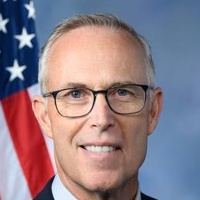
Jared Huffman
Representative
CA
Jared Huffman
Representative
CA
The Arctic Refuge Protection Act officially repeals the previous law authorizing oil and gas leasing in the Arctic National Wildlife Refuge. This legislation simultaneously designates approximately 1.56 million acres within the Refuge as protected wilderness under the National Wilderness Preservation System. The Secretary of the Interior is now required to manage this newly designated land according to strict wilderness preservation standards.
This Act authorizes the President to impose sanctions, including asset freezes and visa bans, on foreign individuals involved in violence, property destruction, or displacement in the West Bank.
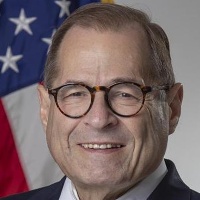
Jerrold Nadler
Representative
NY
Jerrold Nadler
Representative
NY
The West Bank Violence Prevention Act of 2025 declares extreme settler violence and displacement in the West Bank a threat to U.S. national security interests. This Act mandates the President to impose sanctions, including asset freezes and visa bans, on foreign individuals responsible for undermining peace and stability in the region. The Treasury Department must report to Congress on the implementation of these sanctions every 90 days.
This Act funds state systems to track real-time hospital bed capacity affecting emergency department wait times and mandates CMMI pilot programs to improve emergency care for older adults and those in psychiatric crisis.
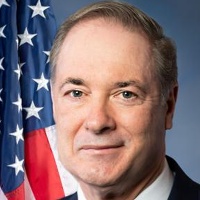
John Joyce
Representative
PA
John Joyce
Representative
PA
The ABC-ED Act of 2025 aims to alleviate emergency department boarding and crowding by modernizing public health data systems to track real-time hospital bed capacity. It also directs the Center for Medicare and Medicaid Innovation to pilot programs specifically improving emergency care for older adults and those in acute psychiatric crisis. Finally, the bill mandates a study on best practices for statewide, real-time capacity tracking systems and their impact on ER wait times.
This Act permanently prohibits oil and gas leasing for exploration, development, or production on the outer Continental Shelf off the coasts of Maine, New Hampshire, Massachusetts, Rhode Island, and Connecticut.
Seth Magaziner
Representative
RI
Seth Magaziner
Representative
RI
The New England Coastal Protection Act of 2025 permanently prohibits all oil and gas leasing, exploration, and development on the outer Continental Shelf off the coasts of Maine, New Hampshire, Massachusetts, Rhode Island, and Connecticut. This legislation ensures the long-term protection of New England's offshore environment from fossil fuel extraction.
The National Biotechnology Initiative Act of 2025 establishes a coordinated federal effort, led by a new Coordination Office, to advance U.S. national security, economic productivity, and competitiveness through biotechnology research, development, and commercialization.
Stephanie Bice
Representative
OK
Stephanie Bice
Representative
OK
The National Biotechnology Initiative Act of 2025 establishes a comprehensive, whole-of-government effort to advance U.S. leadership in biotechnology for national security and economic competitiveness. This Act creates the National Biotechnology Initiative, overseen by a new National Biotechnology Coordination Office within the Executive Office of the President. Participating federal agencies are mandated to coordinate strategies across research, data management, biomanufacturing, regulatory streamlining, and workforce development. The law also establishes mechanisms for interagency coordination, public reporting, and the development of a national biotechnology strategy.
This act bans bump stocks and similar devices that increase the firing rate of semi-automatic firearms, requiring registration for any previously modified weapons.
Dina Titus
Representative
NV
Dina Titus
Representative
NV
The Closing the Bump Stock Loophole Act of 2025 seeks to amend federal gun laws by banning devices and modifications that significantly increase the rate of fire of semiautomatic firearms, effectively treating them like machineguns. The bill specifically prohibits the manufacture, sale, or possession of such accessories and modified firearms after 120 days of enactment. Existing owners of previously modified firearms must register them under the National Firearms Act within that same timeframe to legally keep them.
The Bolstering Research And Innovation Now (BRAIN) Act aims to accelerate brain tumor research, improve patient access to clinical trials and specialized care, and enhance long-term survivor support through new funding, transparency requirements, and public awareness campaigns.
Brian Fitzpatrick
Representative
PA
Brian Fitzpatrick
Representative
PA
The Bolstering Research And Innovation Now (BRAIN) Act aims to significantly advance the fight against brain tumors by increasing research funding and improving patient access to care. This legislation establishes new networks for glioblastoma research, creates a public database for tracking biospecimens, and launches a national awareness campaign about clinical trials. Furthermore, the Act funds pilot programs to improve long-term care for survivors and directs the FDA to ensure brain tumor patients are not unfairly excluded from relevant clinical trials.
This bill establishes the American Family Act, which revamps the Child Tax Credit into a system of refundable monthly advance payments for qualifying children and a separate credit for other dependents.
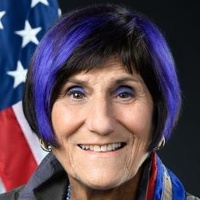
Rosa DeLauro
Representative
CT
Rosa DeLauro
Representative
CT
The American Family Act fundamentally overhauls the Child Tax Credit by replacing the annual lump sum with a system of advance, refundable monthly payments delivered directly to families. These monthly allowances vary based on the child's age, with higher amounts provided for younger children. The bill also establishes a separate, smaller credit for other dependents and outlines procedures for annual renewal and reconciliation of advance payments when filing taxes.
The Gas-Operated Semi-Automatic Firearms Exclusion (GOSAFE) Act prohibits the manufacture, sale, and possession of certain gas-operated semi-automatic firearms and large-capacity ammunition feeding devices, while establishing a formal process for firearm determinations and funding buy-back programs.
Lucy McBath
Representative
GA
Lucy McBath
Representative
GA
The Gas-Operated Semi-Automatic Firearms Exclusion Act (GOSAFE Act) prohibits the manufacture, sale, and possession of certain gas-operated semi-automatic firearms and large-capacity ammunition feeding devices (over 10 rounds). The bill establishes a formal process managed by the Attorney General and ATF to list prohibited firearms, while grandfathering existing possessions under strict transfer rules. Furthermore, it permits states to use federal Byrne grants for voluntary buy-back programs targeting these newly restricted items. Violations carry significant fines and potential prison sentences.
This bill establishes financial incentives for deploying grid-enhancing technologies and mandates improved reporting on transmission congestion costs.
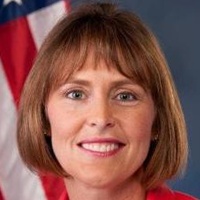
Kathy Castor
Representative
FL
Kathy Castor
Representative
FL
The Advancing GETs Act of 2025 aims to modernize the electric grid by incentivizing the adoption of Grid-Enhancing Technologies (GETs) through a shared savings program managed by FERC. The bill also mandates annual reporting on transmission congestion costs to improve transparency and requires the Department of Energy to create a public application guide and clearinghouse for GETs deployment. Ultimately, this legislation seeks to increase grid capacity, reliability, and efficiency using existing infrastructure.
The Secure Background Checks Act of 2025 prohibits firearm possession for individuals who fail to meet both federal and state age/residency requirements or who illegally purchase firearms across state lines without meeting specific exemptions.
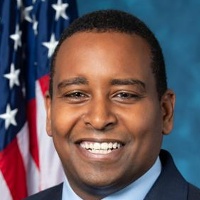
Joe Neguse
Representative
CO
Joe Neguse
Representative
CO
The Secure Background Checks Act of 2025 updates federal law to prohibit firearm possession for individuals who fail to meet both federal and state age requirements simultaneously. It also bans possession for out-of-state purchasers who do not qualify for specific interstate transaction exceptions. The bill includes minor technical amendments to existing penalty statutes.