Legislation
This Act mandates a study and subsequent recommendations on how driver-controlled technology, especially touch screens, impacts traffic safety and fatalities involving pedestrians and cyclists.
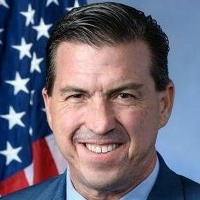
Kevin Mullin
Representative
CA
Kevin Mullin
Representative
CA
The Driver Technology and Pedestrian Safety Act of 2025 mandates a comprehensive study by the National Academies on how driver-controlled technology, especially touch screens, impacts serious crashes involving pedestrians and cyclists. Following the study, the Secretary of Transportation must report findings to Congress and provide actionable recommendations for reducing traffic fatalities. These recommendations must be categorized based on whether they require new legislation or can be implemented immediately by existing agencies.
This act prohibits the use of federal funds to rename the body of water officially known as the Persian Gulf.

Yassamin Ansari
Representative
AZ
Yassamin Ansari
Representative
AZ
The Persian Gulf Act prohibits the use of any federal funds to rename the body of water officially known as the Persian Gulf. This legislation mandates that all official U.S. documents, maps, and records must continue to use the name "Persian Gulf." The bill effectively locks in the current name for federal purposes unless Congress specifically passes new authorizing legislation.
This Act requires foreign shrimp facilities to meet U.S. safety standards through bilateral agreements or risk having their products blocked at the border.
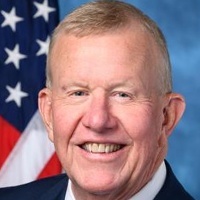
Mike Ezell
Representative
MS
Mike Ezell
Representative
MS
The Safer Shrimp Imports Act establishes new requirements for foreign facilities that process or pack shrimp destined for the U.S. market. It mandates that foreign governments must agree to U.S. safety standards or demonstrate that their inspection systems are equivalent to the FDA's. Shrimp from countries refusing cooperation or lacking adequate oversight will be blocked from entering the United States.
This Act grants the Bureau of Prisons temporary authority to directly hire qualified individuals into competitive service positions to expedite staffing until 96% of those positions are filled.
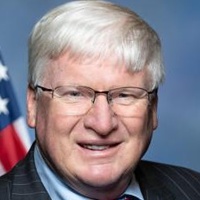
Glenn Grothman
Representative
WI
Glenn Grothman
Representative
WI
The BOP Direct-Hire Authority Act grants the Director of the Bureau of Prisons the authority to directly hire qualified individuals into competitive service jobs, bypassing standard federal hiring procedures. This expedited hiring power is intended to speed up staffing efforts across all BOP facilities. This special authority will automatically expire once 96% of all competitive service positions within the Bureau of Prisons are filled.
The CHEERS Act expands tax deductions for energy-efficient draft beer equipment used in restaurants, bars, and entertainment venues.
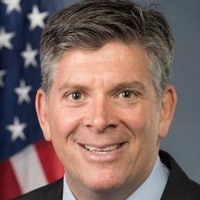
Darin LaHood
Representative
IL
Darin LaHood
Representative
IL
The CHEERS Act amends tax law to allow businesses like restaurants and bars to claim tax deductions for installing specific energy-efficient draft beer equipment. This provision expands eligibility under Section 179D for stainless steel or aluminum kegs and associated dispensing systems. The goal is to incentivize the adoption of energy-saving technology in the hospitality industry starting in 2025.
The COMPOST Act officially recognizes composting as a federal conservation practice under farm laws, enabling farmers to utilize conservation program benefits for on-farm composting activities that improve soil health while ensuring transportation of off-farm materials results in a net decrease in greenhouse gas emissions.
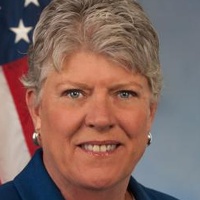
Julia Brownley
Representative
CA
Julia Brownley
Representative
CA
The COMPOST Act officially designates composting as a recognized conservation practice under federal farm conservation laws. This change allows farmers to utilize existing conservation program benefits for activities related to creating and applying compost on their farms. The legislation requires the Secretary of Agriculture to establish clear standards for what qualifies as on-farm composting, including using organic waste from nearby communities only if it results in a net decrease in greenhouse gas emissions. Ultimately, this bill aims to improve soil health and water retention through the formal promotion of composting.
This Act enhances the FAA's Collegiate Training Initiative, establishes new grant programs, funds training equipment, creates retention incentives for air traffic controllers, and mandates improvements to mental health support and airport radar safety reporting.

Nicholas Begich
Representative
AK
Nicholas Begich
Representative
AK
The Air Traffic Control Workforce Development Act of 2025 aims to strengthen the air traffic control pipeline by improving the Collegiate Training Initiative (CTI) program and establishing new grants for participating colleges. The bill also funds new training equipment and creates financial incentives to both encourage trainees to complete their certification and retain experienced controllers. Finally, it mandates improvements to mental health support for controllers and requires a report on the future of airport radar safety systems.
This Act establishes federal programs to support the early childhood education workforce through student loan assistance and grants for aspiring educators who commit to service.

Katherine Clark
Representative
MA
Katherine Clark
Representative
MA
The Child Care Workforce Development Act establishes two key initiatives to strengthen the early childhood education field. First, it creates a loan assistance program to help repay student debt for experienced educators who commit to five years of service. Second, it sets up a grant program to provide financial aid to individuals pursuing degrees or certificates in early childhood education, contingent upon a future service commitment. These measures aim to reduce educator debt and increase the pipeline of qualified professionals in the childcare sector.
This bill authorizes the Secretary of the Interior to acquire approximately 551.14 acres of land to expand the southern boundary of Mammoth Cave National Park.
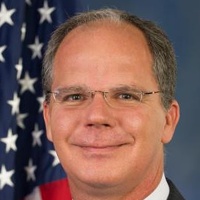
Brett Guthrie
Representative
KY
Brett Guthrie
Representative
KY
The Mammoth Cave National Park Boundary Adjustment Act of 2025 authorizes the Secretary of the Interior to acquire approximately 551.14 acres of land to expand the boundaries of Mammoth Cave National Park. This addition, detailed on a specific map, modifies the park's existing boundaries in Edmonson and Barren Counties, Kentucky.
This Act establishes a bipartisan Fiscal Commission tasked with developing and reporting legislative recommendations to reduce the national debt, followed by an expedited congressional process for considering those recommendations.
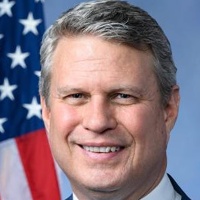
Bill Huizenga
Representative
MI
Bill Huizenga
Representative
MI
The Fiscal Commission Act establishes a bipartisan commission tasked with developing legislative recommendations to improve the nation's long-term fiscal health, aiming to reduce the national debt ratio to 100% of GDP by 2039. This Commission, composed of appointed members from both chambers of Congress and outside experts, must submit its final report and proposed legislation within a specific timeframe. The Act also creates an expedited, amendment-free process for Congress to consider and vote on any resulting "implementing bills."
This Act establishes a federal loan and guarantee program to improve mental health and substance use treatment facilities, with surplus funds directed to a new Trust Fund supporting community mental health block grants.

Jennifer McClellan
Representative
VA
Jennifer McClellan
Representative
VA
The Mental Health Infrastructure Improvement Act of 2025 establishes a federal program to issue loans and loan guarantees for building, renovating, and upgrading mental health and substance use disorder treatment facilities. This legislation prioritizes underserved areas and sets aside funds specifically for projects serving children and teens. Furthermore, it creates a dedicated Trust Fund to hold surplus revenue from the loan program, which Congress can later use to fund community mental health service block grants.
The Medicare and Social Security Fair Share Act modifies payroll and self-employment taxes by setting new income caps and introducing additional Medicare taxes on high earners, while also significantly increasing and reallocating the Net Investment Income Tax revenue to Social Security trust funds.
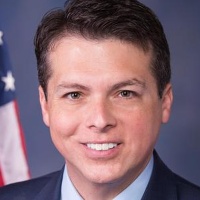
Brendan Boyle
Representative
PA
Brendan Boyle
Representative
PA
The Medicare and Social Security Fair Share Act modifies payroll and self-employment taxes by establishing new income caps and introducing an additional 1.2% Medicare tax on high earners. It also significantly overhauls the Net Investment Income Tax (NIIT) for very high earners and for trusts and estates, increasing rates and redirecting the revenue to Social Security and Medicare trust funds starting in 2026. These changes aim to ensure higher earners contribute more to these essential federal programs.
This Act establishes the authority to create trusted trade agreements to diversify and strengthen the U.S. medical supply chain against future crises.

Nicole Malliotakis
Representative
NY
Nicole Malliotakis
Representative
NY
The Medical Supply Chain Resiliency Act aims to secure the U.S. supply of critical medical goods by diversifying trade relationships and reducing reliance on high-risk sources. It authorizes the President to enter into special "trusted trade partner agreements" that lower trade barriers with reliable allies. These agreements focus on regulatory cooperation, intellectual property protection, and ensuring supply chain stability during public health emergencies. The bill also establishes strict reporting and oversight mechanisms for Congress before any such agreement can take effect.
This Act modernizes the merchant mariner credentialing exam process by establishing a working group to review and update exam content, timelines, and approval procedures.
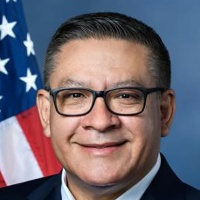
Salud Carbajal
Representative
CA
Salud Carbajal
Representative
CA
The Mariner Exam Modernization Act updates the process for reviewing and updating merchant mariner credentialing exams. It establishes a "Working group," including recent exam passers, to focus on the relevance and content of current exams. This legislation mandates a comprehensive review of industry standards and technology, leading to a modernization plan for the exams within a set timeframe.
The Liberating Incandescent Technology Act of 2025 cleans up and updates outdated definitions and standards within the Energy Policy and Conservation Act concerning general service lamps, while also officially canceling three previous Department of Energy rules on the subject.
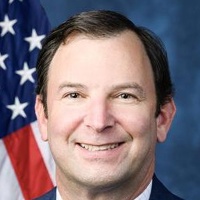
Craig Goldman
Representative
TX
Craig Goldman
Representative
TX
The Liberating Incandescent Technology Act of 2025 (LIT Act) cleans up outdated definitions and references related to general service lamps within the Energy Policy and Conservation Act. It formally strikes specific sections and rules previously established by the Department of Energy concerning incandescent lamp standards. This legislative action effectively reserves certain parts of the law for future use and cancels previous DOE regulations on the matter.
The MARKET CHOICE Act establishes a federal carbon tax on greenhouse gas emissions, creates a border adjustment mechanism, dedicates revenue to infrastructure and household assistance, temporarily limits EPA regulatory authority, and creates a commission to set mandatory emission reduction targets.
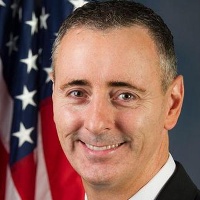
Brian Fitzpatrick
Representative
PA
Brian Fitzpatrick
Representative
PA
The MARKET CHOICE Act establishes a comprehensive federal tax on greenhouse gas emissions starting in 2027, coupled with a border tax adjustment to maintain competitiveness for US exporters. Revenue generated funds the RISE Trust Fund, dedicated to infrastructure, energy research, and low-income assistance, while simultaneously repealing federal fuel taxes starting in 2026. The bill also temporarily restricts the EPA's authority to regulate emissions based solely on climate impact and creates a National Climate Commission to set mandatory, science-based emission reduction targets.
This act modifies the student loan interest deduction limit for married couples filing separately, applying the \$2,500 cap to each spouse individually.
Glenn Grothman
Representative
WI
Glenn Grothman
Representative
WI
The Student Loan Marriage Penalty Elimination Act of 2025 aims to adjust the student loan interest deduction for married couples filing separately. This bill caps the deductible student loan interest at \$2,500 per individual spouse. It ensures that taxpayers cannot claim the same interest amount under multiple deduction provisions.
This bill mandates that airlines create and maintain operational resiliency plans to minimize passenger disruption from future delays and cancellations caused by weather, staffing issues, or technical failures.
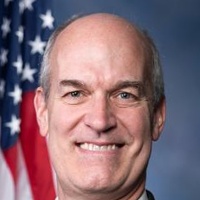
Rick Larsen
Representative
WA
Rick Larsen
Representative
WA
This Act requires major airlines to develop and maintain detailed operational resiliency plans to minimize passenger disruption from future events like severe weather or system failures. These plans must address staffing, technology, and emergency response procedures. The Secretary of Transportation will ensure these plans are created, and the Comptroller General will later audit their effectiveness.
The Midwives for MOMS Act of 2025 establishes grant programs to fund the expansion of midwifery and nurse-midwifery education, student support, and preceptor training, with a focus on increasing access in underserved areas.
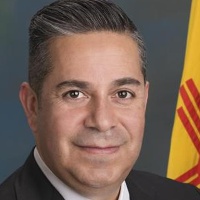
Ben Luján
Senator
NM
Ben Luján
Senator
NM
The Midwives for MOMS Act of 2025 aims to strengthen the maternity care workforce by authorizing significant federal funding to support and expand accredited midwifery and nurse-midwifery education programs. These grants will directly assist students, help establish or grow educational institutions, and support clinical preceptors. Priority for funding will be given to programs that increase diversity and train providers to work in designated health professional shortage areas.
This Act abolishes the EPA and redirects federal environmental funding to states through block grants, subject to annual review by the GAO.
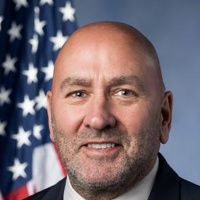
Clay Higgins
Representative
LA
Clay Higgins
Representative
LA
This Act abolishes the Environmental Protection Agency (EPA) and transfers its environmental quality responsibilities to the states. It establishes a system where the Treasury Department distributes annual block grants to designated state environmental departments for programs covering air, water, and waste management. The Government Accountability Office (GAO) is required to conduct annual studies on the effectiveness of this new state-led system.