Legislation
This Act expands veterans' access to care at Critical Access Hospitals and affiliated clinics under the Community Care Program, eliminating pre-authorization requirements for those living within 35 miles.

Kevin Cramer
Senator
ND
Kevin Cramer
Senator
ND
The Critical Access for Veterans Care Act expands veterans' access to care by allowing those living within 35 miles of a Critical Access Hospital (CAH) or its affiliated clinic to receive services under the Community Care Program. This new provision eliminates the requirement for pre-authorization or referrals for such care. The bill also establishes specific Medicare-based payment rates for these facilities and mandates a report to Congress on the implementation and veteran experience one year after enactment.
This bill prohibits the sale or lease of genetic information during bankruptcy proceedings without the explicit, written consent of every affected individual.
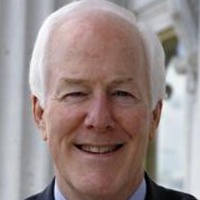
John Cornyn
Senator
TX
John Cornyn
Senator
TX
The Don’t Sell My DNA Act amends federal bankruptcy law to establish strict protections for genetic information. This legislation prohibits the sale or lease of an individual's genetic data by a bankruptcy trustee unless every affected person provides explicit, written consent after the case begins. Furthermore, any genetic data not sold must be securely deleted according to court-approved standards. These new rules apply immediately to all current and future bankruptcy cases.
The ANTE Act empowers the U.S. Trade Representative to impose new duties on goods produced in third countries by entities attempting to evade existing U.S. trade duties imposed on nonmarket economy countries.
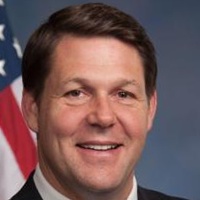
Jodey Arrington
Representative
TX
Jodey Arrington
Representative
TX
The ANTE Act, or Axing Nonmarket Tariff Evasion Act, empowers the U.S. Trade Representative (USTR) to investigate and impose new duties on goods produced in third countries by entities attempting to evade existing U.S. trade duties imposed on nonmarket economy countries. This tool allows the USTR to crack down on companies moving production specifically to circumvent Section 301 tariffs. If evasion is confirmed, remedial measures, including new duties matching the original rate, can be applied to the goods made in the third country.
This bill mandates the Coast Guard to retain enlisted members with 18 or more, but less than 20, years of service to ensure they qualify for retirement benefits.
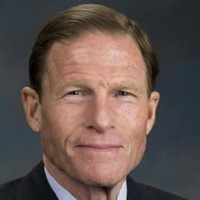
Richard Blumenthal
Senator
CT
Richard Blumenthal
Senator
CT
This bill amends federal law to require the Coast Guard to retain active-duty enlisted members who have completed 18 or more, but less than 20, years of service when facing involuntary separation or non-reenlistment. The goal is to prevent these service members from being discharged just before they qualify for retirement benefits. This protection applies to both regular and reserve members nearing the 20-year service threshold.
The ZOMBIE Act mandates that candidates' authorized committees and Leadership PACs must spend down all unexpended funds after an election, unless they immediately run again, and requires former candidates who become lobbyists or foreign agents to certify compliance with these new disbursement rules.

Michael Bennet
Senator
CO
Michael Bennet
Senator
CO
The ZOMBIE Act mandates that candidates' authorized committees and Leadership PACs must spend down all unexpended campaign funds within a strict six-month period after an election, unless they immediately run again. This leftover money can only be used to pay outstanding bills or be returned to donors, with strict prohibitions against giving funds to candidate-affiliated charities. Furthermore, former candidates who become registered lobbyists or foreign agents must certify that their campaign committees complied with these new disbursement requirements upon filing their registration paperwork after the November 2026 general election.
This bill posthumously awards Henrietta Lacks a Congressional Gold Medal in recognition of the foundational contributions of her cells to science and medicine.

Chris Van Hollen
Senator
MD
Chris Van Hollen
Senator
MD
This bill proposes awarding a Congressional Gold Medal posthumously to Henrietta Lacks to recognize the monumental and foundational contributions of her HeLa cells to modern science and medicine. The legislation directs the Secretary of the Treasury to strike the medal, which will then be presented to the Smithsonian Institution for display. Additionally, the Act authorizes the creation and sale of bronze duplicate medals to cover production costs.
The Protect DSH Act delays the scheduled federal reductions to Disproportionate Share Hospital (DSH) payments from 2026-2028 to 2029-2031.

Dan Crenshaw
Representative
TX
Dan Crenshaw
Representative
TX
The Protect DSH Act delays scheduled federal reductions to Disproportionate Share Hospital (DSH) payments, which support hospitals serving many low-income patients. This legislation shifts the planned payment cuts from the 2026-2028 period to the 2029-2031 fiscal years. Essentially, the bill postpones the scaling back of these critical hospital funds by several years.
The Real Education and Access for Healthy Youth Act of 2025 establishes competitive grant programs to fund comprehensive, evidence-based sex education and youth-friendly sexual health services that address historical inequities for young people.
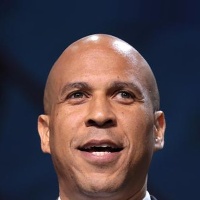
Cory Booker
Senator
NJ
Cory Booker
Senator
NJ
The Real Education and Access for Healthy Youth Act of 2025 establishes competitive grant programs to fund comprehensive, evidence-based sex education in schools, colleges, and youth organizations. The bill aims to address historical inequities by ensuring education and sexual health services are medically accurate, culturally responsive, and accessible to all young people, especially underserved populations. It also creates grants specifically for training educators and improving the delivery of youth-friendly sexual health services. Funding is authorized through 2031, with resources redirected from previous abstinence-only programs.
The Auto Reenroll Act of 2025 mandates that employees who temporarily opt out of automatic enrollment retirement plans will be automatically re-enrolled after three years unless they actively choose to remain opted out.
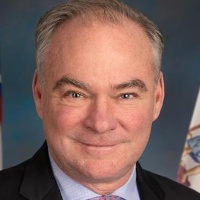
Timothy Kaine
Senator
VA
Timothy Kaine
Senator
VA
The Auto Reenroll Act of 2025 modifies rules for automatic enrollment retirement plans (QACAs and EACAs) to encourage continued participation. This legislation allows an employee's prior election to opt out of automatic contributions to automatically expire after three years or less. Upon expiration, the employee is automatically reenrolled in the plan unless they actively choose to opt out again. These changes aim to simplify reenrollment processes and maintain higher participation rates in employer-sponsored retirement savings.
This bill ensures that active duty military families maintain their Medicaid eligibility and critical long-term care waitlist status when relocating due to service orders.
Richard Blumenthal
Senator
CT
Richard Blumenthal
Senator
CT
The Care for Military Kids Act ensures that active duty military families do not lose essential Medicaid benefits when relocating due to service orders. This bill mandates that new states treat relocated service members and their dependents as residents for Medicaid eligibility purposes. Furthermore, it protects a family's place on waiting lists for crucial Home and Community-Based Services (HCBS) when they move. These provisions aim to provide stability and continuous access to necessary healthcare services during military transfers.
The ATTAIN Mental Health Act mandates the creation of an accessible, interactive federal dashboard to simplify finding and tracking funding opportunities for mental health and substance use disorder programs.
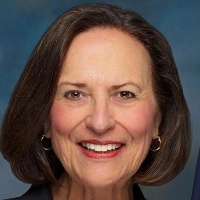
Deb Fischer
Senator
NE
Deb Fischer
Senator
NE
The ATTAIN Mental Health Act of 2025 mandates the creation of a new, accessible online interactive dashboard managed by HHS. This tool will centralize and clearly display all federal funding opportunities related to mental health and substance use disorder programs. The dashboard must provide up-to-date application statuses, key identifying details, and direct links to grant portals. This aims to significantly improve transparency and ease of navigation for potential applicants seeking mental health resources.
This Act mandates the inclusion of Asian American, Native Hawaiian, and Pacific Islander history across federally supported American history and civics education programs.

Mazie Hirono
Senator
HI
Mazie Hirono
Senator
HI
This Act mandates the inclusion of Asian American, Native Hawaiian, and Pacific Islander (AAPI) history across federally supported K-12 American history and civics education programs. It recognizes the significant, yet often erased, contributions and historical injustices faced by AAPI communities, including discriminatory immigration laws and internment. The legislation specifically updates federal education authorizations to ensure AAPI history is explicitly taught and partners the Presidential and Congressional Academies with the Smithsonian's Asian Pacific American Center.
This Act establishes a committee to harmonize and streamline overlapping federal cybersecurity regulations across various agencies through a unified framework and pilot testing.
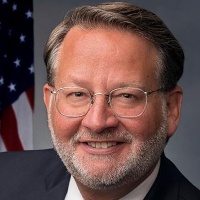
Gary Peters
Senator
MI
Gary Peters
Senator
MI
The Streamlining Federal Cybersecurity Regulations Act of 2025 establishes an interagency Harmonization Committee, chaired by the National Cyber Director, to create a unified baseline of cybersecurity requirements across federal agencies. This Act mandates the development of a regulatory framework to reduce conflicting or redundant rules and includes a voluntary pilot program to test these harmonized standards. Ultimately, the goal is to improve efficiency and consistency in federal cybersecurity oversight without granting new authorities to any agency outside of the pilot program's scope.
This bill officially designates the Federal building at 300 West Congress Street in Tucson, Arizona, as the "Raúl M. Grijalva Federal Building."
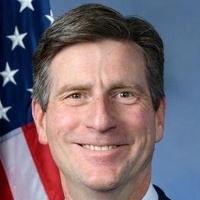
Greg Stanton
Representative
AZ
Greg Stanton
Representative
AZ
This bill officially designates the Federal building located at 300 West Congress Street in Tucson, Arizona, as the "Raúl M. Grijalva Federal Building." It ensures that all existing laws and official documents will automatically update to use the new name.
This bill eliminates the legal doctrine of qualified immunity, making it easier for individuals to sue state and local government officials for violating their constitutional rights.
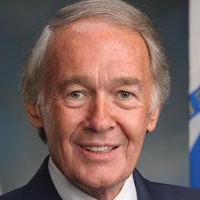
Edward Markey
Senator
MA
Edward Markey
Senator
MA
The Ending Qualified Immunity Act aims to restore the original intent of civil rights law by eliminating the legal doctrine of qualified immunity. This act prevents state and local government officials from using defenses like "good faith" or "clearly established law" to avoid liability. Consequently, individuals will have a clearer path to sue officials who violate their constitutional rights under Section 1983.
The HEALTH Panel Act establishes a new Panel of Health Advisors within the Congressional Budget Office to provide expert technical guidance on health care policy analyses and cost estimates.
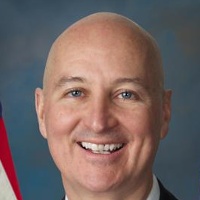
Pete Ricketts
Senator
NE
Pete Ricketts
Senator
NE
The HEALTH Panel Act establishes a new Panel of Health Advisors within the Congressional Budget Office (CBO) composed of 15 independent experts. This Panel will provide technical guidance and recommendations to improve the CBO's analysis, modeling, and cost estimates related to federal health care policy. The CBO Director must publicly report on how these expert recommendations are incorporated into official CBO projections.
This bill mandates that all national cemeteries managed by the Department of Defense, VA, or National Park Service remain open to visitors on all federal legal public holidays.
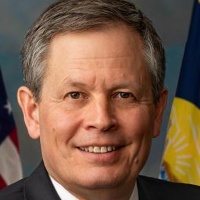
Steve Daines
Senator
MT
Steve Daines
Senator
MT
This bill mandates that all national cemeteries managed by the Department of Defense, the Department of Veterans Affairs, or the National Park Service must remain open to the public on all federal legal public holidays. This ensures continuous access for visitors wishing to honor service members and veterans on these significant days.
This bill allows individuals to defer paying immediate taxes on capital gain dividends from regulated investment companies when those dividends are automatically reinvested into buying more shares.
John Cornyn
Senator
TX
John Cornyn
Senator
TX
This bill, the Generating Retirement Ownership through Long-Term Holding Act, allows individuals to defer paying immediate taxes on capital gain dividends from regulated investment companies if those dividends are automatically reinvested into buying more shares. Tax on the deferred gain is recognized only when the shares are eventually sold, redeemed, or upon the owner's death. The legislation also grants these reinvested shares an automatic long-term holding period for tax purposes.
The SPEED Act doubles the federal funding and total project cost thresholds for transportation projects to qualify for expedited environmental review under categorical exclusion.
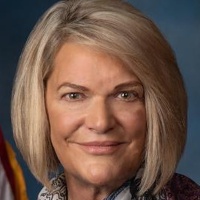
Cynthia Lummis
Senator
WY
Cynthia Lummis
Senator
WY
The Small Projects Expedited Execution and Delivery Act (SPEED Act) significantly raises the financial thresholds for transportation projects to qualify for expedited environmental review. Specifically, it doubles the maximum federal assistance cap to $\$12$ million and increases the total project cost limit to $\$70$ million for projects eligible for categorical exclusion. This change aims to speed up the delivery of smaller infrastructure projects by reducing lengthy environmental review requirements for those with limited federal funding.
The Labor Income Fairness and Transparency Act (LIFT Act) significantly raises the federal minimum wage, phases out subminimum wages for special categories of workers, increases the direct cash wage for tipped employees, doubles a key civil penalty, and permanently expands the Earned Income Tax Credit for low-income workers.
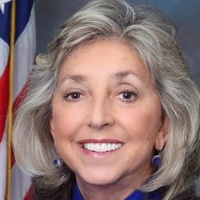
Dina Titus
Representative
NV
Dina Titus
Representative
NV
The Labor Income Fairness and Transparency (LIFT) Act significantly raises the federal minimum wage through a phased schedule, eventually tying future increases to median wage growth. It also phases out subminimum wages for youth, students, and tipped employees, ensuring they reach the standard minimum wage. Furthermore, the bill restores and makes permanent pandemic-era improvements to the Earned Income Tax Credit (EITC) for low-income workers. Finally, it establishes grants for state wage law enforcement and creates an advisory committee for the hospitality industry.