Legislation
The FAIR Act prohibits state regulators from approving electricity rates for utilities that incorporate Diversity, Equity, and Inclusion (DEI) practices or discretionary Environmental, Social, or Governance (ESG) factors in their decision-making.
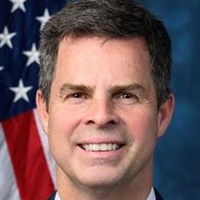
John McGuire
Representative
VA
John McGuire
Representative
VA
The FAIR Act prohibits state utility regulators from approving electricity rates for utilities that engage in certain Diversity, Equity, and Inclusion (DEI) practices or use Environmental, Social, or Governance (ESG) factors in their rate-setting decisions. This legislation places strict limitations on utility considerations, banning rates tied to practices that discriminate or enforce specific ideological training based on protected characteristics. Utilities may only consider ESG factors if strictly mandated by existing Federal or State law.
This Act mandates increased public disclosure of workplace discrimination and harassment data, requires independent third-party investigations for claims, and enforces mandatory, externally managed training and annual safety surveys for covered companies.
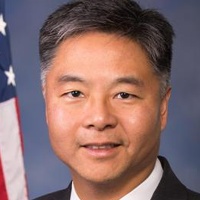
Ted Lieu
Representative
CA
Ted Lieu
Representative
CA
The Protections and Transparency in the Workplace Act mandates that publicly traded companies significantly increase disclosure regarding workplace discrimination and harassment claims in their SEC filings. The bill also requires these companies to hire independent outside counsel to investigate all such claims and implement mandatory annual training for all employees on prevention and reporting. Furthermore, covered issuers must conduct annual employee safety surveys and establish an anonymous whistleblower tip line.
This Act allows designated individuals or immediate family members to supplement the health records of deceased veterans with observed health information.
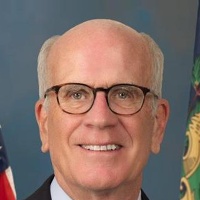
Peter Welch
Senator
VT
Peter Welch
Senator
VT
The Health Records Enhancement Act allows designated individuals or immediate family members to supplement the health records of deceased veterans with observed health information after their passing. This process ensures that important post-mortem details can be added to the existing records maintained by the DoD and VA. Any added information will serve only as a supplement and will not alter the original medical documentation.
This bill expands funding for overdose prevention tools like fentanyl test strips, mandates training for first responders on their use, and directs the development of research and marketing frameworks for test strip technology.
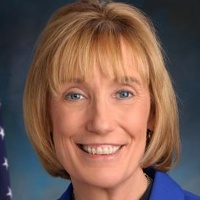
Margaret Hassan
Senator
NH
Margaret Hassan
Senator
NH
The ALERT Communities Act aims to enhance overdose prevention by allowing states and tribes to use grant funds to distribute fentanyl and xylazine test strips where legally permitted. The bill also mandates training for first responders on the use and distribution of these test strips. Furthermore, it directs the HHS to establish clear research and marketing frameworks for new test strip technology and to study the impact of these interventions on overdose rates and treatment access.
This Act updates the eligibility requirements for members of federally recognized U.S. Indian Tribes and Canadian First Nations to receive immediate permanent resident status upon entry to the United States.
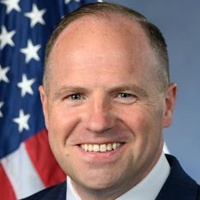
Timothy Kennedy
Representative
NY
Timothy Kennedy
Representative
NY
The McCarran-Walter Technical Corrections Act updates immigration eligibility for members of federally recognized Native American Tribes in the U.S. and First Nations in Canada. This bill removes outdated "blood quantum" requirements, instead requiring only verifiable membership in a recognized tribe or First Nation. Individuals admitted under this revised status will immediately receive permanent resident status.
The Payment Choice Act of 2025 mandates that retail businesses accepting in-person payments must accept cash for transactions up to $\$500$ and cannot charge cash customers a higher price than non-cash customers.

Kevin Cramer
Senator
ND
Kevin Cramer
Senator
ND
The Payment Choice Act of 2025 affirms the right of consumers to use U.S. currency for in-person retail transactions up to $\$500$. This Act mandates that businesses accepting in-person payments must offer equal pricing for cash and non-cash transactions. It establishes exceptions for technical failures or lack of change, and outlines a process for consumers to enforce compliance through civil action.
This Act mandates the FDA to study the human health impacts of microplastic exposure in food and water and report recommendations to Congress.

Jeff Merkley
Senator
OR
Jeff Merkley
Senator
OR
The Microplastics Safety Act mandates the FDA to conduct a comprehensive study on the human health impacts of microplastic exposure through food and water. This research must specifically investigate effects on children's health, the endocrine system, cancer risk, and reproductive health. Following the study, the Secretary of Health and Human Services must report findings and recommend necessary legislative or regulatory actions to Congress within one year.
The LEAD Act of 2025 mandates that specific advanced, reusable unmanned aircraft systems be treated as manned aircraft for U.S. arms export control purposes, separating them from missile technology regulations.
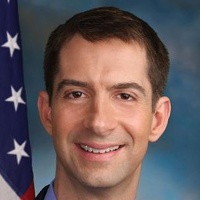
Tom Cotton
Senator
AR
Tom Cotton
Senator
AR
The LEAD Act of 2025 revises U.S. arms export controls for specific advanced, reusable unmanned aircraft systems. This legislation mandates that these covered drones be treated identically to manned aircraft systems under export regulations, including those related to the Missile Technology Control Regime (MTCR). The goal is to separate the export review of these sophisticated drones from that of missile technology. The President is required to update relevant regulations within 180 days to reflect this new treatment.
This act allows eligible veterans to use their educational assistance benefits, up to \$500 per exam, to pay for standardized tests and assessments that grant college credit.
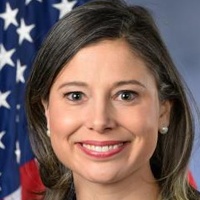
Maggie Goodlander
Representative
NH
Maggie Goodlander
Representative
NH
The Military Learning for Credit Act of 2025 allows eligible veterans to use their existing educational assistance benefits to pay for specific exams and assessments designed to earn college credit. This provision caps the benefit usage at \$500 per covered test, including DSST and CLEP exams. Using these benefits for testing will count against the veteran's total entitlement time, calculated based on the cost of the exam.
This act mandates that HHS grant programs update their language to include all FDA-approved emergency opioid overdose reversal medications.

John Cornyn
Senator
TX
John Cornyn
Senator
TX
The Halting the Epidemic of Addiction and Loss Act of 2025 mandates that the Department of Health and Human Services (HHS) update all relevant grant programs to include any FDA-approved medication for emergency opioid overdose reversal. This ensures that federal funding guidance reflects the broadest range of life-saving reversal agents available. HHS has one year to revise all existing regulations and guidance documents to incorporate these updated definitions.
This Act establishes federal grants to strengthen coordination between various service providers to improve comprehensive support for survivors of sexual assault.

Lisa Murkowski
Senator
AK
Lisa Murkowski
Senator
AK
The Healing Partnerships for Survivors Act establishes new federal grants to strengthen coordination between health, behavioral health, disability, and sexual assault service providers. These funds aim to create trauma-informed, culturally relevant support systems for survivors of sexual assault, including adult survivors of childhood sexual abuse. Grantees will use the funding to develop integrated services such as direct support, case management, and specialized healing approaches. The bill authorizes $30 million annually for these grants from fiscal years 2026 through 2030.
This bill, the PROTECTED Act, modifies small business loan data collection requirements for financial institutions by clarifying disclosure rules, streamlining reporting, and strictly limiting data retention to applicant-provided information to enhance privacy.
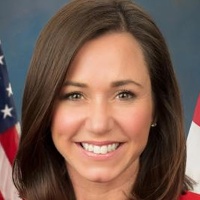
Katie Britt
Senator
AL
Katie Britt
Senator
AL
The PROTECTED Act aims to reform how financial institutions collect and handle sensitive data from small business loan applicants. It mandates clearer disclosures to applicants regarding the voluntary nature of providing data and restricts institutions from retaining data gathered through observation rather than direct submission. Furthermore, the bill modifies reporting requirements and establishes a multi-year timeline for the CFPB to implement new privacy-focused rules.
The EACH Act of 2025 mandates that all federally funded health programs and plans must cover abortion services and prohibits federal interference with state or private insurance coverage for abortion.

Tammy Duckworth
Senator
IL
Tammy Duckworth
Senator
IL
The EACH Act of 2025 mandates that all federally funded health programs and insurance plans must cover abortion services without imposing restrictions based on income or insurance type. This legislation aims to eliminate existing federal bans and state-level restrictions that prevent access to comprehensive reproductive care. Furthermore, the bill prevents the federal government from interfering with state or private insurance plans that choose to cover abortion services. It explicitly repeals Section 1303 of the Affordable Care Act and establishes that this Act takes precedence over all conflicting federal laws.
This resolution officially designates August 14, 2025, as "National Save Social Security Day" to celebrate the program's 90th anniversary and urge bipartisan action to ensure its long-term solvency.

Bill Cassidy
Senator
LA
Bill Cassidy
Senator
LA
This resolution officially designates August 14, 2025, as "National Save Social Security Day" to mark the program's 90th anniversary. It recognizes Social Security's vital role while stressing the need for bipartisan action to ensure its long-term financial stability. The measure encourages public education and outreach regarding the challenges facing the program. Ultimately, it calls on Congress to work together to strengthen Social Security for future generations.
This bill mandates the removal of all references to Senator Francis G. Newlands from the memorial fountain at Chevy Chase Circle in D.C. and dictates the handling of the removed items.

Chris Van Hollen
Senator
MD
Chris Van Hollen
Senator
MD
This Act mandates the removal of all references to Senator Francis G. Newlands from the memorial fountain at Chevy Chase Circle in D.C. The Secretary of the Interior must remove the existing plaque and stone tablet bearing his name, and either remove or obscure his carved name on the coping stones. Removed items will first be offered to Newlands' descendants, and if unclaimed, will be added to the Rock Creek Park museum collection.
This bill amends federal law to include rioting as a form of racketeering activity under the RICO Act.

Ted Cruz
Senator
TX
Ted Cruz
Senator
TX
This bill proposes amending federal law to explicitly include the crime of arson and bombing threats within the definition of "racketeering activity" under the RICO Act. By adding this offense to Title 18, U.S. Code, the legislation makes it easier to prosecute individuals involved in such acts under federal racketeering statutes.
The 340B PATIENTS Act of 2025 clarifies that drug manufacturers must provide 340B discounts without imposing restrictions on covered entities' ability to purchase or use those drugs, regardless of dispensing location, and establishes penalties for non-compliance.

Doris Matsui
Representative
CA
Doris Matsui
Representative
CA
The 340B PATIENTS Act of 2025 clarifies and strengthens the existing 340B drug discount program for covered entities like hospitals and clinics. It explicitly prohibits drug manufacturers from placing restrictions on how or where these entities purchase or dispense discounted outpatient drugs, including through contract pharmacies. The bill also establishes significant civil monetary penalties for manufacturers who intentionally violate these non-restriction rules. Ultimately, this legislation aims to ensure that covered entities can fully utilize 340B savings to expand patient care.
This Act mandates a timely Government Accountability Office audit of the Federal Reserve Board of Governors and requires prompt reporting of the findings to Congress.

Rand Paul
Senator
KY
Rand Paul
Senator
KY
The Federal Reserve Transparency Act of 2025 mandates a comprehensive audit of the Federal Reserve Board of Governors by the Government Accountability Office (GAO) within one year of enactment. The resulting report, detailing findings and recommendations, must be delivered to Congress within 90 days of the audit's completion. This legislation streamlines reporting requirements and clarifies the scope of GAO audit authority over the Federal Reserve's operations, including emergency lending facilities.
This Act modernizes seasonal agricultural CDLs by allowing online renewal for eligible employees and clarifying that implements of husbandry are not considered commercial motor vehicles.
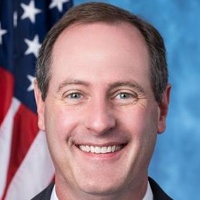
Tracey Mann
Representative
KS
Tracey Mann
Representative
KS
The Seasonal Agriculture CDL Modernization Act streamlines the process for farm workers by allowing states to establish online systems for renewing seasonal, restricted Commercial Driver's Licenses (CDLs). This legislation also clarifies that implements of husbandry (farm equipment) are not classified as commercial motor vehicles for licensing purposes. Overall, the bill aims to modernize and simplify CDL requirements for those in the farm-related service industries.
This bill establishes a State judicial threat intelligence and resource center to monitor threats, coordinate security, and report on incidents targeting state and local judges and court staff.
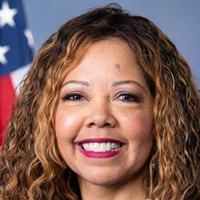
Lucy McBath
Representative
GA
Lucy McBath
Representative
GA
This bill establishes a new State judicial threat intelligence and resource center to enhance the security of state and local judges and court staff. The center will provide training, monitor threats, standardize reporting, and create a national database for incidents against the judiciary. It also requires annual reporting to Congress on the number and severity of threats received.