Legislation
This act establishes a pathway to conditional lawful permanent residency for certain undocumented immigrants present since January 1, 2024, who have worked in designated essential professions for at least 100 days.
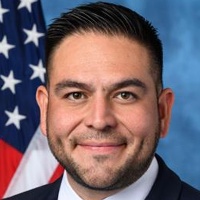
Gabriel (Gabe) Vasquez
Representative
NM
Gabriel (Gabe) Vasquez
Representative
NM
The Strengthening Our Workforce Act of 2025 establishes a pathway to conditional lawful permanent residency for certain undocumented immigrants present in the U.S. as of January 1, 2024, who have worked in designated "covered professions." Eligible individuals receive immediate work authorization and must maintain continuous employment in these essential fields for two years to automatically transition to full permanent resident status. The bill outlines specific eligibility criteria, including continuous presence and work history, while imposing restrictions based on criminal history.
This Senate resolution declares a lack of confidence in Secretary of Health and Human Services Robert F. Kennedy Jr. due to alleged undermining of public health, scientific integrity, and unlawful actions, demanding his removal from office.

Angela Alsobrooks
Senator
MD
Angela Alsobrooks
Senator
MD
This Senate resolution expresses a profound lack of confidence in Secretary of Health and Human Services Robert F. Kennedy Jr., citing numerous actions that allegedly undermine public health, scientific integrity, and the legal duties of his office. The resolution details accusations of illegal funding cuts, mass firings of career staff, and the dismantling of key advisory committees. Therefore, the Senate declares that the Secretary should be removed from his position.
This bill reinstates Post-9/11 Educational Assistance benefits for spouses or children who lost them due to a service member's administrative separation or conviction for dependent abuse.
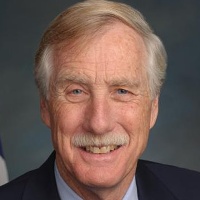
Angus King
Senator
ME
Angus King
Senator
ME
The Safeguarding Department of Veterans Affairs Dependent Education Benefits Act of 2025 aims to protect education benefits for victims of abuse. This bill allows spouses or children to petition for the reinstatement of Post-9/11 Educational Assistance benefits that were previously transferred but terminated due to the service member's conviction or administrative separation for dependent abuse. The process requires victims to apply with evidence, and denials can be appealed to the Secretary of Defense or Homeland Security.
This bill establishes a USDA grant program to help specialty crop producers purchase and receive training for new automation and mechanization equipment.
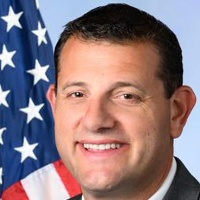
David Valadao
Representative
CA
David Valadao
Representative
CA
This bill establishes a new grant program administered by the Secretary of Agriculture to help specialty crop producers become more competitive. These grants will assist eligible entities in purchasing advanced mechanized or automated equipment and providing necessary training for its use. Recipients must provide matching funds equal to at least 50 percent of the total project cost. The covered technology ranges widely, including harvesting tools, sorting machinery, traceability systems, and advanced IoT and robotic equipment.
This bill mandates regular intelligence community assessments on the national security and economic impacts of climate change.
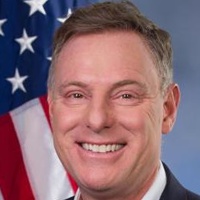
Scott Peters
Representative
CA
Scott Peters
Representative
CA
The National Security Climate Intelligence Act of 2025 mandates that the intelligence community regularly assess the national security and economic impacts of climate change. This requires the Director of National Intelligence to produce a comprehensive Intelligence Community Assessment on these effects, with the first due within four years of enactment and subsequent reports at least every six years. Any classified assessments must include an unclassified executive summary for broader understanding.
This comprehensive act establishes federal entitlements and grants to ensure access to affordable, high-quality child care and universal preschool for young children while significantly increasing compensation for early childhood educators.
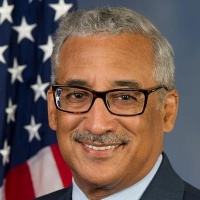
Robert Scott
Representative
VA
Robert Scott
Representative
VA
The Child Care for Working Families Act establishes comprehensive federal programs to ensure access to high-quality, affordable child care and universal preschool for young children. The legislation creates an entitlement program for child care, mandates that provider reimbursement rates cover actual costs and ensure living wages for staff, and establishes free, universal preschool for 3- and 4-year-olds. Additionally, it provides dedicated funding to stabilize childcare providers and extend the operating hours and compensation for Head Start staff.
This bill prohibits the public release of a federal law enforcement officer's name with the intent to obstruct an ongoing criminal investigation or immigration enforcement action.
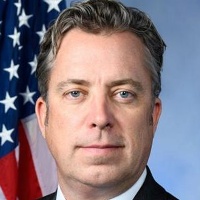
Andrew Ogles
Representative
TN
Andrew Ogles
Representative
TN
The Protecting Law Enforcement from Doxxing Act makes it a federal crime to publicly release the name of a federal law enforcement officer with the intent to obstruct an ongoing criminal investigation or immigration enforcement action. Violators of this new prohibition face potential fines and imprisonment of up to five years. The bill updates federal statutes to explicitly include immigration enforcement operations within the scope of obstruction laws.
This bill mandates that the Department of Education update the College Scorecard annually to include median earnings, specific loan debt levels, and repayment/default rates for individual higher education programs and institutions.
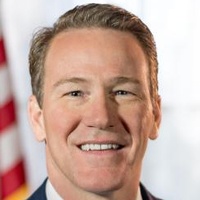
Jon Husted
Senator
OH
Jon Husted
Senator
OH
The Debt, Earnings, and Cost Information Disclosure for Education Act, or DECIDE Act, aims to increase transparency for student loan borrowers. This bill mandates that the Secretary of Education update the College Scorecard annually with crucial data for every federal aid-eligible program. This new information will include median earnings ten years out, median student loan debt levels, and repayment/default rates for program completers. The goal is to provide prospective students with clearer accountability metrics before they enroll.
The Safer Truckers Act of 2025 establishes new residency and work authorization requirements for obtaining a Commercial Driver's License (CDL) and mandates annual state reporting on English proficiency enforcement for commercial drivers.

Ashley Moody
Senator
FL
Ashley Moody
Senator
FL
The Safer Truckers Act of 2025 updates Commercial Driver's License (CDL) eligibility by requiring applicants to be U.S. citizens, lawful permanent residents, or authorized to work in commercial driving by USCIS. This bill also mandates that states annually report on their enforcement of English language proficiency standards for CDL holders. These measures aim to enhance safety and compliance within the commercial trucking industry.
This Act automatically extends government funding in 14-day increments to prevent shutdowns while imposing travel and procedural restrictions on Congress and officials during funding lapses.
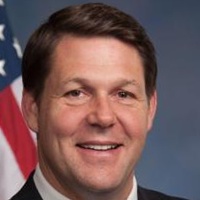
Jodey Arrington
Representative
TX
Jodey Arrington
Representative
TX
The Prevent Government Shutdowns Act of 2025 establishes automatic 14-day continuing appropriations to fund federal programs immediately when Congress fails to pass a budget. This mechanism prevents service disruptions while imposing strict limits on official travel and legislative business for Congress and certain executive branch officials during funding lapses. The Act ensures that spending during these extensions is accounted for against the final enacted budget.
This Act bans Members of Congress and their immediate families from trading or owning specific investments while in office, requiring divestment within 90 to 180 days or facing significant financial penalties.
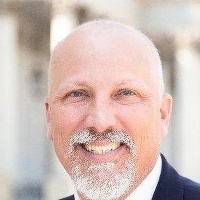
Chip Roy
Representative
TX
Chip Roy
Representative
TX
The Restore Trust in Congress Act establishes strict new rules prohibiting Members of Congress and their immediate families from owning or trading specific financial assets, referred to as "covered investments," while in office. Covered individuals must divest existing prohibited holdings within a set timeframe or face significant financial penalties, including fines and forfeiture of profits. The legislation aims to eliminate conflicts of interest arising from personal financial trading while serving in federal office.
This Act strengthens federal requirements for purchasing biobased products, increases transparency, and promotes domestically made goods to expand the biobased market.

Todd Young
Senator
IN
Todd Young
Senator
IN
The Biobased Market Expansion Act of 2025 significantly strengthens federal requirements for purchasing biobased products by mandating annual goal increases and tightening exemptions for non-compliance. This legislation promotes U.S.-made goods by establishing domestic price advantages and improving transparency through public reporting of purchasing data and any unmet goals. Furthermore, it requires updated training for contracting officers and directs the GAO to review the program's effectiveness within two years.
This bill directs the TSA to create guidelines to help incarcerated individuals prepare for and access the Transportation Worker Identification Credential (TWIC) program upon release to improve employment opportunities.
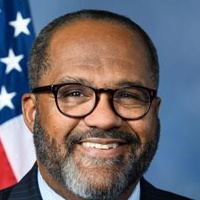
Troy Carter
Representative
LA
Troy Carter
Representative
LA
This bill directs the Transportation Security Administration (TSA) to develop guidelines to improve access to the Transportation Worker Identification Credential (TWIC) program for individuals currently in custody. Specifically, it mandates assistance for incarcerated individuals to pre-apply or prepare applications for TWIC cards before release. The goal is to reduce barriers to employment for returning citizens by streamlining the credentialing process.
This resolution recognizes the 50th anniversary of Cabo Verde's independence and celebrates the significant contributions of Cabo Verdean-Americans to both nations.
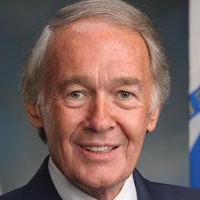
Edward Markey
Senator
MA
Edward Markey
Senator
MA
This resolution recognizes the 50th anniversary of the independence of the Republic of Cabo Verde and celebrates the deep, historical relationship between the U.S. and Cabo Verde. It specifically commends the significant contributions of Cabo Verdean-Americans to both nations. The bill affirms U.S. support for Cabo Verde's democracy, good governance, and its important role in global security.
This bill prohibits the use of United States embassies and diplomatic posts for fundraising activities benefiting any foreign political party or candidate.
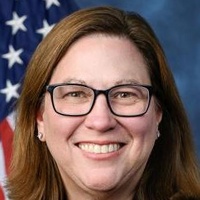
Julie Johnson
Representative
TX
Julie Johnson
Representative
TX
This Act prohibits the use of any United States embassy, consulate, or diplomatic residence for the purpose of fundraising for any foreign political party or candidate. The legislation clarifies that while diplomatic engagement with foreign political entities is a core function, using U.S. government property to provide a financial or electoral boost to a foreign political campaign is strictly forbidden. The Secretary of State is required to update regulations within 90 days to enforce this prohibition.
This Act establishes new research programs and studies by the National Academies to assess the safety, risks, and regulatory pathways for products developed using biotechnology.
Todd Young
Senator
IN
Todd Young
Senator
IN
The National Biotechnology Safety Act establishes a new research program, managed by the NSF, to study the potential risks associated with biotechnology products. It also mandates a two-phase study by the National Academies to compare the safety of biotech tools against traditional methods. The overall goal is to provide the necessary scientific foundation for effective federal regulation and oversight of these rapidly developing technologies.
The Tipped Worker Protection Act phases out the lower minimum wage for tipped employees, establishes stricter rules for tip retention and pooling via employee vote, and redefines what constitutes a tip.
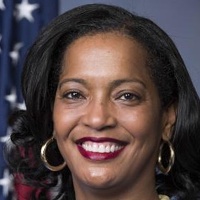
Jahana Hayes
Representative
CT
Jahana Hayes
Representative
CT
The Tipped Worker Protection Act aims to eliminate the lower minimum wage for tipped employees by phasing out the tip credit system, ensuring all workers eventually receive the standard federal minimum wage. The bill also establishes strict new rules regarding tip pooling, mandates employee voting to create or change pooling systems, and prohibits employers from keeping any portion of employee tips. Furthermore, it clarifies what constitutes a tip, including certain mandatory service charges, and updates penalties for illegal tip retention.
This bill increases the maximum microloan amount, allows loan funds for building costs, adjusts the required matching percentage, and extends the authorization timeline for the Rural Microentrepreneur Assistance Program.
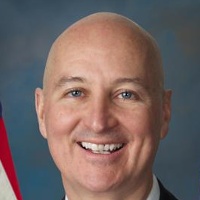
Pete Ricketts
Senator
NE
Pete Ricketts
Senator
NE
The Rural Microentrepreneur Assistance Act of 2025 aims to strengthen support for small businesses in rural areas by increasing the maximum microloan amount to $\$75,000$ and allowing loan funds to cover building and construction costs. This legislation also extends the program's authorization through 2030. A key change requires microloan organizations to now match 100 percent of federal funds received.
The ARMOR Act streamlines defense trade and cooperation among the U.S., U.K., Australia, and Canada by expanding expedited export license reviews and requiring regular reporting on the process.
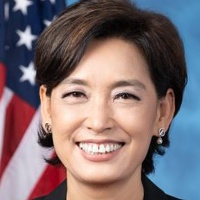
Young Kim
Representative
CA
Young Kim
Representative
CA
The ARMOR Act aims to streamline defense trade and cooperation among the United States, the United Kingdom, Australia, and Canada by expanding expedited export license reviews for defense items and services shared between these nations. It also directs the President to work with the UK and Australia to harmonize policies regarding extraterritoriality to reduce maintenance and repair delays. Furthermore, the bill establishes new annual reporting requirements for the President to track the implementation and usage of these expedited review processes over the next 15 years. Finally, it mandates regular reviews to narrow the list of defense technologies that still require special licensing.
This resolution expresses support for designating September as "Founding Fathers' Month" to honor the nation's founders and promote civic education about their contributions.
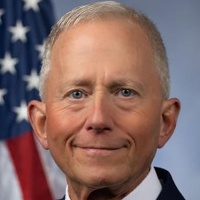
Jefferson Van Drew
Representative
NJ
Jefferson Van Drew
Representative
NJ
This resolution expresses strong support for designating September as "Founding Fathers' Month" to honor the leaders who established American democracy. It encourages schools and public groups nationwide to host educational events highlighting the Founders' sacrifices and contributions. The bill aims to combat declining civic knowledge by focusing attention on founding principles at the start of the school year.