Legislation
This resolution supports designating September 2025 as "National Voting Rights Month" while urging Congress to pass legislation that expands voting access and restores rights lost due to felony convictions.
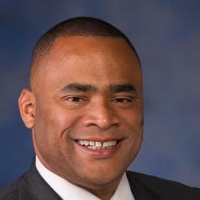
Marc Veasey
Representative
TX
Marc Veasey
Representative
TX
This resolution supports designating September 2025 as "National Voting Rights Month" to highlight ongoing threats to fair elections, such as gerrymandering and restrictive voting laws. It urges Congress to pass key legislation like the Freedom to Vote Act and the Democracy Restoration Act. The bill also encourages educational programs about voting history and registration efforts nationwide. Ultimately, it calls for federal action to protect and expand access to the ballot box for all citizens.
This Act streamlines pharmacy compounding during drug shortages, improves FDA reporting requirements for manufacturers to anticipate supply issues, and updates labeling and regulatory language for compounded and outsourced drugs.

Diana Harshbarger
Representative
TN
Diana Harshbarger
Representative
TN
The Drug Shortage Compounding Patient Access Act of 2025 aims to improve patient access to necessary medications during drug shortages. It allows pharmacists and physicians to compound urgent batches of drugs without an individual prescription if the drug is on the shortage list and commercial alternatives are unavailable. Furthermore, the bill enhances drug shortage mitigation by requiring manufacturers to report sudden surges in demand to the FDA, alongside existing reporting for manufacturing interruptions. Finally, it clarifies compounding regulations and adds specific labeling requirements for patient-specific compounded drugs.
The JAIL Act allows victims to sue judges or government agencies for damages when a repeat offender, charged with a violent crime and previously convicted of one, causes harm after being released pending trial.
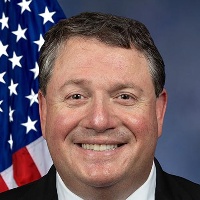
Randall Fine
Representative
FL
Randall Fine
Representative
FL
The Judicial Accountability for Irresponsible Leniency (JAIL) Act creates a new civil cause of action allowing victims to sue judges or government agencies for damages when a repeat offender, charged with a crime of violence, commits further harm after being released pending trial. This law specifically strips judges of their usual immunity defense in these cases. The provision targets release decisions involving defendants with prior convictions for violent crimes.
This Act establishes grants for paid local government internships, creates scholarships for student volunteers, and recognizes institutions for community service achievements.
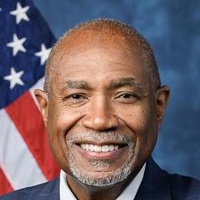
Herbert Conaway
Representative
NJ
Herbert Conaway
Representative
NJ
The Service Starts At Home Act establishes federal grants to support paid local government internships for students and creates a new scholarship program rewarding high school and college students for significant community volunteer hours. Additionally, the bill mandates a program to recognize educational institutions for their achievements in community service. These initiatives aim to foster civic engagement and provide practical experience in public service.
This resolution expresses support for National Hydrocephalus Awareness Month and World Hydrocephalus Day to highlight the significant impact of hydrocephalus and encourage continued research and care.
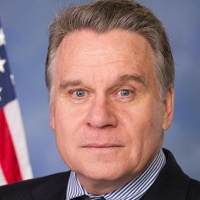
Christopher Smith
Representative
NJ
Christopher Smith
Representative
NJ
This resolution expresses the House of Representatives' support for "National Hydrocephalus Awareness Month" and "World Hydrocephalus Day." It recognizes the significant impact of hydrocephalus, a condition affecting millions, and the ongoing need for better treatment and research. The bill formally backs efforts to raise public awareness and advance scientific understanding of this serious brain condition.
The No More Missing Children Act establishes a rigorous anti-trafficking program for unaccompanied alien children involving mandatory GPS monitoring, extensive sponsor vetting, DNA collection, and frequent unannounced home visits.
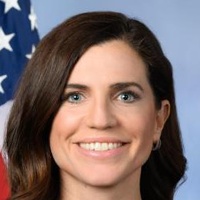
Nancy Mace
Representative
SC
Nancy Mace
Representative
SC
The No More Missing Children Act establishes the Unaccompanied Alien Child Anti-Trafficking Program to safeguard unaccompanied minors released from government custody. This program mandates rigorous vetting of sponsors, continuous GPS monitoring, mandatory DNA collection, and frequent unannounced home inspections. The goal is to prevent trafficking, disappearance, or loss of these children by ensuring their placement is safe and continuously monitored.
This Act guarantees skilled nursing facility residents the right to unrestricted visitation by at least one individual they designate.
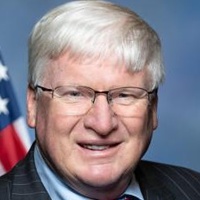
Glenn Grothman
Representative
WI
Glenn Grothman
Representative
WI
The Randy Susen Visitation Rights Act of 2025 guarantees skilled nursing facility residents the right to designate at least one individual who must be permitted unrestricted visitation access. This designated visitor cannot be restricted by the facility unless the resident explicitly withdraws consent. The Act amends both Medicare and Medicaid rules to ensure this fundamental right to chosen visitation.
The FAIR Act prohibits federal agencies from procuring large language models unless they adhere to strict standards of truthfulness, accuracy, neutrality, and transparency regarding ideological bias.
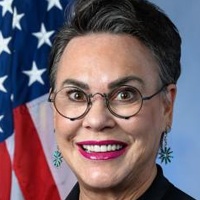
Harriet Hageman
Representative
WY
Harriet Hageman
Representative
WY
The FAIR Act establishes new procurement standards for the U.S. government when purchasing advanced Large Language Models (LLMs). This legislation mandates that any federally acquired LLM must prioritize accuracy, truthfulness, and neutrality in its outputs. Furthermore, the bill prohibits developers from embedding undisclosed political or ideological biases into these models used by federal agencies.
This resolution expresses Congressional support for designating September 2025 as "Peace Month" and calls on members to actively promote peace domestically and internationally.

Eleanor Norton
Representative
DC
Eleanor Norton
Representative
DC
This resolution expresses the House of Representatives' formal support for designating September 2025 as "Peace Month." It recognizes the United Nations' International Day of Peace on September 21st and encourages ongoing efforts to promote global peace and human rights. Furthermore, the resolution calls upon Congress to actively champion peace initiatives both domestically and internationally.
The RAPID Act streamlines the deployment of small wireless facilities by exempting them from certain major environmental and historic preservation reviews and establishing a presumption of tribal disinterest after a 45-day period of non-response to FCC filings.
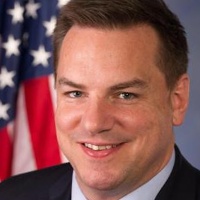
Richard Hudson
Representative
NC
Richard Hudson
Representative
NC
The RAPID Act aims to streamline the deployment of small wireless facilities by exempting them from certain major environmental and historic preservation reviews under federal law. It also establishes a presumption that an Indian Tribe has disclaimed interest in a project if they fail to respond to specific FCC forms within 45 days. This legislation seeks to reduce permitting delays for infrastructure deployment, particularly for small cell sites.
This resolution urges that all future U.S. trade agreements must mandate reasonable cooperation from partner nations to facilitate the search and recovery of missing American service members from past conflicts.
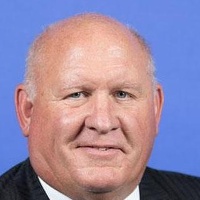
Glenn Thompson
Representative
PA
Glenn Thompson
Representative
PA
This resolution expresses the sense of Congress that all future U.S. trade agreements must require partner nations to provide reasonable access and collaboration for the search and recovery of missing U.S. service members. It directs that cooperation on accounting for Prisoners of War/Missing in Action (POW/MIA) be a mandatory component of international trade partnerships. The goal is to streamline and accelerate efforts to bring closure for families of personnel missing from past conflicts.
This Senate resolution condemns FCC Chairman Brendan Carr's threats against ABC and Disney over political commentary as a dangerous and unconstitutional infringement on free speech.
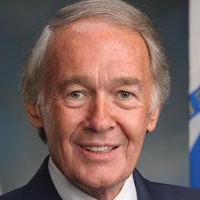
Edward Markey
Senator
MA
Edward Markey
Senator
MA
This Senate resolution formally condemns FCC Chairman Brendan Carr for threatening ABC and Disney over political commentary made by a late-night host. The resolution asserts that the Chairman's actions were dangerous and unconstitutional, violating the First Amendment protections for broadcast speech. It demands the Chairman retract his threats, which created a chilling effect on free expression in broadcasting.
This resolution directs the Clerk of the House to formally request the Senate return H.R. 3426, a bill concerning limitations on new courthouse construction.
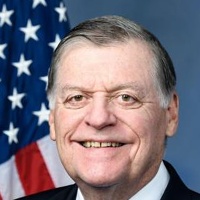
Tom Cole
Representative
OK
Tom Cole
Representative
OK
This resolution directs the Clerk of the House to formally request the Senate return H.R. 3426, a bill concerning limitations on the construction of new federal courthouses. The House is seeking the return of this legislation for further consideration or amendment.
This bill modifies Medicare Part D cost-sharing for specific chronic care drugs by basing out-of-pocket expenses on the drug's net price after the deductible begins in 2027.
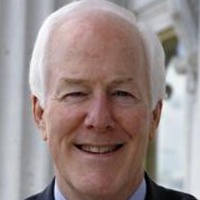
John Cornyn
Senator
TX
John Cornyn
Senator
TX
The Share the Savings with Seniors Act aims to lower out-of-pocket costs for seniors taking specific, long-term chronic care medications under Medicare Part D, beginning in 2027. This bill mandates that cost-sharing for these drugs, once the deductible is met, must be calculated based on the drug's net price rather than the retail price. These changes apply to drugs treating conditions like diabetes and certain respiratory or cardiovascular issues.
This Act updates food assistance benefit calculations using a new "low-cost food plan," modifies medical expense deductions for the elderly and disabled, and eliminates a time limit for certain program participants.

Kirsten Gillibrand
Senator
NY
Kirsten Gillibrand
Senator
NY
The Closing the Meal Gap Act of 2025 overhauls food assistance by basing benefit calculations on a new "low-cost food plan" instead of the previous "thrifty food plan." It also introduces new standard medical expense deductions for elderly or disabled households and eliminates a previous time limit restriction for certain program participants. Finally, the bill removes the cap on deductions for excess shelter expenses.
This resolution expresses support for recognizing September 7, 2025, as "Liturgical Dance Day" and honors the community service and dedication of the International Dance Commission.
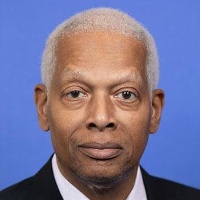
Henry Johnson
Representative
GA
Henry Johnson
Representative
GA
This resolution officially expresses support for recognizing September 7, 2025, as "Liturgical Dance Day." It honors the vital role liturgical dance ministries play in worship and community service, particularly in mentoring youth. Furthermore, the resolution recognizes the International Dance Commission for its dedication to supporting dance and worship arts ministries globally and locally.
This resolution urges Congress to protect Medicare from devastating, automatic budget cuts triggered by recent spending legislation.

Sheldon Whitehouse
Senator
RI
Sheldon Whitehouse
Senator
RI
This resolution urges Congress to protect the Medicare program from significant, automatic budget cuts triggered by recent spending legislation. These sequestration cuts are projected to reduce Medicare funding by hundreds of billions of dollars over the next decade. The resolution emphasizes that these cuts jeopardize essential healthcare services for millions of seniors and people with disabilities who have paid into the system. Ultimately, it serves as a statement demanding that earned Medicare benefits be shielded from these financial reductions.
This resolution expresses support for designating October 14, 2025, as the "National Day of Remembrance for Charlie Kirk" to honor his advocacy for free speech, civic education, and individual liberty.
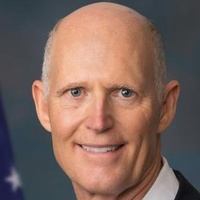
Rick Scott
Senator
FL
Rick Scott
Senator
FL
This resolution expresses support for designating October 14, 2025, as the "National Day of Remembrance for Charlie Kirk." It formally honors Kirk's legacy as a champion of free speech, civic education, and individual liberty through his work with Turning Point USA and his writing. The resolution encourages citizens and organizations nationwide to observe this day through activities promoting faith, liberty, and democracy.
The SUPPORT for Patients and Communities Reauthorization Act of 2025 strengthens federal efforts across prevention, treatment, and recovery for substance use disorders while enhancing public health infrastructure and provider training requirements through 2030.
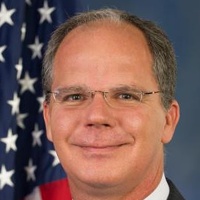
Brett Guthrie
Representative
KY
Brett Guthrie
Representative
KY
The **SUPPORT for Patients and Communities Reauthorization Act of 2025** is a comprehensive bill designed to strengthen the nation's response to the substance use disorder crisis across prevention, treatment, and recovery. It locks in funding for key health initiatives, expands overdose tracking, enhances cybersecurity for crisis hotlines, and increases resources for workforce development and community recovery infrastructure through 2030. The legislation also clarifies provider definitions and updates requirements for mandatory prescriber training programs.
This Act modernizes Department of Veterans Affairs outreach by expanding communication methods for new veterans and allowing beneficiaries to opt into digital correspondence for education benefits, while also extending certain pension payment limits.
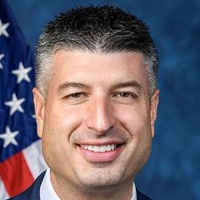
Tom Barrett
Representative
MI
Tom Barrett
Representative
MI
The Delivering Digitally to Our Veterans Act of 2025 modernizes how the Department of Veterans Affairs communicates with veterans by expanding outreach methods beyond traditional calling and mail to include texts and electronic messaging. This legislation specifically updates the Solid Start program and allows veterans to opt-in for digital correspondence regarding their educational assistance benefits. Additionally, the Act extends the expiration date for certain existing limits on pension payments.