Legislation
This legislation provides fiscal year 2026 appropriations for the Department of Homeland Security, extends temporary government funding, and mandates proof of citizenship and photo identification for federal voter registration.

Chip Roy
Representative
TX
Chip Roy
Representative
TX
The **Homeland Security and Further Additional Continuing Appropriations Act, 2026** provides comprehensive funding for the Department of Homeland Security’s operations, including border security, emergency management, and cybersecurity, while implementing new oversight and transparency mandates. The legislation also includes short-term funding extensions to prevent government shutdowns and incorporates the **SAVE America Act**, which establishes nationwide requirements for proof of citizenship and photo identification in federal elections.
This bill mandates that states annually report detailed data on improper child care payments, including breakdowns of suspected and verified fraud.
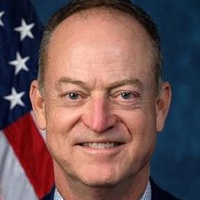
Mark Messmer
Representative
IN
Mark Messmer
Representative
IN
The Child Care Payment Integrity and Fraud Accountability Act of 2026 mandates that states submit annual reports detailing improper payments within their child care programs. This legislation requires states to categorize and quantify these payments—including suspected fraud, verified fraud, and administrative errors—to improve transparency and oversight.
This bill authorizes $1.8 million in annual funding from 2027 through 2031 to establish an International Military Education and Training program aimed at strengthening defense cooperation and interoperability between the United States and Greece.
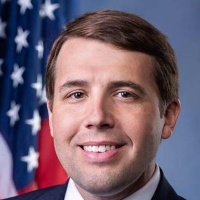
Chris Pappas
Representative
NH
Chris Pappas
Representative
NH
The U.S.-Greece Defense Cooperation Advancement Act establishes a dedicated International Military Education and Training (IMET) program to strengthen the strategic partnership between the two nations. This initiative aims to enhance military interoperability, professional development, and cooperation through authorized funding of $1.8 million annually from 2027 to 2031.
The No Waivers for Fraud Act of 2026 eliminates the Secretary of Health and Human Services' authority to waive financial penalties for states that fail to comply with Child Care and Development Block Grant requirements.
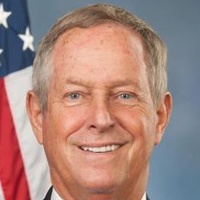
Joe Wilson
Representative
SC
Joe Wilson
Representative
SC
The No Waivers for Fraud Act of 2026 removes the authority of the Secretary of Health and Human Services to waive financial penalties imposed on states for non-compliance with the Child Care and Development Block Grant. This legislation ensures that states remain fully accountable for program violations by eliminating the Secretary's discretion to grant sanctions waivers.
The Closing the Provider Fraud Gap Act mandates a GAO study to evaluate and improve fraud prevention measures within federal early childhood education, child care, and nutrition programs.
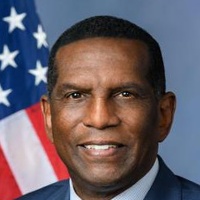
Clarence Owens
Representative
UT
Clarence Owens
Representative
UT
The Closing the Provider Fraud Gap Act of 2026 mandates a comprehensive GAO study to evaluate fraud prevention measures within federal early childhood education, child care, and nutrition programs. This legislation aims to assess the effectiveness of current oversight and data usage in identifying provider-related fraud. Ultimately, the resulting report will provide Congress with actionable recommendations to strengthen program integrity and accountability.
This bill establishes a mandatory triennial review process for states receiving Child Care and Development Block Grant funds to identify and increase oversight of high-risk programs.
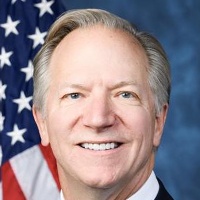
Robert Onder
Representative
MO
Robert Onder
Representative
MO
The Child Care Integrity Monitoring Act of 2026 establishes a mandatory, triennial review process for states receiving Child Care and Development Block Grant funds. This legislation ensures greater accountability by requiring the Secretary of Health and Human Services to identify and implement enhanced monitoring for states designated as "high risk" due to repeated noncompliance or unresolved audit findings.
This bill mandates the permanent debarment of child care providers and food program institutions from federal assistance programs upon a final determination of fraud.
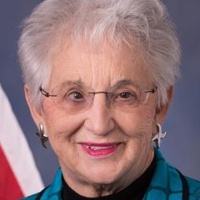
Virginia Foxx
Representative
NC
Virginia Foxx
Representative
NC
The Safeguarding Taxpayer Dollars in Child Care Act of 2026 mandates the permanent debarment of child care providers from federal assistance programs if they are found to have committed fraud. This legislation ensures cross-program accountability by requiring that providers barred from the Child Care and Development Block Grant or the Child and Adult Care Food Program are disqualified from both.
The CRACKDOWN Act of 2026 mandates corrective action plans and establishes conditional funding ineligibility for states that fail to reduce improper payment rates within the Child Care and Development Block Grant program.
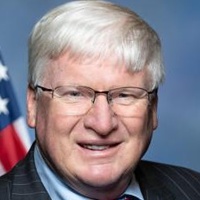
Glenn Grothman
Representative
WI
Glenn Grothman
Representative
WI
The CRACKDOWN Act of 2026 aims to reduce financial mismanagement in the Child Care and Development Block Grant program by requiring states with improper payment rates exceeding 5% to implement mandatory corrective action plans. States that fail to meet these standards for two consecutive years face temporary ineligibility for federal funding. This legislation ensures greater accountability and oversight to protect taxpayer resources.
The Stop Child Care Fraud Act of 2026 mandates that states implement enhanced internal controls, verification procedures, and fraud recovery processes to strengthen the integrity of child care assistance programs.
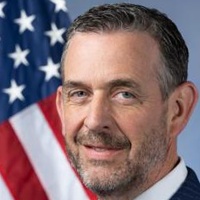
Michael Rulli
Representative
OH
Michael Rulli
Representative
OH
The Stop Child Care Fraud Act of 2026 strengthens oversight of child care assistance programs by requiring states to implement robust internal controls and accountability measures. This legislation mandates that states establish clear procedures for verifying eligibility, investigating fraudulent payments, and imposing sanctions on non-compliant providers or clients. Additionally, it encourages the integration of cross-agency data to better detect and prevent fraud within the system.
This bill supports small oil and gas producers by expanding tax depletion deductions for marginal wells and increasing the production threshold for qualifying properties.
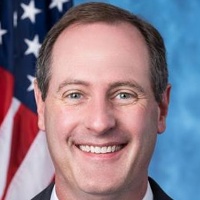
Tracey Mann
Representative
KS
Tracey Mann
Representative
KS
The Protecting America’s Small Oil and Gas Producers and Rural Jobs Act aims to support domestic energy production by modifying tax depletion rules for marginal oil and gas wells. The bill increases the daily production threshold for qualifying properties and adjusts the depletion deduction formula to provide greater financial relief when oil prices are low. Additionally, it removes the taxable income limitation for these deductions to help sustain operations and protect rural jobs.
This bill prohibits Members of Congress from receiving expedited airport security screening or participating in Trusted Traveler Programs based on their official position.
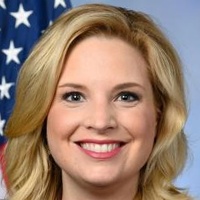
Ashley Hinson
Representative
IA
Ashley Hinson
Representative
IA
The End Special Treatment for Congress at Airports Act of 2026 prohibits the TSA from providing Members of Congress with expedited security screening or preferential access based on their official position. The bill further mandates that Members of Congress be ineligible for Trusted Traveler Programs, such as TSA PreCheck and Global Entry, ensuring they are subject to the same standard security procedures as the general public.
The Military Financial Literacy Act of 2026 mandates expanded, personalized financial and housing counseling services to better support the long-term financial stability of members of the Armed Forces.
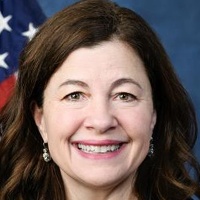
Kristen McDonald Rivet
Representative
MI
Kristen McDonald Rivet
Representative
MI
The Military Financial Literacy Act of 2026 expands and enhances financial and housing counseling services for members of the Armed Forces. The bill mandates a new, personalized one-on-one counseling program focused on credit management, budgeting, and homeownership, delivered through partnerships with qualified veteran-focused organizations. Additionally, it requires the Department of Defense to report on the program's effectiveness in improving financial stability and housing outcomes for service members.
This bill mandates federal serialization for 3D-printed and unserialized firearms, classifies assembly kits as firearms, and provides tax credits to licensed dealers to offset compliance costs.
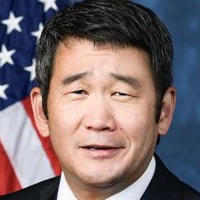
Dave Min
Representative
CA
Dave Min
Representative
CA
The Unserialized Firearm Harm Oversight and Serialization Act of 2026 classifies firearm assembly kits as firearms and mandates the serialization of 3D-printed and other non-traditionally manufactured firearms. The bill requires licensed dealers to serialize any unserialized firearms they take into inventory while establishing a federal tax credit to help offset the associated compliance costs. These measures aim to improve firearm tracking and oversight without overriding existing state laws.
The GUARDRAILS Act repeals the December 2025 executive order on artificial intelligence and prohibits the use of federal funds for its implementation.
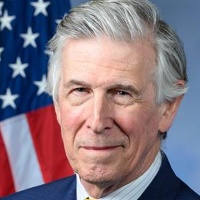
Donald Beyer
Representative
VA
Donald Beyer
Representative
VA
The GUARDRAILS Act repeals the December 11, 2025, Executive Order regarding national AI policy. This legislation prohibits the use of federal funds to implement or enforce the mandates set forth in that order.
This bill extends the surveillance authorities under Title VII of the Foreign Intelligence Surveillance Act (FISA) through October 20, 2027.
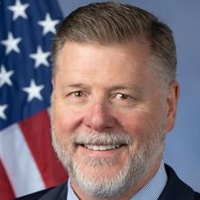
Eric Crawford
Representative
AR
Eric Crawford
Representative
AR
This bill extends the surveillance authorities granted under Title VII of the Foreign Intelligence Surveillance Act (FISA) of 1978 through October 20, 2027. It also ensures that the associated transition procedures remain in effect until that same date.
This bill requires Medicare to provide separate payments for certain high-cost cancer drugs in hospital outpatient departments rather than bundling them into a single service fee.
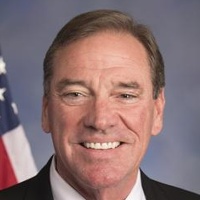
Neal Dunn
Representative
FL
Neal Dunn
Representative
FL
The Facilitating Access to Innovation in Cancer Care (FAIC) Act mandates that Medicare provide separate payments for high-cost cancer drugs administered in hospital outpatient departments, rather than bundling them into general service fees. By establishing a specific cost threshold for these treatments, the bill aims to improve reimbursement accuracy for innovative cancer therapies. To maintain fiscal responsibility, the legislation requires that these payment adjustments remain budget-neutral within the outpatient system.
The Expanding the Fast Track Act of 2026 lowers the minimum cost threshold for federal permitting improvement projects from $200 million to $50 million to accelerate infrastructure development.
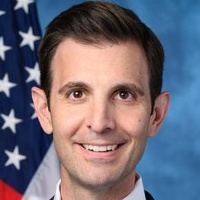
Chris Deluzio
Representative
PA
Chris Deluzio
Representative
PA
The Expanding the Fast Track Act of 2026 accelerates infrastructure development by lowering the cost threshold for "covered projects" from $200 million to $50 million. This amendment expands eligibility for federal permitting improvements, allowing a broader range of projects to benefit from streamlined review processes.
The DPA Transparency Act of 2026 prevents conflicts of interest by barring federal officials and their families from receiving Defense Production Act assistance, while increasing fraud penalties and strengthening oversight requirements.

Maxine Waters
Representative
CA
Maxine Waters
Representative
CA
The DPA Transparency Act of 2026 strengthens oversight of the Defense Production Act by prohibiting financial assistance to entities with significant ties to high-ranking government officials and their families. The bill also increases monetary penalties for violations and mandates the implementation of a comprehensive fraud risk management program. Additionally, it requires enhanced annual reporting to Congress to ensure greater accountability and transparency in federal transactions.
The 10 Years of ICE Funding Act appropriates over $105 billion to U.S. Immigration and Customs Enforcement for operations, procurement, and facility construction through fiscal year 2036.
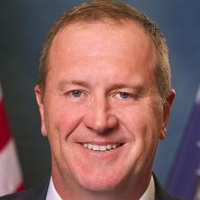
Eric Schmitt
Senator
MO
Eric Schmitt
Senator
MO
The 10 Years of ICE Funding Act appropriates over $105 billion to U.S. Immigration and Customs Enforcement (ICE) to support agency operations, facility construction, and equipment procurement. These funds are authorized for use through September 30, 2036, providing long-term financial stability for the agency's infrastructure and logistical needs.
This bill establishes a $106 million reserve fund to ensure the continued protection of high-level officials by the U.S. Secret Service during government funding lapses.
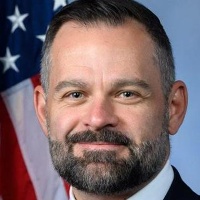
Cory Mills
Representative
FL
Cory Mills
Representative
FL
The United States Secret Service Reserve Fund Act of 2026 establishes a $106 million fund to ensure the agency can continue its essential protection duties during a government funding lapse. This reserve provides dedicated resources for up to 30 days of operations when regular appropriations are unavailable. Any unused funds must be returned to the Treasury by early 2027, accompanied by a detailed report to Congress on the fund's utilization.