Legislation
This bill appropriates over \$2.1 billion for the operations of the Legislative Branch for fiscal year 2027 while imposing new restrictions on technology purchases, spending transparency, and congressional pay raises.
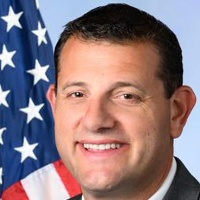
David Valadao
Representative
CA
David Valadao
Representative
CA
This bill makes appropriations to fund the operations of the entire Legislative Branch, including the House of Representatives, Capitol Police, and support agencies, for Fiscal Year 2027. It sets specific spending limits for salaries, security, and maintenance while including policy restrictions on technology purchases and contractor oversight. The legislation also establishes general provisions to enhance spending transparency and control costs, such as freezing congressional pay raises for the year.
This resolution reaffirms Congress's enduring support for the Taiwan Relations Act and the longstanding bipartisan policy guiding U.S.-Taiwan relations.
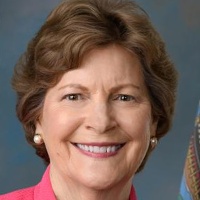
Jeanne Shaheen
Senator
NH
Jeanne Shaheen
Senator
NH
This resolution reaffirms strong, bipartisan Congressional support for the foundational **Taiwan Relations Act** and the longstanding U.S. policy framework regarding Taiwan. It emphasizes that the future of Taiwan must be determined peacefully, consistent with the Act, the Three Joint Communiqués, and the Six Assurances. The bill supports maintaining robust ties and ensuring Taiwan's ability to defend itself against coercion.
This bill updates federal law to require a warrant for government access to the content of stored electronic communications, regardless of how long they have been stored, while also clarifying provider disclosure rules.
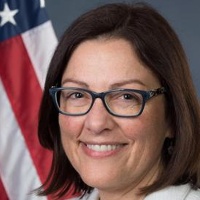
Suzan DelBene
Representative
WA
Suzan DelBene
Representative
WA
The Email Privacy Act updates federal law regarding electronic communication privacy and government access to stored digital data. This bill mandates that law enforcement must obtain a warrant to compel service providers to disclose the content of any stored electronic communication, regardless of how long it has been stored. It also clarifies the rules under which providers may voluntarily disclose customer information.
This bill mandates the Department of Defense to phase out the use of payment processing technology from retailers linked to countries of national security concern.

Ben Cline
Representative
VA
Ben Cline
Representative
VA
This bill, the Servicemember Payment Data Privacy and Security Act, directs the Department of Defense to review and phase out the use of payment processing equipment and services from retailers that rely on technology linked to designated countries of concern. The goal is to secure servicemember payment data by prohibiting contracts with retailers using this covered equipment starting in 2027. The Secretary of Defense must report to Congress on the implementation of these security measures.
This bill denies federal retirement benefits to Members of Congress convicted of specific sexual offenses or who flee prosecution for such crimes.
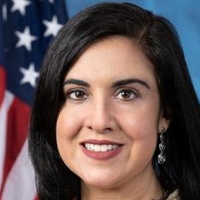
Nicole Malliotakis
Representative
NY
Nicole Malliotakis
Representative
NY
The End Government Pensions for Sexual Abusers Act of 2026 prohibits current or former Members of Congress convicted of specific sexual offenses from receiving federal retirement benefits. This denial of annuity or retired pay also applies to their survivors and beneficiaries upon conviction, whether the conviction occurs in the U.S. or abroad under comparable due process standards. Furthermore, the bill allows forfeited pension funds to be used to pay victims of the covered offenses.
This bill extends the Work Opportunity Tax Credit to employers who hire qualifying veterans for jobs in the renewable energy sector.
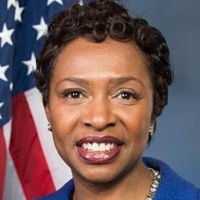
Yvette Clarke
Representative
NY
Yvette Clarke
Representative
NY
The Incentives for our Nation’s Veterans in Energy Sustainability Technologies (INVEST) Act extends the Work Opportunity Tax Credit to employers who hire qualified veterans for jobs in the renewable energy sector. This provision aims to incentivize the hiring of veterans whose military or educational backgrounds align with skills needed in sustainable energy fields. The bill also outlines provisions for compensating U.S. territories for any resulting revenue loss.
This bill expands housing assistance for qualified volunteer first responders by allowing income deductions for USDA loans and making them eligible for HUD's Good Neighbor Next Door home discount program.
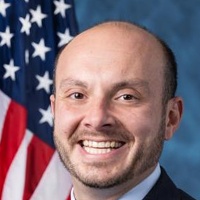
Andrew Garbarino
Representative
NY
Andrew Garbarino
Representative
NY
The Volunteer First Responder Housing Act aims to increase housing accessibility for dedicated volunteer first responders. This bill allows qualified volunteers to receive an $18,000 income deduction when applying for USDA Single Family Housing Guaranteed Loans. Furthermore, it makes these volunteers eligible for HUD's Good Neighbor Next Door Sales Program, allowing them to purchase homes at discounted prices. Eligibility requires continuous service, meeting minimum hour requirements, and holding current first responder certification.
This bill establishes a dedicated federal transit funding set-aside for medium-sized urban areas, distributed based on their performance against benchmarks set by the largest transit cities.
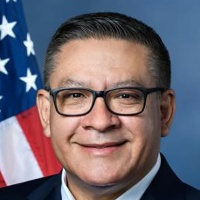
Salud Carbajal
Representative
CA
Salud Carbajal
Representative
CA
The Medium Transit Intensive Cities Authorization Act of 2026 establishes a new dedicated funding stream by setting aside 1.5% of certain federal transit formula grants for medium-sized urban areas (200,000 to 999,999 residents). This reserved funding will be distributed based on how well these cities meet or exceed performance benchmarks established by the largest urban transit systems. The goal is to incentivize efficiency by rewarding medium-sized areas that demonstrate strong transit performance across key metrics.
This Act prohibits private equity funds engaged in harmful practices, termed "vulture investors," from investing in or exploiting youth sports entities.
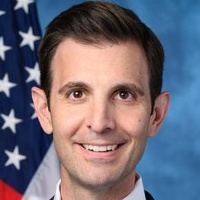
Chris Deluzio
Representative
PA
Chris Deluzio
Representative
PA
The Let Kids Play Act prohibits "vulture investors"—private equity firms with harmful track records—from investing in youth sports entities. It bans covered firms from using specific predatory business tactics, such as imposing junk fees or restricting competition, when involved in youth sports. The bill mandates that designated vulture investors must fully divest from these entities within two years. Enforcement is granted to the FTC and the Department of Justice, and the Act also allows private lawsuits for damages.
This act mandates that hospitals and birth centers notify parents of their options for the disposition of a fetus following a miscarriage or stillbirth.
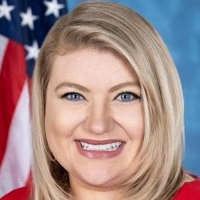
Katherine Cammack
Representative
FL
Katherine Cammack
Representative
FL
The Bereaved Parents Rights Act mandates that hospitals and birth centers must notify parents of their options for the disposition of a fetus following a miscarriage or stillbirth. This notice must be provided quickly, and facilities must honor the parents' written choice for private burial or cremation. The Act also establishes a right for individuals harmed by violations to seek legal relief.
This Act mandates the structural separation of vertically integrated health conglomerates by prohibiting combined ownership of pharmacies and insurance companies or Pharmacy Benefit Managers (PBMs), requiring divestment to restore competition.
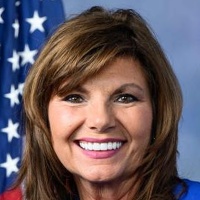
Diana Harshbarger
Representative
TN
Diana Harshbarger
Representative
TN
The Patients Before Monopolies Act aims to break up conflicts of interest within the healthcare industry by prohibiting entities from simultaneously owning a Pharmacy Benefit Manager (PBM) or insurer alongside a pharmacy. This legislation mandates the divestiture of such integrated businesses to foster competition and reduce prescription drug costs. It grants the FTC and DOJ significant authority to enforce this structural separation and allows civil actions, including by private citizens, to ensure compliance.
This act amends Title IX to explicitly define "sex," "female," and "male" based on biological characteristics.
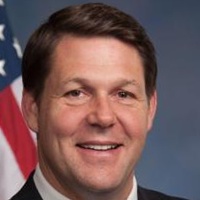
Jodey Arrington
Representative
TX
Jodey Arrington
Representative
TX
The Title IX Clarification Act of 2026 amends Title IX to explicitly define "sex," "female," and "male" based on an individual's biologically determined sex and reproductive system. This legislation clarifies the scope of sex-based protections under federal education law. The changes take effect immediately upon enactment.
This act reclassifies certain snow removal vehicles and machinery as emergency vehicles under the Clean Air Act.
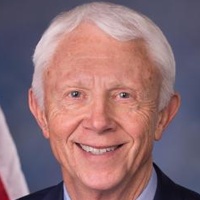
Jack Bergman
Representative
MI
Jack Bergman
Representative
MI
The PLOW Storms Act amends the Clean Air Act to officially recognize certain snow removal vehicles and machinery as "emergency vehicles." This designation ensures that essential winter storm response equipment is properly classified under federal regulations.
This bill expands the advanced manufacturing production tax credit to include more critical minerals, allows extraction costs to qualify for the credit, and removes the credit reduction for metallurgical coal.
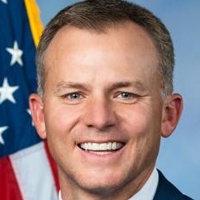
Blake Moore
Representative
UT
Blake Moore
Representative
UT
The Critical Mineral and Extraction Tax Parity Act expands the advanced manufacturing production tax credit to include several new critical minerals, such as copper, silicon, and uranium. The bill also allows extraction costs for domestically sourced ore to qualify for the credit when refined into these minerals. Finally, it repeals the existing credit reduction previously applied to metallurgical coal.
This Act temporarily sets the federal excise tax on gasoline and diesel to zero and reimburses the affected trust funds for lost revenue.
Nicole Malliotakis
Representative
NY
Nicole Malliotakis
Representative
NY
The Gas Tax Relief Act temporarily suspends the federal excise tax on gasoline and diesel fuel to zero upon enactment. This holiday lasts for a base period of 90 days, which the President can extend up to 215 days based on economic conditions. To prevent revenue loss, the Treasury will reimburse the Highway Trust Fund and the Leaking Underground Storage Tank Trust Fund for the foregone tax receipts.
This bill allows taxpayers to exclude certain charitable distributions made directly from employer-sponsored retirement plans from their gross income, similar to existing IRA rules.
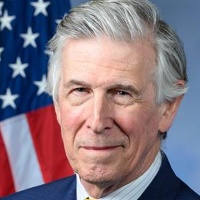
Donald Beyer
Representative
VA
Donald Beyer
Representative
VA
This bill amends the Internal Revenue Code to allow taxpayers to exclude certain charitable distributions made directly from employer-sponsored retirement plans from their gross income. This provision mirrors existing rules for IRA charitable distributions, applying to individuals aged 70½ and older. The exclusion is subject to the same annual dollar limit as IRA charitable distributions, and the bill also removes restrictions on charitable distributions from SEP and SIMPLE IRAs.
The GUIDANCE Act of 2026 restores 23 previously withdrawn consumer financial protection rules and guidance documents issued by the CFPB.
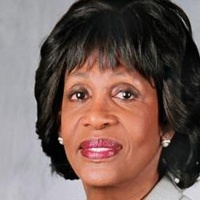
Maxine Waters
Representative
CA
Maxine Waters
Representative
CA
The GUIDANCE Act of 2026 aims to restore numerous consumer financial protection rules and guidance documents previously withdrawn or rescinded by the CFPB. This legislation reinstates 23 specific provisions covering areas like credit reporting, debt collection, lending discrimination, and data security. By reinstating these original rules, the Act seeks to strengthen consumer protections across various financial practices.
This bill mandates a comprehensive report detailing best practices for reducing mental health stigma and improving confidential support resources for law enforcement officers.
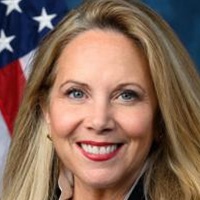
Laura Gillen
Representative
NY
Laura Gillen
Representative
NY
The Officer Wellness and Peer Support Act of 2026 mandates a comprehensive report from the Attorney General identifying best practices for improving mental health support within law enforcement. This report must focus on reducing stigma, encouraging resource utilization, and ensuring the confidentiality of services like peer counseling. The goal is to provide actionable recommendations for enhancing officer well-being across all levels of law enforcement.
This bill mandates the Access Board to establish and finalize accessibility standards for electric vehicle charging stations, adopting existing proposed guidelines if the deadline is missed.

Lauren Underwood
Representative
IL
Lauren Underwood
Representative
IL
The EV Charging Accessibility Act mandates the Access Board to finalize accessibility standards for electric vehicle (EV) charging stations based on existing proposed guidelines within 18 months. If the deadline is missed, the proposed rule automatically becomes law. Following finalization, relevant agencies must adopt these accessibility guidelines into their regulations.
This bill formally recognizes the 1885 Rock Springs Chinese Massacre as a deadly act of anti-Chinese violence, honors the victims, and encourages education and preservation of this history.
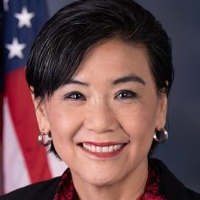
Judy Chu
Representative
CA
Judy Chu
Representative
CA
This bill formally recognizes the 1885 Rock Springs Chinese Massacre as a deadly act of anti-Chinese violence in U.S. history. It honors the murdered Chinese immigrant workers and condemns the racist mob violence and subsequent failure to hold perpetrators accountable. Furthermore, the resolution encourages education and the preservation of the massacre site to ensure this history is not erased.