Legislative Activity
Track George's sponsored bills, co-sponsored legislation, and voting record
The STOP CSAM Act of 2025 strengthens protections for child victims in federal court, mandates technology companies to report suspected child sexual exploitation, and expands civil remedies for victims against perpetrators and online platforms.
Barry Moore
Representative
AL
Barry Moore
Representative
AL
The STOP CSAM Act of 2025 significantly strengthens protections for child victims and witnesses in federal court by expanding definitions of harm and restricting the public disclosure of their identities. It mandates new, strict reporting duties for tech providers regarding child sexual exploitation material, backed by substantial criminal and civil penalties for non-compliance. Furthermore, the Act creates broad new civil remedies allowing victims to sue responsible online platforms and app stores for damages related to exploitation that occurred during their childhood. Finally, it improves restitution procedures, particularly for vulnerable victims, while ensuring existing state and tribal protections remain intact.
This Act mandates that most private firearm transfers must go through a licensed dealer to ensure background checks are performed on all purchasers.
Mike Thompson
Representative
CA
Mike Thompson
Representative
CA
The Bipartisan Background Checks Act of 2025 aims to strengthen existing federal background check systems to prevent prohibited persons from acquiring firearms. This bill primarily mandates that most private firearm transfers must be facilitated through a licensed dealer who will conduct a background check. The legislation includes specific exceptions for family gifts, law enforcement, and temporary transfers under emergency circumstances.
This Act officially expands the boundaries of the Santa Monica Mountains National Recreation Area to include the Rim of the Valley Unit, ensuring newly acquired lands are managed under existing recreation area laws while protecting existing utility operations.
Laura Friedman
Representative
CA
Laura Friedman
Representative
CA
The Rim of the Valley Corridor Preservation Act officially expands the boundaries of the Santa Monica Mountains National Recreation Area to include the newly designated Rim of the Valley Unit. This legislation ensures that any newly acquired land within this unit will be managed under the existing rules of the National Recreation Area. Furthermore, the Act allows existing utility and water facilities within the expanded area to continue operations while requiring them to minimize damage to natural resources.
This bill increases the monthly housing stipend for veterans pursuing education solely through distance learning under the Post-9/11 Educational Assistance Program.
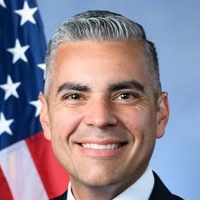
Juan Ciscomani
Representative
AZ
Juan Ciscomani
Representative
AZ
The Expanding Access for Online Veteran Students Act aims to increase financial support for veterans pursuing education entirely online. This bill eliminates the current 50% cap on the monthly housing stipend for eligible Post-9/11 GI Bill recipients enrolled more than half-time in distance learning programs. If enacted, this change would allow these students to receive the full monthly housing allowance rate, effective for terms beginning on or after August 1, 2025.
This bill mandates a comprehensive economic study to quantify the financial costs of extreme heat across health, property, labor, and infrastructure sectors.
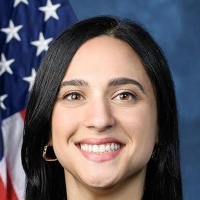
Yassamin Ansari
Representative
AZ
Yassamin Ansari
Representative
AZ
The Extreme Heat Economic Study Act of 2025 mandates a comprehensive study, led by NOAA, to quantify the full financial costs of extreme heat events in the United States. This study must analyze impacts across health, property damage, labor productivity, and critical infrastructure like energy and agriculture. The final report will recommend a national system for tracking and publicly reporting these economic losses within four years of enactment.
The Excess Urban Heat Mitigation Act of 2025 establishes a grant program to fund projects, prioritizing low-income areas, that reduce extreme heat in urban environments through measures like tree planting and installing cooling infrastructure.
Yassamin Ansari
Representative
AZ
Yassamin Ansari
Representative
AZ
The Excess Urban Heat Mitigation Act of 2025 establishes a new grant program to combat dangerous urban heat islands, which disproportionately affect low-income and minority communities. This program will fund eligible entities for projects like tree planting, installing cool pavements, and establishing cooling centers. At least 75% of the annual funding must target designated low-income census tracts, ensuring resources are directed to the most vulnerable areas. The Act authorizes $30 million annually through fiscal year 2033 to support these essential mitigation efforts.
This Act formally establishes the science-based Advisory Committee on Immunization Practices (ACIP) and mandates that changes to the National Vaccine Injury Compensation Program's injury table must be supported by a preponderance of the best available scientific evidence.
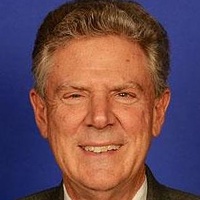
Frank Pallone
Representative
NJ
Frank Pallone
Representative
NJ
The Family Vaccine Protection Act formally establishes the Advisory Committee on Immunization Practices (ACIP) into law, requiring all its vaccine recommendations to be based on the preponderance of the best available, peer-reviewed scientific evidence. This legislation mandates strict procedures for the CDC Director to adopt or reject ACIP advice, including notifying Congress if a recommendation is rejected. Furthermore, the Act requires that any changes to the National Vaccine Injury Compensation Program's injury table must also be supported by strong scientific evidence.
The Integrity in Government Act of 2025 establishes an Inspector General for the Executive Office of the President and strengthens job protections for most Inspectors General against removal without cause.
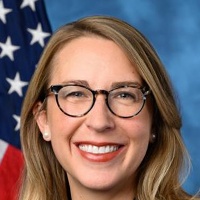
Hillary Scholten
Representative
MI
Hillary Scholten
Representative
MI
The Integrity in Government Act of 2025 aims to strengthen government oversight by establishing an Inspector General for the Executive Office of the President. This bill significantly reforms the system by implementing new protections to ensure Inspectors General can perform their duties without undue political interference. Specifically, it restricts the removal of most presidential appointees to instances of inefficiency, misconduct, or neglect of duty.
This Act establishes a coordinated federal response to extreme heat by creating an interagency committee and a National Integrated Heat Health Information System within NOAA to reduce heat-related health risks.
Yassamin Ansari
Representative
AZ
Yassamin Ansari
Representative
AZ
The Coordinated Federal Response to Extreme Heat Act of 2025 establishes a unified federal approach to mitigating the health and safety risks posed by extreme heat. It creates an Interagency Committee within NOAA to coordinate efforts across numerous federal departments and mandates the development of a National Integrated Heat Health Information System (NIHHIS). This new system will provide open access to data, forecasts, and science-backed tools to improve national preparedness and response to dangerous heat events. The Act authorizes $5 million annually through fiscal year 2029 to support these initiatives.
This act prohibits individuals convicted of specific financial and corruption-related crimes as a CEO from serving in the executive branch of the government.
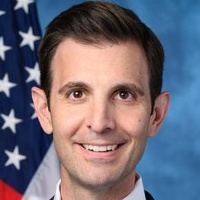
Chris Deluzio
Representative
PA
Chris Deluzio
Representative
PA
The No Corporate Crooks Act prohibits individuals convicted of specific financial and white-collar crimes (such as fraud, embezzlement, and tax evasion) while serving as a CEO from being appointed to positions within the executive branch. This legislation aims to prevent corporate executives convicted of serious offenses from holding government roles. Any individual found in violation of this restriction must be immediately removed from their executive branch service.
This Act modernizes FEMA's approach to extreme weather by establishing a panel to review disaster incident periods, expanding funding eligibility for heat and cold response projects, and mandating new guidance and a comprehensive study on the impacts of extreme temperatures.
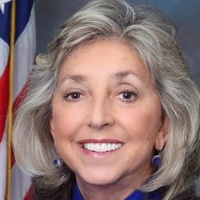
Dina Titus
Representative
NV
Dina Titus
Representative
NV
The Extreme Weather and Heat Response Modernization Act aims to update FEMA's approach to handling disasters, particularly those involving extreme heat and cold. It establishes a panel to review and modernize the definition of disaster "incident periods" to better account for slow-onset and complex weather events. Furthermore, the bill expands funding eligibility for mitigation projects focused on extreme heat and mandates comprehensive studies and new guidance to integrate extreme temperature preparedness across all FEMA operations.
This Act mandates that colleges and universities must print or post essential suicide prevention contact information, including the 988 Lifeline, on student IDs or websites.
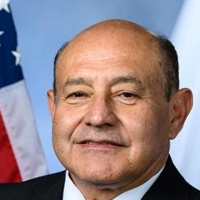
J. Correa
Representative
CA
J. Correa
Representative
CA
The Improving Mental Health Access for Students Act mandates that colleges and universities must prominently display essential mental health and suicide prevention contact information on student ID cards or official websites. This includes the 988 Suicide and Crisis Lifeline, the Crisis Text Line, and the campus mental health center. These requirements take effect one year after the Act is signed into law.
This resolution recognizes the vital economic and educational contributions of California's public higher education systems—UC, CSU, and CCC—and reaffirms commitment to their support.
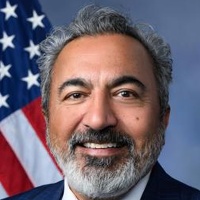
Ami Bera
Representative
CA
Ami Bera
Representative
CA
This resolution formally recognizes the critical importance of California's three public higher education systems—UC, CSU, and CCC—to the state's economy and workforce development. It highlights the massive scale of these institutions and their vital role in providing access and economic mobility for millions of students. Ultimately, the measure reaffirms the United States' commitment to supporting these essential public educational pillars.
The Mental Health in Schools Excellence Program Act of 2025 establishes a matching-funds program to help graduate schools reduce the cost of attendance for students who commit to working as school-based mental health service providers.
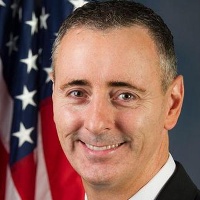
Brian Fitzpatrick
Representative
PA
Brian Fitzpatrick
Representative
PA
The Mental Health in Schools Excellence Program Act of 2025 establishes a new federal program designed to increase the number of mental health professionals working in schools. This program creates matching grants where the government helps cover graduate students' educational costs if their institutions agree to match the funding dollar-for-dollar. The goal is to incentivize graduate schools to support students who commit to careers in school-based mental health services, with specific outreach targeting low-income students.
This Act restricts the use of federal funds for a U.S. nuclear first strike unless the President deems it necessary and Congress is notified seven days prior, except in cases of declared war, prior nuclear attack, or launch-on-warning scenarios.
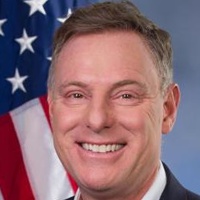
Scott Peters
Representative
CA
Scott Peters
Representative
CA
The Nuclear First-Strike Security Act of 2025 places strict limitations on the use of federal funds to initiate a nuclear attack. Under this Act, a first-use nuclear strike requires a presidential determination that it is in the U.S. best interest, followed by a mandatory seven-day notification to top Congressional leaders. This notification requirement is waived only in cases of a formal declaration of war, a prior nuclear attack on the U.S. or an ally, or during a confirmed launch-on-warning scenario.
This Act establishes a grant program for installing suicide deterrents on public structures and clarifies funding eligibility for bridge safety barriers.
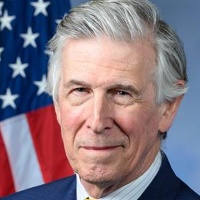
Donald Beyer
Representative
VA
Donald Beyer
Representative
VA
The Barriers to Suicide Act of 2025 establishes a new grant program through the Department of Transportation to fund the installation of suicide deterrents like nets and barriers at high-risk locations such as bridges and rail stations. The bill also amends existing law to explicitly allow National Highway System funds to be used for these safety barriers on bridges. Finally, it mandates a study on the effectiveness of suicide prevention measures for structures other than bridges.
This act increases the penalty-free withdrawal limit from retirement accounts for first-time homebuyers from $\$10,000$ to $\$50,000$.
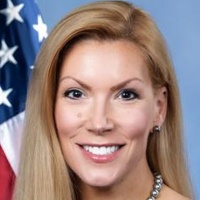
Beth Van Duyne
Representative
TX
Beth Van Duyne
Representative
TX
The Uplifting First-Time Homebuyers Act of 2025 significantly increases the penalty-free withdrawal limit from retirement accounts for first-time homebuyers. This legislation raises the maximum allowable distribution from $\$10,000$ to $\$50,000$. This change is designed to provide greater financial flexibility for individuals purchasing their first home, taking effect for tax years beginning after December 31, 2024.
This Act reinstates and extends the ability for taxpayers to deduct personal casualty losses from unexpected events like crimes, scams, and disasters without previous limitations.
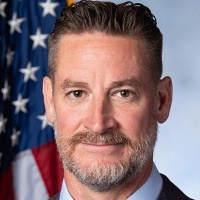
W. Steube
Representative
FL
W. Steube
Representative
FL
The Tax Relief for Victims of Crimes, Scams, and Disasters Act reinstates and removes limitations on the federal income tax deduction for personal casualty losses resulting from unexpected events like fires or floods. This legislation also extends the deadline for taxpayers to file claims for refunds related to these casualty loss deductions for past tax years. These changes apply to tax years beginning after December 31, 2017.
This resolution expresses support for Wildfire Preparedness Week to educate the public on fire safety, promote preventative measures, and raise awareness about the dangers and scale of wildfires.
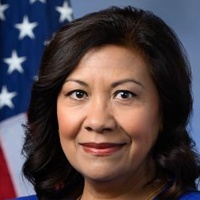
Norma Torres
Representative
CA
Norma Torres
Representative
CA
This resolution expresses strong support for designating May 4 through May 10, 2025, as Wildfire Preparedness Week. The measure aims to raise public awareness about the dangers of wildfires and promote essential fire safety and community preparedness education. It highlights the need for proactive measures, such as evacuation planning and better land management, to mitigate the growing threat posed by these destructive events.
This act establishes research grants and training programs to develop and implement PFAS-free, next-generation turnout gear to protect firefighters from occupational illness and injury.

Debbie Dingell
Representative
MI
Debbie Dingell
Representative
MI
The PFAS Alternatives Act aims to protect firefighters by funding research and development for next-generation turnout gear that eliminates harmful PFAS chemicals. The bill establishes grants through NIOSH to create safer, PFAS-free protective equipment and separate funding for training programs on the proper care of this new gear. Ultimately, this legislation seeks to reduce occupational illness and injury among fire and EMS personnel.