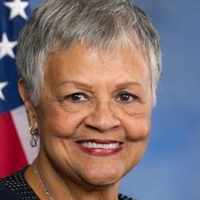
Legislative Activity
Track Bonnie's sponsored bills, co-sponsored legislation, and voting record
This Act establishes a national strategy to combat mental health stigma and improve behavioral health services, research, and workforce diversity within Asian American, Native Hawaiian, and Pacific Islander (AANHPI) communities.
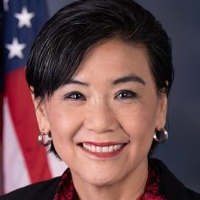
Judy Chu
Representative
CA
Judy Chu
Representative
CA
The Stop Mental Health Stigma in Our Communities Act of 2025 aims to address the significant mental health disparities and high suicide rates within Asian American, Native Hawaiian, and Pacific Islander (AANHPI) communities. The bill mandates the creation of a national behavioral health outreach strategy tailored to the diverse AANHPI population to reduce stigma and increase culturally competent care. Furthermore, it requires comprehensive systematic reviews and reports on the AANHPI youth mental health crisis and strategies to increase the number of AANHPI behavioral health professionals.
The Truth in Tariffs Act requires businesses, excluding small businesses, to clearly display the portion of a product's price attributable to covered tariffs imposed on or after January 20, 2025.
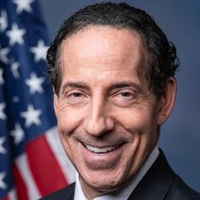
Jamie Raskin
Representative
MD
Jamie Raskin
Representative
MD
The Truth in Tariffs Act mandates that businesses clearly display the portion of a product's price attributable to "covered tariffs" imposed on or after January 20, 2025. This transparency requirement applies to sales made 30 days after enactment, excluding small business concerns. The Federal Trade Commission (FTC) is tasked with enforcement, treating non-compliance as an unfair or deceptive business practice.
This resolution officially recognizes and celebrates Asian American, Native Hawaiian, and Pacific Islander Heritage Month to honor their significant contributions to U.S. history while acknowledging past hardships and ongoing challenges.

Grace Meng
Representative
NY
Grace Meng
Representative
NY
This resolution officially recognizes and celebrates Asian American, Native Hawaiian, and Pacific Islander (AANHPI) Heritage Month every May. It highlights the significant historical contributions of these communities to the United States, while also acknowledging past hardships and ongoing challenges. The bill encourages the nation to observe this month to appreciate the diversity and strength AANHPI individuals bring to the country.
The Protecting our Students in Schools Act of 2025 nationwide prohibits corporal punishment in federally funded schools while establishing grants to help states implement positive behavior support systems.
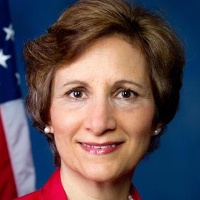
Suzanne Bonamici
Representative
OR
Suzanne Bonamici
Representative
OR
The Protecting our Students in Schools Act of 2025 establishes a nationwide prohibition on corporal punishment in all federally funded educational programs. It creates strong enforcement mechanisms, allowing parents to sue and authorizing the Attorney General to intervene in cases of abuse. Furthermore, the Act establishes a grant program to incentivize states to adopt positive behavior support systems to reduce harsh disciplinary actions and improve school climate.
This Act reinstates and provides backpay to unfairly terminated CDC employees and mandates regular reporting from the CDC on employee dismissals.
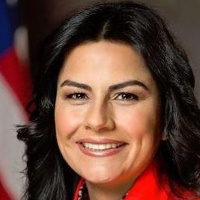
Nanette Barragán
Representative
CA
Nanette Barragán
Representative
CA
The Protect our Public Health Workforce Act addresses the unfair removal of certain CDC federal employees between January 20, 2025, and the enactment of this law. It mandates the reinstatement or placement of these affected employees into equivalent positions, along with providing full backpay. Furthermore, the CDC must regularly report detailed information regarding employee removals to relevant Congressional committees until January 20, 2029.
This bill expands the definition of highly compensated individuals whose executive pay is not tax-deductible for corporations, applying to tax years beginning after December 31, 2024.

Lloyd Doggett
Representative
TX
Lloyd Doggett
Representative
TX
The Stop Subsidizing Multimillion Dollar Corporate Bonuses Act expands the tax code rules that limit corporate deductions for excessive executive compensation. This bill broadens the definition of "covered individuals" whose high pay is subject to these limits, including certain past top executives. The changes aim to prevent companies from deducting multi-million dollar bonuses for highly compensated employees and grant the IRS authority to issue clarifying regulations.
This resolution recognizes the impact of menstrual stigma and expresses support for designating May as National Menstrual Health Awareness Month to promote education, research, and equitable access to care.
Grace Meng
Representative
NY
Grace Meng
Representative
NY
This resolution expresses strong support for designating May as "National Menstrual Health Awareness Month." It recognizes the significant impact that menstruation stigma has on the health, education, and economic participation of women and people who menstruate. The bill advocates for increased education, better access to care for menstrual conditions, and greater clinical research into women's reproductive health.
This bill bans the manufacture, sale, and transfer of specific semiautomatic assault weapons and large-capacity ammunition feeding devices while grandfathering existing possessions and establishing new transfer requirements.
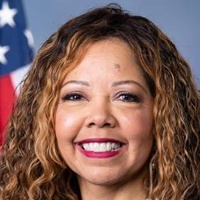
Lucy McBath
Representative
GA
Lucy McBath
Representative
GA
The Assault Weapons Ban of 2025 comprehensively defines and bans the manufacture, sale, and transfer of specific semiautomatic assault weapons and large capacity ammunition feeding devices. The bill grandfathers existing weapons but imposes new requirements for their secure storage and mandates dealer involvement for future private transfers. It also allows federal grant money to be used by states for buy-back programs targeting these banned items.
The Better CARE for Animals Act of 2025 strengthens the enforcement of the Animal Welfare Act by expanding investigative authority, establishing new civil penalties up to \$10,000 per day, and explicitly granting the Attorney General power to file civil actions, including seeking seizure and forfeiture of animals.
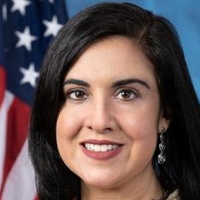
Nicole Malliotakis
Representative
NY
Nicole Malliotakis
Representative
NY
The Better CARE for Animals Act of 2025 significantly strengthens enforcement of the Animal Welfare Act by clarifying definitions and expanding the scope of investigations. It grants the Attorney General explicit authority to file civil actions seeking penalties up to $10,000 per day, and mandates that collected fines help cover temporary animal care costs. The bill also requires the Secretary of Agriculture and the Attorney General to establish a formal agreement for coordinated enforcement.
The REHIRE Act grants a special hiring preference, including five extra points, to certain Federal employees involuntarily removed between January 1, 2025, and January 1, 2027, provided they were not removed for misconduct or poor performance.
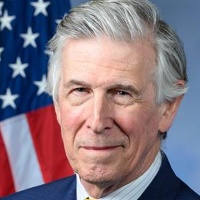
Donald Beyer
Representative
VA
Donald Beyer
Representative
VA
The REHIRE Act establishes a temporary hiring preference for certain Federal employees involuntarily removed from their positions between January 1, 2025, and January 1, 2027. These eligible former employees will receive the equivalent of a "preference eligible" status plus five extra points on their earned scores when applying for competitive service jobs. This hiring advantage excludes those removed for misconduct, poor performance, or from political positions, and it expires five years after enactment.
The PREP Act shortens the initial probationary period for federal employees, often to six months, when they are transferring from another executive branch civil service position.
Donald Beyer
Representative
VA
Donald Beyer
Representative
VA
The Probationary Reduction for Employee Protections (PREP) Act shortens the initial probationary periods for new federal employees. Specifically, it limits the trial period to a maximum of six months for those transitioning directly from another executive branch civil service job. For other new hires, the maximum probationary period will be 12 months across competitive service, excepted service, and Senior Executive Service appointments.
This bill establishes a universal, comprehensive national health insurance program called "Medicare for All" that eliminates patient cost-sharing and transitions the nation away from private insurance duplication.

Pramila Jayapal
Representative
WA
Pramila Jayapal
Representative
WA
The Medicare for All Act establishes a universal, nationwide health insurance program providing comprehensive coverage for all U.S. residents with no out-of-pocket costs. It fundamentally restructures healthcare financing by implementing global budgets for institutions and a new fee schedule for individuals, while phasing out existing federal programs like Medicare and Medicaid. The legislation also sets strict quality standards for providers and creates a dedicated Trust Fund to manage the system's finances.
This bill repeals the Arctic National Wildlife Refuge oil and gas program and designates over 1.5 million acres of the refuge as protected wilderness.
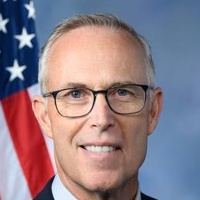
Jared Huffman
Representative
CA
Jared Huffman
Representative
CA
The Arctic Refuge Protection Act officially repeals the previous law authorizing oil and gas leasing in the Arctic National Wildlife Refuge. This legislation simultaneously designates approximately 1.56 million acres within the Refuge as protected wilderness under the National Wilderness Preservation System. The Secretary of the Interior is now required to manage this newly designated land according to strict wilderness preservation standards.
The Equality Act comprehensively prohibits discrimination based on sex, sexual orientation, and gender identity across key areas including public accommodations, employment, housing, credit, and jury service.
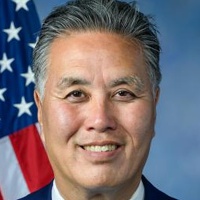
Mark Takano
Representative
CA
Mark Takano
Representative
CA
The Equality Act comprehensively expands federal civil rights protections against discrimination based on sex, sexual orientation, and gender identity across key areas of American life. It amends existing laws to prohibit discrimination in public accommodations, housing, credit, employment, and federal funding. The purpose of the bill is to provide consistent, explicit, and comprehensive remedies for individuals facing bias in these essential sectors.
This Act mandates the CPSC to quickly establish federal safety standards for lithium-ion batteries used in small electric vehicles and personal mobility devices based on existing industry guidelines.

Ritchie Torres
Representative
NY
Ritchie Torres
Representative
NY
The Setting Consumer Standards for Lithium-Ion Batteries Act mandates the Consumer Product Safety Commission (CPSC) to rapidly adopt key industry standards as federal safety rules for lithium-ion batteries in small electric vehicles and personal mobility devices. This legislation ensures these standards automatically update to the newest industry revisions unless the CPSC finds a revision compromises safety. Furthermore, the CPSC must report to Congress five years after enactment regarding battery hazards and compliance.
This Act authorizes the President to impose sanctions, including asset freezes and visa bans, on foreign individuals involved in violence, property destruction, or displacement in the West Bank.
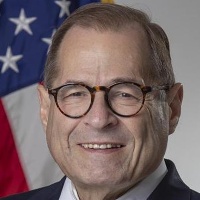
Jerrold Nadler
Representative
NY
Jerrold Nadler
Representative
NY
The West Bank Violence Prevention Act of 2025 declares extreme settler violence and displacement in the West Bank a threat to U.S. national security interests. This Act mandates the President to impose sanctions, including asset freezes and visa bans, on foreign individuals responsible for undermining peace and stability in the region. The Treasury Department must report to Congress on the implementation of these sanctions every 90 days.
This resolution supports designating Black Maternal Health Week to highlight the urgent need to address the severe and preventable maternal health crisis disproportionately affecting Black women and birthing people in the United States.
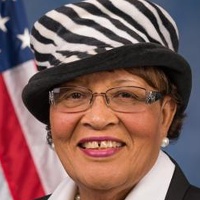
Alma Adams
Representative
NC
Alma Adams
Representative
NC
This resolution officially designates the week of April 11–17, 2025, as the eighth annual Black Maternal Health Week to raise national awareness of the severe maternal and reproductive health crisis facing Black women and birthing people. It highlights the unacceptable disparity where Black women are significantly more likely to die from pregnancy-related causes, emphasizing that most of these deaths are preventable. The bill calls for targeted investments, policy changes addressing systemic barriers, and the centering of Black women's voices in developing solutions to achieve equitable maternal health outcomes.
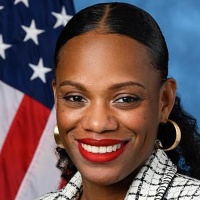
The Oligarch Act of 2025 establishes a new federal wealth tax on individuals and trusts based on their net worth above an annually adjusted threshold, with rates ranging from 2% to 8%.
Summer Lee
Representative
PA
Summer Lee
Representative
PA
The Oligarch Act of 2025 establishes a new federal Wealth Tax applied annually to the net worth of high-net-worth individuals and trusts. This tax features progressive rates ranging from 2% to 8% based on the taxpayer's net worth relative to a dynamic threshold amount. The legislation mandates rigorous valuation rules and includes specific enforcement mechanisms, such as required audits and enhanced penalties for significant asset undervaluation.
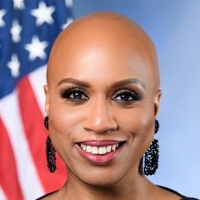
This Act establishes a new CDC center to declare racism a public health crisis and funds research and programs to dismantle structural racism and study the health impacts of police violence.
Ayanna Pressley
Representative
MA
Ayanna Pressley
Representative
MA
The Anti-Racism in Public Health Act of 2025 establishes a new National Center on Antiracism and Health within the CDC to declare racism a public health crisis and develop policies to dismantle structural inequities. It also creates a dedicated program within the CDC to research the health consequences of police violence and develop public health strategies to prevent related injuries and deaths. Both initiatives mandate extensive data collection, research funding, and public education to promote racial equity in health outcomes.
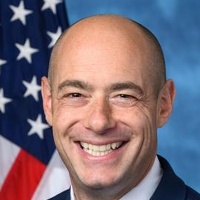
This act increases federal reimbursement rates by 10 cents per meal or snack served through the Child and Adult Care Food Program and streamlines payment calculations for day care homes.
Greg Landsman
Representative
OH
Greg Landsman
Representative
OH
The Child Care Nutrition Enhancement Act of 2025 increases federal support for child care nutrition programs. This bill mandates an additional 10 cents in reimbursement for every meal or snack served through the Child and Adult Care Food Program (CACFP). It also streamlines the calculation methods for payments made to family and group day care homes participating in the program.