
Legislative Activity
Track Robert's sponsored bills, co-sponsored legislation, and voting record
Permanently allows individuals with health savings accounts (HSAs) to utilize telehealth services without needing to meet their deductible.
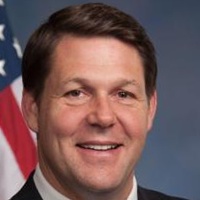
Jodey Arrington
Representative
TX
Jodey Arrington
Representative
TX
The "Telehealth Expansion Act of 2025" permanently allows individuals with Health Savings Accounts (HSAs) to access telehealth services without needing to meet their deductible first, starting after December 31, 2024. This removes a barrier to accessing telehealth services for HSA holders.
The "Rebuild America’s Health Care Schools Act of 2025" expands Medicare coverage to include all direct and indirect costs hospitals incur for nursing and allied health education programs, ensuring better funding and preventing recoupment of previously covered costs.
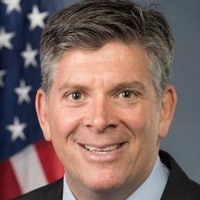
Darin LaHood
Representative
IL
Darin LaHood
Representative
IL
The "Rebuild America’s Health Care Schools Act of 2025" updates how Medicare reimburses hospitals for the costs of running nursing and allied health education programs. It broadens the definition of "reasonable costs" to include both direct and indirect expenses, regardless of whether they are incurred directly by the hospital or through related entities. The Act also requires the Secretary of Health and Human Services to issue rules implementing these changes and to refund hospitals for past cost reductions that would now be allowable. This aims to provide greater financial support for these crucial healthcare education programs.
This Act directs the Architect of the Capitol to create, bury, and seal a time capsule on the U.S. Capitol grounds to commemorate the nation's 250th anniversary, to be opened in 2276.
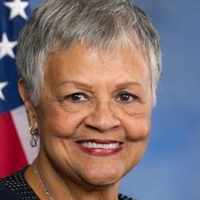
Bonnie Watson Coleman
Representative
NJ
Bonnie Watson Coleman
Representative
NJ
The Semiquincentennial Congressional Time Capsule Act directs the Architect of the Capitol to create and bury a time capsule on the U.S. Capitol grounds to commemorate the nation’s 250th anniversary. Curated by congressional leadership, the capsule will contain historical items and legislative milestones to be preserved for future generations. It is scheduled to be sealed on July 4, 2026, and reopened by Congress on July 4, 2276.
This resolution condemns the Iranian regime’s terrorism and human rights abuses while affirming support for the Iranian people’s right to establish a democratic, secular, and non-nuclear republic.
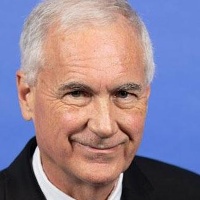
Tom McClintock
Representative
CA
Tom McClintock
Representative
CA
This resolution condemns the Iranian regime for its ongoing human rights abuses, state-sponsored terrorism, and regional instability. It expresses strong support for the Iranian people's struggle for a democratic, secular, and non-nuclear republic. Furthermore, the bill advocates for international accountability for the regime's crimes and calls for the protection of Iranian political refugees.
To award a Congressional Gold Medal to the 761st Tank Battalion, the first Black soldiers to serve in an American armored unit, for their valor and crucial contributions to the Allied victory in Europe.
Gary Palmer
Representative
AL
Gary Palmer
Representative
AL
This bill authorizes the Speaker of the House and the President pro tempore of the Senate to award a Congressional Gold Medal to the 761st Tank Battalion, also known as the "Black Panthers," in recognition of their courageous service and crucial contributions during World War II. The medal will be given to the National Museum of African American History and Culture for display, honoring the 761st as the first Black soldiers to serve in an American armored unit and their significant role in the Allied victory in Europe. The bill also allows for the creation and sale of bronze duplicates of the medal to support the United States Mint Public Enterprise Fund.
This bill establishes the Fort Monroe National Historical Park in Virginia to preserve and interpret its historical, natural, and recreational resources, including its significance in early American history, the Civil War, and as a site of the Contraband Decision.
Robert Scott
Representative
VA
Robert Scott
Representative
VA
The "Fort Monroe National Historical Park Establishment Act" establishes the Fort Monroe National Historical Park, incorporating the former Fort Monroe National Monument, to preserve and interpret its significant historical, natural, and recreational resources. It defines the park's boundaries and authorizes the Secretary of the Interior to acquire land within these boundaries. The Act also outlines administrative guidelines, including cooperative agreements with the Commonwealth of Virginia, to ensure the preservation and appropriate use of historic resources within and near the park.
The "Accelerating Kids’ Access to Care Act of 2025" streamlines Medicaid and CHIP enrollment for out-of-state providers, increasing healthcare access for children.
Lori Trahan
Representative
MA
Lori Trahan
Representative
MA
The "Accelerating Kids Access to Care Act of 2025" streamlines the enrollment process for out-of-state healthcare providers in Medicaid and CHIP, ensuring children under 21 have access to care from eligible providers across state lines. By reducing administrative burdens and unnecessary screening requirements, the Act aims to improve healthcare access for children while maintaining necessary safeguards against fraud and abuse. Participating providers will be enrolled for a 5-year period, and the changes will take effect three years after the Act's enactment.
The "Sporting Goods Excise Tax Modernization Act" clarifies that marketplace providers are responsible for excise taxes on certain imported sporting goods sold through their platforms.
Jimmy Panetta
Representative
CA
Jimmy Panetta
Representative
CA
The "Sporting Goods Excise Tax Modernization Act" modifies excise tax regulations by treating marketplace providers as the importer and seller for excise tax purposes on taxable sporting goods sold through their platform if the goods are shipped from outside the U.S. This applies when the marketplace provider lists the product, collects payments, and the manufacturer is not the marketplace provider. The regulations will be applied to sales in calendar quarters starting 60 days after the enactment of this Act.
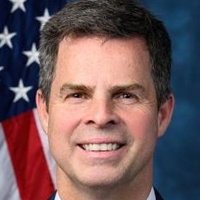
The "Agricultural and Forestry Hauling Efficiency Act" allows Virginia to issue special permits for heavier agricultural and forestry vehicles on the Interstate System, up to 90,000 pounds, to improve transportation efficiency.
John McGuire
Representative
VA
John McGuire
Representative
VA
The "Agricultural and Forestry Hauling Efficiency Act" enables Virginia to issue special permits for agricultural vehicles, allowing them to operate on the Interstate System with a weight of up to 90,000 pounds. These permits apply to vehicles transporting unprocessed agricultural crops or raw forest products.
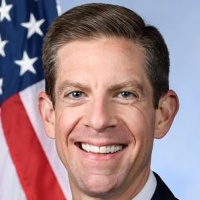
This bill expands Post-9/11 GI Bill eligibility to National Guard members performing specific full-time duties.
Mike Levin
Representative
CA
Mike Levin
Representative
CA
The Guard and Reserve GI Bill Parity Act of 2025 expands Post-9/11 GI Bill eligibility to National Guard members performing specific full-time duties. This expansion applies to service performed on or after September 11, 2001. The changes will take effect one year after the enactment of this Act, with the time limitation for using educational assistance applied as if enacted immediately after the Post-9/11 Veterans Educational Assistance Act of 2008.
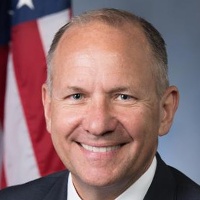
The "ENABLE Act" permanently extends provisions that increase contributions to ABLE accounts, include ABLE contributions in retirement savings calculations, and allow penalty-free rollovers from 529 education savings accounts to ABLE accounts.
Lloyd Smucker
Representative
PA
Lloyd Smucker
Representative
PA
The ENABLE Act permanently extends provisions that allow for increased contributions to ABLE accounts, which are savings accounts for individuals with disabilities. It also allows penalty-free rollovers from 529 education savings accounts to ABLE accounts, providing greater flexibility in financial planning for families and individuals with disabilities. Additionally, the act includes contributions made to an ABLE account when calculating retirement savings contributions.
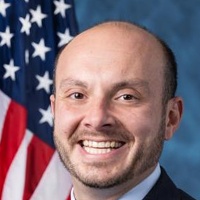
The bill modifies and extends funding for the World Trade Center Health Program, expands the types of healthcare providers who can certify mental health conditions, and requires a report to Congress on the program's budget.
Andrew Garbarino
Representative
NY
Andrew Garbarino
Representative
NY
The 9/11 Responder and Survivor Health Funding Correction Act of 2025 amends the Public Health Service Act to improve the World Trade Center (WTC) Health Program by expanding the types of healthcare providers who can conduct mental health evaluations, modifying provider credentialing, clarifying enrollment calculations, and extending the time frame for adding health conditions for WTC responders. The act adjusts the funding formula for fiscal years 2026 through 2090 and requires the Secretary of Health and Human Services to report to Congress on the program's budget, including projected needs through 2090 and recommendations for changes to the funding formula. It also stipulates that remaining funds in the Supplemental Fund, Special Fund, and Pentagon-Shanksville Fund will revert to the Treasury.
This Act establishes a three-year pilot program to offer donated-fund supported hyperbaric oxygen therapy for veterans with TBI or PTSD and extends certain pension payment limits.
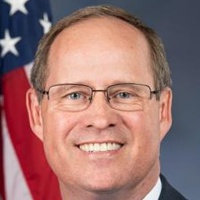
Gregory Murphy
Representative
NC
Gregory Murphy
Representative
NC
This Act establishes a three-year pilot program to provide hyperbaric oxygen therapy (HBOT) to veterans suffering from traumatic brain injury (TBI) or PTSD, funded solely through donations. It also mandates an updated Government Accountability Office (GAO) report assessing recent clinical trials on HBOT for these conditions. Finally, the bill extends the expiration date for certain limitations on veteran pension payments.
This resolution expresses Congressional opposition to imposing new performance fees or royalties on local radio stations and businesses for broadcasting or playing music.
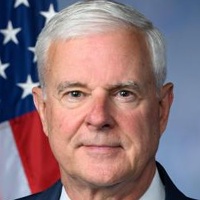
Steve Womack
Representative
AR
Steve Womack
Representative
AR
The Local Radio Freedom Act expresses Congressional opposition to imposing new performance fees, taxes, or royalties on local radio stations and businesses for playing music. It argues that the current system of free airplay provides essential promotional value to artists and that new fees would threaten the financial viability of local broadcasters and the vital community services they provide.
The "More Homes on the Market Act" increases the tax exclusion for profit from the sale of a primary residence, incentivizing homeowners to sell and increasing housing supply.
Jimmy Panetta
Representative
CA
Jimmy Panetta
Representative
CA
The "More Homes on the Market Act" increases the tax exclusion for profit from the sale of a primary residence, raising it to $500,000 for single filers and $1,000,000 for married couples filing jointly. These amounts will be adjusted for inflation starting in 2025. This change encourages homeowners to sell their properties, thereby increasing the availability of homes on the market.
The United States-Israel Defense Partnership Act of 2025 bolsters defense cooperation between the U.S. and Israel through joint programs, funding increases, and extended authorities related to countering unmanned systems, anti-tunnel technology, emerging technologies, and war reserve stockpiles, while also exploring Israel's inclusion in the national technology and industrial base and assessing integrated air and missile defense in the CENTCOM region.
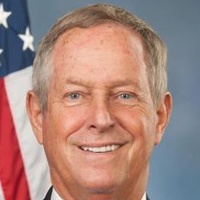
Joe Wilson
Representative
SC
Joe Wilson
Representative
SC
The United States-Israel Defense Partnership Act of 2025 seeks to bolster the defense relationship between the United States and Israel through joint initiatives and increased cooperation. It establishes programs to counter unmanned systems, extend anti-tunnel and counter-UAS cooperation, and promote collaboration in emerging technologies like AI and cybersecurity. The act also mandates the establishment of a Defense Innovation Unit office in Israel and assesses integrated air and missile defense in the U.S. Central Command region. Finally, it explores Israel's potential inclusion in the national technology and industrial base.
The Honoring Our Fallen Heroes Act of 2025 expands public safety officer benefits to include disability and death coverage for certain cancers presumed to be caused by on-duty exposure to carcinogens, and clarifies "line of duty" definitions for first responder benefits.
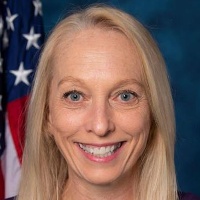
Mary Scanlon
Representative
PA
Mary Scanlon
Representative
PA
The Honoring Our Fallen Heroes Act of 2025 expands public safety officer benefits to include deaths and disabilities caused by exposure-related cancers, presuming that certain cancers diagnosed within 15 years of service are line-of-duty injuries if the officer served for at least 5 years. It defines "exposure-related cancer" and allows for updates to the list based on medical evidence, while also permitting individuals to petition for additions. The Act also clarifies "line of duty action" and applies retroactively to claims dating back to January 1, 2020, with a three-year window for filing claims based on these amendments.
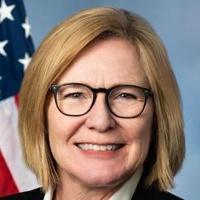
The Investing in Rural America Act of 2025 expands Farm Credit System institutions' ability to finance essential community facilities in rural areas, fostering partnerships with local lenders and increasing transparency through public reporting.
Michelle Fischbach
Representative
MN
Michelle Fischbach
Representative
MN
The Investing in Rural America Act of 2025 amends the Farm Credit Act of 1971, enabling Farm Credit System institutions to finance essential community facilities in rural areas, with a limit of 15% of their total outstanding loans. These institutions must offer participation in financing to other domestic lenders, especially community banks, and report these offers to the Farm Credit Administration. The Farm Credit Administration will then provide an annual report to Congress on these activities. This amendment aims to support rural development by leveraging the resources of the Farm Credit System.
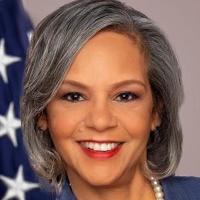
The PREEMIE Reauthorization Act of 2025 extends funding for research and programs aimed at preventing premature births and improving the health outcomes of preterm infants, while also mandating a comprehensive study on preterm birth in the U.S.
Robin Kelly
Representative
IL
Robin Kelly
Representative
IL
The "PREEMIE Reauthorization Act of 2025" extends funding for research on preterm births and infant care through 2029. It directs the Department of Health and Human Services to establish an interagency working group to address premature birth issues and mandates a comprehensive study by the National Academies of Sciences, Engineering, and Medicine on preterm births, including cost analysis, risk factor identification, and best practices for prevention and treatment. A report on the study's findings must be submitted to Congress and the Secretary of Health and Human Services within 24 months.
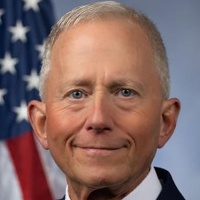
This bill would recognize alpha-gal as a major food allergen, requiring food labels to disclose its presence.
Jefferson Van Drew
Representative
NJ
Jefferson Van Drew
Representative
NJ
The Alpha-gal Allergen Inclusion Act amends the Federal Food, Drug, and Cosmetic Act to include alpha-gal, a sugar found in non-catarrhine primate mammals and red algae, as a major food allergen. This will require food labels to clearly identify the presence of alpha-gal. The amendment will take effect 18 months after the enactment of this Act, with an exception for mammal-derived ingredients where alpha-gal is below a detectable limit as determined by the Secretary.