Legislative Activity
Track Jill's sponsored bills, co-sponsored legislation, and voting record
This resolution designates January 13th as Korean American Day to honor the contributions of Korean Americans and recognize the anniversary of the first Korean immigrants' arrival.
Jimmy Gomez
Representative
CA
Jimmy Gomez
Representative
CA
This resolution officially designates January 13th as Korean American Day. It expresses support for the day's ideals and encourages Americans to observe it. The resolution also honors the 123rd anniversary of the first Korean immigrants arriving in the United States.
This bill expresses support for the Iranian people protesting for a free and democratic Iran while condemning the Islamic Republic's violent repression.
Yassamin Ansari
Representative
AZ
Yassamin Ansari
Representative
AZ
This resolution expresses strong support for the Iranian people protesting for freedom, democracy, and basic human rights against the repressive Islamic Republic. It condemns the regime's brutal crackdown on demonstrators and demands an end to violence and the release of political prisoners. Furthermore, it urges the U.S. government to work with allies to deter further lethal violence against protesters.
This bill modifies deposits into the Crime Victims Fund by excluding certain False Claims Act recoveries and mandates an Inspector General audit of the Fund's sustainability.
Ann Wagner
Representative
MO
Ann Wagner
Representative
MO
This bill amends the Victims of Crime Act of 1984 to temporarily exclude certain False Claims Act recoveries from being deposited into the Crime Victims Fund through fiscal year 2029. It also mandates a comprehensive audit by the Department of Justice Inspector General on the Fund's sustainability and the impact of recent legislative changes. The resulting report will provide recommendations for improving the Fund's effectiveness and oversight.
This act prohibits the use of federal funds and official action for any invasion of NATO member territory.
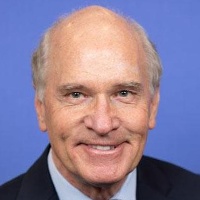
William Keating
Representative
MA
William Keating
Representative
MA
The **No Funds for NATO Invasion Act** prohibits the use of any federal funds for an invasion of any territory belonging to a member nation of the North Atlantic Treaty Organization (NATO). Furthermore, the bill bars U.S. officials from taking any action to execute such an invasion.
This act prohibits federal officials and employees from trading prediction market contracts while possessing material nonpublic government information.
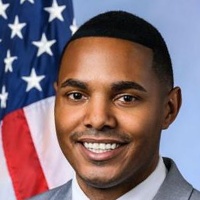
Ritchie Torres
Representative
NY
Ritchie Torres
Representative
NY
The Public Integrity in Financial Prediction Markets Act of 2026 prohibits federal officials and employees from trading in prediction market contracts while possessing material, nonpublic government information. This ban specifically targets transactions related to government policy, actions, or political outcomes. The goal is to prevent insider trading within these emerging financial markets by those with privileged access to government knowledge.
This act reforms the requirements and procedures for determining and maintaining duty status.
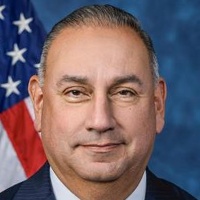
Gilbert Cisneros
Representative
CA
Gilbert Cisneros
Representative
CA
The Duty Status Reform Act aims to modernize and streamline the process for determining and managing duty status for federal employees. This legislation seeks to clarify existing regulations and ensure fair and consistent application of duty status rules across government agencies.
This act prohibits the use of federal funds to support any U.S. occupation, control, or administration of Venezuela, with specific exceptions for diplomatic property acquisition and existing humanitarian aid.
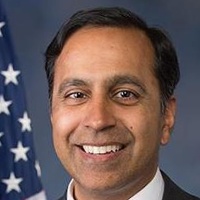
Raja Krishnamoorthi
Representative
IL
Raja Krishnamoorthi
Representative
IL
The No Occupation of Venezuela Act of 2026 (NOVA Act) strictly prohibits the use of U.S. Federal funds to support any form of U.S. military occupation, control, or administration over Venezuela. This ban includes funding for military deployments intended to assert sovereignty or control over Venezuelan territory or resources. The Act carves out narrow exceptions allowing for the acquisition or use of property for U.S. diplomatic or consular establishments, provided the Venezuelan government approves. Importantly, this legislation does not affect existing laws governing the provision of emergency humanitarian aid.
This resolution recognizes the 15th anniversary of the 2011 Tucson shooting, honoring the victims, survivors, and the ongoing advocacy of Gabby Giffords.
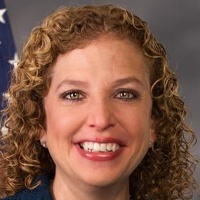
Debbie Wasserman Schultz
Representative
FL
Debbie Wasserman Schultz
Representative
FL
This resolution commemorates the 15th anniversary of the tragic January 8, 2011, Tucson shooting, honoring the six lives lost and the thirteen injured. It specifically commends the courage and ongoing advocacy of gun violence survivor and former Congresswoman Gabby Giffords. The resolution also recognizes the resilience of the community and reaffirms a commitment to ending political violence.
This bill mandates the establishment of a new national veterans cemetery in Hawaii to address the lack of accessible burial options for veterans in the state.
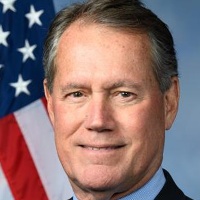
Ed Case
Representative
HI
Ed Case
Representative
HI
This bill establishes the **Hawai‘i National Cemetery Act** to address the severe lack of burial options for veterans in Hawaii. It mandates the Secretary of Veterans Affairs to immediately begin establishing a new national cemetery in the state. This action is necessary because Hawaii's only existing national cemetery is closing to new casketed burials and will soon stop accepting cremated remains, forcing veterans to travel thousands of miles for in-ground burial.
This bill imposes comprehensive sanctions on Russia for its war against Ukraine while permanently extending the U.S. sanctions authority against Iran.
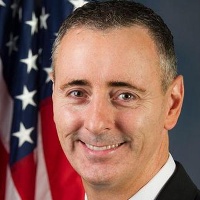
Brian Fitzpatrick
Representative
PA
Brian Fitzpatrick
Representative
PA
The Peace Through Strength Against Russia Act of 2025 imposes comprehensive sanctions on Russia's financial, military, and energy sectors in response to its war against Ukraine. This legislation cuts off major Russian banks from the U.S. financial system and bans new American investment in Russia. Additionally, the bill makes the existing sanctions authority against Iran permanent by removing its expiration date.
This Act establishes a federal civil cause of action for victims of domestic violence involving reproductive coercion.
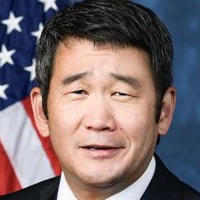
Dave Min
Representative
CA
Dave Min
Representative
CA
The Reproductive Coercion Prevention and Protection Act of 2025 addresses reproductive coercion as a form of intimate partner violence that undermines reproductive autonomy. This bill amends federal law to define reproductive coercion, which includes sabotaging contraception or forcing pregnancy decisions. Crucially, it establishes a new federal civil cause of action allowing victims to sue perpetrators when the abuse involves interstate or foreign commerce. This new right ensures victims can seek damages and relief in federal court for this specific type of domestic violence.
The Schedules That Work Act establishes rights for employees to request flexible schedules, mandates advance notice and predictability pay for schedule changes in covered sectors, and grants employees rest time between shifts.

Rosa DeLauro
Representative
CT
Rosa DeLauro
Representative
CT
The Schedules That Work Act aims to provide workers with greater stability and predictability in their work hours. It grants employees the right to request flexible or stable schedules and requires employers to engage in a good-faith discussion about these requests. For covered sector employees (like retail and food service), the bill mandates 14 days' advance notice of schedules and establishes "predictability pay" for last-minute changes or split shifts. The Act also grants employees the right to 11 hours of rest between shifts, with premium pay required if this rest period is violated.
This Act establishes a comprehensive federal strategy to combat rising antisemitism through policy statements, enhanced security grants, improved hate crime reporting, and specific mandates for educational institutions and federal agencies, while prohibiting the weaponization of antisemitism for partisan goals.
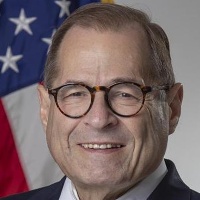
Jerrold Nadler
Representative
NY
Jerrold Nadler
Representative
NY
The Antisemitism Response and Prevention Act of 2025 aims to combat rising antisemitism through comprehensive federal action, emphasizing evidence-based strategies consistent with democratic values. The bill establishes new offices within the DOJ and FBI to coordinate counter-efforts and improve hate crime data collection. Furthermore, it mandates specific compliance and reporting requirements for colleges regarding civil rights and prohibits partisan conditions on nonprofit security grants.
This bill establishes TRICARE coverage for fertility treatments, including IVF, for active duty service members and their dependents beginning October 1, 2027.
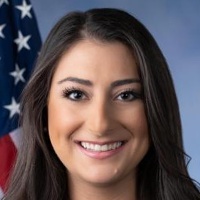
Sara Jacobs
Representative
CA
Sara Jacobs
Representative
CA
This bill, the Bipartisan IVF for Military Families Act, mandates that TRICARE provide coverage for fertility treatments, including IVF, for active duty service members and their dependents starting in late 2027. The legislation outlines specific coverage limits for egg retrievals and embryo transfers while prohibiting the use of DoD funds for certain procedures like preimplantation genetic screening. It also requires the establishment of a program to coordinate this specialized fertility care for military families.
This bill establishes federal programs and research priorities to advance domestic capabilities in food biomanufacturing, workforce development, and innovation for diversifying edible protein sources.
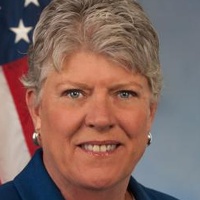
Julia Brownley
Representative
CA
Julia Brownley
Representative
CA
This bill aims to bolster the U.S. bioeconomy and food system resilience by promoting innovation in edible protein production, particularly through biomanufacturing and utilizing under-utilized biomass. It establishes new research centers, prioritizes funding for alternative protein research through existing programs, and creates grant opportunities for commercial-scale production and workforce development. Ultimately, the Act seeks to secure the nation's protein supply, create economic opportunities, and maintain U.S. leadership in food technology.
The Part-Time Worker Bill of Rights Act expands FMLA eligibility to part-time employees and establishes protections against scheduling discrimination, ensuring fair access to benefits and work hours.

Janice Schakowsky
Representative
IL
Janice Schakowsky
Representative
IL
The Part-Time Worker Bill of Rights Act aims to strengthen protections and expand benefits for part-time and temporary employees. The legislation eliminates restrictive hours-of-service requirements for FMLA leave and prohibits discrimination based on hours worked regarding pay, benefits, and promotion opportunities. Additionally, it mandates that employers offer available work hours to existing staff before hiring new employees or contractors.
This Act prohibits the Department of Defense from using fiscal year 2026 funds to implement hiring freezes, reductions in force, or unjustified hiring delays at public shipyards.
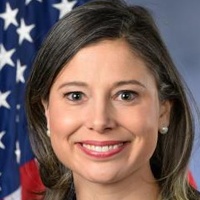
Maggie Goodlander
Representative
NH
Maggie Goodlander
Representative
NH
This act prohibits the Department of Defense from using fiscal year 2026 funds to implement a hiring freeze, a reduction in force, or unjustified delays in filling vacant positions at public shipyards. The goal is to ensure stable staffing levels necessary for shipyard operations.
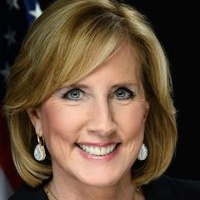
The Essential Caregivers Act of 2025 guarantees nursing home and long-term care residents the right to designate an essential caregiver who maintains access to them even during public health emergencies.
Claudia Tenney
Representative
NY
Claudia Tenney
Representative
NY
The Essential Caregivers Act of 2025 protects the rights of residents in long-term care facilities to designate an essential caregiver who can provide support and companionship. This legislation ensures that these caregivers maintain in-person access to residents even during public health emergencies when general visitation is restricted. By establishing clear protocols and an appeals process, the bill aims to prevent the harmful effects of isolation and ensure residents continue to receive vital care and advocacy.
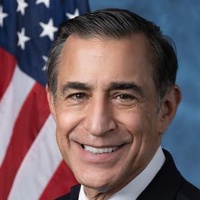
This bill establishes the right for members of the uniformed services to sue the United States for damages resulting from medical malpractice at military treatment facilities.
Darrell Issa
Representative
CA
Darrell Issa
Representative
CA
The Healthcare Equality and Rights for Our Heroes Act (HERO Act) establishes a new legal process allowing members of the uniformed services to sue the United States for damages resulting from medical malpractice at military treatment facilities. This act repeals existing law and creates a new exclusive remedy against the U.S. government for injuries or death caused by negligence in military healthcare. Lawsuits must be filed within 10 years of discovering the injury, and damage awards cannot be reduced by any VA benefits received.
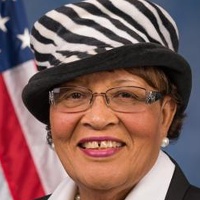
The EFFECTIVE Food Procurement Act mandates that the USDA prioritize purchasing food that supports regional economies, worker well-being, environmental sustainability, and equity for specific producers.
Alma Adams
Representative
NC
Alma Adams
Representative
NC
The EFFECTIVE Food Procurement Act directs the USDA to reform its food purchasing practices to support a more just, healthy, and sustainable food system. This is achieved by mandating the purchase of foods that prioritize equity, resilient supply chains, worker well-being, and climate mitigation. The bill also establishes reporting requirements, a set-aside for specific producers, and pilot programs to help smaller and targeted producers participate in USDA contracts.