Legislative Activity
Track Thomas's sponsored bills, co-sponsored legislation, and voting record
The Reining In Federal Licensing Enforcement (RIFLE) Act of 2025 reforms federal firearms licensing by establishing graduated penalty structures, enhancing due process protections for dealers, and limiting the Attorney General's authority in enforcement and revocation proceedings.
Tracey Mann
Representative
KS
Tracey Mann
Representative
KS
The Reining In Federal Licensing Enforcement (RIFLE) Act of 2025 reforms the federal firearms licensing system by establishing a graduated penalty structure that distinguishes between unintentional and willful violations. The bill mandates increased procedural protections for licensees, including expanded notice requirements, opportunities to cure violations, and the right to formal administrative hearings and judicial review. Additionally, it sets stricter standards for proving "willful" violations, provides a 90-day window for inventory liquidation upon license termination, and requires the Attorney General to establish formal, public standards for inspections and enforcement actions.
This bill proposes a constitutional amendment to permanently set the number of Supreme Court justices at nine, requiring ratification by three-fourths of the states within seven years.

Dusty Johnson
Representative
SD
Dusty Johnson
Representative
SD
This bill proposes a constitutional amendment to fix the number of Supreme Court justices at nine. For this amendment to be valid, three-fourths of the state legislatures must ratify it within seven years of its submission.
The Birthright Citizenship Act of 2025 limits automatic birthright citizenship to children born in the U.S. to at least one parent who is a U.S. citizen, a lawful permanent resident, or an alien serving in the U.S. armed forces.
Brian Babin
Representative
TX
Brian Babin
Representative
TX
The Birthright Citizenship Act of 2025 proposes to limit automatic birthright citizenship to children born in the United States who have at least one parent who is a U.S. citizen, a lawful permanent resident, or an alien serving in the U.S. armed forces. This legislation would exclude children born to parents without legal status or those on temporary visas from receiving automatic citizenship. These changes would apply only to individuals born on or after the date of the Act's enactment.
Sarah’s Law mandates the detention of noncitizens charged with crimes resulting in death or serious bodily injury and requires the Department of Homeland Security to provide timely updates to victims or their families.
Randy Feenstra
Representative
IA
Randy Feenstra
Representative
IA
Sarah’s Law mandates the detention of noncitizens who are charged with or convicted of crimes resulting in death or serious bodily injury. The bill also requires the Department of Homeland Security to issue detainers for these individuals and provide victims or their families with timely, ongoing updates regarding the offender's immigration and custody status.
This bill amends the Immigration and Nationality Act to deem aliens convicted of or admitting to committing sex offenses, domestic violence, stalking, child abuse, or violating protection orders as inadmissible and deportable. It broadens the definition of crimes against children to include domestic violence, regardless of grant funding status.

Nancy Mace
Representative
SC
Nancy Mace
Representative
SC
The "Preventing Violence Against Women by Illegal Aliens Act" amends the Immigration and Nationality Act to deem aliens inadmissible and deportable if they have committed or admitted to acts constituting sex offenses, domestic violence, stalking, child abuse, or violating protection orders. It broadens the definition of crimes against children to include any crime constituting domestic violence.
The Offshore Lands Authorities Act of 2025 nullifies previous presidential withdrawals of unleased offshore lands and establishes strict new limitations and congressional oversight procedures for future executive leasing restrictions.
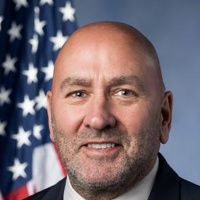
Clay Higgins
Representative
LA
Clay Higgins
Representative
LA
The Offshore Lands Authorities Act of 2025 nullifies several previous Presidential withdrawals of offshore lands, effectively reopening those areas to potential mineral leasing. The bill also establishes strict new limitations on the President’s authority to withdraw unleased offshore lands, including size and duration caps, mandatory resource assessments, and a streamlined congressional disapproval process.
The Chiropractic Medicare Coverage Modernization Act of 2025 expands Medicare coverage to include all services provided by doctors of chiropractic that are within the scope of their state licensure.
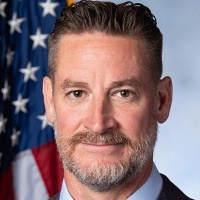
W. Steube
Representative
FL
W. Steube
Representative
FL
The Chiropractic Medicare Coverage Modernization Act of 2025 expands Medicare coverage to include all services legally authorized under a chiropractor’s state license, moving beyond the current restriction limited to manual spinal manipulation. This legislation aligns Medicare benefits with private insurance and other federal health programs to better reflect modern chiropractic practice. To provide these expanded services, chiropractors will be required to complete a one-time training program verified by the Secretary of Health and Human Services.
The No Welfare for the Wealthy Act of 2025 amends the Food and Nutrition Act to strictly enforce income and resource eligibility requirements for food assistance benefits.

Ben Cline
Representative
VA
Ben Cline
Representative
VA
The "No Welfare for the Wealthy Act of 2025" amends the Food and Nutrition Act of 2008 to strictly enforce income and resource eligibility requirements for food assistance benefits. By closing existing loopholes, the bill ensures that program resources are reserved for households that meet established financial criteria. These changes will take effect one year following the date of enactment.
This bill reclassifies silencers under federal tax law, removes federal registration requirements for legally transferred silencers, preempts state taxation and registration of silencers in commerce, and mandates the destruction of existing federal silencer registration records.
Ben Cline
Representative
VA
Ben Cline
Representative
VA
The Hearing Protection Act aims to remove silencers from the purview of the National Firearms Act (NFA) by treating them similarly to standard firearms under federal tax law. This legislation preempts certain state and local taxes and registration requirements related to silencers involved in interstate commerce. Furthermore, the bill mandates the destruction of existing federal silencer registration records and updates federal marking requirements for manufacturers.
The Interstate Commerce Simplification Act of 2025 expands the definition of "solicitation of orders" to include business activities that facilitate sales, even when those activities serve additional independent purposes.
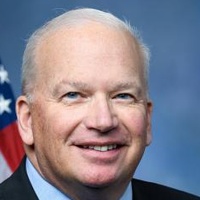
Scott Fitzgerald
Representative
WI
Scott Fitzgerald
Representative
WI
The Interstate Commerce Simplification Act of 2025 updates federal law to clarify the definition of "solicitation of orders." By broadening this term to include business activities that serve multiple purposes, the bill aims to streamline regulatory compliance for companies operating across state lines.
The FORCE Act prohibits the removal of Cuba from the State Sponsors of Terrorism list until the country meets specific democratic and human rights requirements.

Maria Salazar
Representative
FL
Maria Salazar
Representative
FL
The FORCE Act prohibits the President and the Secretary of State from removing Cuba from the State Sponsors of Terrorism list. This restriction remains in effect until the administration certifies that Cuba has met the specific democratic and human rights requirements outlined in the LIBERTAD Act of 1996.
This bill amends Title IX to prohibit schools receiving federal funds from allowing males to participate in female athletic programs, defining "sex" as determined at birth, while allowing males to train with female teams if it doesn't deprive females of opportunities or benefits. It also requires a study on the impact of male participation in female sports.
W. Steube
Representative
FL
W. Steube
Representative
FL
The "Protection of Women and Girls in Sports Act of 2025" amends Title IX to prohibit schools receiving federal funds from allowing males to participate in female athletic programs. Sex is defined as based on reproductive biology and genetics at birth. The bill allows males to train with female teams if it doesn't deprive females of opportunities. It also requires a study on the benefits lost to women when males participate in female sports.
The Regulation Reduction Act of 2025 mandates that federal agencies repeal at least three existing regulations for every new rule issued, ensuring that the costs of new major rules are fully offset by the elimination of previous ones.
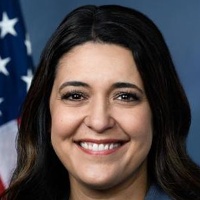
Stephanie Bice
Representative
OK
Stephanie Bice
Representative
OK
The Regulation Reduction Act of 2025 mandates that federal agencies repeal at least three existing regulations before issuing any new rule. For major rules, the legislation further requires that the cost of the new regulation be offset by the cost savings of the repealed rules. Additionally, the bill directs agencies to conduct a comprehensive review to identify and eliminate outdated, duplicative, or ineffective regulatory burdens.
The Sunset Chevron Act mandates a systematic review and staggered expiration of federal rules previously upheld under the *Chevron* deference doctrine.

Mark Green
Representative
TN
Mark Green
Representative
TN
The Sunset Chevron Act mandates that the Government Accountability Office identify and catalog federal rules previously upheld under the *Chevron* deference doctrine. The bill establishes a rolling expiration schedule for these rules, effectively sunsetting them over time unless reauthorized. Additionally, it streamlines the Congressional review process, allowing Congress to disapprove these specific rules without being restricted by standard legislative deadlines.
This bill proposes a constitutional amendment to limit members of the House of Representatives to three terms and Senators to two terms, with specific provisions for partial terms. Terms served before the amendment's ratification would not be counted towards these limits, and the amendment must be ratified within seven years to be valid.
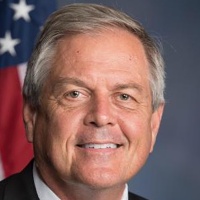
Ralph Norman
Representative
SC
Ralph Norman
Representative
SC
This bill proposes a constitutional amendment to limit the number of terms a member of Congress can serve. Representatives would be limited to 3 terms and Senators to 2 terms, with specific rules for partial terms. Terms served before the amendment's ratification would not be counted. The amendment must be ratified by three-fourths of the states within seven years to be valid.
The FIND Act prohibits federal agencies from contracting with entities that discriminate against the firearm and ammunition industry, ensuring fair access to government contracts for these businesses. Contractors must certify they do not discriminate against firearm entities, with violations leading to contract termination.
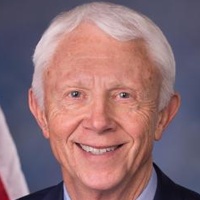
Jack Bergman
Representative
MI
Jack Bergman
Representative
MI
The FIND Act prohibits federal agencies from contracting with entities that discriminate against the firearm and ammunition industry. It requires federal contractors to certify they do not discriminate against firearm entities and prohibits them from awarding subcontracts to entities that do not provide a similar certification. Violations of these clauses will result in contract termination. The act defines "discriminate" as making judgments or refusing/limiting services based on biased criteria, rather than case-by-case evaluations, empirical data, financial risk, or legal non-compliance.
The First Amendment Accountability Act allows individuals to sue federal executive branch employees for civil damages when their First Amendment rights are violated under color of federal authority.

Harriet Hageman
Representative
WY
Harriet Hageman
Representative
WY
The First Amendment Accountability Act empowers individuals to sue federal executive branch employees for violating their First Amendment rights while acting under federal authority. This legislation allows victims to seek monetary damages and legal remedies, while explicitly excluding internal federal employment disputes from its scope. Additionally, it provides for the recovery of attorney’s fees for successful plaintiffs to ensure greater accountability for government actions.