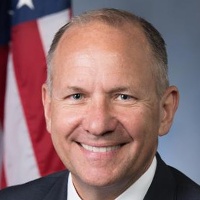
Legislative Activity
Track Lloyd's sponsored bills, co-sponsored legislation, and voting record
The ADOPT Act of 2025 establishes federal crimes for unlawful adoption practices, such as using unlicensed intermediaries or making unauthorized payments, to protect families and prevent child commodification in private interstate adoptions.
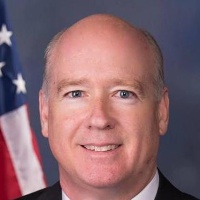
Robert Aderholt
Representative
AL
Robert Aderholt
Representative
AL
The ADOPT Act of 2025 aims to protect families and prevent the commodification of children in private domestic interstate adoptions. It establishes new federal crimes for unlicensed intermediaries who illegally solicit placements or make unauthorized payments to placing parents. The legislation ensures access to licensed and regulated adoption providers by creating clear exceptions for authorized professionals and agencies.
This act mandates Medicare coverage for FDA-approved early detection screening tests for Alzheimer's disease and related dementias beginning in 2028.
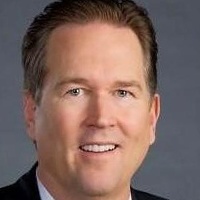
Vern Buchanan
Representative
FL
Vern Buchanan
Representative
FL
The Alzheimer’s Screening and Prevention Act of 2025 (ASAP Act) amends Medicare to cover early detection screening tests for Alzheimer's disease and related dementias starting in 2028. This coverage applies to FDA-cleared tests, including genomic sequencing and other equivalent diagnostic methods, designed to detect pre-symptomatic or early-stage conditions. The bill ensures these screenings are added to the list of covered medical services under Medicare.
This act prohibits the Department of Housing and Urban Development from counting veterans' disability and dependency compensation as household income when determining eligibility and rent for housing assistance programs.
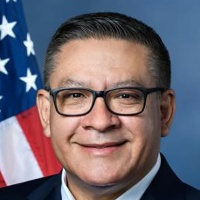
Salud Carbajal
Representative
CA
Salud Carbajal
Representative
CA
The Home for the Brave Act of 2025 ensures that veterans' disability compensation and dependency/indemnity compensation are not counted as household income by the Department of Housing and Urban Development (HUD). This change will positively affect eligibility and the calculation of housing assistance benefits for veterans and their families.
The Safer Supervision Act of 2025 aims to reform federal supervised release by requiring individualized assessments, establishing a presumption for early termination, addressing officer pay, and studying post-release supervision practices.
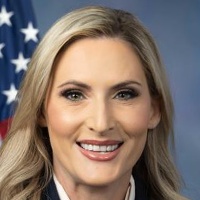
Laurel Lee
Representative
FL
Laurel Lee
Representative
FL
The Safer Supervision Act of 2025 aims to reform federal supervised release by requiring individualized assessments for imposing supervision and establishing a presumption for early termination when defendants meet certain compliance and public safety criteria. The bill also addresses workload concerns by mandating a proposal for law enforcement availability pay for probation officers and allowing prisoners without imposed supervision to apply earned time credits for early release. Finally, it directs the GAO to study the federal supervision and reentry system.
This resolution honors the life and legacy of Charles "Charlie" James Kirk, condemns his assassination as political violence, and calls for a renewed commitment to civil discourse and American founding principles.

Mike Johnson
Representative
LA
Mike Johnson
Representative
LA
This resolution honors the life and legacy of Charles "Charlie" James Kirk, founder of Turning Point USA. It strongly condemns his assassination as an act of political violence. The bill calls for a renewed national commitment to civil discourse and the founding principles of the United States.
The PAAF Act grants automatic U.S. citizenship to certain internationally adopted individuals who meet specific residency and age requirements, clarifying and expanding existing pathways to citizenship.
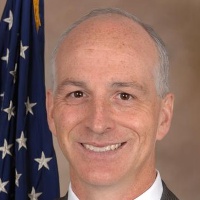
Adam Smith
Representative
WA
Adam Smith
Representative
WA
The Protect Adoptees and American Families Act (PAAF Act) aims to ensure that certain internationally adopted individuals automatically become U.S. citizens. This bill clarifies the requirements for automatic citizenship, particularly for adoptees who were physically present in the U.S. before turning 18. It also provides a pathway to citizenship for eligible adoptees residing abroad upon their legal entry into the United States.
This Act mandates that new passenger motor vehicles sold in the U.S. must include standard equipment capable of receiving AM broadcast radio signals.

Gus Bilirakis
Representative
FL
Gus Bilirakis
Representative
FL
The AM Radio for Every Vehicle Act of 2025 mandates that the Secretary of Transportation establish a rule requiring AM broadcast radio receivers to be installed as standard equipment in new passenger motor vehicles. This requirement aims to ensure public access to AM radio signals, which are often used for emergency alerts. The bill also directs a GAO study on the effectiveness of AM radio within the national emergency alert system compared to other technologies. Finally, the Act preempts state and local laws on this matter and includes a sunset provision eight years after enactment.
This bill amends the Social Security Act to provide Medicare coverage for FDA-approved multi-cancer early detection screening tests starting in 2028.
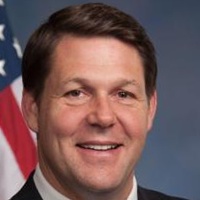
Jodey Arrington
Representative
TX
Jodey Arrington
Representative
TX
The Nancy Gardner Sewell Medicare Multi-Cancer Early Detection Screening Coverage Act amends the Social Security Act to provide Medicare Part B coverage for multi-cancer early detection screening tests starting January 1, 2028. This legislation establishes clear criteria for qualifying tests and outlines payment structures to ensure beneficiaries have access to these advanced diagnostic tools. Importantly, this coverage is designed to complement, rather than replace, existing Medicare-covered cancer screenings.
This Act ensures the automatic continuation of pay for active duty military personnel and essential civilian support staff if Congress fails to pass a budget for fiscal year 2026.
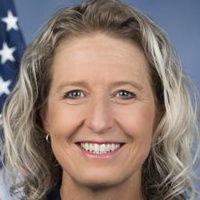
Jennifer Kiggans
Representative
VA
Jennifer Kiggans
Representative
VA
The Pay Our Troops Act of 2026 ensures that active duty military personnel and essential civilian support staff continue to receive their pay if Congress has not yet passed the full budget for fiscal year 2026. This act provides automatic continuing appropriations from the Treasury to prevent a lapse in military salaries due to budget delays. The funding automatically terminates once a new budget or continuing resolution is passed, or on January 1, 2027, whichever comes first.
This resolution recognizes the vital contributions of medical research, particularly NIH-funded work, to public health and the economy, while designating September 15-19, 2025, as "Medical Research Week."
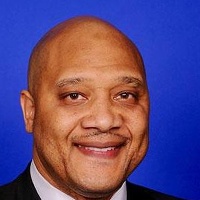
André Carson
Representative
IN
André Carson
Representative
IN
This resolution officially recognizes the vital contributions of medical research to public health and economic growth across the nation. It specifically designates September 15 through September 19, 2025, as "Medical Research Week." The bill emphasizes the critical role of sustained federal funding, particularly for the National Institutes of Health (NIH), in driving life-saving discoveries and ensuring national health security. It encourages public appreciation for the scientists and institutions conducting this essential work.
This Act limits the sharing of consumer reports requested in connection with a residential mortgage loan to prevent unauthorized access to homebuyers' sensitive financial information.
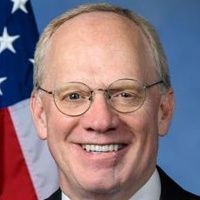
John Rose
Representative
TN
John Rose
Representative
TN
The Homebuyers Privacy Protection Act limits how consumer reporting agencies can share a consumer's report when it is requested in connection with a residential mortgage loan. Reports can only be shared with entities directly involved in the consumer's current mortgage or those providing a firm offer of credit or insurance. The Act also mandates a study by the GAO regarding the use and impact of "trigger leads" derived from credit checks.
The Afghan Adjustment Act creates pathways to conditional permanent residency for eligible Afghans already in the U.S. and establishes special refugee processing for at-risk Afghan allies who worked with U.S. interests.
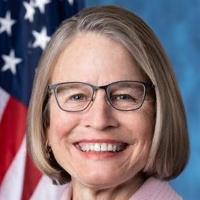
Mariannette Miller-Meeks
Representative
IA
Mariannette Miller-Meeks
Representative
IA
The Afghan Adjustment Act establishes new pathways for certain Afghan nationals already in the U.S. to obtain conditional permanent resident status, contingent upon rigorous security vetting. It also creates a special referral process for at-risk Afghan allies still outside the U.S. to access the U.S. Refugee Admissions Program remotely. Furthermore, the bill extends deadlines and expands eligibility for existing Special Immigrant Visas (SIVs) while mandating significant interagency coordination and reporting to Congress on processing efficiency.
This Act mandates a comprehensive review by the NCI and a separate study by the DoD to improve prevention, early detection, and awareness of stomach cancer, particularly among high-risk populations and military personnel.
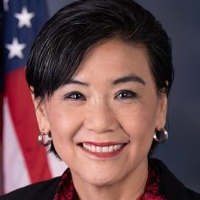
Judy Chu
Representative
CA
Judy Chu
Representative
CA
The Stomach Cancer Prevention and Early Detection Act mandates a comprehensive review by the National Cancer Institute (NCI) to assess the current state of stomach cancer incidence, risk factors, and screening effectiveness in the U.S. It also requires the Department of Defense to study stomach cancer rates and potential service-related risk factors among military personnel and veterans. The ultimate goal is to develop better public health strategies, improve provider education, and establish clearer guidelines for prevention and early detection.
The Save Our Seniors Act mandates that Social Security trust fund reports include a comparison graph showing budget assumptions versus actual projected payouts based on dedicated funding.
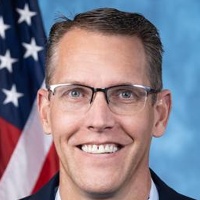
Randy Feenstra
Representative
IA
Randy Feenstra
Representative
IA
The Save Our Seniors Act (SOS Act) mandates that reports on the Social Security Old-Age and Survivors Insurance and Disability Insurance Trust Funds must now include a new graphical comparison. This comparison will show the difference between initial budget assumptions and the actual projected payouts from the Trust Funds based on dedicated funding sources. The goal is to provide clearer transparency regarding the financial status and projections of these vital funds.
This Act establishes a corporate tax rate reduction for qualifying U.S. corporations that implement broad-based employee stock ownership plans, while also making the distributed stock tax-free to the employees upon receipt.
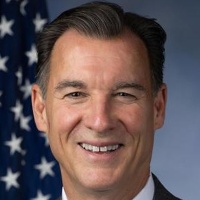
Thomas Suozzi
Representative
NY
Thomas Suozzi
Representative
NY
The Share Holder Allocation for Rewards to Employees Plan Act (SHARE Plan Act) establishes a new corporate tax incentive for U.S. companies that distribute a significant amount of their stock equity to employees through formal, broad-based plans. Eligible "SHARE corporations" receive a 3 percentage point reduction in their corporate income tax rate. Crucially, stock received by employees under a qualified SHARE plan is excluded from the employee's gross income for federal tax purposes. The bill sets strict requirements for plan structure, employee participation, and minimum equity distribution ratios to qualify for these benefits.
The PRIME Act exempts custom slaughter facilities from federal inspection requirements for meat distributed only within the state where it was processed, provided they comply with state law.
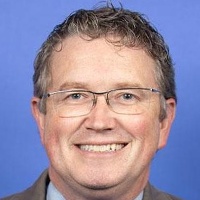
Thomas Massie
Representative
KY
Thomas Massie
Representative
KY
The PRIME Act, or Processing Revival and Intrastate Meat Exemption Act, exempts custom slaughter facilities from federal inspection requirements for meat that is processed and sold only within the state of origin. To qualify, facilities must comply with all applicable state laws regarding slaughter and preparation. This legislation ensures that states retain the authority to enforce their own, potentially stricter, regulations on local meat processing.
This act requires the CBO to score the long-term budget savings resulting from preventive healthcare measures when requested by key committee leaders.
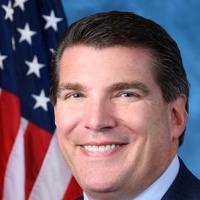
Jay Obernolte
Representative
CA
Jay Obernolte
Representative
CA
The Preventive Health Savings Act requires the Congressional Budget Office (CBO) to score the long-term budget savings resulting from preventive healthcare measures when requested by key congressional leaders. If savings are found, the CBO must include an estimate of these future reductions in its budget projections for the legislation. However, these supplementary savings estimates cannot be used to satisfy standard budget enforcement rules.
The SHIELD Act amends federal unemployment rules to prohibit benefits for individuals unemployed due to active participation in or direct stake in a labor dispute or strike.
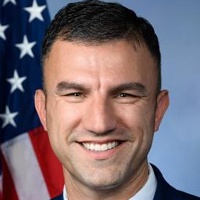
Rudy Yakym
Representative
IN
Rudy Yakym
Representative
IN
The Securing Help for Involuntary Employment Loss and Displacement Act (SHIELD Act) revises federal requirements for state unemployment programs regarding labor disputes. This bill mandates that states deny regular unemployment benefits to individuals unemployed due to a strike or labor dispute in which they actively participated or had a direct stake. The new federal conditions take effect in two years, though states may adopt them sooner.
This bill allows employees belonging to certain religious faiths to claim a credit or refund for previously paid Social Security and healthcare taxes.
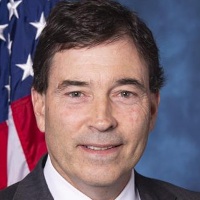
Troy Balderson
Representative
OH
Troy Balderson
Representative
OH
This bill, the Religious Exemptions for Social Security and Healthcare Taxes Act, allows employees belonging to specific religious faiths to claim a credit or refund for Social Security taxes previously deducted from their paychecks. To qualify, individuals must apply for authorization under existing tax code procedures related to religious exemptions. These provisions apply to tax years beginning after the date the Act is enacted.
The DIGNIDAD Act of 2025 comprehensively overhauls U.S. immigration policy by simultaneously increasing border security, establishing new pathways to legal status for certain long-term residents, mandating E-Verify for all employers, and reforming asylum and employment visa processes.

Maria Salazar
Representative
FL
Maria Salazar
Representative
FL
The DIGNIDAD Act of 2025 is a comprehensive bill that significantly overhauls U.S. immigration policy across five major divisions. Division A focuses on aggressive border security enhancements, infrastructure modernization, and increased criminal penalties for immigration offenses, while Division B establishes pathways to legal status for long-term residents who entered as children and creates a temporary protection program for others. Finally, Division C aims to improve legal immigration by reducing green card backlogs, streamlining employment and student visas, and providing new discretionary relief for family separation cases.