
Legislative Activity
Track Linda's sponsored bills, co-sponsored legislation, and voting record
The Better CARE for Animals Act of 2025 strengthens the enforcement of the Animal Welfare Act by expanding investigative authority, establishing new civil penalties up to \$10,000 per day, and explicitly granting the Attorney General power to file civil actions, including seeking seizure and forfeiture of animals.
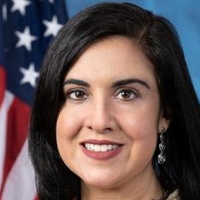
Nicole Malliotakis
Representative
NY
Nicole Malliotakis
Representative
NY
The Better CARE for Animals Act of 2025 significantly strengthens enforcement of the Animal Welfare Act by clarifying definitions and expanding the scope of investigations. It grants the Attorney General explicit authority to file civil actions seeking penalties up to $10,000 per day, and mandates that collected fines help cover temporary animal care costs. The bill also requires the Secretary of Agriculture and the Attorney General to establish a formal agreement for coordinated enforcement.
This Act promotes private employee ownership by extending tax deferrals for S corporation ESOP sales, ensuring ESOP-owned businesses retain small business status, and establishing new Treasury and Labor offices to provide assistance and advocacy.
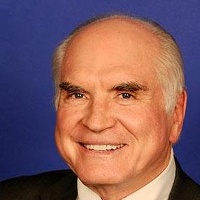
Mike Kelly
Representative
PA
Mike Kelly
Representative
PA
The Promotion and Expansion of Private Employee Ownership Act of 2025 aims to significantly boost employee ownership in S corporations through Employee Stock Ownership Plans (ESOPs). The bill extends key tax deferral benefits for stock sales to ESOPs and removes a major restriction on this tax treatment. Furthermore, it establishes new government offices and an Advocate for Employee Ownership to provide technical assistance and resolve disputes, while ensuring ESOP-owned businesses retain small business status for federal programs.
This resolution recognizes the 50th anniversary of the Fall of Saigon, honoring the history, service, and contributions of Vietnamese Americans while reaffirming U.S. commitment to democracy and human rights.
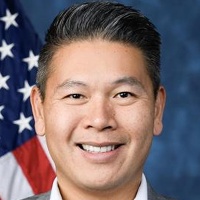
Derek Tran
Representative
CA
Derek Tran
Representative
CA
This resolution commemorates the 50th anniversary of the Fall of Saigon and recognizes the profound contributions of Vietnamese Americans to the United States. It honors those who fled the communist regime after April 30, 1975, and reaffirms American commitment to democracy and human rights. The bill encourages all citizens to observe this anniversary and remember the sacrifices made in the pursuit of freedom.
This bill bans the manufacture, sale, and transfer of specific semiautomatic assault weapons and large-capacity ammunition feeding devices while grandfathering existing possessions and establishing new transfer requirements.
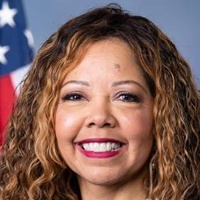
Lucy McBath
Representative
GA
Lucy McBath
Representative
GA
The Assault Weapons Ban of 2025 comprehensively defines and bans the manufacture, sale, and transfer of specific semiautomatic assault weapons and large capacity ammunition feeding devices. The bill grandfathers existing weapons but imposes new requirements for their secure storage and mandates dealer involvement for future private transfers. It also allows federal grant money to be used by states for buy-back programs targeting these banned items.
The Equality Act comprehensively prohibits discrimination based on sex, sexual orientation, and gender identity across key areas including public accommodations, employment, housing, credit, and jury service.
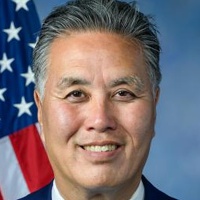
Mark Takano
Representative
CA
Mark Takano
Representative
CA
The Equality Act comprehensively expands federal civil rights protections against discrimination based on sex, sexual orientation, and gender identity across key areas of American life. It amends existing laws to prohibit discrimination in public accommodations, housing, credit, employment, and federal funding. The purpose of the bill is to provide consistent, explicit, and comprehensive remedies for individuals facing bias in these essential sectors.
This bill establishes a universal, comprehensive national health insurance program called "Medicare for All" that eliminates patient cost-sharing and transitions the nation away from private insurance duplication.

Pramila Jayapal
Representative
WA
Pramila Jayapal
Representative
WA
The Medicare for All Act establishes a universal, nationwide health insurance program providing comprehensive coverage for all U.S. residents with no out-of-pocket costs. It fundamentally restructures healthcare financing by implementing global budgets for institutions and a new fee schedule for individuals, while phasing out existing federal programs like Medicare and Medicaid. The legislation also sets strict quality standards for providers and creates a dedicated Trust Fund to manage the system's finances.
This bill repeals the Arctic National Wildlife Refuge oil and gas program and designates over 1.5 million acres of the refuge as protected wilderness.
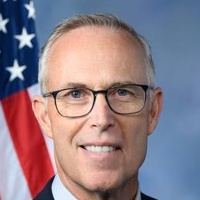
Jared Huffman
Representative
CA
Jared Huffman
Representative
CA
The Arctic Refuge Protection Act officially repeals the previous law authorizing oil and gas leasing in the Arctic National Wildlife Refuge. This legislation simultaneously designates approximately 1.56 million acres within the Refuge as protected wilderness under the National Wilderness Preservation System. The Secretary of the Interior is now required to manage this newly designated land according to strict wilderness preservation standards.
This Act authorizes the President to impose sanctions, including asset freezes and visa bans, on foreign individuals involved in violence, property destruction, or displacement in the West Bank.
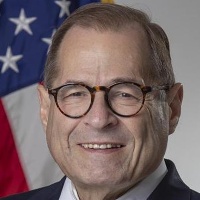
Jerrold Nadler
Representative
NY
Jerrold Nadler
Representative
NY
The West Bank Violence Prevention Act of 2025 declares extreme settler violence and displacement in the West Bank a threat to U.S. national security interests. This Act mandates the President to impose sanctions, including asset freezes and visa bans, on foreign individuals responsible for undermining peace and stability in the region. The Treasury Department must report to Congress on the implementation of these sanctions every 90 days.
This Act establishes comprehensive assistance programs through USAID for Vietnamese individuals affected by Agent Orange exposure and mandates HHS to conduct health assessments and establish support centers for Vietnamese Americans.
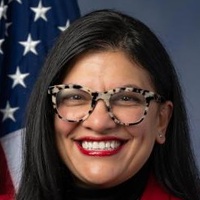
Rashida Tlaib
Representative
MI
Rashida Tlaib
Representative
MI
The Victims of Agent Orange Act of 2025 aims to address the ongoing health and environmental damage caused by the use of herbicides, including Agent Orange, during the Vietnam War. This legislation establishes comprehensive assistance programs through USAID for affected individuals and environmental cleanup in Vietnam. Furthermore, it mandates health assessments and the creation of dedicated health centers by HHS to support Vietnamese Americans impacted by the toxic exposure.
This bill officially establishes Workers Memorial Day as a recognized federal holiday.
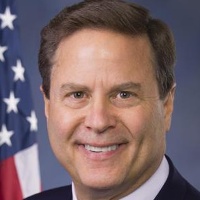
Donald Norcross
Representative
NJ
Donald Norcross
Representative
NJ
This bill officially establishes "Workers Memorial Day" as a recognized federal holiday. It amends the U.S. Code to formally insert this new observance into the list of federal holidays.
The Agent Orange Relief Act of 2025 expands benefits for children of male Vietnam veterans, funds health studies for affected Vietnamese Americans, and mandates research into the ongoing health effects of Agent Orange exposure.
Rashida Tlaib
Representative
MI
Rashida Tlaib
Representative
MI
The Agent Orange Relief Act of 2025 aims to address the ongoing health crises stemming from the U.S. use of herbicides during the Vietnam War. This legislation expands benefits for children of male veterans born with certain birth defects and mandates new research into intergenerational health effects. Furthermore, the Act requires the Department of Health and Human Services to fund health studies and establish treatment centers for affected Vietnamese Americans. Agencies are given 18 months to fully implement these provisions, followed by mandatory quarterly progress reports to Congress.
This bill limits the Social Security Administration's recovery of benefit overpayments to a maximum of 10 percent of a monthly benefit unless the recipient agrees to a higher withholding rate.
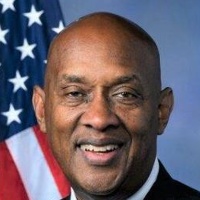
Dwight Evans
Representative
PA
Dwight Evans
Representative
PA
This bill amends the Social Security Act to limit the amount the Social Security Administration can withhold from a person's monthly benefit to recover an overpayment. Unless the individual agrees to a higher rate, the SSA can withhold no more than 10 percent of a monthly benefit payment to recoup accidental overpayments. This new limit applies to existing and future unrecovered overpayments under Title II benefits.
This bill significantly enhances the Child and Dependent Care Tax Credit by raising expense limits, adjusting income phase-outs, and making the credit partially refundable.

Danny Davis
Representative
IL
Danny Davis
Representative
IL
The Child and Dependent Care Tax Credit Enhancement Act of 2025 significantly increases the maximum expenses eligible for the Child and Dependent Care Tax Credit to \$8,000 for one child and \$16,000 for two or more. This legislation also modifies the income-based calculation for the credit percentage and makes the credit partially or fully refundable for eligible taxpayers. Furthermore, key dollar limits will be adjusted annually for inflation starting in 2026.
This resolution officially designates April 2025 as Community College Month to recognize the vital role over 1,000 community colleges play in providing accessible education, workforce training, and economic prosperity across the United States.

Joe Courtney
Representative
CT
Joe Courtney
Representative
CT
This resolution officially designates April 2025 as "Community College Month" to celebrate the vital role of over 1,000 community colleges nationwide. It recognizes these institutions for providing accessible, affordable higher education and critical workforce training. The bill highlights their significant economic contributions and commitment to local community needs.
This act extends the excise tax exemption for alternative motorboat fuels to include certain vessels operating exclusively along one U.S. coast.
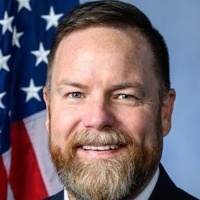
Aaron Bean
Representative
FL
Aaron Bean
Representative
FL
The Maritime Fuel Tax Parity Act extends the existing excise tax exemption for alternative motorboat fuels to include certain vessels operating exclusively between ports on either the Atlantic or Pacific coast. This change ensures that qualifying vessels, such as specific fishing or maritime activity vessels, benefit from the fuel tax break when trading only along a single U.S. coast. The provision applies to fuel sales occurring after December 31, 2023.
This Act establishes a 30% tax credit for businesses investing in qualifying on-site or municipal water reuse projects to encourage the use of recycled water.
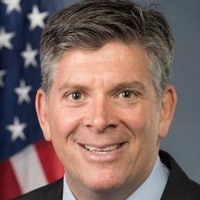
Darin LaHood
Representative
IL
Darin LaHood
Representative
IL
The Advancing Water Reuse Act establishes a new "qualifying water reuse project credit" to incentivize businesses to recycle water. This credit offers a 30% tax break on qualified investments in on-site water recycling systems or infrastructure that supports industrial or commercial water reuse. The tax incentive is designed to encourage the adoption of water conservation technologies until the end of 2032.
This Act provides disaster survivors with federally backed mortgage payment forbearance, fee waivers, and protection from default during recovery.

Judy Chu
Representative
CA
Judy Chu
Representative
CA
The Mortgage Relief for Disaster Survivors Act allows homeowners with Federally backed loans in a declared disaster area to request a mandatory 180-day forbearance on their mortgage payments. Borrowers must provide proof of property damage to their loan servicer to access this relief, which prohibits extra fees or penalties during the pause. This protection is available for both single-family and multifamily properties secured by loans purchased or securitized by Fannie Mae or Freddie Mac.
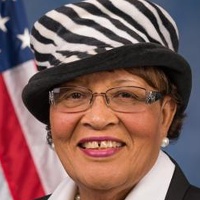
This resolution supports designating Black Maternal Health Week to highlight the urgent need to address the severe and preventable maternal health crisis disproportionately affecting Black women and birthing people in the United States.
Alma Adams
Representative
NC
Alma Adams
Representative
NC
This resolution officially designates the week of April 11–17, 2025, as the eighth annual Black Maternal Health Week to raise national awareness of the severe maternal and reproductive health crisis facing Black women and birthing people. It highlights the unacceptable disparity where Black women are significantly more likely to die from pregnancy-related causes, emphasizing that most of these deaths are preventable. The bill calls for targeted investments, policy changes addressing systemic barriers, and the centering of Black women's voices in developing solutions to achieve equitable maternal health outcomes.
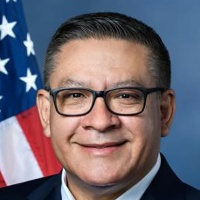
The California Clean Coast Act of 2025 permanently prohibits new oil and gas leasing and related activities on the Outer Continental Shelf off the coast of California while preserving existing leases.
Salud Carbajal
Representative
CA
Salud Carbajal
Representative
CA
The California Clean Coast Act of 2025 permanently prohibits all new federal oil and gas leasing and related activities on the outer Continental Shelf off the coast of California. This measure ensures no future drilling permits can be issued in these sensitive waters. However, the Act explicitly preserves the rights of any existing oil and gas leases already in effect.
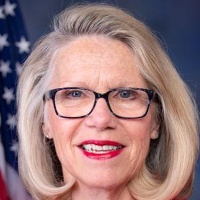
The RESILIENCE Act of 2025 modifies tax rules to allow public utility companies to reduce their adjusted financial statement income by deductions taken for property repair and maintenance costs.
Carol Miller
Representative
WV
Carol Miller
Representative
WV
The Repair Expenditures Support Infrastructure, Labor Investment, Energy Needs, and Creates Equity Act of 2025, or the RESILIENCE Act of 2025, modifies tax rules for public utility companies. This legislation allows utility companies to reduce their adjusted financial statement income by deductions taken for repairing and maintaining their property. The goal is to align these specific repair deductions with existing depreciation rules for tax purposes, effective for tax years beginning after 2024.