
Legislative Activity
Track Pete's sponsored bills, co-sponsored legislation, and voting record
The Consumer Financial Protection Accountability and Reform Act of 2026 seeks to increase the CFPB’s transparency and accountability by restructuring its funding, refining its enforcement and rulemaking standards, and establishing clearer regulatory oversight for financial institutions and consumer products.
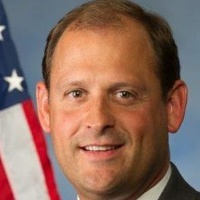
Garland Barr
Representative
KY
Garland Barr
Representative
KY
The Consumer Financial Protection Accountability and Reform Act of 2026 seeks to restructure the Consumer Financial Protection Bureau (CFPB) by bringing it under congressional appropriations and establishing more rigorous oversight and transparency requirements. The bill introduces stricter standards for enforcement actions, clarifies definitions of abusive practices, and provides new regulatory frameworks for emerging financial products like earned wage access. Additionally, it adjusts supervisory thresholds and limits the Bureau’s ability to use market-monitoring data for enforcement, aiming to increase procedural fairness for both financial institutions and consumers.
This resolution honors the life and historic congressional legacy of the Honorable Kay Granger, recognizing her trailblazing service as a Representative from Texas and her dedicated contributions to national defense and the city of Fort Worth.
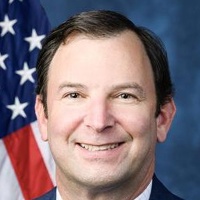
Craig Goldman
Representative
TX
Craig Goldman
Representative
TX
This resolution honors the life and legacy of the Honorable Kay Granger, celebrating her nearly 28 years of service in the U.S. House of Representatives. It recognizes her historic achievements as a trailblazer for women in public office, her dedicated advocacy for national defense, and her lasting contributions to the city of Fort Worth, Texas.
This resolution expresses the House of Representatives' support for Charleston, South Carolina, to host the 2027 annual session of the OSCE Parliamentary Assembly.

Joe Wilson
Representative
SC
Joe Wilson
Representative
SC
This resolution expresses the support of the House of Representatives for Charleston, South Carolina, to host the 2027 annual session of the Organization for Security and Cooperation in Europe (OSCE) Parliamentary Assembly. It highlights the city’s world-class infrastructure and honors the legacy of the late Senator Lindsey Olin Graham by advocating for the event to proceed as originally planned.
The Stop EU Overreach Act mandates a formal investigation by the U.S. Trade Representative into the economic burden and extraterritorial impact of European Union sustainability and environmental regulations on American businesses.
Craig Goldman
Representative
TX
Craig Goldman
Representative
TX
The Stop EU Overreach Act mandates that the United States Trade Representative (USTR) launch a formal Section 301 investigation into the extraterritorial impact of various European Union environmental and sustainability regulations on U.S. businesses. The bill seeks to address concerns that these EU mandates impose unfair, burdensome, and conflicting requirements on U.S. companies for operations occurring outside of Europe. If the investigation confirms these practices harm U.S. commerce, the USTR is authorized to take retaliatory trade actions to eliminate those burdens.
This bill reauthorizes the Accelerating Access to Critical Therapies for ALS Act through 2031 while enhancing grant oversight, safety reporting requirements, and FDA strategic planning for rare neurodegenerative diseases.

Mike Quigley
Representative
IL
Mike Quigley
Representative
IL
The Accelerating Access to Critical Therapies for ALS Reauthorization Act of 2026 extends vital funding for ALS research and clinical trial programs through 2031. This legislation strengthens oversight by enhancing grant review processes, improving safety reporting requirements, and mandating a comprehensive five-year FDA action plan to accelerate the development of treatments for rare neurodegenerative diseases.
The Main Street Act aims to foster economic growth by reducing regulatory burdens on community banks, streamlining the application and merger processes, and enhancing transparency in financial supervision.

J. Hill
Representative
AR
J. Hill
Representative
AR
The Main Street Act is comprehensive legislation designed to foster a more competitive and accessible banking environment by reducing regulatory burdens on community banks and credit unions. The bill streamlines application processes, modernizes supervision standards, and enhances transparency across federal financial agencies to encourage local lending and economic growth. Additionally, it promotes innovation and financial stability by facilitating bank-fintech partnerships and improving the tools available for managing liquidity and bank resolutions.
The D.C. Taxing Authority Review Act requires explicit congressional approval for all District of Columbia laws related to taxes, fees, or Title 47 of the D.C. Code before they can take effect.

James Comer
Representative
KY
James Comer
Representative
KY
The D.C. Taxing Authority Review Act requires explicit congressional approval for any District of Columbia legislation that imposes or increases taxes or fees, or relates to Title 47 of the D.C. Code. Under this bill, such acts will no longer take effect automatically after the standard review period but must instead be passed by a joint resolution of Congress. Additionally, the legislation establishes expedited, one-hour debate limits in the Senate for these specific approval resolutions.
This bill establishes new payment rules and prohibitions for Pharmacy Benefit Managers (PBMs) administering federal employee health plans, including penalties for noncompliance.
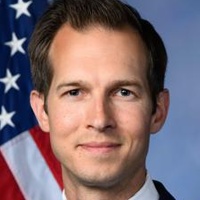
Jake Auchincloss
Representative
MA
Jake Auchincloss
Representative
MA
This bill, the Pharmacists Fight Back in Federal Employee Health Benefit Plans Act, establishes new rules for Pharmacy Benefit Managers (PBMs) administering prescription drug benefits for federal employees. It mandates specific reimbursement rates for pharmacies and prohibits PBMs from engaging in anti-competitive practices like steering patients to affiliated pharmacies. The legislation also institutes civil monetary penalties and potential debarment for PBMs that fail to comply with these new requirements.
This act amends Title IX to explicitly define "sex," "female," and "male" based on biological characteristics.
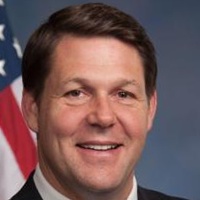
Jodey Arrington
Representative
TX
Jodey Arrington
Representative
TX
The Title IX Clarification Act of 2026 amends Title IX to explicitly define "sex," "female," and "male" based on an individual's biologically determined sex and reproductive system. This legislation clarifies the scope of sex-based protections under federal education law. The changes take effect immediately upon enactment.
This bill clarifies that a franchisor is only considered a joint employer of a franchisee's workers if it exercises substantial, direct, and immediate control over essential terms of employment.
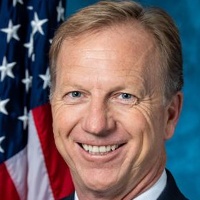
Kevin Hern
Representative
OK
Kevin Hern
Representative
OK
The American Franchise Act aims to protect the traditional franchise business model by clarifying the definition of a "joint employer." This legislation establishes that a franchisor is only considered a joint employer if it exercises "substantial direct and immediate control" over the essential terms of employment for a franchisee's workers. This change specifically targets liability risks associated with maintaining brand standards, ensuring franchisors are not automatically held responsible for local labor practices. The new standard applies prospectively to future legal proceedings.
This bill mandates electronic prior authorization, increases transparency through required data reporting, and establishes faster decision timelines for Medicare Advantage plans to improve timely access to care for seniors.
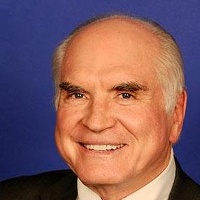
Mike Kelly
Representative
PA
Mike Kelly
Representative
PA
The Improving Seniors’ Timely Access to Care Act of 2025 aims to streamline and modernize the prior authorization process within Medicare Advantage plans. This bill mandates the adoption of electronic prior authorization systems and significantly increases transparency regarding approval rates and decision times starting in 2027. Furthermore, it establishes new enrollee protections and grants the Secretary authority to enforce faster decision timeframes for medical services.
This Act prohibits payment card networks and processors from assigning specific merchant category codes to identify firearms retailers, protecting the privacy of firearm and ammunition purchases.
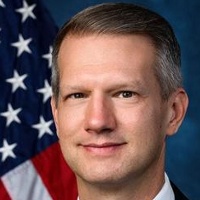
Riley Moore
Representative
WV
Riley Moore
Representative
WV
The Protecting Privacy in Purchases Act prohibits payment card networks and processors from assigning specific merchant category codes to firearms retailers. This legislation aims to protect consumer privacy by preventing the tracking of firearm and ammunition purchases through specialized financial classification. The Attorney General is tasked with enforcing these provisions and reporting annually on compliance.
The Sunshine Protection Act of 2025 establishes daylight saving time as the permanent, year-round standard time across the United States, while providing states the option to maintain their current standard time.

Vern Buchanan
Representative
FL
Vern Buchanan
Representative
FL
The Sunshine Protection Act of 2025 proposes making daylight saving time the permanent, year-round standard time across the United States. By advancing standard time zones by one hour, the bill eliminates the need for biannual clock changes. Additionally, it provides states that currently observe standard time year-round the option to maintain their existing timekeeping practices.
The **21st Century ROAD to Housing Act** aims to significantly increase housing supply and affordability through regulatory reforms, new financing tools, increased transparency, and restrictions on large institutional home purchases.
J. Hill
Representative
AR
J. Hill
Representative
AR
The **21st Century ROAD to Housing Act** is a comprehensive bill designed to significantly increase housing supply, improve affordability, and modernize federal housing programs. It tackles issues from streamlining construction regulations and incentivizing local zoning reform to restricting large corporate home purchases and enhancing financing for manufactured homes. Ultimately, the Act aims to create more pathways to homeownership and ensure safer, more stable rental conditions across the country.
This bill aims to improve securities laws by increasing SEC accountability, transparency, and cybersecurity, while also streamlining oversight and reforming rulemaking procedures.
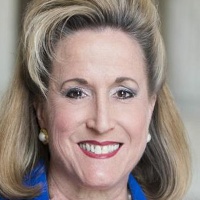
Ann Wagner
Representative
MO
Ann Wagner
Representative
MO
This bill aims to significantly improve the regulation of securities markets by increasing accountability and transparency at the Securities and Exchange Commission (SEC). It mandates rigorous cost-benefit analyses for new rules, strengthens congressional oversight through mandatory testimony, and requires independent reviews of the SEC's cybersecurity and rule effectiveness. Furthermore, the legislation streamlines audit oversight by dissolving the PCAOB and integrating its functions directly into the SEC.
The Securing Agriculture's Workforce Act of 2026 modernizes the H-2A visa program by streamlining the application process through a centralized online platform, updating labor and housing requirements, and expanding the definition of eligible agricultural work.
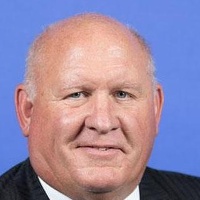
Glenn Thompson
Representative
PA
Glenn Thompson
Representative
PA
The Securing Agriculture's Workforce Act of 2026 modernizes the H-2A visa program to better support the agricultural industry by streamlining application processes and establishing a centralized online portal for employers. The bill updates labor certification, housing, and wage requirements while expanding the definition of eligible agricultural work to include a broader range of activities. Additionally, it enhances worker protections—including new heat illness prevention standards—and provides greater administrative efficiency for federal agencies managing the program.
The Financial Exploitation Prevention Act of 2025 empowers mutual funds to delay redemption requests and contact trusted individuals when they suspect the financial exploitation of older or vulnerable investors.
Ann Wagner
Representative
MO
Ann Wagner
Representative
MO
The Financial Exploitation Prevention Act of 2025 empowers mutual funds and transfer agents to protect vulnerable investors by delaying suspicious redemption requests. The bill requires participating firms to maintain trusted contact information and establishes formal internal procedures to identify and report potential financial exploitation. Additionally, it mandates that the SEC report to Congress with recommendations for further regulatory improvements to safeguard older and impaired adults.
The Freedom of Association in Higher Education Act of 2026 prohibits colleges and universities that receive federal funding from taking adverse actions against students or organizations based on their participation in single-sex social groups.
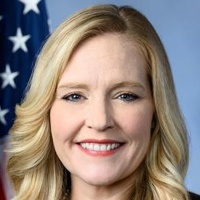
Erin Houchin
Representative
IN
Erin Houchin
Representative
IN
The Freedom of Association in Higher Education Act of 2026 protects students and single-sex social organizations from adverse actions by colleges and universities that receive federal funding. The bill ensures that students can freely join or lead these organizations without facing institutional bias or discrimination based on their membership. It establishes clear standards to prevent schools from penalizing students or organizations solely for maintaining single-sex membership policies.
The Budgeting for a Better America Act overhauls federal budgeting with a biennial cycle, establishes a commission to fast-track deficit reduction, and mandates greater long-term fiscal transparency.
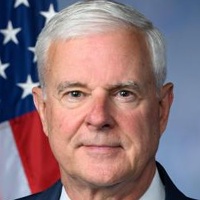
Steve Womack
Representative
AR
Steve Womack
Representative
AR
The Budgeting for a Better America Act fundamentally reforms the federal budget process by shifting to a two-year (biennial) cycle to promote stability and long-term planning. It also establishes a bipartisan commission tasked with developing a deficit-reduction plan that Congress must consider under fast-track procedures. Finally, the bill mandates greater transparency through required long-term financial reports and expanded participation in budget oversight.
This bill establishes a free, voluntary program to provide veteran borrowers with expert support services to help them understand and navigate their VA home loan benefits.
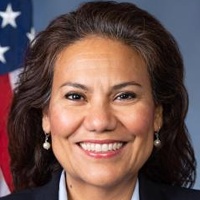
Veronica Escobar
Representative
TX
Veronica Escobar
Representative
TX
The VA Home Loan Navigator Act establishes a new, free program to provide comprehensive housing loan support services to veteran borrowers. This program will offer education, guidance, and assistance navigating all aspects of their VA home loan benefits, from eligibility to foreclosure prevention. Services will be delivered by independent, neutral third-party organizations approved by the VA and HUD. Participation is entirely voluntary for the borrower.